5 Sources
[1]
Lenovo Q1 FY2027 earnings beat on AI computers and servers
The Chinese PC maker posted record quarterly revenue of $26.9 billion, far exceeding analyst expectations of $22.3 billion Lenovo reported first-quarter results on Thursday showing adjusted net income of $1.1 billion, up 176% from a year earlier, as demand for AI computers and servers drove the company's revenue to an all-time quarterly high. For the quarter ended June 30, Lenovo's total revenue climbed to $26.9 billion, a 43% year-on-year increase that left the analyst consensus of $22.3 billion well behind, according to Brecorder. Adjusted net income crossed $1 billion for the first time, the company said. AI-related revenue grew 60% year-on-year to $9.3 billion, accounting for 35% of total group revenue, the company said. The company's Infrastructure Solutions Group, which covers servers and data center hardware, nearly doubled in revenue, rising 98% year-on-year to $8.5 billion. Operating profit for that unit reached $777 million, with operating margin climbing to 9.1%. Lenovo said the AI server pipeline expanded to $54 billion, up 157% from the prior quarter. The Intelligent Devices Group, which includes PCs and smartphones, posted revenue of $17.1 billion, up 27% year-on-year. Lenovo said its global PC market share reached 24.2%, extending its lead over the second-place competitor to more than five percentage points. AI PC market share rose to 25.1%. The Solutions and Services Group posted revenue of $2.9 billion, up 28% year-on-year, with operating margin reaching 24.2%. AI services revenue in that segment grew at a triple-digit rate year-on-year, the company said. On a net basis, shareholders absorbed a $609 million loss for the quarter, reversing the $505 million profit recorded in the same period a year ago, according to Brecorder. Analysts had on average projected a $589 million loss. Chairman and CEO Yuanqing Yang attributed the results to the company's strategy spanning personal and enterprise AI. "Building on our leadership in PCs and Smart Devices, we are proud of our rapid emergence as a global leader in AI and Infrastructure," Yang said in a statement. During the quarter, Lenovo also expanded its server manufacturing facility in North Carolina to meet rising demand from large cloud customers and enterprise buyers, the company said.
[2]
Lenovo Q1 FY26/27 slides: record $26.9B revenue, AI drives growth By Investing.com
Lenovo Group (HKSE:0992) presented its first-quarter fiscal 2026/27 earnings on August 13, 2026, revealing what the company called "the best quarter in Lenovo's history." The technology giant reported record revenue of $26.9 billion, up 43% year-over-year, driven by broad-based growth across its device, infrastructure, and services businesses. The company's stock closed the regular session at $73.77, up 1.79% from the previous close, and remained unchanged in after-hours trading. The shares are trading near the top of their 52-week range of $21 to $74.59. Chairman and CEO Yuanqing Yang highlighted three strategic pillars driving the performance: "Strategic foresight, operational excellence, and relentless innovation." The quarter marked several historic milestones, including adjusted net income surpassing $1 billion for the first time and AI-related revenue reaching $9.3 billion, representing 35% of total group revenue. Quarterly Performance Highlights As detailed in the company's performance overview, Lenovo achieved record results across all key metrics in the first quarter. The presentation emphasized strong double-digit growth across all three main business segments -- Intelligent Devices Group (IDG), Infrastructure Solutions Group (ISG), and Solutions and Services Group (SSG). Geographically, the company demonstrated robust expansion with PRC up 25%, Asia Pacific up 28%, EMEA up 53%, and Americas up 58% year-over-year. Adjusted net income reached $1,075 million, up 176% year-over-year, while adjusted net margin expanded to 4.0%, an increase of 1.9 percentage points. The company also increased R&D expenses by 30% year-over-year, signaling continued investment in innovation. However, the presentation materials note that reported net income showed a loss of $609 million, primarily due to a $1.7 billion non-cash fair value loss on warrant revaluation and $30 million in notional interest on convertible bonds. This accounting treatment resulted in a reported EPS miss against analyst expectations, though the underlying business performance remained strong. The company's strategic transformation is illustrated in what it termed "3 Historic Breakthroughs." Business Segment Performance Intelligent Devices Group Lenovo's IDG segment achieved "new heights despite headwinds," according to the presentation, generating $17.1 billion in revenue with a 27% year-over-year increase. The PC and Smart Devices (PCSD) division maintained industry-leading profitability with an operating margin of 7.1%. Lenovo's PC market share reached 24.2%, extending its lead over the number two competitor by 5.3 percentage points. The company has now gained market share for 12 consecutive quarters and widened its lead for 10 straight quarters. Beyond traditional PCs, the tablet business achieved record first-quarter revenue with 83% year-over-year growth, while the smartphone division recorded its highest Q1 revenue with 15% growth and a record premium smartphone revenue mix of 37%. The company's detailed IDG financial performance shows consistent execution across both revenue and profitability. Lenovo's personal AI strategy centers on creating an integrated ecosystem across multiple devices. The presentation highlighted Lenovo's total device growth significantly outpacing the market, with a 2-year compound annual growth rate of 12.4% compared to 5.0% for the total device market. Notably, Lenovo's AI PC growth showed a 2-year CAGR of 395%, more than 3.7 times the total AI PC market growth. Infrastructure Solutions Group ISG emerged as a standout performer in the quarter, with the presentation noting "investment paying off, sustained profitable growth." Revenue reached $8.5 billion, nearly doubling with 98% year-over-year growth. More significantly, the segment achieved record operating profit of $777 million and an operating margin of 9.1%, both all-time highs for the business. The detailed financial charts illustrate the dramatic turnaround in ISG's profitability. The segment's dual strategy targeting both cloud service providers (CSP) and enterprise/small-medium business (ESMB) customers drove exceptional growth, with both channels nearly doubling year-over-year. The AI server pipeline expanded to $54 billion, up 157% quarter-over-quarter, indicating strong future demand. The presentation emphasized ISG's dual-engine growth model and its position as an AI infrastructure leader. Lenovo highlighted its unique ODM+/OEM model and global-local approach as competitive advantages. The company reported more than 2.5 times AI server revenue growth year-over-year in international markets and triple-digit revenue growth across both server and storage products. Solutions and Services Group SSG demonstrated "AI solutions gaining momentum," according to the presentation, with revenue reaching $2.9 billion, up 28% year-over-year. The segment achieved a record operating margin of 24.2%, up 2 percentage points year-over-year. Non-hardware-tied solutions and services reached a record 62% revenue mix, indicating a strategic shift toward higher-margin recurring revenue. The presentation prominently featured SSG's role in empowering the FIFA World Cup 2026, showcasing AI solutions including FIFA AI Pro, Referee View AI Stabilizer, 3D Player Avatars, and an AI-powered command center, all delivered with "zero-fault execution." SSG's financial performance showed consistent margin expansion alongside revenue growth. The segment's total addressable market is expected to expand significantly, driven by AI-related opportunities. Management projects SSG's AI-led TAM will grow at approximately 25% per year through fiscal 2029/30, with total SSG TAM exceeding $850 billion by that time. The presentation noted triple-digit AI services revenue growth year-over-year and approximately double TruScale Infrastructure-as-a-Service bookings. Strategic Initiatives FIFA World Cup 2026 Partnership A major highlight of the presentation was Lenovo's role as the Official FIFA World Cup 2026 Technology Partner. The company deployed more than 25,000 Lenovo and Motorola devices across 600+ FIFA sites with 350+ engineers onsite, achieving 99.99% solution uptime throughout the tournament. The partnership reached an estimated 6 billion+ global fans through broadcasts and generated significant brand visibility. Management emphasized three key impacts: powering the largest FIFA World Cup with end-to-end technology across 104 matches in 16 cities and 3 countries; creating a high-impact customer engagement platform hosting 16,000 guests including Fortune 500 CEOs; and elevating global brand awareness with Lenovo leading among FIFA partners in share of voice. Hybrid AI Strategy The presentation outlined Lenovo's comprehensive hybrid AI approach spanning personal and enterprise AI. On the personal AI front, the company is developing "Qira" and "Tianxi" platforms to orchestrate AI experiences across multiple devices and ecosystems. For enterprise AI, Lenovo emphasized its ability to help customers "transform private data into insights and business value" through its hybrid infrastructure capabilities. The company positioned itself as uniquely able to deliver AI solutions across the entire value chain, from devices to infrastructure to services. Financial Analysis The comprehensive financial summary demonstrates the magnitude of Lenovo's quarterly performance. Revenue increased from $18.8 billion to $26.9 billion year-over-year, while gross profit expanded from $2.8 billion to $4.5 billion, a 60% increase. Gross margin improved from 14.7% to 16.5%, reflecting better product mix and pricing power. On an adjusted basis, operating profit increased from $631 million to $1.5 billion, up 141% year-over-year. The adjusted operating margin expanded from 3.4% to 5.7%. Adjusted profit before taxation grew 172% to $1.4 billion, and adjusted net income attributable to equity holders reached $1.1 billion, up 176%. The reconciliation between reported and adjusted figures shows the impact of non-operating items. The largest adjustment was a $1.7 billion fair value loss on derivative financial liabilities relating to warrants, along with $30 million in notional interest on convertible bonds and other non-cash items. These accounting treatments resulted in a reported net loss of $609 million, despite strong underlying operational performance. Forward-Looking Statements Management indicated Lenovo is on track to reach its $100 billion annual revenue target within the current fiscal year, ahead of the original two-year timeline. The company also reiterated longer-term goals of $130 billion in annual revenue with a net margin above 5%. However, the presentation acknowledged near-term market challenges. Management expects the PC market to contract approximately 15% in units during the second half of the fiscal year, with commercial demand likely holding up better than consumer demand. Overall smartphone shipments are projected to decline about 20%, though Lenovo expects Motorola to offset unit declines through higher average selling prices and a richer product mix. For infrastructure, the $54 billion AI server pipeline represents significant future opportunity, though conversion to revenue will occur over multiple quarters. The company highlighted new manufacturing capacity in North Carolina and deeper partnerships with NVIDIA, AMD, and Intel to support this growth. Chief Financial Officer Winston Cheng emphasized that the record results "were not a one-time event but reflected the company's long-term operating model," suggesting confidence in sustained performance despite market headwinds. Risks and Challenges While the presentation emphasized record achievements, several challenges merit investor attention. Component inflation, particularly in memory, could pressure margins in the PC and smartphone businesses. The anticipated market contraction in both PCs and smartphones in the second half of the fiscal year represents a headwind to volume growth. Execution risk remains in converting the $54 billion AI server pipeline into actual revenue, as large infrastructure deployments often face delays and require sustained customer relationships. Additionally, the accounting volatility from warrant revaluation and other non-cash items can create significant swings in reported earnings, potentially obscuring underlying operational trends. Supply chain constraints, while positioned as a competitive advantage in the presentation, continue to require careful management. The company's ability to maintain its margin expansion trajectory while navigating these challenges will be critical to achieving its long-term financial targets. Full presentation: This article was generated with the support of AI and reviewed by an editor. For more information see our T&C.
[3]
Lenovo Q1 revenue jumps 43% as AI demand soars; shares hit record high By Investing.com
Investing.com-- Lenovo Group (HK:0992) reported a sharp rise in first-quarter revenue on Thursday, helped by strong demand for artificial-intelligence infrastructure and devices, sending its shares to all-time highs. Revenue for the three months ended June 30 rose 43% year-on-year to a record $26.9 billion, while adjusted profit attributable to shareholders jumped 176% to $1.075 billion, surpassing $1 billion for the first time. AI-related revenue increased 60% and accounted for 35% of group revenue, Lenovo said. Analyse corporate earnings with AI-powered tools with InvestingPro -- at 55% off now Hong Kong-listed Lenovo shares rose as much as 7.6% to record highs of HK$31.26 and last traded 3.4% at HK$30.02 by 05:05 GMT. Its infrastructure solutions business nearly doubled revenue to $8.5 billion, with operating margin expanding to 9.1%. The AI server pipeline reached $54 billion, up 157% from the previous quarter. The company's intelligent devices business, which includes PCs and smartphones, posted revenue of $17.1 billion, up 27%, while its solutions and services business grew 28% to $2.9 billion. Lenovo posted a reported net loss of $609 million, compared with a $505 million profit a year earlier, mainly due to a $1.69 billion non-cash loss from the revaluation of warrants. Looking ahead, Lenovo said it expects to pursue sustained, multi-year margin expansion through its Hybrid AI strategy, despite component supply pressures. It said its scale, supply-chain resilience and AI portfolio should support further profitable growth.
[4]
Lenovo Posts Record Revenue, Expects to Hit $100 Billion Goal This Year -- Update
Lenovo Group kicked off its fiscal year with record sales and now expects to achieve its $100 billion annual revenue goal ahead of schedule, thanks to robust AI infrastructure demand and a resilient personal-computer business. The upgraded guidance comes as the world's largest PC maker branches out beyond computers, helping it increasingly be viewed as a play on the AI infrastructure and AI device themes. The company on Thursday said revenue grew 43% to $26.94 billion in the three months ended June, surpassing market expectations of $22.33 billion. Its infrastructure-solutions business, encompassing data-center hardware, powered ahead on surging AI server demand fueled by growing adoption of agentic AI by both overseas and domestic clients. Segment revenue nearly doubled from a year earlier, producing an operating profit of $777 million. With the business "flying as fast as [a] Boeing 777," Chairman and Chief Executive Yuanqing Yang said he now expects the company to hit the $100 billion revenue mark this fiscal year. A $54 billion AI server pipeline, up more than twofold from a year ago, with clients spanning cloud service providers to enterprises, will serve as fuel to reach that milestone. Artificial intelligence has become a more meaningful growth engine for Lenovo as its AI server orders have translated into tangible revenue. AI-related revenue accounted for 35% of the total in its fiscal first quarter. The PC and server giant also beat expectations on other key metrics, with adjusted net profit nearly tripling to $1.075 billion. The company swung to a $609 million net loss, however, hurt by a nonrecurring fair-value loss due to the revaluation of its warrants. Lenovo's intelligent-devices group, which includes PCs, smartphones and tablets, delivered a 27% revenue gain amid surging memory costs. Worldwide PC shipments fell 4.9% from a year earlier in the April-June period, declining for the first time after nine straight quarters of growth, as the memory shortage pushed up prices of consumer electronics, according to data from industry tracker IDC. "While raising end-device prices should help support margins and maintain revenue growth, it will inevitably put pressure on unit volumes," Counterpoint Research analyst Ivan Lam said. Despite the lower shipments, Lenovo remained the world's leading PC maker, with a market share of 24.2%. The weakness in PC sales could prove temporary, as a new line of AI PCs equipped with Nvidia's new chip is expected to roll out later this year, supporting Lenovo's core business. Lenovo's Hong Kong-listed shares have rallied as investors rerate the company on its AI potential, sending the stock about 150% higher in the June quarter. Shares jumped 20% on Thursday after the results, taking year-to-date gains to more than 275%. "Lenovo's AI story is compelling, with significant upside potential," Counterpoint's Lam said.
[5]
Lenovo's Revenue Beats Expectations on Robust AI Demand
Lenovo Group kicked off its fiscal year on a strong note with record-high revenue thanks to robust artificial-intelligence infrastructure demand and its resilient personal-computer business. The world's largest personal-computer maker is increasingly being viewed as both an AI infrastructure and AI device play as it branches out beyond computers. Its fiscal first quarter results put it on a sound footing toward meeting its goal of $100 billion in annual revenue in the next two years. Lenovo ended its latest fiscal year in March with $83.1 billion in revenue, after recording its strongest quarterly top-line growth in five years. The company on Thursday said revenue in the three months ended June rose grew 43%, compared with the same period a year earlier, at $26.94 billion, beating market expectations for $22.33 billion. Its adjusted net profit surged 176% on year to $1.075 billion, also comfortably beating market expectations. Still, unadjusted net profit was hit by a nonrecurring fair-value loss due to the revaluation of its warrants and swung to a loss of $609 million. AI has continued to become a more meaningful growth engine for Lenovo with AI-related revenue in the quarter making up 35% of the total. Its infrastructure-solutions business powered ahead thanks to the surge in AI server demand with the growing adoption of agentic AI by both overseas and domestic clients. Revenue for this segment almost doubled, producing an operating profit of $777 million. "We believe Lenovo is well positioned to benefit from the growing budget for AI infrastructure, as its improving execution and streamlined product portfolio should support sustained high growth and margin expansion," Macquarie analyst Cherry Ma said in a recent note. Lenovo's intelligent-devices group, which includes PCs, smartphones and tablets, saw 27% revenue growth amid surging memory costs. Worldwide PC shipments fell 4.9% from a year earlier in the April-June period--the first decline after nine consecutive quarters of growth--as the memory shortage pushed up prices of consumer electronics, according to data from industry tracker IDC. Lenovo remained the world's leading PC maker despite lower shipments during the quarter, with a market share of 24.2%. The weakness in PC sales could prove temporary as a new line of AI PCs equipped with Nvidia's new chip is expected to roll out later this year, supporting Lenovo's core business.
Share
Copy Link
Lenovo reported record quarterly revenue of $26.9 billion for Q1 FY26/27, marking a 43% year-over-year increase driven by surging demand for AI infrastructure and servers. The world's largest PC maker saw AI-related revenue climb 60% to $9.3 billion, while its Infrastructure Solutions Group nearly doubled revenue to $8.5 billion, pushing shares to all-time highs.
Lenovo delivered what Chairman and CEO Yuanqing Yang called "the best quarter in Lenovo's history," posting record revenue of $26.9 billion for the three months ended June 30
1
2
. The 43% year-over-year growth substantially exceeded analyst expectations of $22.3 billion, signaling the world's largest PC maker has successfully positioned itself as both an AI infrastructure and AI device play1
4
.The company's adjusted net income reached $1.075 billion, up 176% from the prior year and surpassing $1 billion for the first time in company history
1
3
. Adjusted net margin expanded to 4.0%, an increase of 1.9 percentage points year-over-year2
. However, on a reported basis, Lenovo posted a net loss of $609 million, primarily due to a $1.69 billion non-cash fair value loss from warrant revaluation and notional interest on convertible bonds1
3
.Lenovo's Infrastructure Solutions Group emerged as the standout performer, with revenue nearly doubling to $8.5 billion, representing 98% year-over-year growth
1
3
. The segment achieved record operating profit of $777 million with an operating margin climbing to 9.1%, both all-time highs for the business1
2
.The AI server pipeline expanded dramatically to $54 billion, up 157% from the previous quarter, indicating robust future demand from both cloud service providers and enterprise customers
1
3
. This surge reflects growing adoption of agentic AI by overseas and domestic clients, with AI server revenue growing more than 2.5 times year-over-year in international markets2
5
.AI-related revenue increased 60% year-over-year to $9.3 billion, accounting for 35% of total group revenue
1
3
. Yang attributed the performance to the company's AI-focused strategy spanning personal and enterprise AI, stating, "Building on our leadership in PCs and Smart Devices, we are proud of our rapid emergence as a global leader in AI and Infrastructure"1
.The Intelligent Devices Group posted revenue of $17.1 billion, up 27% year-over-year, despite headwinds in the broader PC market
1
3
. Lenovo's global PC market share reached 24.2%, extending its lead over the second-place competitor to more than 5.3 percentage points1
2
. The company has now gained market share for 12 consecutive quarters and widened its lead for 10 straight quarters2
.Lenovo's AI PC market share rose to 25.1%, with AI PC growth showing a 2-year compound annual growth rate of 395%, more than 3.7 times the total AI PC market growth
1
2
. The PC and Smart Devices division maintained industry-leading profitability with an operating margin of 7.1%2
.Beyond traditional PCs, the tablet business achieved record first-quarter revenue with 83% year-over-year growth, while smartphones recorded their highest Q1 revenue with 15% growth and a record premium smartphone revenue mix of 37%
2
. This performance came despite worldwide PC shipments falling 4.9% in the April-June period, marking the first decline after nine consecutive quarters of growth, as memory shortages pushed up prices4
5
.The Solutions and Services Group posted revenue of $2.9 billion, up 28% year-over-year, with operating margin reaching a record 24.2%, up 2 percentage points from the prior year
1
2
. AI services revenue in this segment grew at a triple-digit rate year-over-year, demonstrating the company's expanding capabilities beyond hardware1
.Related Stories
Lenovo demonstrated robust expansion across all geographic regions, with China up 25%, Asia Pacific up 28%, EMEA up 53%, and Americas up 58% year-over-year
2
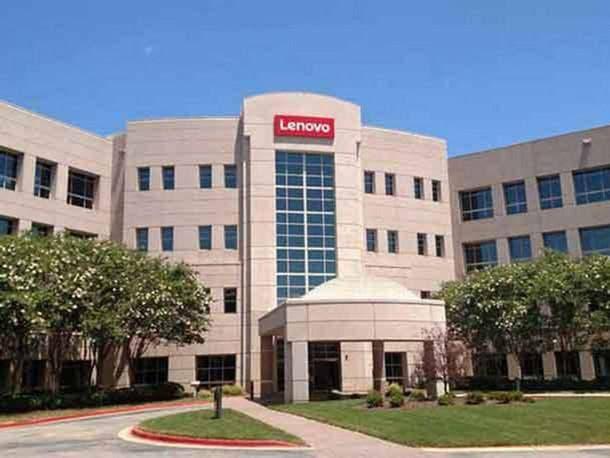
. During the quarter, the company expanded its server manufacturing facility in North Carolina to meet rising demand from large cloud customers and enterprise buyers1
.The company also increased R&D expenses by 30% year-over-year, signaling continued investment in innovation to support its Hybrid AI strategy
2
. Yang highlighted three strategic pillars driving the performance: "Strategic foresight, operational excellence, and relentless innovation"2
.Lenovo's Hong Kong-listed shares hit record highs, rising as much as 7.6% to HK$31.26, with year-to-date gains exceeding 275%
3
4
. The stock has rallied approximately 150% in the June quarter alone as investors rerate the company on its AI potential4
.With the infrastructure business "flying as fast as [a] Boeing 777," Yang now expects Lenovo to hit the $100 billion revenue mark this fiscal year, ahead of the previously announced two-year timeline
4
. The company ended its latest fiscal year in March with $83.1 billion in revenue5
.Looking ahead, Lenovo expects to pursue sustained, multi-year margin expansion through its Hybrid AI strategy, despite component supply pressures
3
. The company stated its scale, supply-chain resilience, and AI portfolio should support further profitable growth3
. Macquarie analyst Cherry Ma noted, "We believe Lenovo is well positioned to benefit from the growing budget for AI infrastructure, as its improving execution and streamlined product portfolio should support sustained high growth and margin expansion"5
.The weakness in PC sales could prove temporary as a new line of AI computers equipped with Nvidia's new chip is expected to roll out later this year, supporting Lenovo's core business while the AI infrastructure boom continues to accelerate
4
5
.Summarized by
Navi
[3]
[4]
[5]
22 May 2026•Business and Economy

20 Feb 2025•Business and Economy

15 Aug 2024

1
Science and Research

2
Technology

3
Technology