OpenAI, Anthropic, and Block Launch Agentic AI Foundation to Standardize AI Agents Development


17 Sources
[1]
Big Tech joins forces with Linux Foundation to standardize AI agents
Big Tech has spent the past year telling us we're living in the era of AI agents, but most of what we've been promised is still theoretical. As companies race to turn fantasy into reality, they've developed a collection of tools to guide the development of generative AI. A cadre of major players in
[2]
OpenAI, Anthropic and Block join new Linux Foundation effort to standardize the AI agent era
As AI moves beyond chatbots and towards systems that can take actions, the Linux Foundation is launching a new group dedicated to keeping AI agents from splintering into a mess of incompatible, locked-down products. The group, dubbed the Agentic AI Foundation (AAIF), will act as a neutral home for
[3]
OpenAI, Anthropic, and Block Are Teaming Up to Make AI Agents Play Nice
The three companies are also transferring ownership of some widely used agentic technologies over to the foundation. This includes Anthropic's Model Context Protocol (MCP), which allows agents to connect and interact; OpenAI's Agents.md, which lets programs and websites specify rules for coding
[4]
The fix for messy AI agent ecosystems might finally be here
At Open Source Summit Japan in Tokyo, the Linux Foundation announced the launch of the Agentic AI Foundation (AAIF). This new, open standards industry-backed consortium seems destined to be a game changer. The AAIF's mission is to standardize and accelerate the emerging ecosystem of AI agents.
[5]

Microsoft, Google, OpenAI, and Anthropic join forces to form Agentic AI alliance, according to report -- organization backed by the Linux Foundation is set to create open source standards for AI agents
Many of the world's largest AI tech companies are going to start working together on some of their shared problems. Microsoft, Google, Anthropic, OpenAI, and a number of other related companies are going to team up as part of the Agentic Artificial Intelligence Foundation, as reported by The
[6]

Linux Foundation founds Agentic AI Foundation
An attempt to provide vendor-neutral oversight as the agent train barrels on The Linux Foundation on Tuesday said it has formed the Agentic AI Foundation (AAIF) to provide vendor-neutral oversight for the development of AI agent infrastructure. AI agents are machine learning models empowered to
[7]

Linux Foundation launches Agentic AI Foundation
Backed by AWS, Google, Microsoft, OpenAI, and others, the AAIF kicks off with contributed projects from Anthropic, Block, and OpenAI. The Linux Foundation has announced the formation of the Agentic AI Foundation (AAIF), which is intended to provide a neutral, open foundation to ensure that agentic
[8]

OpenAI, Anthropic, and Others Create Foundation for Standardizing AI Agents
OpenAI, Anthropic, and Block have teamed up to co-found a new foundation that promises to help standardize the development of AI agents. The new Agentic AI Foundation (AAIF) will operate under the larger Linux Foundation, a non-profit that oversees several open-source projects including the Linux
[9]

Innovation Happens in the Open: Cisco Joins the Agentic AI Foundation (AAIF)
At Cisco, we believe in the power of collaboration and neutral governance to drive innovation. That's why we're proud to join the newly-formed Agentic AI Foundation (AAIF) under the Linux Foundation as a launch Gold member, supporting its mission to advance open standards like the Model Context
[10]

The Agentic AI Foundation offers shared specs for building, running, and scaling agents
Scaling enterprise and agentic AI will rely heavily on industry players agreeing on standards. From model context protocol (MCP) to Agent 2 Agent (A2A) and beyond, interoperability protocols give organizations a common language and way to identify agents. This could significantly fast track
[11]

OpenAI, Anthropic and Block Set up Agentic AI Foundation Under Linux Foundation | AIM
The new foundation aims to provide a neutral, open governance structure for the emerging ecosystem of agentic AI systems. The Linux Foundation has announced the formation of the Agentic AI Foundation (AAIF), backed by Anthropic, Block and OpenAI. Other members include Amazon Web Services,
[12]

Linux Foundation announces Agentic AI Foundation joined by Anthropic, OpenAI, Block - SiliconANGLE
Linux Foundation announces Agentic AI Foundation joined by Anthropic, OpenAI, Block The Linux Foundation, the nonprofit supporting open-source projects such as the Linux operating system kernel, today announced the formation of the Agentic Artificial Intelligence Foundation alongside major
[13]

Anthropic, OpenAI, and Block donate AI agent projects to new Linux Foundation body
The Linux Foundation today announce the formation of the Agentic AI Foundation (AAIF), a new home for open source projects that underpin how AI agents connect to tools, data, and each other. The technology matters, but so does who's contributing it. Anthropic is donating the Model Context Protocol
[14]

OpenAI and Anthropic join Linux Foundation to standardize AI agents
The Linux Foundation has launched the Agentic AI Foundation (AAIF) with contributions from Anthropic, Block, and OpenAI to standardize AI agents and prevent incompatible products. Based in the open-source community, the initiative aims to foster interoperability through shared protocols and
[15]

Agentic AI Splits Big Tech Between Open Alliances and Closed Control | PYMNTS.com
By completing this form, you agree to receive marketing communications from PYMNTS and to the sharing of your information with our sponsor, if applicable, in accordance with our Privacy Policy and Terms and Conditions. The biggest one came from Block, which has joined with Anthropic and OpenAI to
[16]
Linux Foundation Says New Organization Brings Open Governance to Agentic AI | PYMNTS.com
By completing this form, you agree to receive marketing communications from PYMNTS and to the sharing of your information with our sponsor, if applicable, in accordance with our Privacy Policy and Terms and Conditions. The AAIF is a neutral, open foundation, the Linux Foundation said in a Tuesday
[17]

Agentic AI Foundation explained: Why Linux is joining OpenAI, Anthropic for future of AI
Open-source collaboration promises seamless, interoperable AI agents across platforms and tools The race to build autonomous AI agents has just entered a new phase of collaboration. The Linux Foundation has officially announced the launch of the Agentic AI Foundation (AAIF), a new initiative
Share
Copy Link
Major tech companies including OpenAI, Anthropic, and Block have formed the Agentic AI Foundation under the Linux Foundation to establish open source standards for AI agents. The initiative brings together three key technologies—Model Context Protocol, AGENTS.md, and Goose—to create interoperable infrastructure and prevent the AI agent ecosystem from fracturing into incompatible, proprietary systems.
Big Tech Unites to Prevent AI Agent Fragmentation
The AI industry is taking a decisive step toward coordination as major players form the Agentic AI Foundation (AAIF) under the Linux Foundation. Announced at Open Source Summit Japan in Tokyo, the initiative brings together OpenAI, Anthropic, and Block alongside supporters including Google, Microsoft, Amazon, Bloomberg, and Cloudflare
1
2
. The goal is clear: standardize the development of AI agents before the ecosystem splinters into incompatible, proprietary stacks that lock users into single vendors.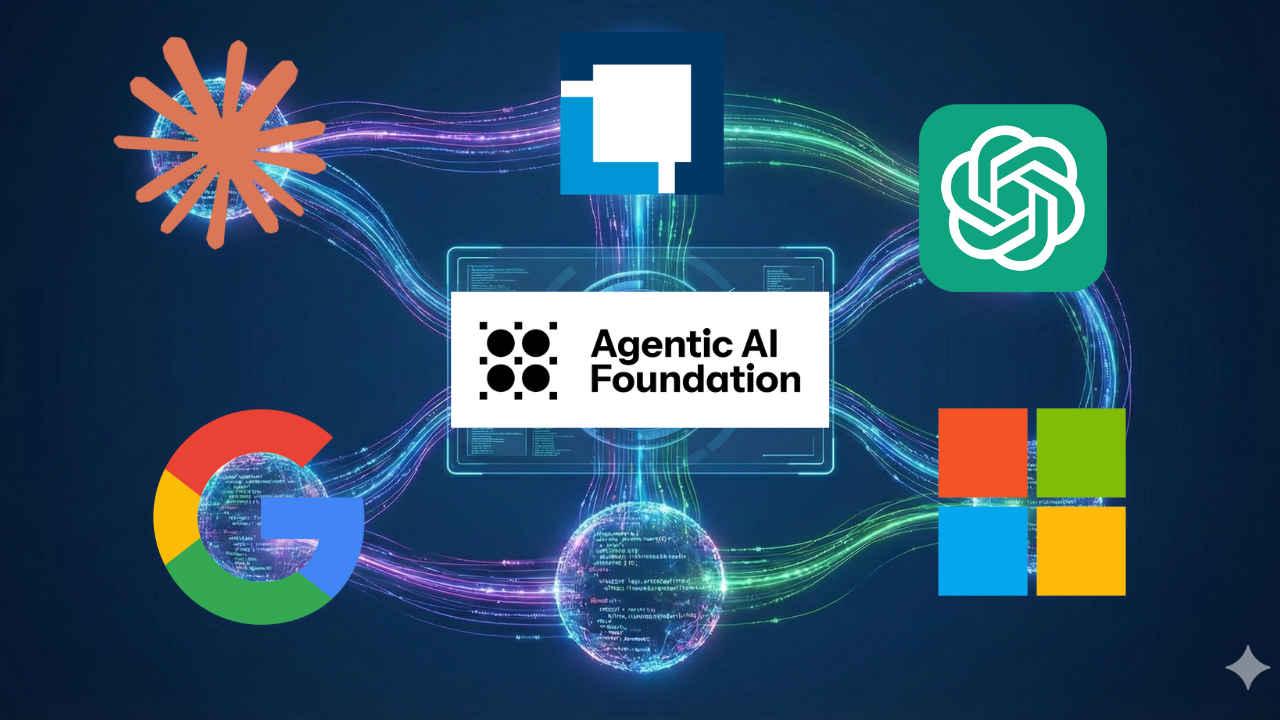
Source: Digit
As Jim Zemlin, executive director of the Linux Foundation, explained, the objective is avoiding a future of "closed wall" proprietary systems where tool connections and agent behavior remain locked behind a handful of platforms
2
. This marks a shift from chat-based generative AI systems to programs that take actions on behalf of users, representing what many see as the next evolution in AI development3
.Three Core Technologies Drive Open Source Standards
The Agentic AI Foundation centers on three cornerstone open-source tools donated by its founding members. Anthropic contributed the Model Context Protocol (MCP), which Anthropic describes as a "USB-C port for AI" that allows developers to connect AI agents to data sources in a standardized way
1
. Rather than creating custom integrations for every database or cloud storage platform, MCP enables quick connections to any MCP-compliant server.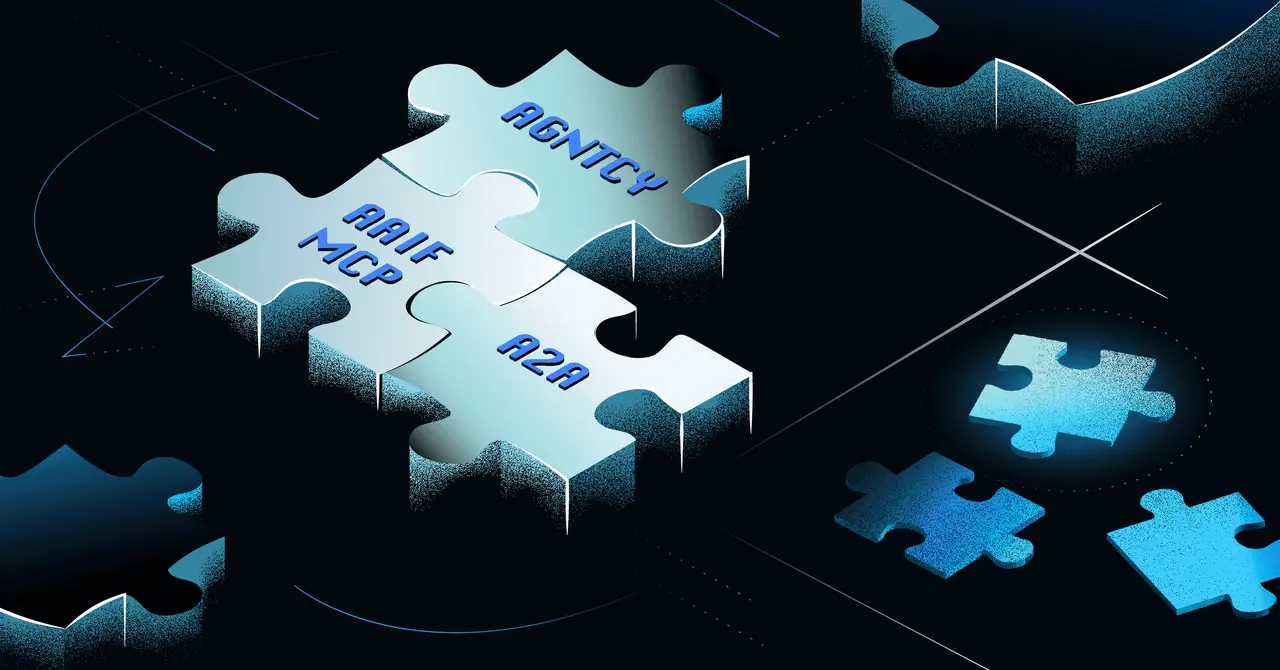
Source: Cisco
Since Anthropic open-sourced MCP a year ago, adoption has grown rapidly across the AI industry. Google announced MCP support in its dev tools at I/O 2025, while OpenAI adopted the protocol just months after its release
1
. The protocol already powers diverse applications, from the Pebble Index 01 ring's local LLM to enterprise productivity tools. "A lot of tasks on productivity and content are fully doable on the edge," explains Vinesh Sukumar, Qualcomm's head of AI products. "With MCP, you have a handshake with multiple cloud service providers for any kind of complex task to be completed"1
.Block contributed Goose, a customizable open source agent for coding that launched in early 2025
1
. Designed to run locally or in the cloud with any Large Language Models, Goose includes built-in MCP support. Brad Axen, AI Tech Lead at Block, frames the donation as both a strategic and practical move: "Getting it out into the world gives us a place for other people to come help us make it better"2
.OpenAI's contribution, AGENTS.md, provides a markdown-based readme format announced in August that lets developers specify rules for coding agents to guide their behavior more predictably
1
2
.Why Interoperability Matters for Agentic AI Deployments
The push to foster interoperability addresses a fundamental challenge as AI moves beyond chatbots. Srinivas Narayanan, chief technology officer of B2B applications at OpenAI, envisions large numbers of AI agents routinely communicating with one another in business contexts
3
. Without shared protocols, this vision remains impractical.
Source: ZDNet
"We need multiple [protocols] to negotiate, communicate, and work together to deliver value for people, and that sort of openness and communication is why it's not ever going to be one provider, one host, one company," Nick Cooper, who leads protocol work at OpenAI, told TechCrunch
2
. Cooper emphasizes that open interoperability means companies can communicate across providers and agentic systems seamlessly3
.The timing reflects how rapidly the AI ecosystem has evolved. The world in which tech companies operate has changed considerably as everyone rushes to integrate generative AI into products and processes
1
. Yet serious challenges remain. Security vulnerabilities present particular concerns—IT managers have flagged issues with prompt injection attacks when using MCP to connect systems like ChatGPT to company Slack channels5
.Related Stories


Governance Questions and Industry Control
The AAIF operates as a "directed fund" within the Linux Foundation, where companies contribute through membership dues. Zemlin maintains that funding doesn't equal control, with project roadmaps set by technical steering committees rather than individual members
2
. This governance structure mirrors successful precedents like the Cloud Native Computing Foundation, which was formed in 2015 to support Google's Kubernetes and has since integrated dozens of cloud computing tools1
.However, questions persist about whether AAIF becomes genuine infrastructure or merely an industry logo alliance. The technologies being standardized are remarkably recent—even MCP, the most established, still faces considerable flux in handling basic technologies like OAuth
1
. Critics note that larger companies with enormous investment capabilities could shape standards in ways that benefit them disproportionately5
.Chris DiBona, vice president of Microsoft's office of the CTO, emphasized the collaborative imperative: "For the agentic future to become a reality, we have to build it together, and we have to build it in the open"
4
.What Success Looks Like and What to Watch
Zemlin suggests early success indicators include widespread adoption of these standards and shared frameworks being used by vendor agents globally
2
. For Cooper, success means evolution: "I don't want it to be a stagnant thing. I don't want these protocols to be part of this foundation, and that's where they sat for two years. They should evolve and continually accept further input"2
.The foundation's near-term focus involves evolving MCP, AGENTS.md, and Goose under open governance while recruiting additional projects
4
. Long-term, members expect AAIF to become the central venue for interoperability profiles, security frameworks, and reference implementations as agentic AI becomes mainstream infrastructure4
.This matters because AI agents face real-world effectiveness challenges. Despite industry hype, agents struggle with reliability—hallucinations remain problematic, and customer-facing applications show particular weakness
4
5
. The pressure is mounting as major AI companies have yet to achieve profitability from their massive investments, making breakthroughs in agentic AI increasingly urgent5
.References
Summarized by

Navi
[2]
Related Stories
Recent Highlights



Recent Highlights
Today's Top Stories






Don’t drown in AI news. We cut through the noise - filtering, ranking and summarizing the most important AI news, breakthroughs and research daily. Follow topics that matter to you and stay ahead.


