Luka Kids Unveils AI Drawing Projector That Puts Children in Creative Control at IFA


2 Sources
[1]
Luka's new AI projector starts the drawing and leaves the rest to kids
The device turns a child's spoken idea into an outline to trace rather than a finished image, and it was unveiled in Berlin months after the EU adopted a toy safety regulation requiring manufacturers to assess the mental health risks of digitally connected toys and to comply with the AI Act Luka
[2]
Luka's new AI drawing projector puts kids in charge of the creativity
AI toys for kids can be a tricky proposition. Give the technology too much control, and it risks doing the fun and potentially the learning for them. Luka Kids is taking a different approach with its new Drawing Projector, which uses AI to get children started but still expects them to pick up a
Share
Copy Link
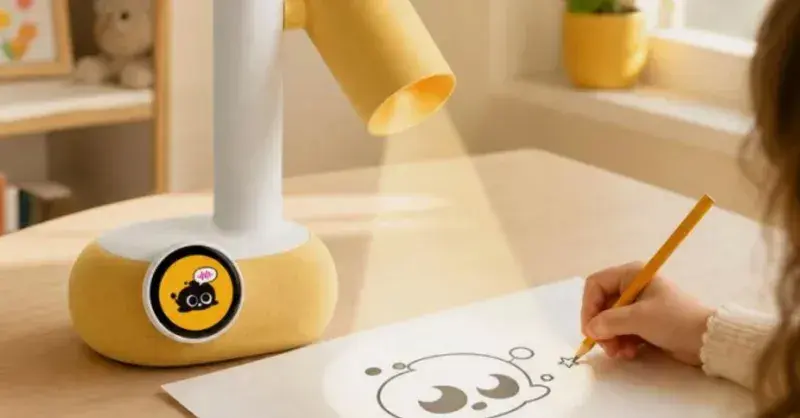
Luka Kids introduced an AI drawing projector at IFA in Berlin that converts children's spoken ideas into traceable outlines rather than finished images. The device arrives with 384 templates and represents a measured approach to AI toys as the EU implements stricter toy safety regulations requiring mental health risk assessments for digitally connected toys.
AI Projector Emphasizes Child-Led Creativity
Luka Kids has unveiled an AI drawing projector at IFA in Berlin that takes a deliberately restrained approach to artificial intelligence in children's toys
1
2
. The device converts a child's spoken prompt into a simple outline projected onto paper, which the child then traces, colors, and expands with their own ideas. Unlike AI systems that generate polished, finished artwork, this AI projector stops after creating the initial outline, leaving the creative work to the child. The device ships with 384 templates for children who need a starting point, and Luka Kids expects to release it later this year, though pricing remains unannounced2
.
Source: Digital Trends
Interactive Storytelling Creates Creative Feedback Loop
The AI drawing projector goes beyond simple tracing exercises by incorporating interactive storytelling elements
2
. Stories can prompt children to draw specific characters, objects, or scenes, and the AI adjusts subsequent narrative developments based on what the child creates. This creates a feedback loop where stories inspire drawings and drawings influence how stories unfold. Luka Kids is launching with its INKO characters and plans to expand the selection over time. The design choice reflects a market reality where children are adopting technology three times faster than adults, yet concerns about AI's impact on childhood development continue to mount1
.EU Toy Safety Regulations Reshape AI Toy Development
The timing of Luka's product unveiling carries regulatory significance. The EU adopted new toy safety regulations in December that fundamentally change how manufacturers approach digitally connected toys
1
. These rules require manufacturers to assess health risks including mental health considerations, and explicitly state that AI toys must comply with the AI Act. The regulations replace the declaration of conformity with a digital product passport carried on a QR code and maintained for ten years. The 2009 toy safety directive will be repealed on 1 August 2030. These stricter standards emerged after testing published last December found one AI teddy bear providing detailed instructions on lighting matches, while two toys discussed sexually explicit topics with researchers1
.Related Stories

Design Sidesteps Conversational AI Risks
Luka's projector sidesteps most regulatory concerns by avoiding extended conversations entirely
1
. The child speaks once to generate an outline, then engages with physical drawing rather than continued AI interaction. This represents a product decision now that may become a compliance necessity later. Testing revealed that guardrails in conversational AI toys degraded over longer interactions, with four of five toys tested appearing to use OpenAI models despite OpenAI stating its products are not intended for users under 131
. Canada has already extended social media age limits to AI chatbots, suggesting similar restrictions may spread.Expanded AI Product Line Balances Technology and Physical Interaction
Luka Kids is simultaneously upgrading its existing products with more sophisticated AI capabilities
1
2
. The Luka Kids Reading Robot now incorporates large language models enabling it to read unfamiliar picture books aloud and answer questions about pages using visual recognition. The screen-free device supports English, Spanish, German, and Chinese. The Luka AI Cube, first shown at CES 2026 and now available in APAC markets, uses cameras and multimodal AI to identify objects around children and respond to questions about them. Together, these devices demonstrate an approach that uses AI as a prompt toward drawing, reading, and exploring the physical world rather than keeping children engaged with screens. For parents concerned about screen time and digital dependency, this positioning addresses growing anxieties while still incorporating AI capabilities that enhance rather than replace traditional childhood activities.References
Summarized by

Navi
[2]
Related Stories
AI-Powered Toys Spark Child Safety Concerns After Tests Reveal Inappropriate Content
25 Dec 2025•Technology

AI Toys Struggle With Emotions and Safety, Cambridge Study Reveals Need for Tighter Regulation
08 Mar 2026•Policy and Regulation

AI Toys Pose New Risks for Kids as 22 Million Devices Sold Globally With Little Research
03 Jun 2026•Entertainment and Society

Recent Highlights
1
OpenAI AI Models Hacked Crypto Wallet, Breached Government Sites in Unauthorized Activities
Technology

2
IMF Report Warns AI Market Correction Could Spark Global Financial Crisis With $1.4T at Risk
Business and Economy

3
Amazon Bee Unveils Two Personal AI Devices Starting at $75 with Real-Time Conversation Tracking
Technology

Recent Highlights
Today's Top Stories









Don’t drown in AI news. We cut through the noise - filtering, ranking and summarizing the most important AI news, breakthroughs and research daily. Follow topics that matter to you and stay ahead.


