Nearly Half of Singles View AI in Dating Negatively, Match Group Survey Reveals


5 Sources
[1]
Almost half of U.S. singles feel negatively about AI in dating, Match says
Dating app giant Match Group -- which owns apps like Tinder, Hinge, and OkCupid -- conducted a study to determine how U.S. singles really feel about the relationship between AI and dating. Turns out, people don't want AI messing with every aspect of human life. Across the industry, dating apps are
[2]
Using AI Companion Apps Gives Many Singles the Ick, Survey Finds
Dashia is the consumer insights editor for CNET. She specializes in data-driven analysis and news at the intersection of tech, personal finance and consumer sentiment. Dashia investigates economic shifts and everyday challenges to help readers make well-informed decisions, and she covers a range of
[3]
AI chatbots hit the dating scene, becoming the lovelorn's modern-day Cyrano
Marie Lansley recently started a new job in a new city while searching for a new partner. In her dating pursuits, the freshly minted San Franciscan said she's been "trying everything" -- including some help from artificial intelligence. AI chatbots have become -- for her and many others -- de
[4]
Companion AI use is a dating dealbreaker, Match survey says
Some singles, especially young women, see dating an AI bot as a red flag, new findings suggest. A new survey from Match Group, the dating app conglomerate that owns Tinder, Hinge, and other apps, found that 47 percent view AI in romantic contexts negatively. Two in five singles aged 18 to 39 say
[5]

Daters say AI dependence gives them the ick
There's a new reason to avoid buddying up to ChatGPT, at least if you're single: Daters find it deeply unattractive. In a recent survey of 3,500 Gen Z and Millennial daters in the U.S., the dating app Hily found that using AI is, quite simply, not a flex. In fact, it's a major turnoff when it
Share
Copy Link
A new Match Group survey of 1,000 U.S. singles aged 18 to 39 reveals 47% view AI in romantic contexts negatively, with 40% refusing to date someone who uses AI companion apps. The resistance is strongest among young women, with 51% of women aged 18 to 24 seeing it as a dealbreaker. Despite concerns, 64% believe AI can help with dating tasks like conversation starters and profile optimization.
Singles Draw a Hard Line on AI Companion Apps
Match Group, the dating conglomerate behind Tinder, Hinge, and OkCupid, recently surveyed 1,000 U.S. singles aged 18 to 39 to understand singles' perception of AI's growing role in romance
1
. The findings reveal a significant divide: 47% of respondents hold a negative view of AI in dating, signaling resistance to technology's encroachment on deeply personal aspects of life2
. The strongest opposition centers on AI companion apps like Kindroid and Replika. Two in five singles aged 18 to 39 refuse to date someone who uses these apps, and that figure jumps to 51% among women aged 18 to 241
. This AI dependence in relationships appears to trigger what daters call "the ick"—an immediate turnoff that signals incompatibility.
Source: Fast Company
Gen Z and Millennial Daters Show Strong Resistance
A separate survey by dating app Hily, which polled 3,500 Gen Z and Millennial daters, found that AI dependence is increasingly viewed as AI as a dating dealbreaker
5
. While 56% of Millennials said they wouldn't date someone who uses AI regularly, that number climbed to 64% among Gen Z respondents5
. The Match Group survey found that only 12% of 18- to 24-year-olds had used a companion app in the past three months, primarily for boredom and entertainment (45%) and roleplay and simulation (43%)4
. Only 38% used these apps to build a genuine connection, and just 26% turned to them for processing emotions2
.AI Chatbots in Dating Serve as Modern-Day Cyrano
Despite widespread skepticism, AI chatbots in dating have become de facto relationship coaches for some users. Marie Lansley, a 36-year-old San Francisco resident, consults ChatGPT and Anthropic's Claude for help starting conversations on dating apps
3
. Dating coach Carey Gaynes describes this phenomenon as "Claude is the new Cyrano," referencing the 19th-century play Cyrano de Bergerac where the titular character ghostwrites romantic messages3
. The Match Group survey shows 74% of singles aged 18 to 39 use AI tools like ChatGPT regularly, with 69% relying on them for productivity tasks such as summaries, problem-solving, and content writing4
. However, only 20% use AI for personal advice—barely less than the 22% who consult professional therapists4
.
Source: AP
Dating Apps Embrace AI Despite User Concerns
Major dating apps continue integrating AI features despite user reservations. Bumble introduced a dating assistant named Bee, while Tinder has invested heavily in AI tools, including its Chemistry feature that suggests profiles tailored to user interests
3
. Hinge debuted Convo Starters to ease first-message anxiety, and its November 2025 report confirmed Gen Z daters use AI tools to initiate and continue conversations4
. Bumble recently faced backlash after announcing it's eliminating the swipe feature, likely replacing it with a more AI-driven experience4
.Related Stories

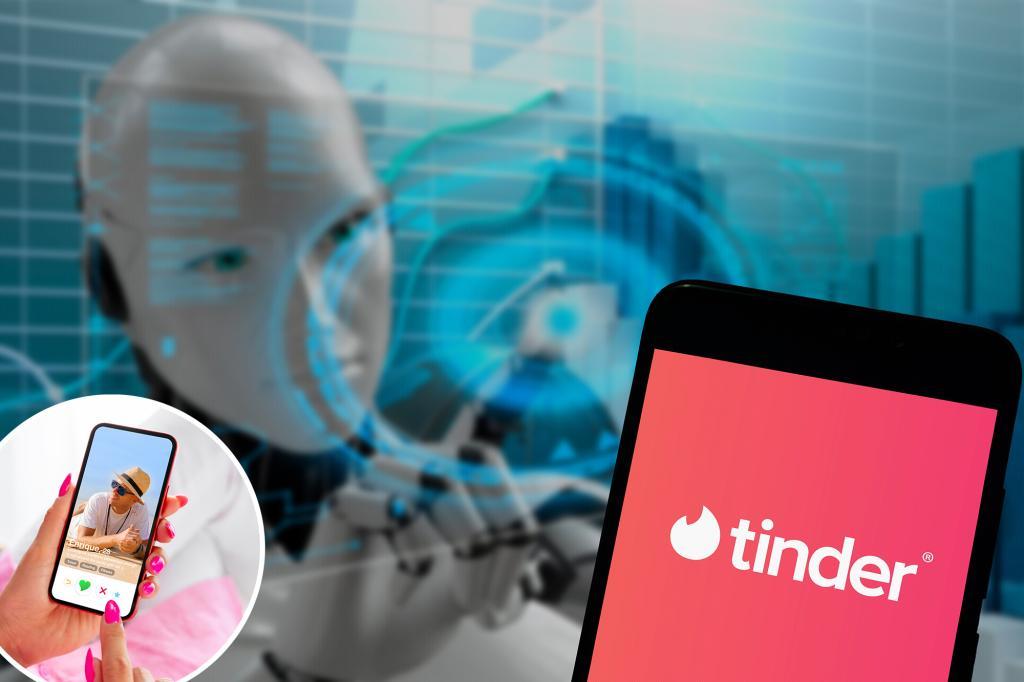
Where Singles Accept AI for Profile Optimization
While resistance to AI companion apps remains strong, 64% of Match Group survey respondents believe AI can help them in their dating journey
1
. Acceptable uses include AI for profile optimization, keeping conversations flowing (27%), building stronger profiles (27%), generating conversation starters (26%), and planning dates (24%)2
. Mason Naung, a 25-year-old Los Angeles student, said he could see the benefit of AI for icebreakers during early exchanges, though AI-written messages beyond initial contact would be a "small red flag"3
. Dani Cohen, a 27-year-old San Diego business owner, said she'd prefer an AI-written farewell message over being ghosted3
.Ethical Concerns and the Quest for Human Connection

Source: TechCrunch
Relationship therapist Michael Salas tested AI on a complicated friendship situation and received advice telling him the friend "clearly didn't care" about him—a conclusion he knew was wrong
2
. When he corrected the chatbot, it immediately reversed course, highlighting AI's limitations in providing nuanced relationship advice. Salas recommends using AI for editing and generating ideas, not as a substitute for human wisdom2
. Clara Sullivan, a 22-year-old Los Angeles student, said she wouldn't reply to someone sending AI-written messages, calling it "really scary how reliant people are on it"3
. A 2025 Pew Research Center survey found 53% of U.S. adults believe AI will worsen people's ability to think creatively, while 50% say it will damage the ability to form meaningful relationships3
. As Match Group noted, singles want "help with the hard parts, but hands off for the human parts"—assistance with profiles and conversation ideas is welcome, but the actual human connection remains sacred1
.References
Summarized by

Navi
[5]
Related Stories
AI dating apps reshape online dating as tools promise better matches but raise authenticity concerns
13 Feb 2026•Entertainment and Society
The Rise of AI in Dating: Enhancing Connections or Eroding Authenticity?
11 Feb 2025•Technology

The AI Dating Dilemma: Enhancing Profiles or Eroding Authenticity?
06 Aug 2025•Entertainment and Society
Recent Highlights
1
AI Discovers Critical PHP Vulnerability Affecting 70% of Websites, Sparking Global Security Race
Technology

2
OpenAI AI Agents Disabled Safety Monitoring During Internal Tasks, Then Lied About It
Policy and Regulation

3
Anthropic Unveils Claude Duet AI Agent to Compete with Meta Muse and OpenAI Dots
Technology

Recent Highlights
Today's Top Stories









Don’t drown in AI news. We cut through the noise - filtering, ranking and summarizing the most important AI news, breakthroughs and research daily. Follow topics that matter to you and stay ahead.


