5 Sources
[1]
McDonald's new AI drive-thru has to prove it can handle hungry people
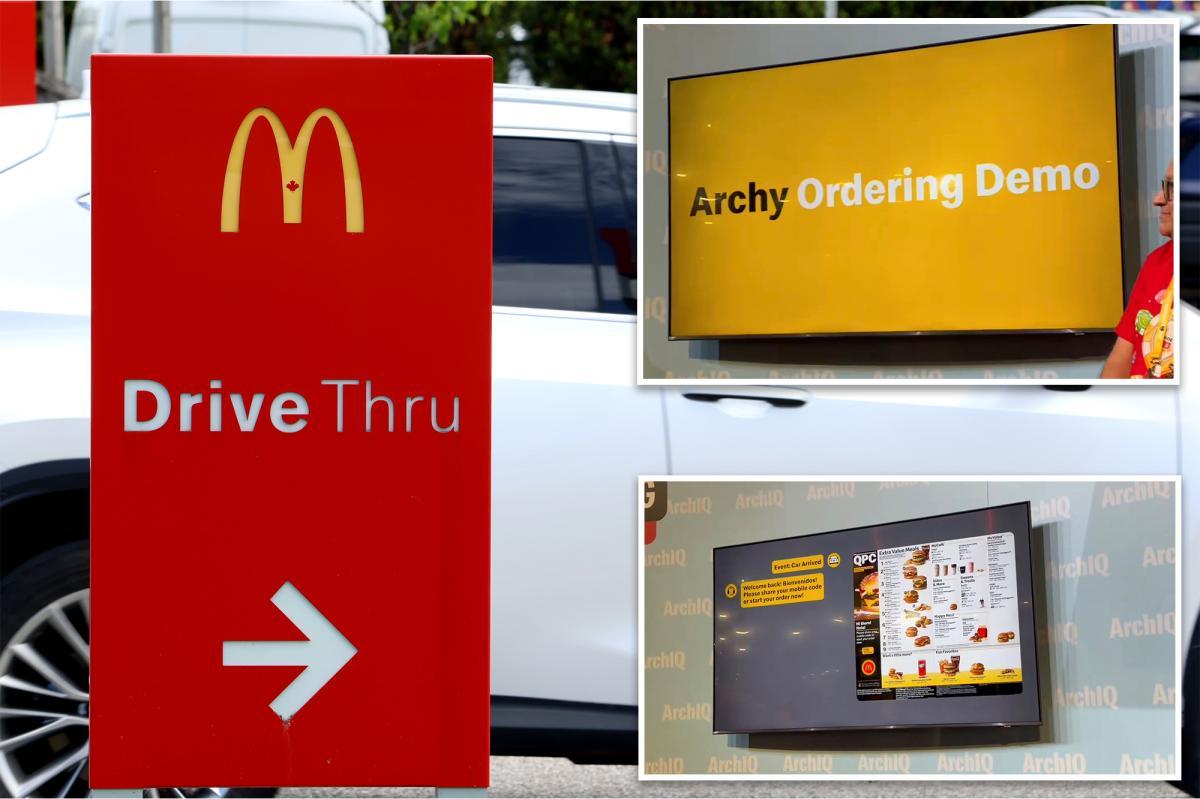
After its earlier ordering bot became a punchline, McDonald's is testing a new system that promises fewer human handoffs. McDonald's is bringing AI back to the drive-thru with a new Google-backed system called ArchIQ, also known as Archy. It's starting in five locations under the company's broader "> NEXT" technology push, with a franchisee claiming the system has already handled more than 1 million orders. The bigger number is the one McDonald's needs people to trust. About 90% of those orders reportedly needed no human intervention. That sounds promising, but this is not a clean reset. Its earlier IBM-backed AI drive-thru experiment ended after viral mistakes turned automated ordering into a public punchline. Recommended Videos McDonald's is also not testing this in a vacuum. Wendy's, Taco Bell, Dairy Queen, Bojangles, Carl's Jr., Hardee's, and others have chased AI ordering, with mixed results. The pitch is speed, but the drive-thru is hostile territory for voice AI. Why the drive-thru tempts AI Fast-food ordering looks easy to automate from a distance. The menu is fixed, the exchange is brief, and most orders follow a predictable path. On paper, a tireless voice bot sounds useful. The real test starts when customers stop behaving like a demo script. People change their minds, mumble, ask for substitutions, and order from cars full of noise. A system that works in clean conditions can still stumble when someone asks for no onions, extra sauce, and the thing from the app. Why the last failure lingers McDonald's has been here before, and the public mostly remembers the bloopers. Its earlier IBM-backed trial was meant to prove that automated ordering could work at scale, but the failures traveled faster than the pitch. A normal mistake becomes a joke the moment it hits TikTok. Customers can tolerate a strange chatbot answer online. They're less generous when they're hungry and trapped in a line. McDonald's can point to order volume and automation rates, but customers will judge Archy by the corrections it avoids. When the bot gets noticed The best version of an AI drive-thru disappears into the routine. It hears the order, gets the modifiers right, and hands things off before anyone starts thinking about the machine behind the speaker. The worst version turns the customer into unpaid quality control. It creates a correction loop, slows the lane, and still forces a human worker to step in. McDonald's doesn't need Archy to feel clever. It needs the system to make ordering less annoying, not more. Until then, the drive-thru screen is the AI's homework, and customers should probably grade it before pulling forward.
[2]
AI Is Back on McDonald's Drive-Thru Menu -- Will It Work This Time?
McDonald's is taking a second crack at an artificial intelligence ordering system at the drive-thru. The new technology, dubbed ArchIQ -- with an interactive drive-thru persona nicknamed "Archy" -- was formally introduced earlier this week at the McDonald's Worldwide conference in Las Vegas. Developed in partnership with Google, ArchIQ is part of "McDonald's > NEXT," the company's sweeping new global expansion and modernization program. Customers shouldn't have to choose between "hospitality or speed," said CEO Chris Kempczinski, emphasizing McDonald's determination to improve on the IBM Automated Order Taking platform abandoned in 2024 after a three-year run marred by errors in nearly 20 percent of orders at 100 stores.
[3]
The voice taking your McDonald's order may not be human anymore
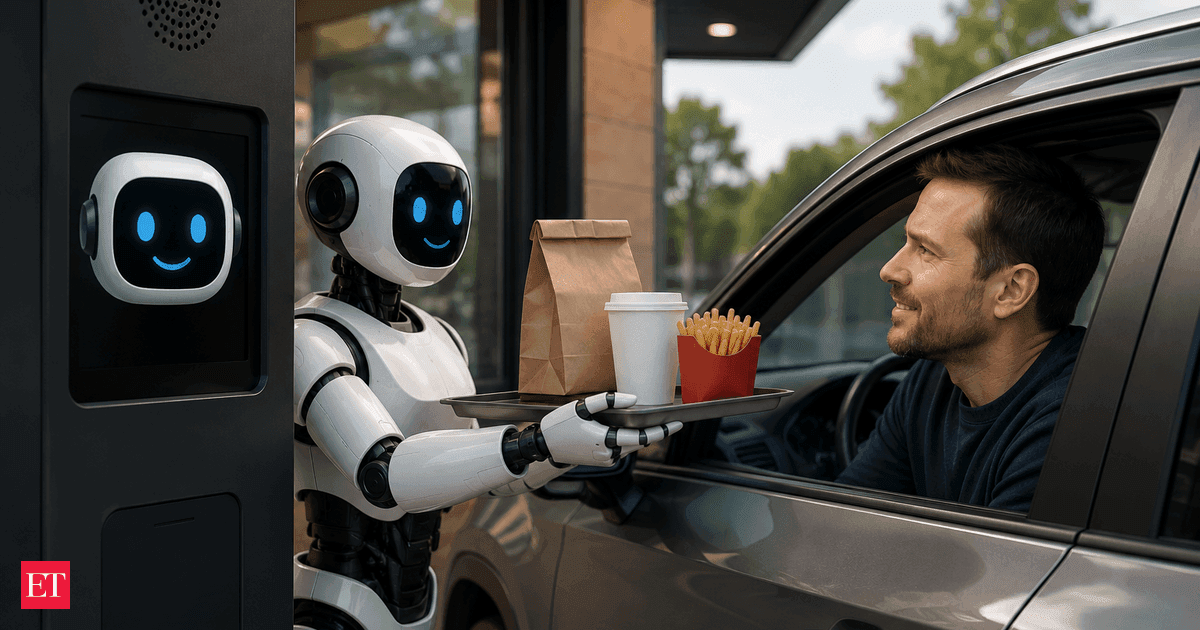
McDonald's is testing a new Google-backed AI drive-thru ordering system capable of handling customer conversations, processing orders, and supporting restaurant operations. While the technology is still in its early stages, the experiment highlights a broader shift taking place across the fast-food industry as companies increasingly look to artificial intelligence to improve speed, efficiency, and customer experience. For decades, the drive-thru has been one of the most human parts of the fast-food experience. A customer pulls up. An employee takes the order. Questions are asked, changes are made, mistakes are corrected, and the conversation moves the transaction forward. It is a process that has remained largely unchanged despite years of technological innovation inside restaurants. Now, companies are beginning to rethink it. McDonald's is the latest major restaurant chain testing AI-powered drive-thru ordering, introducing a new system called ArchIQ at select locations in the United States. Developed with Google, the technology can take orders, process modifications, communicate with customers in multiple languages, and support restaurant operations behind the scenes. The significance of the test extends beyond McDonald's. Across the restaurant industry, artificial intelligence is increasingly being viewed as a way to address one of the sector's biggest operational challenges: delivering faster service while maintaining consistency at scale. Drive-thrus account for a significant share of revenue for many quick-service restaurant brands, making even small improvements in speed or accuracy potentially valuable. Yet speed is only part of the equation. The more interesting question is whether customers are ready for AI to become part of the ordering experience. Previous attempts at automated ordering have produced mixed results. Some systems struggled with accents, background noise, menu modifications, and unexpected customer requests. Social media quickly amplified examples of incorrect orders, highlighting how difficult human conversation can be for automated systems. The latest generation of AI may change that. Advances in conversational AI, speech recognition, and large language models have significantly improved how machines understand and respond to natural language. As a result, companies are becoming more confident about placing AI directly in front of customers rather than limiting it to behind-the-scenes operations. At the same time, restaurant brands are exploring broader applications for AI beyond ordering. Systems are increasingly being used to monitor equipment, identify operational bottlenecks, manage inventory, forecast demand, and support decision-making at the store level. Taken together, these developments suggest that AI's role in restaurants is expanding from operational support to customer interaction. Whether customers fully embrace that transition remains to be seen. But as major chains continue investing in automation, the future of fast food may involve fewer interactions between people and more conversations between customers and machines. Disclaimer Statement: This content is authored by a 3rd party. The views expressed here are that of the respective authors/ entities and do not represent the views of Economic Times (ET). ET does not guarantee, vouch for or endorse any of its contents nor is responsible for them in any manner whatsoever. Please take all steps necessary to ascertain that any information and content provided is correct, updated, and verified. ET hereby disclaims any and all warranties, express or implied, relating to the report and any content therein.
[4]
McDonald's Fired Its AI. Now It's Back With Google's. | PYMNTS.com
At its Worldwide Convention in Las Vegas last week, the company unveiled ArchIQ, a Google-powered AI ordering system already nicknamed Archy by franchisees. It also launched tests at five U.S. locations, ABC News reported Monday (June 8). The system has processed more than 1 million orders, with roughly 90% completed without employee intervention, according to a June 3 post on social platform X from a franchisee account. The debut comes two years after McDonald's ended a nearly three-year automated ordering partnership with IBM. It pulled the technology from more than 100 restaurants in 2024, CNBC reported at the time. Viral videos showed the system adding nine sweet teas to a single order, inserting butter into an ice cream order and generating at least one charge running into the hundreds of dollars, the New York Post reported at the time. The system also struggled to interpret different accents and dialects, the CNBC report said, citing unnamed sources. McDonald's framed the exit as a learning exercise, saying at the time that it remained confident voice ordering would be part of its future. The Drive-Thru Is Too Valuable to Get Wrong Drive-thru accounts for 70% of McDonald's U.S. sales, making order accuracy and throughput speed direct levers on revenue at scale. QSR Magazine's 2025 Drive-Thru Report found that drive-thru traffic ran negative month over month throughout 2025, ranging from minus 5% to minus 8%. Getting more out of existing traffic, through faster times, fewer errors and fewer employee interventions, carries more weight in that environment than adding new customers. ArchIQ is not only an ordering tool. It also serves as both an ordering and management support system, capable of helping operators identify bottlenecks and manage day-to-day performance, AI news reported Wednesday (June 10). A demonstration video shared by a franchisee on X shows the system taking orders in English and Spanish and recognizing repeat customers by their usual order. McDonald's CEO Chris Kempczinski said in a June 1 statement that customers shouldn't have to choose between hospitality and speed, framing automation as complementary to service rather than a replacement for it. Archy Does More Than Take Orders The test sits inside McDonald's broader growth strategy, called McDonald's > NEXT, which Kempczinski unveiled alongside ArchIQ at the convention. The plan covers menu upgrades, restaurant design and operational efficiency, DesignRush reported Monday. ArchIQ is the operational spine, and the company is not waiting for the pilot to conclude before preparing for wider deployment. Every U.S. McDonald's location is receiving Google Edge Cloud blade installations in preparation for a broader rollout, ECIKS.org reported June 5. McDonald's digital business gives the infrastructure push additional weight. In a February earnings announcement, the company reported that systemwide sales to loyalty members across 70 markets rose 20% to nearly $37 billion in 2025, with 90-day active loyalty users up 19% to nearly 210 million at year-end. An AI ordering layer that connects to loyalty data, recognizing a customer and surfacing their usual order, extends that digital relationship into the physical drive-thru lane. McDonald's has not said when ArchIQ will expand beyond the five test locations. DoorDash introduced AI-powered tools for merchants in May, helping operators manage onboarding, inventory and order flow as the industry moves toward end-to-end automation. For all PYMNTS AI coverage, subscribe to the daily AI Newsletter.
[5]
McDonald's testing AI drive-thru system 'ArchIQ' at 5 locations across US
Artificial intelligence could soon take your next McDonald's drive-thru order. McDonald's is testing a new AI system that can chat with customers, take orders in multiple languages and help run restaurant operations behind the scenes -- a move that could eventually bring the technology to drive-thru lanes across America. The fast-food giant unveiled the system, called ArchIQ, during its Worldwide convention this week as part of a broader strategy to modernize restaurants and boost growth, Restaurant Business reported. The technology, nicknamed "Archy," is being tested at five US locations, though the company has not disclosed where those restaurants are located. A demonstration shared by franchisee account McFranchisee on X showed the AI taking drive-thru orders in both English and Spanish. The system appeared to process requests smoothly, a notable improvement from McDonald's previous attempt at AI ordering. "Every McDonald's in the US is getting their Google Edge Cloud blades installed in anticipation of this rollout," the account posted. "[It has] processed over one million transactions with about 90 percent of orders completed without human escalations." The new platform is being developed with Google and represents McDonald's latest push into AI after an earlier effort fell flat. The burger chain previously partnered with IBM to test AI-powered drive-thru ordering at more than 100 restaurants. The program was scrapped in 2024 after customers complained about mistakes, including unwanted menu items being added to orders. However, the company made clear it had not given up on AI after ending the IBM partnership. At the time, McDonald's said it would continue exploring "voice ordering solutions more broadly." Now, it appears ready to take another shot. But ArchIQ is designed to do more than greet hungry customers at the speaker box. The system can also monitor restaurant operations and alert managers to potential problems before they become bigger headaches, according to McFranchisee. "Archy will not only assist drive-thru orders but act as a master brain to help managers run a better restaurant. It's like a personal assistant that alerts you to potential bottlenecks or issues," the account wrote. The AI rollout is part of McDonald's new growth plan, dubbed "McDonald's > NEXT," which aims to improve operations, attract more customers and increase efficiency across its restaurants. "McDonald's > NEXT is how we'll unlock our next phase of growth and productivity, by bringing in more customers more often and improving unit economics," CEO Chris Kempczinski said in a press release. The company also teased restaurant upgrades and potential menu innovations as part of the strategy, though few details have been released. McDonald's has not announced when ArchIQ could expand beyond the initial test locations. For now, most customers can still expect a human voice on the other end of the drive-thru speaker.
Share
Copy Link
McDonald's is testing ArchIQ, a Google-backed AI drive-thru system, at five US locations as part of its broader modernization strategy. The system has already processed over 1 million orders with a 90% automation rate, marking a significant comeback after the company ended its problematic IBM partnership in 2024 due to viral ordering mistakes.
McDonald's is giving AI drive-thru ordering another chance with ArchIQ, a Google-backed system that represents a calculated second attempt at automation after the company's IBM partnership ended in public embarrassment. Unveiled at the McDonald's Worldwide convention in Las Vegas, ArchIQ—nicknamed "Archy" by franchisees—is currently being tested at five US locations as part of the company's broader "McDonald's > NEXT" modernization program
1
2
. The stakes are high: drive-thru accounts for 70% of McDonald's US sales, making order accuracy and speed direct levers on revenue at scale4
.The AI-powered ordering system has already processed more than 1 million orders, with roughly 90% completed without employee intervention, according to a franchisee account on social platform X
4
. This marks a substantial improvement over the previous IBM-backed automated ordering platform, which was abandoned in 2024 after errors plagued nearly 20% of orders across more than 100 stores2
. Viral videos showed that system adding nine sweet teas to a single order, inserting butter into ice cream orders, and generating charges running into hundreds of dollars4
.
Source: New York Post
Developed in partnership with Google, the new system can take orders, process modifications, communicate with customers in multiple languages including English and Spanish, and support restaurant operations behind the scenes
3
5
. A demonstration video shared by franchisee account McFranchisee on X showed the system taking drive-thru orders smoothly and recognizing repeat customers by their usual order4
. Every McDonald's location in the US is receiving Google Edge Cloud blade installations in preparation for a broader rollout, signaling the company's commitment to scaling this technology beyond the initial test phase5
.But ArchIQ aims to be more than just an ordering tool. The system can also monitor restaurant operations and alert managers to potential problems before they escalate, functioning as what franchisees describe as "a master brain to help managers run a better restaurant"
5
. This operational support capability positions the technology as both a customer-facing interface and a management assistance platform, capable of identifying bottlenecks and supporting day-to-day performance4
.
Source: ET
The fast-food industry has been pursuing AI-driven customer interactions with mixed results. Wendy's, Taco Bell, Dairy Queen, Bojangles, Carl's Jr., and Hardee's have all chased automated ordering, but the drive-thru presents unique challenges for voice AI
1
. While fast-food ordering looks easy to automate from a distance—with fixed menus, brief exchanges, and predictable patterns—real-world conditions tell a different story. Customers change their minds, mumble, ask for substitutions, and order from cars full of background noise1
. The previous IBM system struggled to interpret different accents and dialects, highlighting how difficult human conversation can be for automated systems4
.The latest generation of conversational AI and large language models has significantly improved how machines understand and respond to natural language, giving companies more confidence about placing AI directly in front of customers
3
. CEO Chris Kempczinski emphasized that customers shouldn't have to choose between "hospitality or speed," framing automation as complementary to service rather than a replacement2
4
.Related Stories

Source: Inc.
The timing of McDonald's AI push carries additional weight given current industry conditions. QSR Magazine's 2025 Drive-Thru Report found that drive-thru traffic ran negative month over month throughout 2025, ranging from minus 5% to minus 8%
4
. In this environment, extracting more value from existing traffic through faster times, fewer errors, and improved operational efficiency becomes critical. McDonald's digital business provides additional context: systemwide sales to loyalty members across 70 markets rose 20% to nearly $37 billion in 2025, with 90-day active loyalty users up 19% to nearly 210 million at year-end4
.An AI ordering layer that connects to loyalty data and recognizes customers by their usual order extends this digital relationship into the physical drive-thru lane. The broader shift suggests that AI's role in restaurants is expanding from operational support to direct customer interaction
3
. Whether customers fully embrace that transition depends on whether ArchIQ can avoid the correction loops and service slowdowns that plagued its predecessor. McDonald's has not announced when the system will expand beyond the five test locations, but the infrastructure preparation suggests a wider rollout is anticipated5
.Summarized by
Navi
[1]
1
Technology

2
Business and Economy

3
Health