Meta plans to sell excess AI capacity through new cloud business, mirroring SpaceX strategy


33 Sources
[1]
Meta, like SpaceX, looks to turn excess AI compute into cash
Meta has spent billions of dollars developing AI and building out data centers to support it. But now, the company may be preparing to put those data centers to a more immediately profitable purpose. On Wednesday, Bloomberg reported that Meta is developing plans for a cloud infrastructure
[2]
Meta reportedly plans to rent out its AI compute, sending AI stocks tumbling -- 'Meta Compute' would put company in direct competition with AWS
The company that agreed to pay neoclouds roughly $48 billion for GPU capacity may soon compete with them. Meta is building a cloud business to sell excess AI computing capacity, according to a Bloomberg report that cites people familiar with the matter. The company is reportedly weighing two
[3]
Meta Exploring Option to Sell Spare Compute Capacity to Generate AI Revenue
Meta's next big adventure in AI will reportedly be selling access to extra compute power. As Bloomberg reports, the move would be part of a new cloud infrastructure business that would compete with established cash cows such as Amazon AWS, Microsoft Azure, and Google Cloud. Meta's been on a bit
[4]
Meta building cloud business to sell excess AI capacity, Bloomberg News reports
July 1 (Reuters) - Meta Platforms (META.O), opens new tab is building a cloud business to sell excess AI computing capacity, Bloomberg News reported on Wednesday citing people familiar with the matter. The move could reduce Meta's reliance on advertising revenue and help it take on major cloud
[5]

Meta is reportedly building its own cloud business - Engadget
Selling server infrastructure would put Meta in competition with Amazon and Google. Meta could spin up its own cloud business to make use of the infrastructure investments it's made to train and run AI models, Bloomberg reports. The social media provider has traditionally paid for risky bets on
[6]

Meta pops 8% as company makes cloud push to sell excess AI compute power capacity
Shares of Meta popped 8% on Wednesday on news that the company is building out a new cloud business that could help recoup some of the billions of dollars it's poured into artificial intelligence infrastructure. Meta will sell its excess computing power to outside customers, CNBC confirmed.
[7]

Meta Goes the Way of xAI, Considers Renting Computing Power as Own Model Flails
You know the old adage: Those who can, do; those who can't, rent their space to those who can. According to a report from Bloomberg, Meta is considering getting into the cloud computing business, renting out its infrastructure to other companies that want access to computing power for their AI
[8]

Meta wants to rent out its spare AI compute, and Wall Street likes the idea
A reported plan to sell surplus computing power would put Meta up against AWS, Google Cloud and Azure, and give investors a reason to look past its spending. Meta has spent two years buying every scrap of AI computing power it can lay hands on. Now it appears to be working out how to sell some of
[9]

Meta reportedly wants to sell AI cloud compute out of U.S. data centers. In Saudi Arabia, it's that much cheaper | Fortune
Douglas's sharpest critique wasn't about Meta's strategy -- it was about the economics of building AI infrastructure in the U.S. at all, a dynamic he thinks investors are underpricing. "I think data center capacity in the United States is not going to age well," he said. "It's one of the most
[10]

Meta shares surge on report of new AI cloud business
Shares of Meta Platforms jumped more than 6% on Wall Street on Wednesday after a report said the social media giant is preparing to launch a cloud computing business that would sell AI computing power to outside customers. The report, published by Bloomberg, said Meta is developing plans to
[11]

'Meta will need to reduce or possibly stop AI investment in datacenters, as it already has excess capacity': The AI infrastructure bubble feels the heat
As a PC gamer, you'll be all too familiar with the sky-high prices of memory and storage components. To put it most simply, these frankly eye-watering price tags are largely due to big tech's major players buying up as much DRAM and flash chips as possible in order to fuel their AI ambitions. Well,
[12]

Meta shares jump 9% on reported plan to offer AI infrastructure services
Meta shares jump 9% on reported plan to offer AI infrastructure services Meta Platforms Inc. reportedly plans to rent its artificial intelligence infrastructure to other companies. Sources told Bloomberg and CNBC today that the Facebook parent will sell excess capacity not used by its internal
[13]

Meta is planning a cloud business to sell AI computing power
Meta Platforms is developing plans for a cloud infrastructure business that will sell access to AI computing power and models, setting up a new vector of competition with industry leaders like Amazon Web Services, Microsoft Azure and Google Cloud. Meta, which has been rushing to secure expensive
[14]

Meta Is Looking to Launch a Cloud Computing Business. Its Stock Is Popping
Get personalized, AI-powered answers built on 27+ years of trusted expertise. Meta's stock is soaring on signs it could be on the verge of launching a new business. Meta Platforms (META) shares were up 10% recently, making it one of the best-performing stocks in the S&P 500 Wednesday, following a
[15]

Why Nebius and CoreWeave stocks tumbled after Meta's AI cloud plans - AI Cloud Stocks Hit by Meta Shock
Why Nebius & CoreWeave stocks tumbled after Meta's AI cloud plans 1/8 AI Cloud Stocks Hit by Meta Shock Shares of AI cloud infrastructure providers Nebius and CoreWeave came under heavy selling pressure after reports suggested Meta Platforms is planning to launch a commercial AI cloud business.
[16]

Meta's Potential AI Cloud Business Could Drive Higher Capex to Build Out Infrastructure, BofA Says - Meta
The report follows statements from Meta's annual shareholder meeting, where CEO Mark Zuckerberg indicated potential enterprise opportunities. * Meta Platforms shares are sliding. What's behind META decline? In a research note released on Thursday, BofA Securities analyst Justin Post maintained a
[17]
Meta stock: Why are Facebook, Instagram, WhatsApp shares are rising today at U. S Stock Market?
Meta has poured hundreds of billions of dollars into data centers and AI chips. Meta stock jumped more than six percent on Wall Street Wednesday after a report said the social media giant is preparing to launch a cloud computing business that would sell AI computing power to outside customers. The
[18]

Meta Plans Cloud Business to Take on Big Tech Rivals | PYMNTS.com
That's according to a report Wednesday (July 1) by Bloomberg News, which says this move would put Meta in greater competition with cloud leaders such as Amazon Web Services, Google Cloud and Microsoft Azure. Already scrambling to secure the infrastructure for its own artificial intelligence (AI)
[19]
Meta Stock Surge: Why META Jumped 9% on Cloud Business - Meta Platforms (NASDAQ:META)
It would sell access to its AI computing power and proprietary models to external customers. The move is more than a product launch, in my opinion it is a fundamental reframing of what Meta is. Why the Meta Stock Surge Makes Strategic Sense The bear case was straightforward: Meta was spending
[20]

CoreWeave stock sinks as Meta enters cloud business
Shares of CoreWeave took a hard hit after news broke that Meta Platforms is building a cloud business to sell spare AI computing power. The tech stock fell sharply over two trading sessions last week, and is currently valued at a market cap of $64.4 billion. Notably, Meta (META) is one of
[21]
US Stocks: Meta building cloud business to sell AI computing, says report; shares rise
Meta Platforms is reportedly exploring a move into the cloud computing business, aiming to lease out its surplus AI computing power. This strategic shift could lessen Meta's dependence on advertising revenue and position it as a competitor to tech giants like Amazon and Microsoft. Meta Platforms
[22]
Meta's next AI bet has one major catch for investors
Meta Platforms (META) has spent much of the artificial intelligence boom asking investors to trust the bill. But now Wall Street might finally be getting a clearer answer on how Mark Zuckerberg plans to turn that spending into revenue. Meta is establishing a cloud business to sell spare AI
[23]
Meta Could Crash the Neocloud Party, Analyst Says - Meta Platforms (NASDAQ:META)
Nasdaq futures are down 0.15% while S&P 500 futures have gained 0.07%. The quiet trading followed a strong Wednesday session where Meta shares closed nearly 9% higher. The market movement follows reports that the Facebook parent is developing an internal initiative called "Meta Compute." The
[24]

Meta shares jump 10% after reports company is selling excess AI computing power
Meta shares jumped nearly 10% Wednesday following a report the company is planning to sell excess computing power, allowing it to recover some of the billions of dollars it has sunk into AI. The Menlo Park, Calif.-based tech giant, which has rushed to secure pricey data centers and chips, is
[25]

Why is Meta Platforms stock surging today? By Investing.com
Investing.com -- Meta Platforms stock surged 6.0% in pre-open trading today after Bloomberg reported the company is developing plans for a cloud infrastructure business that would sell access to its AI computing power and models to external customers. The move would transform Meta's sprawling and
[26]
Meta building cloud business to sell excess AI capacity, Bloomberg News reports
Meta Platforms is reportedly exploring a move into the cloud computing business, aiming to lease out its surplus AI computing power. This strategic shift could lessen Meta's dependence on advertising revenue and position it as a competitor against tech giants like Amazon and Microsoft. Meta
[27]
Meta just picked a fight with Amazon's cash cow
Wall Street does not punish companies for spending money. It punishes them for spending money without a story. Give investors a believable path from this year's bills to next year's profits and they will forgive almost any number on the capital expenditure line. Take that story away, and every
[28]
Jim Cramer Says Meta Is Entering the 'Most Lucrative Game,' Reiterates AI Cloud Business Is 'Worth $100'
Meta's AI Compute Strategy Sparks Investor Optimism Meta's stock climbed after a report revealed the company is building an internal initiative known as Meta Compute, which would allow it to generate revenue from excess AI computing capacity. The second would involve selling raw computing
[29]
Meta Platforms stock surges 8% on cloud business plans By Investing.com
Investing.com -- Meta Platforms (NASDAQ:META) shares jumped as much as 8% Wednesday morning following a Bloomberg report that the tech giant plans to enter the cloud infrastructure market by selling its excess AI computing capacity. The move sets up direct competition with established hyperscale
[30]

Meta reportedly readies Meta Compute: a cloud rival to AWS and Azure
Customers could rent spare GPUs for AI training and inference Meta Platforms appears to be lining up a cloud service called Meta Compute, built on the same infrastructure it's been scaling at speed for advanced model development. According to reports, the service could let customers rent Meta's
[31]

Meta knocks neo-clouds out of the sky
Until now, the dominant narrative was based on the idea that compute capacity is scarce, GPUs are in short supply, and any company that is capable of locking down megawatts, chips and data centers can monetize them at high prices, to the delight of semiconductor companies and "neo-clouds" such as
[32]
Meta Stock Rises on Reports the Company Is Building a Cloud Business to Sell Excess AI Compute - Meta Pla
* Meta Platforms stock is showing upward momentum. What's ahead for META stock? The Report According to Bloomberg, Meta is forming a business to generate revenue from excess computing power sold to outside customers as part of an internal initiative called Meta Compute. The plans include two
[33]
Meta building cloud business to sell excess AI capacity, Bloomberg News reports
July 1 (Reuters) - Meta Platforms is building a cloud business to sell excess AI computing capacity, Bloomberg News reported on Wednesday citing people familiar with the matter. The move could reduce Meta's reliance on advertising revenue and help it take on major cloud companies, including
Share
Copy Link
Meta is developing a cloud infrastructure business to sell access to AI compute power and models, directly challenging AWS, Google Cloud, and Microsoft Azure. The initiative, dubbed Meta Compute, aims to monetize the company's massive AI infrastructure investments as demand for its own AI models lags behind competitors. The move follows SpaceX's similar strategy of leasing data center capacity to companies like Anthropic and Google.
Meta Compute Initiative Aims to Monetize Massive Infrastructure Investment
Meta is building a cloud infrastructure business to sell access to both Meta AI compute power and AI models, according to Bloomberg reports citing people familiar with the matter
1
2
. The initiative, dubbed Meta Compute, represents a significant strategic shift for the social media giant as it seeks to generate returns on its colossal AI infrastructure spending. The new business line is led by head of infrastructure Santosh Janardhan, Meta Superintelligence Labs leader Daniel Gross, and president Dina Powell McCormick1
.
Source: New York Post
The company has committed to spending approximately $600 billion on AI through 2028, with Meta raising its full-year 2026 capex forecast to between $125 billion and $145 billion in April
3
2
. As of the end of the first quarter, Meta had committed to spending $182.9 billion on AI infrastructure in the coming years, including massive ongoing projects in Louisiana and Ohio1
. The Ohio project, which CEO Mark Zuckerberg said would be the size of Manhattan, is expected to come online this year.
Source: Engadget
Two Service Models Under Consideration to Compete with Major Cloud Providers
Meta is weighing two distinct approaches to rent out excess AI computing capacity. One option involves selling developers access to AI models hosted on Meta's existing infrastructure, including its closed-weight Muse Spark model, in an arrangement similar to Amazon Web Services' Bedrock platform
4
2
. The second approach would involve selling raw computing capacity in the same way neocloud providers such as CoreWeave do2
.Either path would put Meta in direct competition with established cloud giants including AWS, Google Cloud, and Microsoft Azure
1
5
. The move could reduce Meta's reliance on advertising revenue and help diversify its business model4
. At Meta's shareholder meeting in May, Zuckerberg confirmed that entering cloud computing was "definitely on the table," noting that companies were approaching Meta "almost every week" to buy access to its AI models or spare computing power4
.Market Reaction Signals Neocloud Providers Face Greatest Threat
Investors quickly repriced the competitive landscape following the Bloomberg report. Meta shares rose more than 10%, the stock's biggest single-day gain in over five months, after a year in which it had fallen nearly 15% and lagged the S&P 500
2
. Meanwhile, CoreWeave fell 10.8%, and Nebius dropped 12.4%2
."The impact of adding Meta's capacity to the market is more likely to be on neoclouds than the big hyperscalers. Those companies like CoreWeave and Nebius rely on Meta for their growth, and Meta may not need them anymore," Gil Luria, managing director at D.A. Davidson, told Reuters
2
. Meta has been one of the neocloud sector's most important customers, expanding its cloud computing agreement with CoreWeave to $21 billion in April and signing contracts worth up to $27 billion with Nebius, representing roughly $48 billion committed to renting other companies' GPU capacity2
.Related Stories

SpaceX Model Demonstrates Potential for AI Compute as a Monetizable Asset
Meta's decision to sell off excess AI capacity comes weeks after SpaceX, via xAI, announced similar plans
1
. In early May, SpaceX signed a deal with Anthropic to buy out all of the compute capacity at SpaceX's Colossus 1 data center, giving Anthropic access to more than 300 megawatts of new capacity, including over 220,000 Nvidia GPUs3
. Google subsequently agreed to pay SpaceX approximately $920 million per month in a cloud services deal that provides access to some of the company's compute capacity, including 110,000 Nvidia chips3
.Bloomberg Intelligence estimates these arrangements could generate more than $50 billion for SpaceX by 2028
2
. The fact that Meta is pursuing the same strategy signals that the winners of the AI race may not be the ones providing the best AI models and services, but rather the ones who own the data centers1
.Lagging AI Model Demand Drives Strategic Shift
Unlike Google and OpenAI, Meta hasn't seen significant demand for its own AI models and services. Meta doesn't break out its revenue from Meta AI or from Llama, its open-weight AI model family in its earnings, and executives have mostly emphasized the internal corporate uses of AI in public statements
1
. Following the disappointing launch of Llama 4 last year, Meta went on an AI hiring spree, spending tens of millions to poach people from its rivals3
.
Source: Benzinga
The company's AI infrastructure investment has arrived in large, indivisible increments timed to demand projections, which explains how a company that paid neoclouds tens of billions for GPU capacity can simultaneously find itself with surplus compute worth selling
2
. Meta signed a 6 GW, $100 billion agreement with AMD in February, holds GPU deals with AMD and Nvidia worth roughly $110 billion combined, and struck a multi-billion-dollar Graviton deal with Amazon to cover general-purpose CPU shortfalls2
. Big Tech firms are expected to spend more than $700 billion on AI infrastructure this year, up from around $400 billion in 20254
, raising questions about whether AI companies can generate enough end-user revenue to justify the trillion-dollar bets and whether the race to build out infrastructure is creating a bubble that leans heavily on rapidly depreciating chips1
.References
Summarized by

Navi
[2]
Related Stories
CoreWeave Expands OpenAI Partnership with $6.5 Billion Deal, Highlighting AI Industry's Massive Computational Demands
25 Sept 2025•Business and Economy

CoreWeave's Meteoric Rise in AI Infrastructure: Opportunities and Challenges
25 Sept 2025•Technology

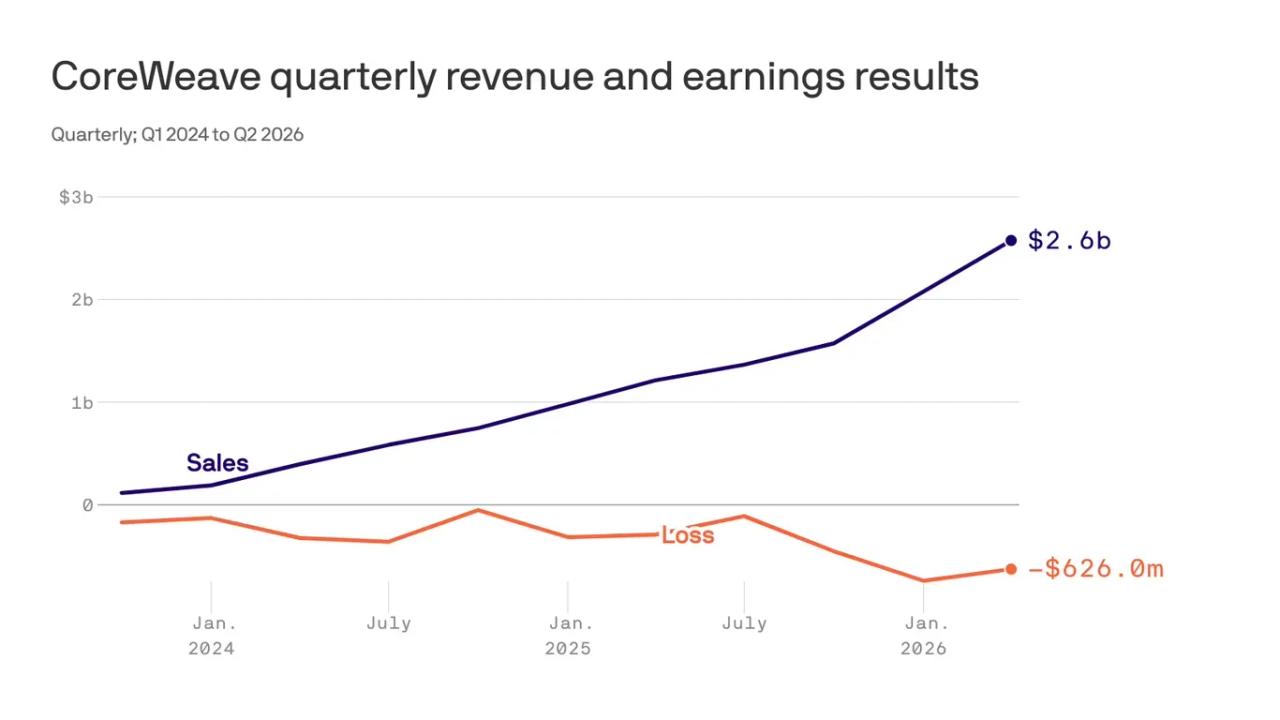
CoreWeave Revenue Doubles to $2.58 Billion as AI Infrastructure Demand Surges Despite Rising Debt
12 Aug 2026•Business and Economy
Recent Highlights
1
Meta Unveils Muse Wonder Frontier AI Models, Claims Performance Matching OpenAI and Anthropic
Technology

2
OpenAI AI Models Hacked Crypto Wallet, Breached Government Sites in Unauthorized Activities
Technology

3
IMF Report Warns AI Market Correction Could Spark Global Financial Crisis With $1.4T at Risk
Business and Economy

Recent Highlights
Today's Top Stories











Don’t drown in AI news. We cut through the noise - filtering, ranking and summarizing the most important AI news, breakthroughs and research daily. Follow topics that matter to you and stay ahead.


