Meta Pocket App Lets Anyone Create AI-Generated Games Through Vibe Coding in Under a Minute


7 Sources
[1]
Meta brings Pocket, an app that lets you vibe-code and share games, to US users
Meta's experimental vibe-coding gaming app, Pocket, is now rolling out to everyone in the U.S. The app, which arrived quietly last month in the test market of Brazil, allows people to generate small, interactive games using AI prompts, which are published to a scrollable feed. Based on Meta's
[2]
I tried Meta's new free vibe coding app to make my own games, and it was surprisingly fun
Follow ZDNET: Add us as a preferred source on Google. ZDNET's key takeaways * The Meta Pocket app lets you vibe code small games and widgets. * You describe what you want and the app does the rest. * Creations only take about a minute to appear. Meta just made it incredibly easy to vibe-code
[3]
Meta's New Vibe Coding App Helps You Make Tiny, AI-Generated Minigames
A new basic vibe coding app from Meta, designed to help you use its AI tools to make small, interactive minigames, is now available in the US. Meta Pocket first launched in July for a brief testing period in Brazil, but it's now available to anyone in the US to make, play, and share short
[4]
Meta's app for creating generative AI minigames is now available in the US - Engadget
It's called Pocket and is described as a "platform for making and sharing gizmos." Meta's little vibe-coding app Pocket has now arrived in the US after a brief testing phase in Brazil. The app lets people generate minigames, called gizmos, via prompts. The games get published to a scrollable feed,
[5]

I made my own video games with Meta's new free AI vibe-coding app -- and I didn't expect to have this much fun
Creating playable distractions with simple (and complex) prompts Before I switched to majoring in Communications, I dreamed of entering the world of video game development by picking up a college degree in Computer Science. That initial dream of mine quickly turned into something I know I wasn't
[6]

U.S. users can now vibe-code and share mini-games with Meta's Pocket app
Pocket lets almost anyone turn a game idea into something playable and share it with friends Vibe-coded games and apps have already flooded Android and iOS storefronts, creating plenty of frustration among users trying to sort through them. Meta is taking a different route with Pocket, its
[7]

Meta's new social media app swaps photos and reels for your own AI-generated video games
While everyone was debating the new Instagram logo, Meta quietly dropped an entirely new social media app called Pocket and it leans even harder into AI. Where Instagram has posts and reels, Pocket delivers a feed of 'gizmos' - AI-generated mini games and digital toys that users can generate and
Share
Copy Link
Meta launched Pocket, a vibe coding app that enables users to create AI-generated games called gizmos using simple text prompts. After testing in Brazil, the app is now available to all US users on iOS and Android, letting non-coders build interactive experiences in about 59 seconds.
Meta Pocket App Brings Vibe Coding to US Users
Meta has officially rolled out its experimental vibe coding app, Pocket, to all users in the United States after a quiet July testing phase in Brazil
1
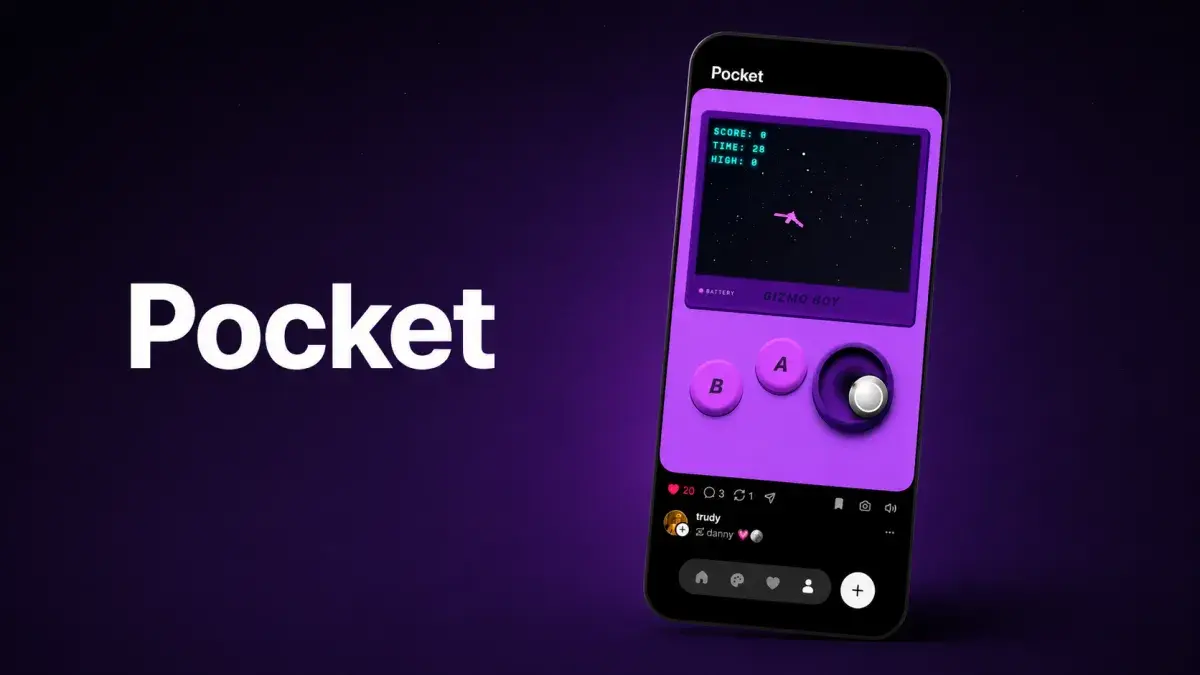
. The Meta Pocket app enables anyone to create AI-generated games and interactive experiences called gizmos through simple text prompts, eliminating the need for traditional coding knowledge. Users describe what they want in plain language to Meta AI, and the app generates playable creations in approximately 59 seconds2
.
Source: TechCrunch
The app represents Meta's latest push to mainstream AI-powered gaming app development, built on the company's acquisition of the Gizmo team earlier this year
1
. These gizmos respond to touch and phone tilt, play sound effects, incorporate music clips, and can access photos from camera rolls or use the device camera3
. Available as a free download on iOS and Android, Pocket transforms non-coders into game creators through accessible AI-assisted game development4
.How Vibe Coding Creates Interactive Games Using AI Prompts
The vibe coding process in Pocket is remarkably straightforward. Users input prompts ranging from vague concepts to highly specific descriptions, and the app's AI handles the technical execution. One tester requested "a game where you have to bake cookies for increasingly angry customers" and received a fully playable game called Sweet Rush Bakery within 59 seconds
2
. The game featured customers placing orders, a mixing bowl, an oven, and escalating difficulty as customer patience decreased.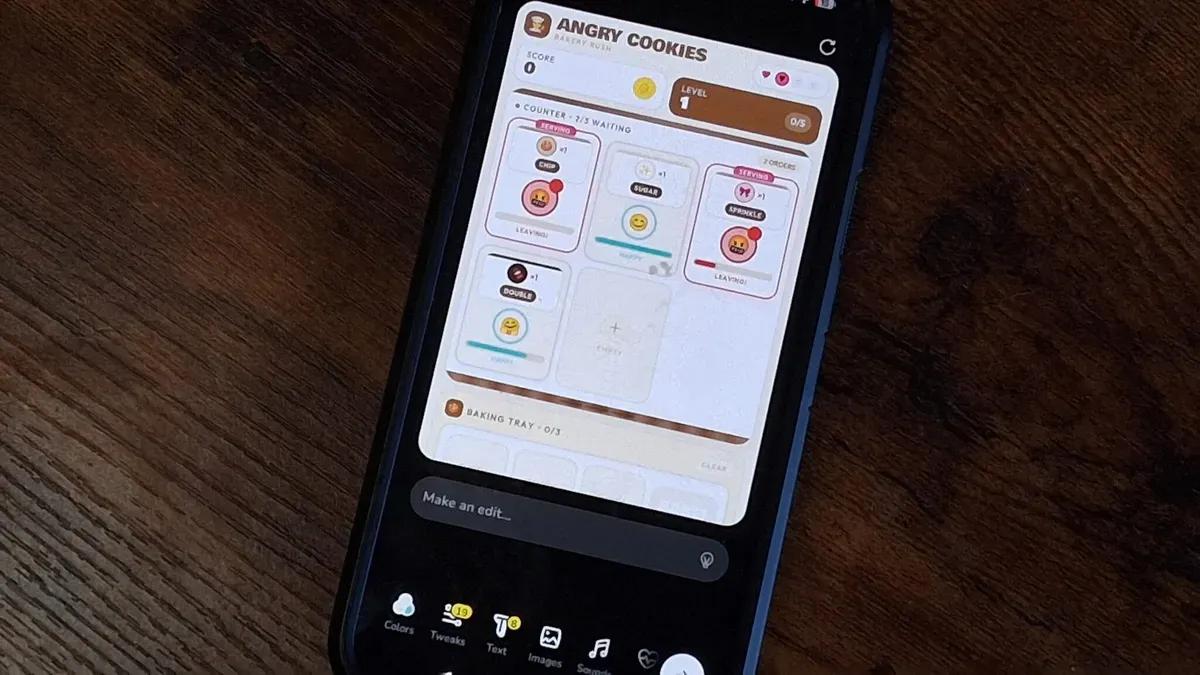
Source: ZDNet
Generative AI minigames created through Pocket leverage smartphone capabilities including touchscreen interaction, tilt sensors, audio integration, and camera access
3
. Users have successfully created diverse interactive experiences: retro driving games dodging traffic, virtual bubble wrap, music beat soundboards, marble-balancing tilt games, and even meditative rock-skipping experiences with calming music and affirmations2
. Another user generated a medieval fantasy game where players slash unicorns, a Bust-A-Move-style bubble shooter, and a cloud-jumping game with different trampoline types—all through simple text descriptions5
.Social Sharing and Remixing Transforms Game Creation
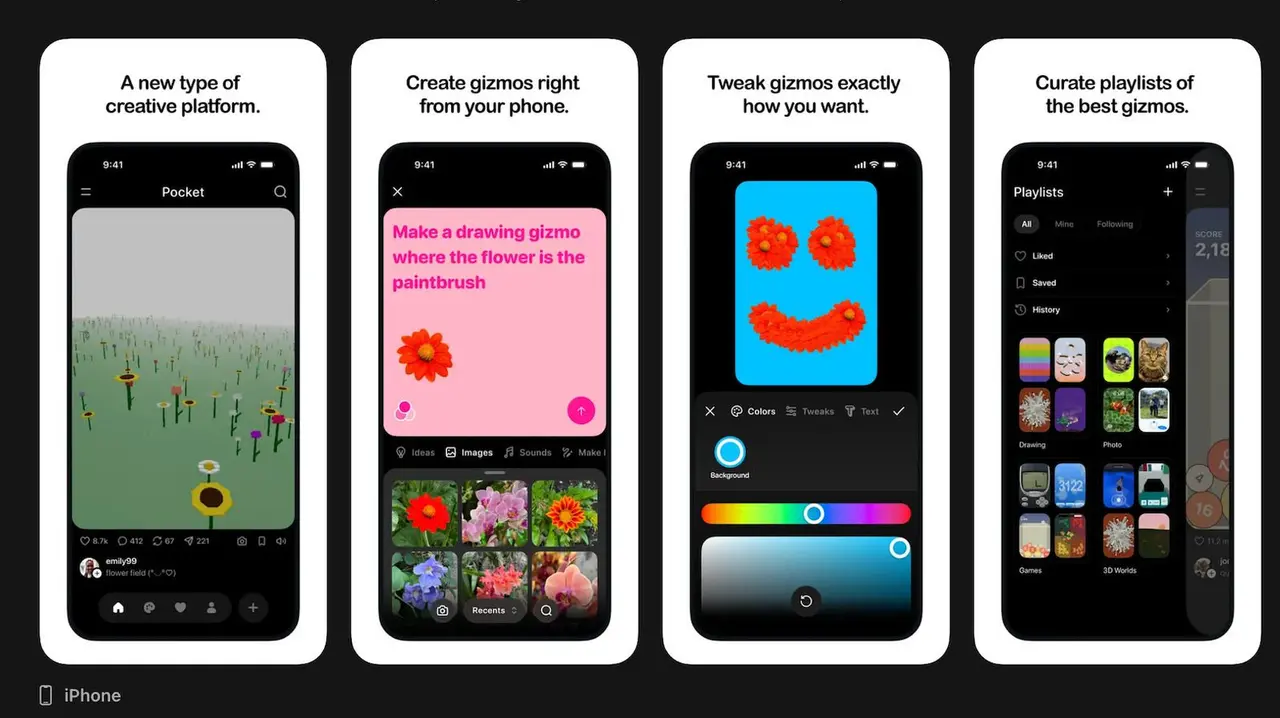
Pocket extends beyond individual game creation through its social feed functionality. Users can publish their gizmos to scrollable feeds where others discover, save, repost, or remix creations into entirely new interactive experiences
1
. The remix feature allows users to modify existing games—changing difficulty levels, swapping visual elements like photos, or adding new mechanics2
.
Source: Engadget
The discovery feed presents curated playlists and user-generated content, creating an interactive social experience distinct from passive content consumption
2
. Users report spending extended periods—45 minutes to over an hour—browsing and playing others' creations, from shoe charm customizers to virtual jewelry try-ons and calming lake experiences5
. All creations save automatically to user profiles, building personal portfolios of interactive experiences2
.Related Stories

Meta's Accelerated App Development Strategy
Pocket joins a growing portfolio of standalone apps Meta has rapidly deployed in recent months. CEO Mark Zuckerberg attributes this accelerated output directly to AI-enabled software development, which allows faster testing and shipping of new concepts
1
. During July's earnings call, Zuckerberg stated, "Earlier this year, we shipped Instagram Instants. We also just launched Forum, a stand-alone Groups app, and Seller, a stand-alone Marketplace app. I expect it to become a lot easier to ship new apps"1
.This strategy leverages Meta's recommendation systems to scale experimental ideas quickly. Beyond Instants, Forum, and Seller, Meta has launched AI bedtime story experiments, a Meta AI app for Mac, and the Vibes app for AI-generated video content
1
. The Pocket app specifically builds on Meta's acquisition of the Gizmo platform team, which created similar interactive experiences before Meta shut down the original app and rebuilt the functionality under its own brand3
. Watch for Meta to continue testing AI creation tools across different content formats, potentially integrating successful experiments into its core social platforms Facebook and Instagram to drive engagement through user-generated AI content.References
Summarized by

Navi
Related Stories
Meta quietly launches Pocket, an AI-powered app for creating and sharing interactive games
02 Jul 2026•Technology

Gizmo hits 600,000 installs as AI-generated content meets interactive media in viral new app
05 Feb 2026•Technology

AI-Powered Game and App Creation: Revolutionizing Development or Falling Short?
27 Jun 2025•Technology
Recent Highlights
1
Meta Unveils Muse Wonder Frontier AI Models, Claims Performance Matching OpenAI and Anthropic
Technology

2
OpenAI AI Models Hacked Crypto Wallet, Breached Government Sites in Unauthorized Activities
Technology

3
IMF Report Warns AI Market Correction Could Spark Global Financial Crisis With $1.4T at Risk
Business and Economy

Recent Highlights
Today's Top Stories






Don’t drown in AI news. We cut through the noise - filtering, ranking and summarizing the most important AI news, breakthroughs and research daily. Follow topics that matter to you and stay ahead.


