MIT Dropout Alexandr Wang Drives Meta's Muse AI App to 5 Million Downloads, Stock Soars 20%


4 Sources
[1]
Who's the Genius Behind Meta's Hit AI App Muse? A Mulleted, Croc-Wearing MIT Dropout.
Meta has a hit AI app, and a 29-year-old billionaire is getting the credit. The Meta Muse app, which performs multi-step tasks and runs actions in the background for users, passed 5 million U.S. downloads 22 days after its Sept. 8 launch, according to Mashable. And Meta's stock is up nearly 20%
[2]
Meet Alexandr Wang, MIT dropout who built Scale AI, caught Mark Zuckerberg's attention, became Meta's 29-year-old AI chief, turned Muse into an App Store hit
Wang is currently 29-years-old and grew up in Los Alamos, New Mexico. He belongs to a family of physicists who worked at Los Alamos National Laboratory. He started programming as a teenager and joined the Massachusetts Institute of Technology in 2015. Notably, he left MIT after his freshman year at
[3]
Meet Meta's billionaire AI guru --a 29-year-old, mullet-wearing tech bro who posts racy meme jokes
Alexandr Wang -- the 29-year-old MIT dropout who has spearheaded the launch of Meta's wildly successful Muse AI app -- is a foul-mouthed, mullet-wearing tech bro with a penchant for posting off-color memes on social media. Last month, two weeks after the Sept. 8 launch of the new Muse AI agent,
[4]
How MIT dropout turned billionaire Alexandr Wang turned Meta's Muse into an App Store hit
Meta chief AI officer Alexandr Wang has helped turn the company's new Muse AI agent into an App Store hit through an aggressive AI overhaul and unconventional social media blitz. Muse, Meta's personal AI agent, rose to the top of Apple's U.S. App Store after its Sept. 8 launch, overtaking ChatGPT.
Share
Copy Link
Alexandr Wang, Meta's 29-year-old AI chief and MIT dropout, transformed Muse into an App Store sensation with 5 million downloads in 22 days. His unconventional leadership style—featuring mullets, Crocs, and meme-driven marketing—helped Meta's stock surge 20% while challenging traditional tech executive norms.
Meta's Muse AI App Achieves Breakthrough Success Under Alexandr Wang
Meta has scored a major win in the AI race with its Muse AI app, which surpassed 5 million U.S. downloads just 22 days after its Sept. 8 launch
1
. The personal AI agent quickly climbed to the top of Apple's U.S. App Store, overtaking ChatGPT in a head-to-head comparison. Market intelligence firm Apptopia estimated that of Muse's 2.8 million mobile installs during its first 12 days, 1.8 million were on iOS in the U.S. and Canada, compared to ChatGPT's 1.3 million iOS downloads during the equivalent period after its mobile debut4
. Meta's stock has risen nearly 20% since Muse's early-September debut, boosting the company's market capitalization by more than $400 billion3
.Behind this App Store hit stands Alexandr Wang, Meta's 29-year-old chief AI officer and the company's first Gen Z senior executive. Mark Zuckerberg recruited Wang in June 2025 after Meta invested $14.3 billion for a 49% stake in Scale AI, valuing the startup at more than $29 billion
2
. Wang stepped down as Scale AI's CEO to join Meta at 28, tasked with overhauling the company's AI operations following a disappointing showing of its Llama 4 model3
.From MIT Dropout to Billionaire AI Chief
Alexandr Wang grew up in Los Alamos, New Mexico, in a family of physicists who worked at Los Alamos National Laboratory. He started programming as a teenager and enrolled at the Massachusetts Institute of Technology in 2015
2
. The MIT dropout left after his freshman year at 19 and co-founded Scale AI with Lucy Guo in 20164
.Scale AI built its business around preparing and evaluating the vast amounts of data needed to train AI systems. As demand for AI advancements accelerated, Scale became a major supplier to leading technology companies, making Wang one of the world's youngest self-made billionaires. Forbes estimated his net worth at $3.2 billion as of October 5
2
. His success eventually caught Mark Zuckerberg's attention, leading to the $14 billion deal that brought him to Meta.Unconventional Leadership Reshapes Meta's AI Strategy
At Meta, Wang was put in charge of the new superintelligence operation, where he helped recruit top AI researchers and oversaw work on a new generation of AI models. Meta released Muse Spark, the first model developed under the new operation, in April. Wang acknowledged at the time that it was not yet among the industry's leading frontier AI models
2
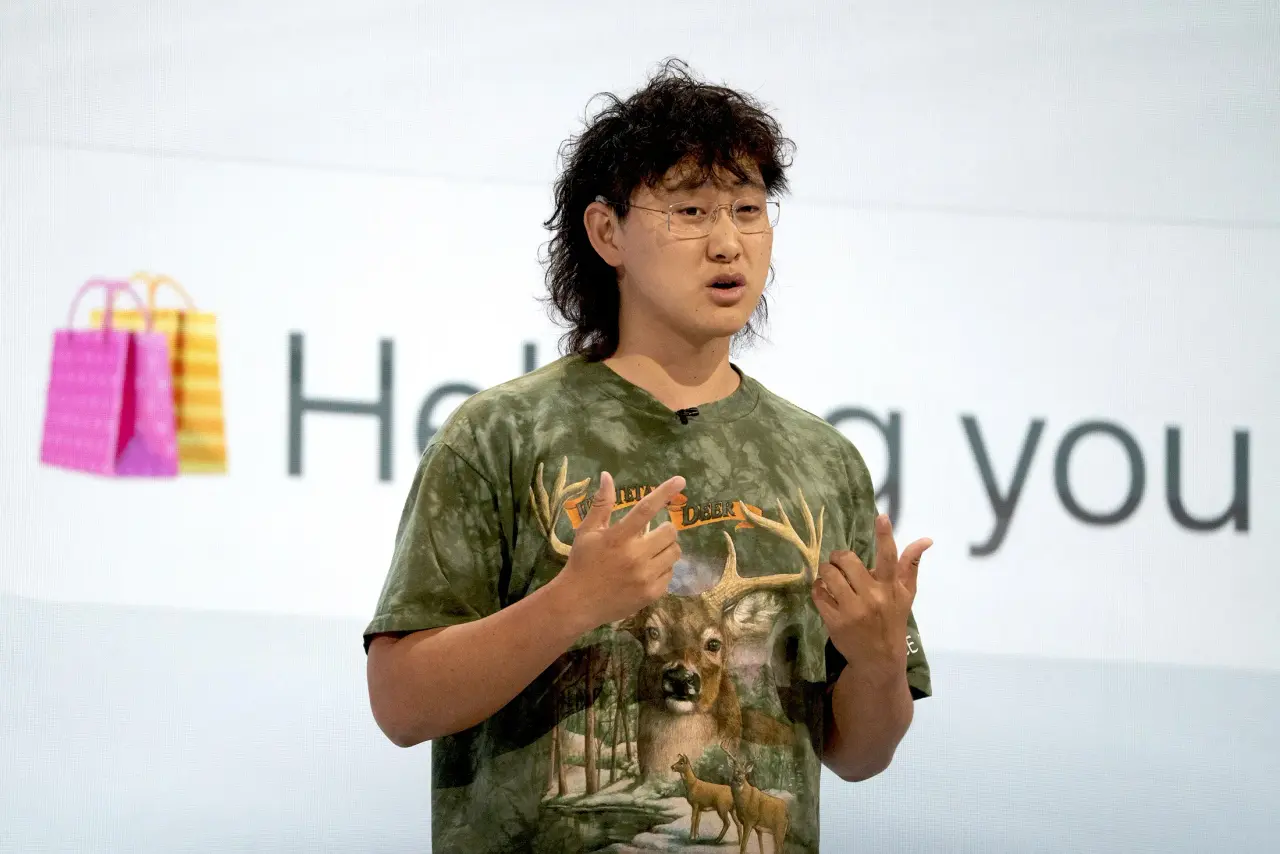
.Wang's unconventional leadership style has become his signature. At Meta's annual developer conference in September, he appeared onstage sporting a mullet, wearing a 1990s-style camouflage T-shirt emblazoned with deer, black pants, and camouflage Crocs. After social media users speculated his outfit cost thousands of dollars, Wang clarified the shirt was a $30 thrift-store purchase from Santa Cruz
4
. His approach contrasts sharply with Zuckerberg's traditionally straight-arrow public persona.Muse: A Personal AI Agent That Acts on Your Behalf
Unlike conventional AI chatbots, Muse is designed to do more than simply answer questions. The personal AI agent can act on a user's behalf, sending emails, booking travel, shopping online, and performing various tasks through its own virtual computer. Users decide which services Muse is allowed to access
2
. This task automation capability positions Muse as a significant step forward in AI operations, moving beyond simple query responses to active assistance.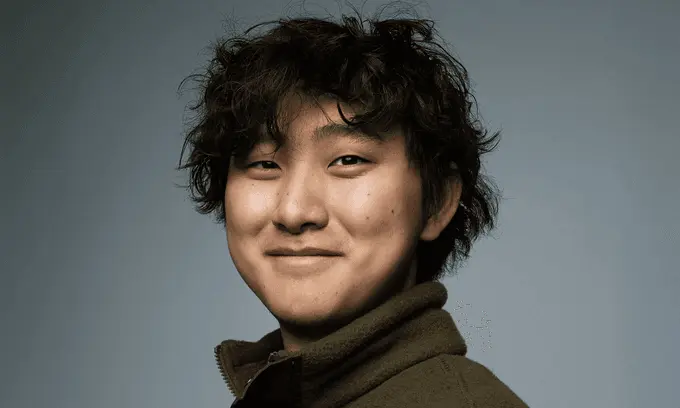
Source: VnExpress
The Muse AI app was the culmination of more than a year of work led by Wang and Nat Friedman, head of Meta's AI products division
4
. The launch represents a critical moment for Meta as competition intensifies in the personal AI agent market, with tech companies and startups racing to develop tools capable of completing everyday tasks rather than simply answering questions.Social Media Campaign Drives Muse's Viral Success
Wang's social media campaign for Muse has been anything but conventional. He posted more than 300 times on X following the app's launch, including more than 100 posts during one five-day stretch
4
. Many posts featured Jolly, Muse's fuzzy mascot, while others amplified users describing how the agent had saved them money or handled everyday chores. Wang made clear the campaign was largely his own work: "Someone today said I had the best social team for the muse launch. Bruh this is all me out here rawdogging these tweets. I don't let the corposlops near my tweet cannon"4
.Two weeks after launch, Wang posted an image of Jolly displaying its large, fuzzy butt, asking followers, "does this do anything for any of you, be honest no judgment zone"
3
. The post sparked a torrent of copycat meme jokes, some depicting the mascot in sexually charged poses. Nick Braund, founder of communications agency Words+Pixels, observed: "Wang is attempting to insert Muse into meme culture by getting as far away from corporate jargon as possible. It feels like his PR strategy is being anti-PR"4
.Related Stories

Internal Tensions and High-Stakes Gamble
Wang's arrival at Meta initially sparked tumult and skepticism. Numerous high-profile executives, including AI guru Yann LeCun, left the company in the months following his hire
3
. Wang's actions have reportedly irked employees, particularly over sky-high pay packages for his elite TBD Lab hires. Mike Volpi, one of Scale's board members and a partner at Hanabi Capital, acknowledged the friction: "When you spend billions of dollars to bring onboard a non-Meta person in a very senior role in this company, it's going to ruffle some feathers." However, he added, "I would give both Mark and Alex an enormous amount of credit for actually being able to make it work"3
.According to a Financial Times report, Wang was reportedly frustrated by Zuckerberg's micromanagement of the company's AI push, calling it "suffocating"
3
. Despite these tensions, Muse's success appears to have validated Meta's $14 billion bet on Wang and his unconventional approach.Competition Heats Up in Personal AI Agent Market
Source: Entrepreneur
Wang's campaign has also spilled into public rivalry with Instinct, another personal AI agent founded by college dropout turned tech entrepreneur Noah Shinn. "Muse absolutely crushes Insect," Wang wrote in one jab, deliberately misspelling the rival's name. He also posted that Muse would beat Instinct in an MMA fight and declared it "way hotter than the other personal agents"
4
. This rivalry underscores the intensifying competition in the personal AI agent market as companies race to dominate task automation capabilities.Wang's edgy style could be entirely strategic as Meta has struggled to reel in younger users to Facebook and Instagram platforms
3
. His internet-native communication style as a Gen Z senior executive represents a stark departure from traditional tech leadership, potentially helping Meta connect with younger demographics while advancing its AI advancements agenda. Watch for how Wang's approach influences both Meta's product development and the broader competitive landscape as personal AI agents become central to everyday digital life.References
Summarized by

Navi
[1]
[3]
Related Stories
Meta's $14.3 Billion Bet: Alexandr Wang Joins 'Superintelligence' Team in AI Race
17 Jun 2025•Business and Economy

AI godfather Yann LeCun calls Meta's 29-year-old AI chief inexperienced, warns of staff exodus
05 Jan 2026•Business and Economy

Meta's AI chief says researchers joined for compute power, not just multimillion-dollar packages
15 May 2026•Business and Economy

Recent Highlights



Recent Highlights
Today's Top Stories


Don’t drown in AI news. We cut through the noise - filtering, ranking and summarizing the most important AI news, breakthroughs and research daily. Follow topics that matter to you and stay ahead.


