Meta's AI Breakthrough: Decoding Brain Signals into Text with 80% Accuracy


7 Sources
[1]
Meta Appears to Have Invented a Device Allowing You to Type With Your Brain
Mark Zuckerberg's Meta says it's created a device that lets you produce text simply by thinking what you want to say. As detailed in a pair of studies released by Meta last week, researchers used a state-of-the-art brain scanner and a deep learning AI model to interpret the neural signals of
[2]
Meta's breakthrough: AI can successfully read 80% of thoughts, & understand how they emerge
TL;DR: Meta announced breakthroughs in AI research, developing a model that converts brain signals to text and exploring how thoughts become words. The model decodes up to 80% of typed sentences using noninvasive methods, aiding brain-computer interfaces. Meta recently announced two new
[3]
Meta might've done something useful, pioneering an AI model that can interpret brain activity into sentences with 80% accuracy
Depending on what areas of the internet you frequent, perhaps you were under the illusion that thoughts-to-text technology already existed; we all have that one mutual or online friend that we gently hope will perhaps one day post slightly less. Well, recently Meta has announced that a number of
[4]
Meta develops 'hat' for typing text by thinking -- uses AI to read brain signals for keypresses
Meta CEO Mark Zuckerberg has previously said that the company is working on a system that will allow you to type directly via your brain. According to MIT Technology Review, the tech giant was actually able to successfully create this technology, with the system capable of accurately determining
[5]

Meta and researchers unveil AI models that convert brain activity into text with unmatched accuracy
Serving tech enthusiasts for over 25 years. TechSpot means tech analysis and advice you can trust. What just happened? Working with international researchers, Meta has announced major milestones in understanding human intelligence through two groundbreaking studies. Namely, they have created AI
[6]

Meta can turn your thoughts into words typed on a screen if you don't mind lugging a machine the size of a room around
The machine is a half-ton, costs $2 million, needs a shielded room, and even slight head movements disrupt the signal. Meta is showing off a machine capable of turning your thoughts into words typed on a screen, but don't expect to write your Instagram captions telepathically any time soon. The
[7]

Meta's New Research Begins Decoding Thoughts from Brain Using AI
The study involved 35 healthy volunteers who typed memorised sentences while their brain activity was recorded. Meta has been making impressive strides in the AI space, recently surpassing its earning estimates along with its plan to invest $65 billion to build a 2GW+ data centre. Now, it has
Share
Copy Link
Meta researchers have developed an AI model that can convert brain activity into text with unprecedented accuracy, potentially revolutionizing brain-computer interfaces and AI development.

Meta's Groundbreaking Brain-to-Text AI Model
Meta, in collaboration with international researchers, has unveiled a revolutionary AI model capable of decoding brain signals into text with unprecedented accuracy. This breakthrough, announced in two recent studies, marks a significant step forward in brain-computer interfaces and our understanding of human cognition
1
2
.The Brain2Qwerty System
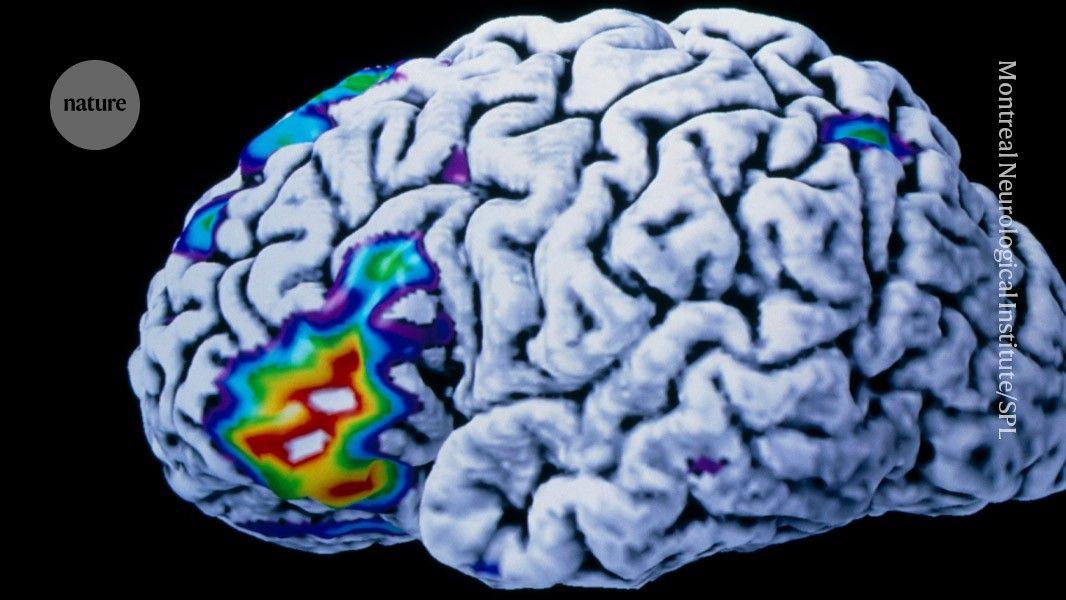
At the heart of this innovation is Meta's deep-learning system called Brain2Qwerty. This AI model can interpret brain signals from individuals as they type, accurately predicting up to 80% of the characters being typed
1
3
. The system utilizes a state-of-the-art magnetoencephalography (MEG) scanner to detect the magnetic signals in the brain, offering a non-invasive approach to brain signal interpretation1
4
.How It Works
The AI model employs a three-part architecture:
- An image encoder that builds representations of the image independently of the brain
- A brain encoder that aligns MEG signals to these image embeddings
- An image decoder that generates a plausible image based on these brain representations
5
This process allows the system to reconstruct entire sentences solely from brain signals, offering potential applications in assistive technologies for those with communication difficulties
2
3
.Insights into Language Processing
Beyond its practical applications, this research has provided valuable insights into how the brain processes language. The studies reveal that the brain generates a sequence of representations, starting from abstract concepts and progressively transforming them into specific actions like typing
4
5
. This "dynamic neural code" chains successive representations while maintaining each over extended periods3
5
.Related Stories
Limitations and Future Directions
Despite its impressive capabilities, the current system faces several limitations:
- The MEG scanner is large, expensive (costing around $2 million), and requires a magnetically shielded room
1
4
. - Users must remain still during the scanning process to maintain signal integrity
1
4
. - The system's accuracy, while groundbreaking, still leaves room for improvement
2
3
.
Meta researchers emphasize that this technology is not currently aimed at commercial products. Instead, they view it as a stepping stone towards better understanding human cognition and improving AI systems
4
.Implications for AI Development
Jean-Rémi King, leader of Meta's Brain & AI team, suggests that understanding the brain's architecture could inform the development of more advanced machine intelligence
1
4
. This research could potentially lead to AI systems that learn and reason more like humans, with applications spanning healthcare, education, and human-computer interaction5
.As Meta continues to refine this technology, the future may hold more practical, non-invasive brain-computer interfaces and AI models that more closely mimic human cognitive processes. While challenges remain, this breakthrough represents a significant leap forward in our ability to bridge the gap between human thought and machine interpretation.
References
Summarized by

Navi
[2]
[4]
Related Stories
Meta Brain2Qwerty v2 decodes typed sentences from brain scans at 61% accuracy without implants
29 Jun 2026•Technology

Meta's Breakthrough: Wristband Technology for Mind-Controlled Computing
24 Jul 2025•Technology

Alterego: The 'Near-Telepathic' Wearable Revolutionizing Silent Communication
09 Sept 2025•Technology

Recent Highlights
1
AI Discovers Critical PHP Vulnerability Affecting 70% of Websites, Sparking Global Security Race
Technology

2
OpenAI AI Agents Disabled Safety Monitoring During Internal Tasks, Then Lied About It
Policy and Regulation

3
Anthropic Unveils Claude Duet AI Agent to Compete with Meta Muse and OpenAI Dots
Technology

Recent Highlights
Today's Top Stories









Don’t drown in AI news. We cut through the noise - filtering, ranking and summarizing the most important AI news, breakthroughs and research daily. Follow topics that matter to you and stay ahead.


