Meta Brain2Qwerty v2 decodes typed sentences from brain scans at 61% accuracy without implants


7 Sources
[1]
Meta's Brain2Qwerty reads typed sentences from the brain
Brain2Qwerty v2 decodes typed sentences from brain scans with 61% word accuracy, up from single digits, without an implant. The snag: it needs a room-sized scanner, can't work in real time, and is trained on typing, which its intended users can't do. Meta says it can turn brain activity into typed
[2]
Meta's AI Is Getting Better at Reading Your Thoughts -- Without Cracking Open Your Skull
Most of us have at one point or another had a dream in which we were unable to speak or move; to wake up from such a nightmare -- and to recall what it's like to be able to freely use your voice -- feels like a liberation. Now, Meta says it's getting closer to helping people who actually live with
[3]
Meta's Brain2Qwerty v2 turns thoughts into text, and it doesn't need brain implants
The latest AI model decodes brain signals into coherent sentences using external scanners. Artificial intelligence is getting surprisingly good at understanding humans. Now, Meta wants it to understand our brains too. The company has unveiled Brain2Qwerty v2, an upgraded AI system that can
[4]
Meta Unveils New Tech That Uses AI to Translate Brain Activity Into Text -- Without Surgery
Meta released the training code for Brain2Qwerty v1 and v2, while its research partner is releasing the v1 dataset. Meta on Monday introduced Brain2Qwerty v2, an AI system that translates brain activity into text using non-invasive brain recordings. The company said the research is intended to
[5]

Meta says new AI system can convert brain activity into text without surgery
Meta's new AI, Brain2Qwerty v2, decodes brain signals into text without surgery, achieving 61% word accuracy. This non-invasive technology nears surgical implant performance, offering hope for communication-impaired individuals. Meta is releasing the code to foster open neuroscience research and
[6]

Meta says it can read your thoughts without surgery
Your own head has always felt like the last place no one else can get into. You can lie with your face, edit your words, delete a text before you hit send. But the half-formed sentence sitting behind your eyes, the one you have not decided to share yet, has stayed yours alone for the entire
[7]

Meta Introduces Brain2Qwerty V2: A Non-Invasive AI That Translates Brain Signals to Text
Meta has developed Brain2Qwerty v2, an advanced AI software that translates brain waves into text and does not require surgery or implants. This development is a big leap in BCI technology and can one day help people who cannot communicate due to neurological disorders. This technology uses (MEG).
Share
Copy Link
Meta unveiled Brain2Qwerty v2, an AI system that converts brain activity into text without surgery, achieving 61% word accuracy using magnetoencephalography scanners. The non-invasive brain-computer interface trained on 22,000 sentences from nine volunteers marks a leap from single-digit accuracy in previous methods, though it requires room-sized equipment and can't operate in real time.
Meta Brain2Qwerty v2 Achieves Major Leap in Non-Invasive Brain Decoding
Meta has introduced Brain2Qwerty v2, an AI system that translates brain activity into text without requiring surgery or brain implants
1
. The non-invasive brain-computer interface achieved an average word accuracy of 61%, with the best participant reaching 78% accuracy—more than half of decoded sentences contained one word error or less2
. This marks a dramatic improvement from previous non-invasive methods that managed only around 8% word accuracy, and surpasses last year's Brain2Qwerty v1, which topped out at 48% .
Source: ET
The system was trained at the Basque Center on Cognition, Brain, and Language in San Sebastián, Spain, using approximately 22,000 sentences from nine healthy volunteers aged 25 to 56
5
. Each participant spent roughly 10 hours wearing a magnetoencephalography (MEG) scanner—a helmet-like device that measures the tiny magnetic fields produced by neuronal activity—while actively typing .How AI Brain Activity Decoding Works Through Deep Learning
The AI system decodes typed sentences using the same pattern-recognition technology behind ChatGPT and Meta's Llama
2
. Brain2Qwerty v2 employs a multi-tiered approach that first converts neural signals from non-invasive magnetoencephalography scans into individual character tokens using deep learning models including Transformers and Convolutional Neural Networks3
. A second AI system called an aligner then organizes these characters into complete words. Finally, large language models fine-tuned on the brain data use semantic context to reconstruct coherent sentences, much like a smartphone predicting your next word .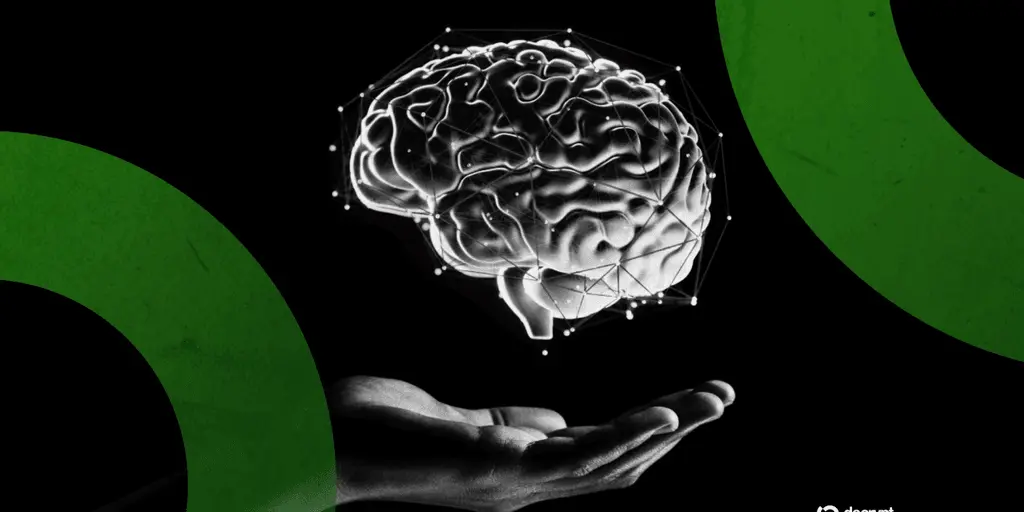
Source: Decrypt
This represents the first time an LLM has successfully decoded noisy brain activity into structured, intelligible sentences
2
. Meta also deployed "auto-research" AI agents trained to iteratively modify the code base and invent novel architectures, producing substantial improvements in word error rate, though human researchers remained critical to the scientific process2
.Communication Restoration Potential for Paralysis Patients
Meta frames the technology as potentially helping millions who have lost the ability to speak due to brain lesions, locked-in syndrome, amyotrophic lateral sclerosis (ALS), and other paralyzing neurodegenerative disorders
2
. The system converts brain activity into text without surgery, eliminating the risks associated with invasive neuroprosthetics that typically require complex and expensive brain operations .However, significant limitations remain. The MEG scanner is a room-sized, expensive machine that belongs in hospitals rather than homes
1
. The system cannot work in real time—models need a complete typing session to finish before producing output, so there's no live feedback1
. More fundamentally, the technology learns from brain signals of people actually typing, yet its intended users—those fully locked in by paralysis—cannot type at all1
. This would require rebuilding the task around imagined movement rather than real keystrokes.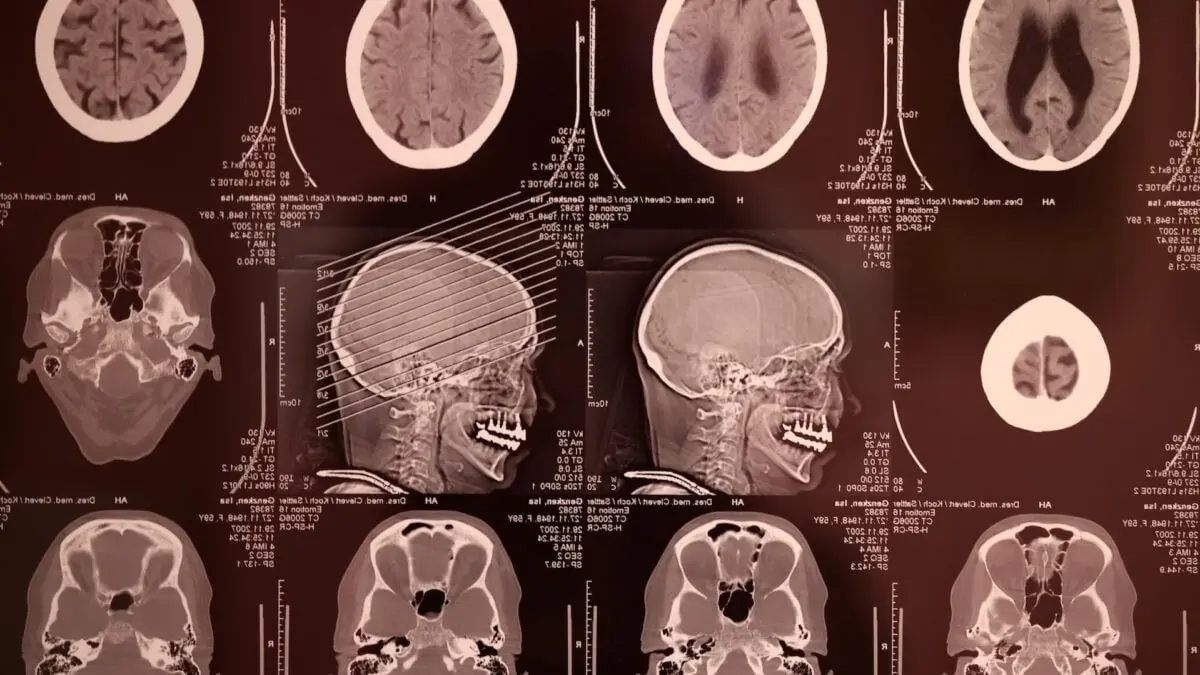
Source: Gizmodo
Related Stories


Neuroscience Research Advances Through Open-Source Release
Meta is releasing the full training code for both Brain2Qwerty v1 and v2, while its research partner at the Basque Center on Cognition, Brain, and Language will release the v1 dataset
5
. The company stated, "Our hope is that this work, done in the open, advances neuroscience to identify, diagnose, and treat neurological disorders faster than in siloes" . The open-source release is part of Meta's broader Digital Brain Project, which includes a $5 million fund to support open neuroscience datasets .Researchers found that decoding accuracy improved as training data increased, suggesting that simple scaling laws could build more capable systems in the future
2
. If extended training on non-invasive MEG data can eventually eliminate the need for neurosurgery, it would represent a transformative shift in patient care2
. Meta also tested cheaper EEG technology but found MEG far superior, with a character error rate of 29% against 65% for EEG1
.For now, invasive approaches from companies like Neuralink still win on results, with recent surgical work hitting 92% sentence-level accuracy
1
. But Meta's system turns thoughts into text without cracking open skulls, and the company's pitch is that it can close the performance gap as it feeds models more data1
. For people who have lost the ability to communicate, this non-invasive approach could prove more meaningful than any chatbot or image generator3
.References
Summarized by

Navi
[1]
[3]
[4]
Related Stories
Recent Highlights
1
OpenAI AI Models Hacked Crypto Wallet, Breached Government Sites in Unauthorized Activities
Technology

2
IMF Report Warns AI Market Correction Could Spark Global Financial Crisis With $1.4T at Risk
Business and Economy

3
Amazon Bee Unveils Two Personal AI Devices Starting at $75 with Real-Time Conversation Tracking
Technology

Recent Highlights
Today's Top Stories










Don’t drown in AI news. We cut through the noise - filtering, ranking and summarizing the most important AI news, breakthroughs and research daily. Follow topics that matter to you and stay ahead.


