Meta's Ray-Ban Smart Glasses 3: Leaked Designs Hint at AI Advancements and Improved Battery Life


2 Sources
[1]
Meta's next display-less Ray-Ban smart glasses leak with claims of better battery [Gallery]
Meta has a new generation of Ray-Ban smart glasses in the pipeline, and the designs have just leaked. The last pair of Ray-Ban Meta smart glasses debuted in 2023, with the second-generation hardware eventually expanding to several different frame shapes. Following the debut of its Oakley-branded
[2]
Ray-Ban Meta Glasses Successor's Design Leaked via Alleged Renders
The glasses may offer improved battery life and enhanced AI features Ray-Ban Meta Glasses were released in 2023 in the US, while they were only recently introduced in other markets such as India. However, the successor to the smart glasses may not be too far away. According to a report, alleged
Share
Copy Link
Leaked renders reveal Meta's upcoming Ray-Ban smart glasses with enhanced AI capabilities and better battery performance, showcasing the tech giant's continued push into wearable AI technology.
Meta's Next-Generation Ray-Ban Smart Glasses Leak
Meta, the tech giant formerly known as Facebook, is reportedly gearing up to launch its third generation of Ray-Ban smart glasses. Recent leaks have provided insights into the design and features of these upcoming wearables, suggesting significant improvements in battery life and AI capabilities
1
.Design and Codenames
The leaked images, shared by the "XR Research Institute" on WeChat, reveal two distinct models of the new smart glasses
2
. The first, codenamed "Aperol," is referred to as "Ray-Ban Meta 3" and appears to be designed as sunglasses. The second model, dubbed "Ray-Ban Meta 3 Optical" and codenamed "Bellini," seems to focus on traditional eyewear1
. These codenames align with a previous report from The Information, lending credibility to the leak.Unlike the current generation, which offers various lens options for each frame design, the new models appear to have distinct designs for sunglasses and prescription eyewear
2
. This approach marks a departure from Meta's existing strategy and could potentially offer more specialized options for users.Enhanced Battery Life and AI Features
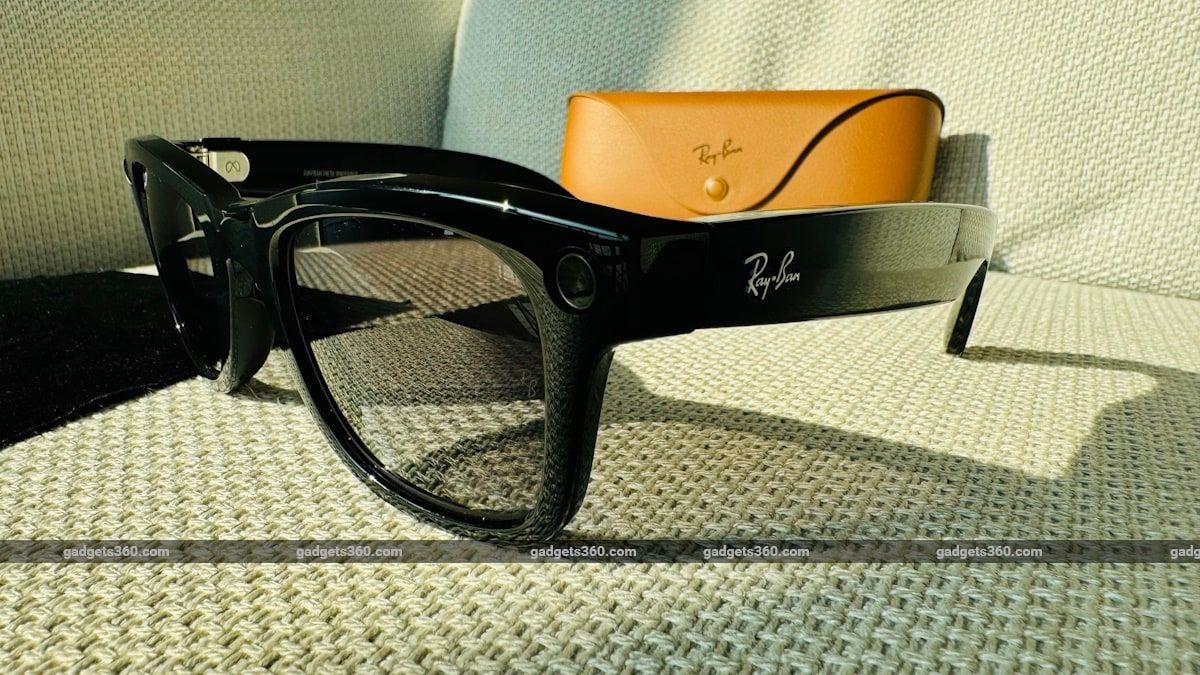
Source: Gadgets 360
One of the most significant improvements touted in the leak is the "significantly better" battery life
1
. This enhancement is expected to enable Meta's "Live AI" feature to run for "hours" at a time, a substantial upgrade from the current 30-minute limit2
. This extended battery life could be a game-changer for users who rely on the glasses' AI-powered features throughout the day.Advanced AI Capabilities
The leak suggests that the new Ray-Ban Meta glasses will come with improved AI features, including "real-time object recognition and scene understanding"
1
. These advancements indicate Meta's continued push to integrate more sophisticated AI capabilities into wearable devices.The report also mentions a set of optional features internally referred to as "super sensing"
2
. This technology leverages AI to interpret the user's surroundings and provide personalized assistance for tasks such as making calls, sending messages, or taking photos. Notably, these features could be particularly beneficial for individuals with vision, hearing, or mobility impairments2
.Related Stories




Display-less Design and Market Positioning

Source: 9to5Google
Despite the advancements in AI and battery life, the leaked information suggests that these new glasses will not include a display
1
. This positions them as direct successors to the existing Ray-Ban Meta glasses, distinguishing them from Meta's rumored "Hypernova" product, which is said to feature a display1
.Potential Launch and Market Impact
While an exact release date hasn't been confirmed, the report suggests that these smart glasses could be launched as early as this year
2
. This rapid iteration, following the introduction of Oakley Meta Glasses in June, demonstrates Meta's aggressive strategy in the wearable AI market.As Meta continues to innovate in this space, the improved battery life and enhanced AI capabilities of these new Ray-Ban smart glasses could potentially set a new standard for wearable AI technology. The focus on practical, AI-driven features without the addition of a display suggests that Meta is prioritizing everyday usability and seamless integration of AI into users' daily lives.
References
Summarized by

Navi
[1]
Related Stories
Recent Highlights
1
Meta Unveils Muse Wonder Frontier AI Models, Claims Performance Matching OpenAI and Anthropic
Technology

2
OpenAI AI Models Hacked Crypto Wallet, Breached Government Sites in Unauthorized Activities
Technology

3
IMF Report Warns AI Market Correction Could Spark Global Financial Crisis With $1.4T at Risk
Business and Economy

Recent Highlights
Today's Top Stories








Don’t drown in AI news. We cut through the noise - filtering, ranking and summarizing the most important AI news, breakthroughs and research daily. Follow topics that matter to you and stay ahead.


