Michael Burry Bets $1 Billion Against AI Bubble as Market Faces Reality Check


8 Sources
[1]
'The Big Short' Investor Michael Burry Bets Against AI Hype
Michael Burry, the investor who is famous for predicting the 2008 housing market crash and was portrayed by Christian Bale in the Oscar-winning movie "The Big Short," has a new bubble prediction. This time, it's AI. Burry's hedge fund Scion Asset Management disclosed put options on Nvidia, and an
[2]
AI valuations face renewed scrutiny
Pat Gelsinger's comments add weight to the growing belief that AI valuations look overheated Growing debate over the stability of artificial intelligence valuations has intensified in recent weeks as the market becomes increasingly dominated by AI companies. The sharpest warning yet comes from a
[3]
"Big Short" investor's challenge signals shift in Wall Street's AI romance
Why it matters: Wall Street can't stop talking about the risks of an AI bubble, yet investment bets that the bubble will deflate or burst haven't gained much traction. That could be changing. By the numbers: Scion Asset Management, Burry's firm, disclosed put-option positions worth roughly $912
[4]
The Big Short Guy Just Bet $1 Billion That the AI Bubble Pops
Michael Burry, who famously shorted the US housing market before its collapse in 2008, has bet over $1 billion that the share prices of AI chipmaker Nvidia and software company Palantir will fall -- making a similar play, in other words, on the prediction that the AI industry will
[5]

Nvidia boss defends AI against claims of bubble by 'Big Short' investor
Michael Burry, who was played by Christian Bale in the 2015 film The Big Short, has bet against Nvidia and other technology stocks, causing market plunges worth hundreds of billions of dollars. Nvidia boss Jensen Huang has told Sky News the AI sector is a "long, long away" from a Big Short-style
[6]

Michael Burry's big short on AI sent shockwaves across global tech. Which Dalal Street tech stocks caught the whiff?
Michael Burry's latest bearish bets on artificial intelligence (AI) stocks have sent tremors through global technology markets, and the ripples have reached Dalal Street. The famed "Big Short" investor's $1.1 billion wager against AI bellwethers Nvidia and Palantir triggered a sharp sell-off across
[7]
'Sometimes, we see bubbles': Big short Michael Burry's bearish bet on world's most valuable stock meets global AI sell-off
Michael Burry's Scion Asset Management has taken massive short positions on Nvidia and Palantir, signalling caution over the AI boom as global tech stocks face their sharpest decline in months. Michael Burry, the investor immortalised by The Big Short for predicting the 2008 housing market
[8]

Fund manager who predicted Great Recession sparks fiery Palantir CEO rant
The hedge fund legend who called the 2008 US housing crisis and is the famed investor behind the "Big Short" is back in the spotlight. This time, he is betting against two artificial intelligence giants, taking a massive bearish position against Palantir Technologies and NVIDIA. Image source:
Share
Copy Link
The investor famous for predicting the 2008 housing crash has placed massive bets against AI giants Nvidia and Palantir, warning of an AI bubble similar to the dot-com crash. His positions have sparked heated responses from tech CEOs and renewed scrutiny over AI valuations.
The Big Short Investor Takes Aim at AI
Michael Burry, the legendary investor who predicted the 2008 housing market crash and inspired the Oscar-winning film "The Big Short," has set his sights on what he believes is the next major financial bubble: artificial intelligence
1
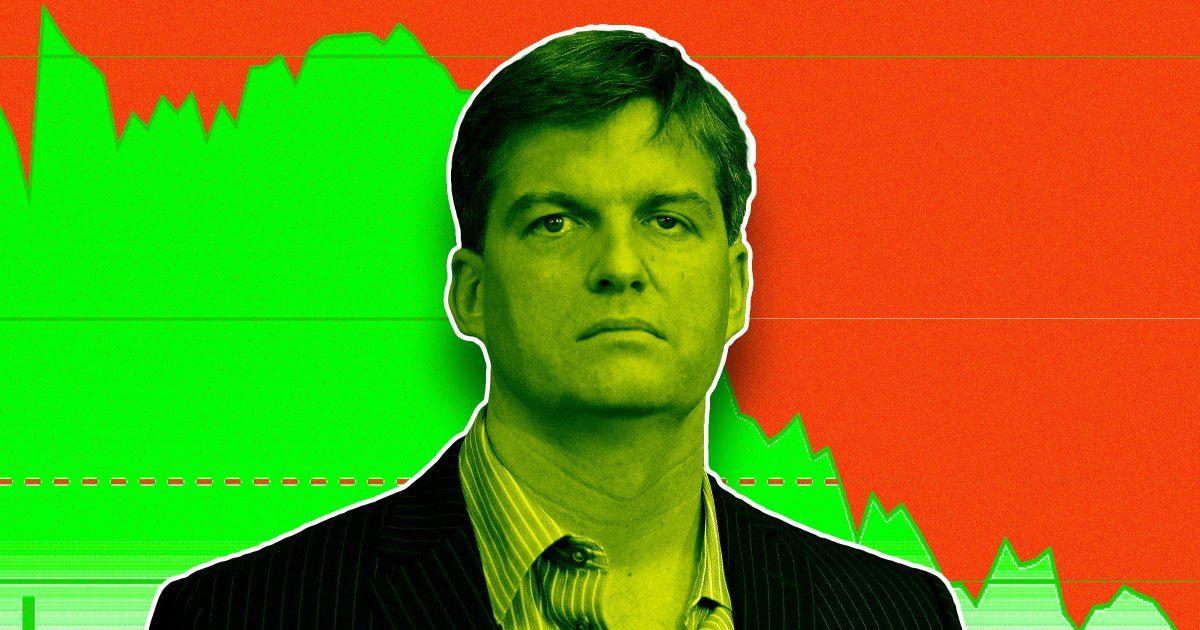
. Recent regulatory filings reveal that Burry's hedge fund, Scion Asset Management, has taken massive put option positions against two AI darlings - $187.6 million against Nvidia and a staggering $912 million against Palantir4
.
Source: Futurism
These positions, totaling nearly $1.1 billion, represent approximately 80% of Burry's portfolio, signaling an extraordinary level of conviction in his bearish AI thesis
3
. The timing of these disclosures has sent shockwaves through the market, with both Nvidia and Palantir experiencing significant declines following the news.Market Reactions and Executive Pushback
The revelation of Burry's positions has triggered immediate market volatility, with approximately $500 billion wiped off technology stocks overnight
5
. Nvidia shares dropped nearly 4% while Palantir plummeted 9% as investors reassessed their exposure to AI companies4
.Palantir CEO Alex Karp responded with visible frustration to Burry's bet against his company. "I do think this behavior is egregious and I'm going to be dancing around when it's proven wrong," Karp told CNBC
1
. He dismissed Burry's strategy as "bats*** crazy," arguing that shorting companies "making all the money" defies logic4
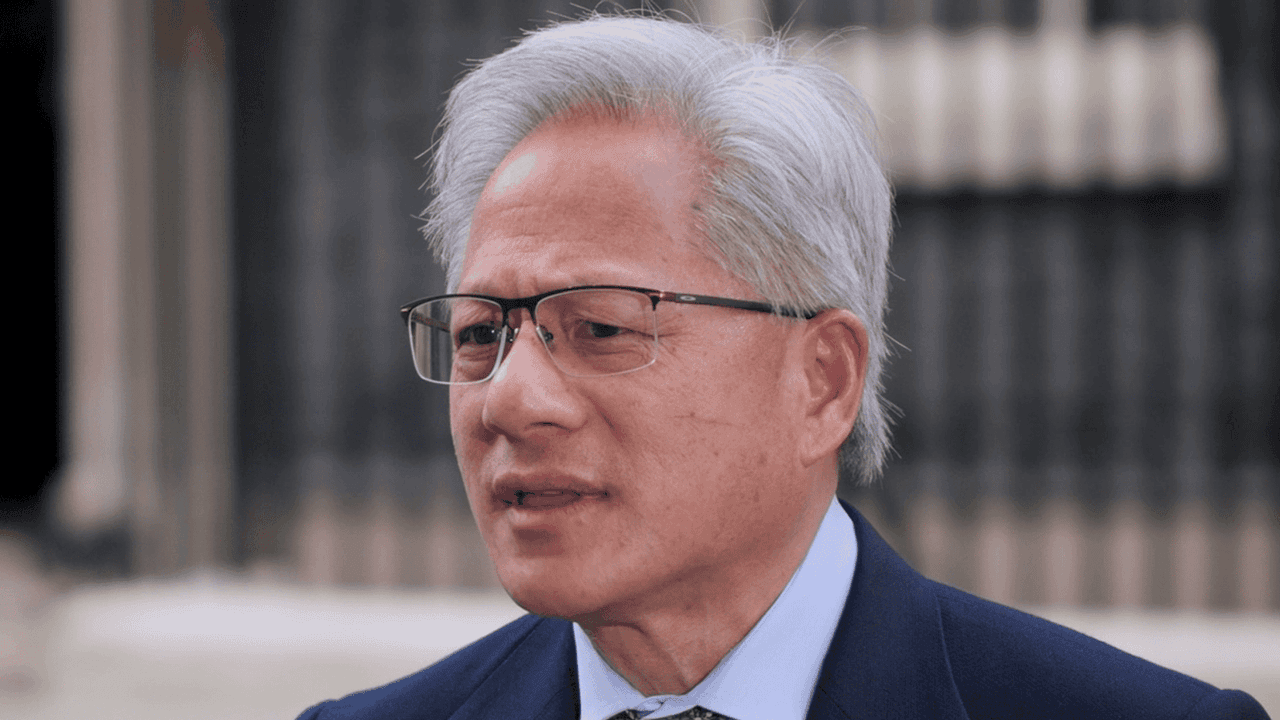
.Nvidia CEO Jensen Huang also defended the AI sector during a visit to Downing Street, telling Sky News that the industry is "long, long away" from a Big Short-style collapse. Huang emphasized that AI represents "the beginning of a very long build out" and highlighted the profitability driving continued infrastructure investment
5
.
Source: Sky News
Historical Parallels and Warning Signs
Burry's skepticism extends beyond individual stock picks to broader structural concerns about the AI market. Days before his positions were disclosed, he posted cryptic messages on X (formerly Twitter), including charts comparing current U.S. tech capital expenditure growth to the 1999-2000 tech bubble
1
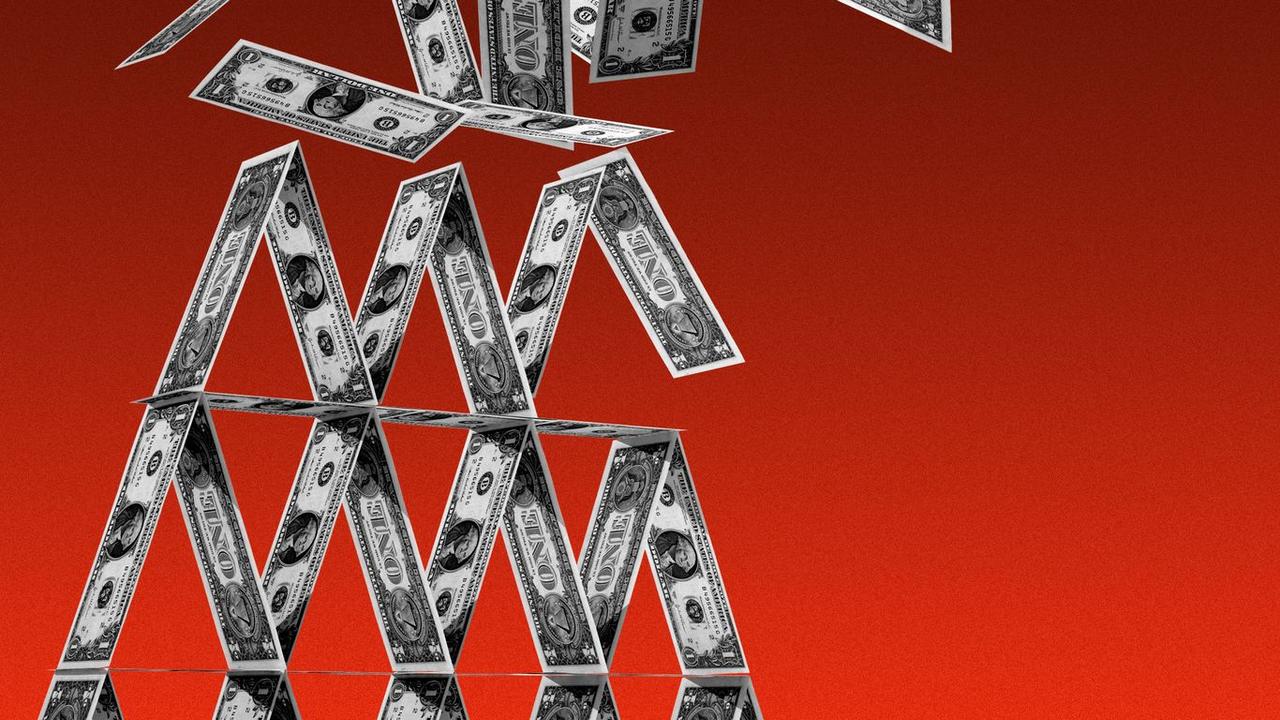
. One particularly telling post featured declining year-over-year growth in cloud segments of Amazon, Alphabet, and Microsoft.Experts have increasingly drawn parallels between today's AI boom and the dot-com bubble that burst in 2000, erasing approximately $5 trillion in market value
1
. Apollo Global Management's chief economist Torsten Slok noted that "the top 10 companies in the S&P 500 today are more overvalued than they were in the 1990s," while the Bank of England warned that current stock valuations are comparable to dot-com bubble peaks1
.
Source: Axios
Related Stories

Circular Investment Concerns
A key element of Burry's thesis centers on what he views as problematic circular dealmaking within the AI industry. His social media posts highlighted a Bloomberg diagram showing Nvidia at the center of interconnected AI investments
1
. This web of multibillion-dollar partnerships between tech giants with overlapping interests has created a system where companies essentially invest in each other, potentially inflating valuations artificially2
.Former Intel CEO Pat Gelsinger has also expressed concerns about AI sector valuations, suggesting the market is in "bubble territory" though he expects any correction to occur gradually rather than suddenly
2
.Track Record and Market Impact
Burry's reputation stems from his prescient 2005 bet against the U.S. mortgage market, which generated a 489% return when the housing bubble collapsed in 2008
4
. However, his track record isn't perfect - he called for investors to "sell" in January 2023, only to admit he was "wrong" two months later as the Nasdaq 100 surged over 21%4
.The influence of Burry's positions extends beyond institutional investors, as retail traders closely monitor and often copy his moves through Reddit threads and Discord chats
3
. This retail following is particularly significant for Palantir, where individual investors own roughly half of all shares3
.References
Summarized by

Navi
[2]
Related Stories
Michael Burry and Wall Street analysts warn AI bubble may burst as hyperscalers pile on debt
06 Jul 2026•Business and Economy
Michael Burry Accelerates Timeline for AI Bubble Burst, Moves to Leveraged Put Options
30 Sept 2026•Business and Economy
AI Investment Bubble Concerns Intensify as Industry Leaders Warn of 'Irrationality' Despite Nvidia's Strong Earnings
18 Nov 2025•Business and Economy

Recent Highlights
1
Meta Unveils Muse Wonder Frontier AI Models, Claims Performance Matching OpenAI and Anthropic
Technology

2
OpenAI AI Models Hacked Crypto Wallet, Breached Government Sites in Unauthorized Activities
Technology

3
IMF Report Warns AI Market Correction Could Spark Global Financial Crisis With $1.4T at Risk
Business and Economy

Recent Highlights
Today's Top Stories






Don’t drown in AI news. We cut through the noise - filtering, ranking and summarizing the most important AI news, breakthroughs and research daily. Follow topics that matter to you and stay ahead.


