Microsoft and Nvidia deploy AI to accelerate nuclear power plants for data center energy demands


9 Sources
[1]
Microsoft and Nvidia launch AI partnership to speed up nuclear power plant permitting and construction -- simulation tools and generative models could hasten historically lengthy processes
I'm sorry I caused a nuclear meltdown. That's on me, and it will never happen again. Microsoft and Nvidia have announced an AI-powered collaboration to accelerate the development and deployment of nuclear power plants that will power AI data centers in turn. The partnership, described in a
[2]
Microsoft, Nvidia claim AI speeds approval of nuclear plants
Microsoft is working with Nvidia on nuclear power. Not to build it, but to offer AI-driven tools to deal with all the red tape, help with the design work, and optimize operations for nuclear projects. Announcing the move on social media site X, Microsoft President Brad Smith said this latest AI
[3]
Microsoft and Nvidia announce AI partnership to fast-track nuclear power plants
Serving tech enthusiasts for over 25 years. TechSpot means tech analysis and advice you can trust. What just happened? If you've ever thought to yourself that what the world really needs is a slew of nuclear power plants to meet the enormous energy demands of AI data centers, here's some good
[4]
US uses AI to speed up nuclear technology licensing applications
The United States has used AI to streamline the nuclear regulatory process. The Department of Energy used AI mapping to convert a safety analysis document required under DOE's authorization pathway for advanced reactor demonstrations into U.S. Nuclear Regulatory Commission (NRC) licensing documents
[5]

The race to build new nuclear reactors -- fast (with AI's help)
Why it matters: Nuclear energy is seen as critical to supplying enough power for AI data centers' massive electricity needs. * And AI itself is being seen as part of the solution. The big picture: A March report from the Nuclear Scaling Initiative research group concluded that "a concentrated set
[6]

Microsoft and Nvidia unleash AI to slash nuclear project delays
Nuclear energy faces critical delays despite rising power demand * AI enables engineers to detect design inconsistencies before construction begins * Generative AI automates documentation workflows, creating audit-ready and traceable regulatory applications * High-fidelity Digital Twins validate
[7]
Microsoft, NVIDIA join forces to accelerate nuclear reactor deployment with new tool
The partnership will take center stage this week at CERAWeek 2026, where the tech giants, alongside Aalo Atomics, will present their vision for a "Digital Age for Nuclear." Currently, projects often experience years of construction delays due to analog era bottlenecks like fragmented data, manual
[8]
Microsoft and Nvidia team up on AI nuclear push
Why it matters: The initiative is the latest example of the tech industry leaning on nuclear's emerging potential to deal with AI's voracious energy needs. Driving the news: Smith mentioned the "AI for nuclear" initiative during onstage remarks at the CERAWeek conference. * The two companies
[9]

Microsoft and NVIDIA plan to use AI to help build nuclear power plants to power AI
TL;DR: Microsoft and NVIDIA are partnering to use AI in accelerating nuclear power plant construction, aiming to create safe, carbon-free energy for AI infrastructure. Their AI tools streamline permitting, reduce documentation errors, and employ Digital Twins for efficient project management,
Share
Copy Link
Microsoft and Nvidia have launched an AI partnership to fast-track nuclear power plants needed for AI data centers. Using generative AI for permitting and digital twin simulations, the collaboration targets years-long licensing processes that cost hundreds of millions. Aalo Atomics already cut its permitting workload by 92%, saving an estimated $80 million annually, while the Department of Energy converted safety documents in one day versus the typical four to six weeks.
Microsoft and Nvidia Target Infrastructure Bottleneck With AI
Microsoft and Nvidia have unveiled a partnership combining AI-driven tools and digital twin simulations to accelerate nuclear plant construction, addressing what both companies describe as a critical infrastructure bottleneck in meeting the energy demands of AI data centers
1
2
. The collaboration spans the full nuclear lifecycle, from permitting and design through construction and operations, using generative AI for permitting alongside Nvidia's Omniverse platform and Microsoft's Azure cloud infrastructure1
. Microsoft President Brad Smith emphasized that the initiative aims to bring more carbon-free nuclear power online sooner to support the massive electricity requirements of AI infrastructure2
.
Source: Axios
Generative AI Slashes Permitting Timeline and Costs
The licensing process represents one of the most significant delays in nuclear development, typically requiring years, costing hundreds of millions of dollars, and involving tens of thousands of pages of documentation
3
. Microsoft's Generative AI for Permitting Solution Accelerator handles document drafting, gap analysis, and regulatory compliance checks that previously consumed enormous resources1
. Aalo Atomics, an Austin-based startup building modular nuclear reactors for data centers, reduced its permitting process workload by 92% using Microsoft's solution, saving an estimated $80 million annually1
5
. The company is currently building its Aalo-X experimental reactor at Idaho National Laboratory, targeting criticality by mid-20261
.
Source: Interesting Engineering
Digital Replicas Enable Virtual Construction Before Breaking Ground
Nvidia's contribution centers on digital twin technology that allows engineers to virtually build entire nuclear facilities before physical construction begins
1
. The collaboration employs 4D and 5D simulation technology, adding time scheduling and cost tracking to standard 3D spatial models, enabling teams to catch potential schedule collisions and design issues early1
3
. The technology stack includes Nvidia's Omniverse, Earth 2, PhysicsNeMo, Isaac Sim, and Metropolis models alongside Microsoft's Planetary Computer, all running on Azure1
. Southern Nuclear has already deployed agents using Microsoft's Copilot to improve consistency in engineering and licensing work2
.
Source: TechSpot
Department of Energy Demonstrates Dramatic Efficiency Gains
The Department of Energy recently showcased how AI can speed up nuclear technology licensing by using Everstar's Gordian AI solution, built on the Microsoft Azure platform, to convert safety analysis documents
4
. The DOE converted the Preliminary Documented Safety Analysis for its National Reactor Innovation Center's Generic High Temperature Gas Reactor into U.S. Nuclear Regulatory Commission license application sections, generating a 208-page document in one day versus the typical four to six weeks required by human teams4
. Deputy Assistant Secretary for Nuclear Reactors Rian Bahran stated this represents more than incremental improvements, with potential to transform how industry prepares regulatory submissions while upholding safety standards4
.Related Stories



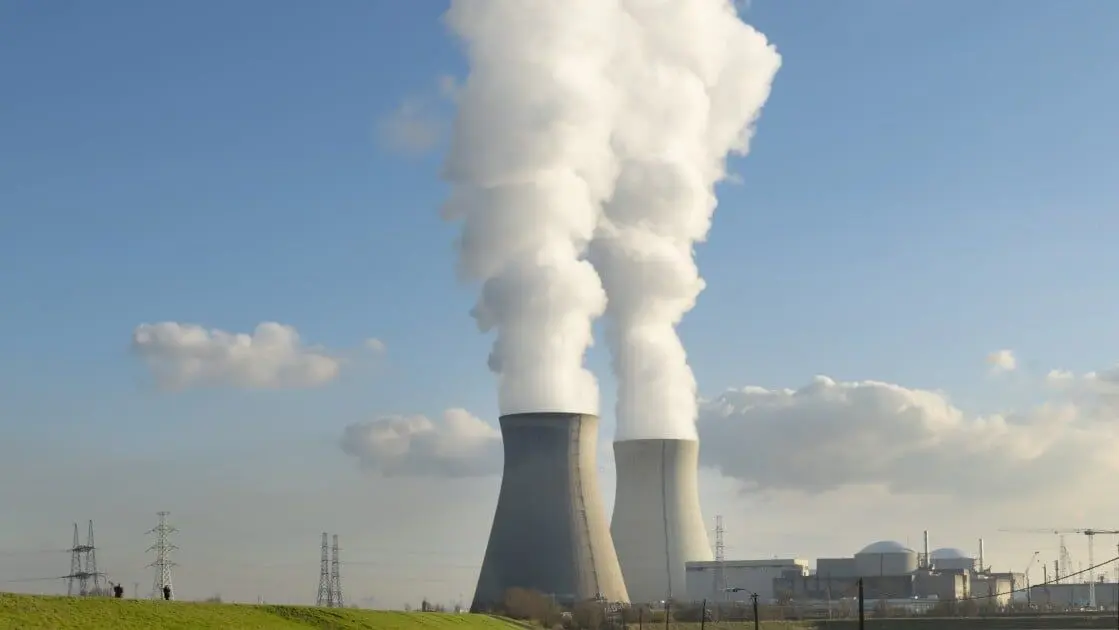
Tech Giants Race Against Time to Power AI Infrastructure
The urgency behind this initiative stems from the massive power requirements of AI infrastructure, which have pushed Microsoft's greenhouse gas emissions up nearly 30 percent since 2020, despite its goal of becoming carbon-negative by 2030
2
. Microsoft has secured a 20-year power purchase agreement with Constellation Energy to restart the Three Mile Island nuclear facility, expected to supply more than 800 megawatts of carbon-free power for its data centers, though not before 20282
3
. A March report from the Nuclear Scaling Initiative identified structural bottlenecks creating industrial capacity constraints that could limit projects to one-off builds rather than sustained, multi-unit delivery unless addressed5
.Industry Adopts Silicon Valley Approach to Streamline Regulatory Processes
Nuclear Energy Institute's John Kotek observed at CERAWeek that the sector now operates with a Silicon Valley-type ecosystem unlike anything seen before
5
. Aalo Atomics' Jon Guidroz emphasized the need to build nuclear infrastructure the way server racks and data centers get built, pursuing a copy-and-paste approach for commercial deployment by 20295
. Additional companies including Everstar and Atomic Canyon are building on the Microsoft-Nvidia collaboration, with Atomic Canyon's Neutron platform now available in the Microsoft Marketplace for enterprise procurement1
. Given that new reactor construction in the United States can stretch many years—fourteen years for Southern Company's Vogtle Unit 3—the potential for acceleration addresses a pressing need, though whether AI data center power demand sustains long enough to see these efforts mature remains uncertain1
.References
Summarized by

Navi
[2]
[4]
Related Stories
Recent Highlights
1
Meta Unveils Muse Wonder Frontier AI Models, Claims Performance Matching OpenAI and Anthropic
Technology

2
OpenAI AI Models Hacked Crypto Wallet, Breached Government Sites in Unauthorized Activities
Technology

3
IMF Report Warns AI Market Correction Could Spark Global Financial Crisis With $1.4T at Risk
Business and Economy

Recent Highlights
Today's Top Stories




Don’t drown in AI news. We cut through the noise - filtering, ranking and summarizing the most important AI news, breakthroughs and research daily. Follow topics that matter to you and stay ahead.


