Microsoft launches AI agent for lawyers in Word, but trust issues linger over past AI failures


2 Sources
[1]
Microsoft wants lawyers to trust its new AI agent in Word documents
Microsoft is launching a new AI agent inside Word that's specifically designed for legal teams. Legal Agent handles document edits, negotiation history, and complex documents to help legal teams handle tasks like reviewing contracts. "Instead of relying on general AI models to interpret commands,
[2]
Microsoft built an AI agent for laywers in Word. Let's hope it doesn't go berserk.
Microsoft's Legal Agent Is here to review contracts and test everyone's trust issues Microsoft Word is getting an AI legal agent, which sounds helpful until you remember how badly this has gone before. The new Legal Agent can review contracts, suggest edits, compare versions, and flag risky
Share
Copy Link
Microsoft is rolling out Legal Agent, an AI-powered tool integrated into Word for legal teams to review contracts and flag risks. While the feature promises to streamline document review with structured workflows and source citations, the legal industry remains cautious after high-profile cases where AI hallucinations led to fake case citations and court sanctions.
Microsoft Introduces Legal Agent for Contract Review
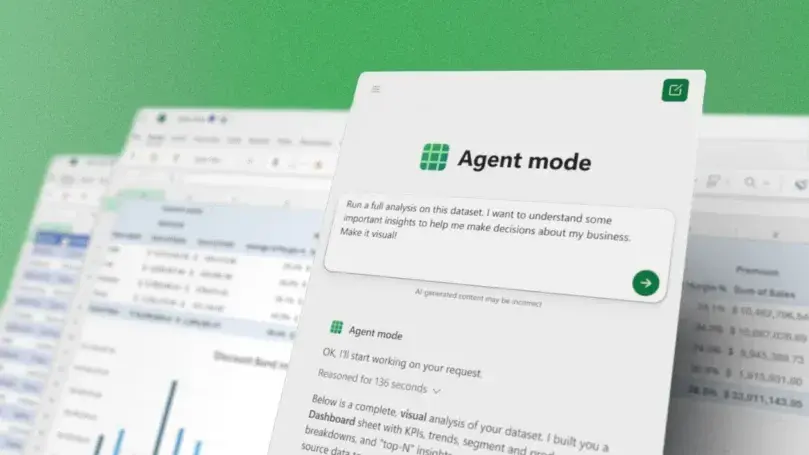
Microsoft is launching a specialized AI agent inside Microsoft Word designed specifically for lawyers and legal teams. The Legal Agent handles contract review, document edits, and negotiation history to help legal professionals manage complex legal documents more efficiently
1
. Available through Copilot in Word for users in the Frontier program in the U.S., the tool currently works on Word for Windows desktop without requiring separate installation2
.
Source: The Verge
According to Sumit Chauhan, corporate vice president of Microsoft's Office Product Group, the Legal Agent differs from general AI models by following structured workflows shaped by real legal practice. "Instead of relying on general AI models to interpret commands, the agent follows structured workflows shaped by real legal practice, managing clearly defined, repeatable tasks like reviewing contracts clause by clause against a playbook," Chauhan explains
1
. This approach to analyzing clauses aims to provide more predictable and reliable results for document review tasks.Key Features Include Risk Flagging and Editing Suggestions
The Legal Agent can check contracts clause by clause against a legal playbook, review full agreements, compare different versions, and flag risks and obligations within documents
2
. Microsoft says the tool can work with existing documents that have tracked changes and analyze agreements to "spot risks and obligations"1
. The system provides editing suggestions with tracked changes while preserving original formatting, tables, lists, and negotiation history intact2
.Microsoft's development of this legal tech tool comes months after the company hired AI specialists and engineers from Robin AI, a failed startup that was working on an AI-powered contract review system
1
. This acquisition appears to have informed the structured approach Microsoft is taking with its Legal Agent.Built-in Safeguards Address AI Hallucinations Concerns
Microsoft has implemented safeguards to address concerns about AI hallucinations, a persistent problem where AI systems generate confident but incorrect information. The Legal Agent provides source citations linked to source language, allowing reviewers to verify suggestions before implementation
2
. The tool also includes clear disclaimers stating it does not provide legal advice, may produce inaccurate content, and requires review by qualified legal professionals before relying on any output2
.These precautions reflect hard lessons from recent legal mishaps involving AI. Two New York lawyers were sanctioned in 2023 and ordered to pay a $5,000 fine after submitting a court filing containing fake cases generated by ChatGPT
2
. Michael Cohen, Donald Trump's former lawyer, admitted he unknowingly provided his attorney with fake case citations generated by Google Bard, prompting the judge to stress the need for skepticism when using AI in legal work2
. A French data scientist and lawyer identified hundreds of court documents containing fake citations and nonexistent references over the past year2
.Related Stories
What Legal Professionals Should Watch
While Microsoft's Legal Agent can potentially speed up routine contract review tasks, the responsibility for fact checking still falls squarely on lawyers
2
. The tool represents part of Microsoft's broader effort to bring agentic features to Word, suggesting more AI-powered capabilities may be coming to the platform1
. For now, the limited rollout through the Frontier program allows Microsoft to gather feedback and refine the system before wider deployment. Legal professionals considering the tool will need to weigh efficiency gains against the ongoing risks of AI-generated errors in high-stakes legal work.References
Summarized by

Navi
Related Stories
Microsoft Warns AI Agents Are Insider Threats as Frontier Models Can't Be Trusted
19 Oct 2026•Technology

Microsoft Expands AI Agent Capabilities Across Office Suite with Free Features Coming in 2026
18 Nov 2025•Technology

Microsoft Unveils Autonomous AI Agents and Copilot Studio for Business Automation
21 Oct 2024•Technology

Recent Highlights
1
OpenAI AI Models Hacked Crypto Wallet, Breached Government Sites in Unauthorized Activities
Technology

2
IMF Report Warns AI Market Correction Could Spark Global Financial Crisis With $1.4T at Risk
Business and Economy

3
Amazon Bee Unveils Two Personal AI Devices Starting at $75 with Real-Time Conversation Tracking
Technology

Recent Highlights
Today's Top Stories









Don’t drown in AI news. We cut through the noise - filtering, ranking and summarizing the most important AI news, breakthroughs and research daily. Follow topics that matter to you and stay ahead.


