AMD Ryzen AI Halo mini PC targets developers in June with 128GB unified memory at half NVIDIA's price


4 Sources
[1]
AMD Ryzen AI Halo mini PC is coming in June with 128GB of unified memory and a focus on local AI workloads
Serving tech enthusiasts for over 25 years. TechSpot means tech analysis and advice you can trust. Forward-looking: AMD is reportedly set to launch its Ryzen AI Halo mini PC in June. Unveiled at CES 2026 in January, the device is designed as an AI developer platform optimized for applications
[2]
AMD Ryzen AI Halo Mini PC Surfaces Ahead of Expected June Release
AMD's first-party Ryzen AI Halo mini PC has surfaced online, offering an early look at the company's compact system built around its latest AI-focused processor platform. Initially introduced at CES 2026, the device is based on the Ryzen AI Max+ 395 processor and is expected to target
[3]
AMD's in-house 'Halo Box' mini-PC confirmed for June launch
TL;DR: AMD introduced the Halo Box, an AI development platform featuring the Ryzen AI MAX+ 395 chip and 128GB RAM, designed for portable, enterprise use with Windows and Linux support. Launching in June, it offers a cost-effective alternative to NVIDIA's DGX Spark but with less software ecosystem
[4]
AMD Aims Ryzen AI Halo Mini PC at NVIDIA's $4,699 DGX Spark, Targets June Launch With Ryzen AI MAX+ 395
AMD's Powerful & Compact "Ryzen AI Halo" Mini PC Is Expected To Launch Next Month AMD recently hosted its AI Dev Day, where it once again showcased the Ryzen AI Halo Mini PC. A Reddit user, 1ncehost, has posted pictures from the event where Jack Hyuh was holding in the Mini PC, and based on the
Share
Copy Link
AMD confirmed its first-party Ryzen AI Halo mini PC will launch in June, powered by the Ryzen AI Max+ 395 chip with up to 128GB of unified memory. Designed as an AI developer platform for local AI workloads, the compact system is positioned to compete directly with NVIDIA's DGX Spark at roughly half the cost, expected between $2,000-$3,000 versus NVIDIA's $4,699.
AMD Confirms June Launch for First-Party AI Mini PC
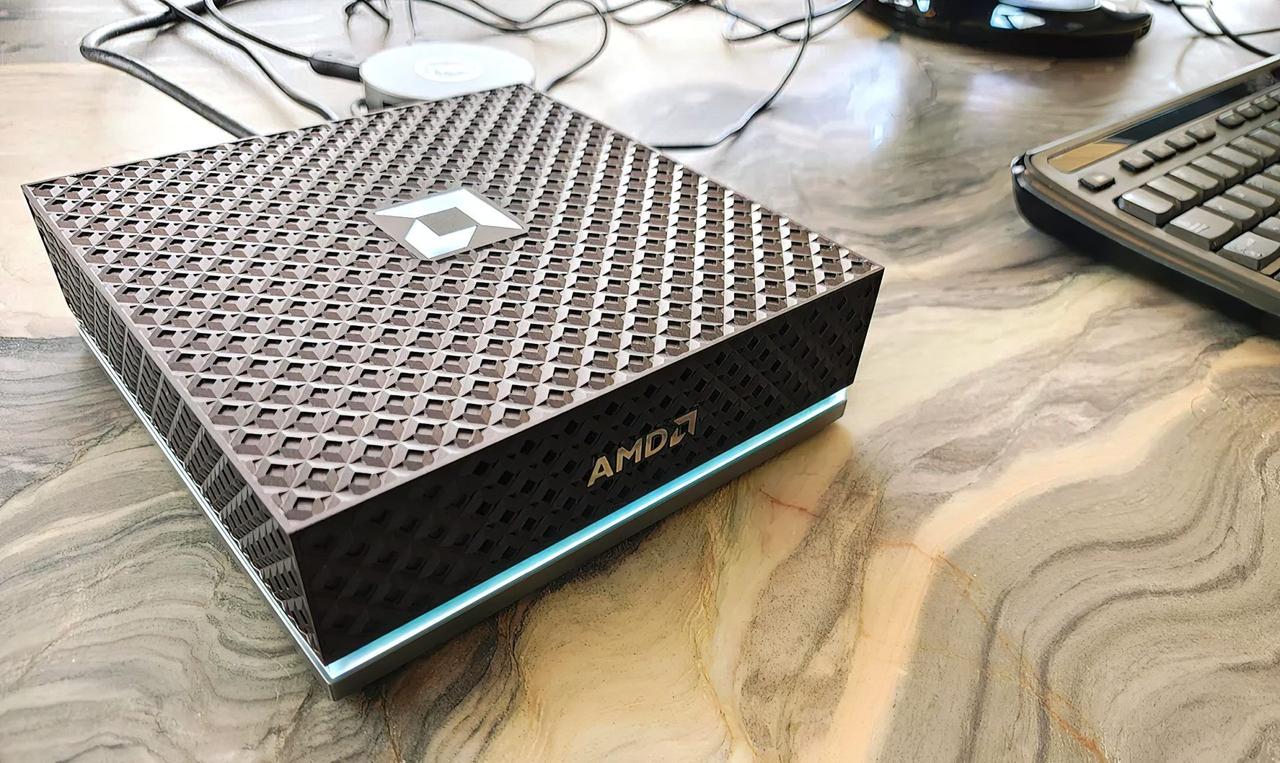
AMD is set to launch the AMD Ryzen AI Halo mini PC in June, marking the company's entry into the first-party AI developer platform market. Jack Huynh, AMD's senior vice president and general manager, confirmed the timeline during the company's AI DevDay event in San Francisco, where he showcased the device on stage
1
4
. Initially unveiled at CES 2026 in January, the compact system is designed specifically for local AI workloads and targets developers working with applications such as LM Studio, ComfyUI, and Visual Studio Code1
4
.
Source: Wccftech
The AI mini PC represents AMD's direct challenge to NVIDIA's DGX Spark, which currently retails at $4,699 for a 128GB configuration
3
. While AMD has not announced official pricing, industry observers expect the Ryzen AI Halo to land between $2,000-$3,000, positioning it as a cost-effective alternative for developers and small form factor AI users4
. The demo unit showcased at AI DevDay featured 128GB of unified memory, ran Ubuntu, and included a programmable RGB light strip on the front1
.Ryzen AI Max+ 395 Powers High-Performance Computing
At the heart of the system sits the Ryzen AI Max+ 395, the flagship SoC in AMD's Strix Halo lineup
1
. This powerful chip integrates 15 Zen 5 CPU cores with 32 threads, running at a base clock of 3GHz and boosting up to 5.1GHz1
. The SoC combines a Radeon 8060S RDNA 3.5 GPU featuring 40 compute units with an XDNA 2 NPU that delivers 50 TOPS of AI compute performance1
4
.The chip includes 64MB of L3 cache and operates at a default TDP of 55W, manufactured by TSMC on its 4nm process node
1
. Memory support extends to 256-bit LPDDR5X at up to 8,000 MT/s through a quad-channel interface, with the flagship configuration supporting up to 128GB of unified memory1
2
. This memory capacity significantly exceeds typical mini PC offerings and is designed to accommodate demanding workloads such as AI inference, large dataset processing, and content creation tasks2
.Enterprise Design Meets Developer-Focused Features
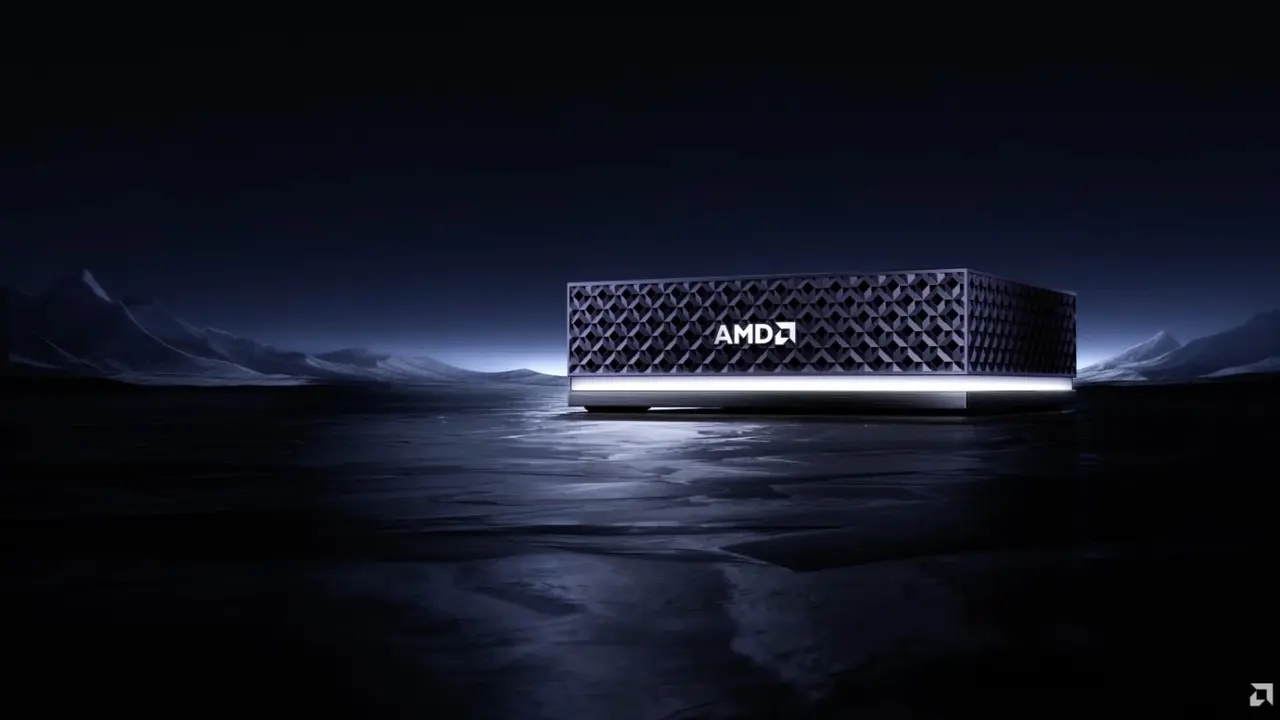
The physical design reveals a square chassis with AMD branding on the top panel, outlined by an ARGB lighting strip that can be controlled via software, even on Linux
2
3
. The surface features a repeating perforated diamond pattern serving as the primary intake, while cooling is handled by a dual-blower system providing targeted airflow to the processor and onboard memory3
.
Source: TweakTown
Connectivity options appear to include multiple USB Type-C ports, HDMI output, at least one USB Type-A port, and wired Ethernet, indicating support for modern high-bandwidth connectivity
2
3
. The compact nature of the system makes it portable enough to be carried by hand, as demonstrated by executives at the event3
.Related Stories

Software Ecosystem and AI Developer Platform Capabilities
As an AI developer platform, the Ryzen AI Halo will feature full AMD ROCm support, including the newly released ROCm 7.2.2 suite
4
. The system will be optimized for dev-ready applications and will enable optimizations for several models, including GPT-OSS, FLUX.2, and SDXL4
. AMD promises day-zero support for leading AI models, positioning the platform for immediate deployment in enterprise use cases4
.The first-party nature of the platform should deliver seamless operation on both Windows and Linux, preloaded models, quality control, and possibly subsidized pricing
3
. Marketing claims suggest the system can run 200B models with quantization, though performance will not match massive cloud-scale providers3
.Market Competition and Pricing Dynamics
Third-party mini PCs powered by the Ryzen AI Max+ 395 are already available, with the GMKtec EVO-X2 featuring 96GB of LPDDR5X RAM and 2TB of storage currently listed on Amazon for $2,349
1
4
. Current Strix Halo mini-PCs with similar specifications are priced around $2,500-$3,0003
.The response to AMD's entry into the mini PC market has been mixed. Some question whether sufficient demand exists for a first-party AMD mini PC, while others believe the company should have launched the device last year, shortly after the Strix Halo announcement
1
. However, commentators note that additional competition could force third-party vendors to lower prices, potentially benefiting consumers1
. While AMD positions this as a lower-cost alternative to NVIDIA, the software and ecosystem support from NVIDIA remains more mature3
, creating an important consideration for developers choosing between platforms for enthusiast systems and professional deployments.References
Summarized by

Navi
[1]
Related Stories
AMD unveils Ryzen AI Halo mini PC to challenge Nvidia in AI development market
06 Jan 2026•Technology

AMD Ryzen AI Halo launches at $3,999, undercutting NVIDIA's DGX Spark in AI development race
13 Jun 2026•Technology
AMD prices Ryzen AI Halo at $3,999 with June preorders, challenges Nvidia's DGX Spark dominance
21 May 2026•Technology
Recent Highlights
1
Meta Unveils Muse Wonder Frontier AI Models, Claims Performance Matching OpenAI and Anthropic
Technology

2
IMF Report Warns AI Market Correction Could Spark Global Financial Crisis With $1.4T at Risk
Business and Economy

3
OpenAI Releases 722 AI-Generated Math Solutions, Triggering Existential Crisis in Mathematics
Technology

Recent Highlights
Today's Top Stories







Don’t drown in AI news. We cut through the noise - filtering, ranking and summarizing the most important AI news, breakthroughs and research daily. Follow topics that matter to you and stay ahead.


