6 Sources
[1]
Meta buys robotics startup to bolster its humanoid AI ambitions | TechCrunch
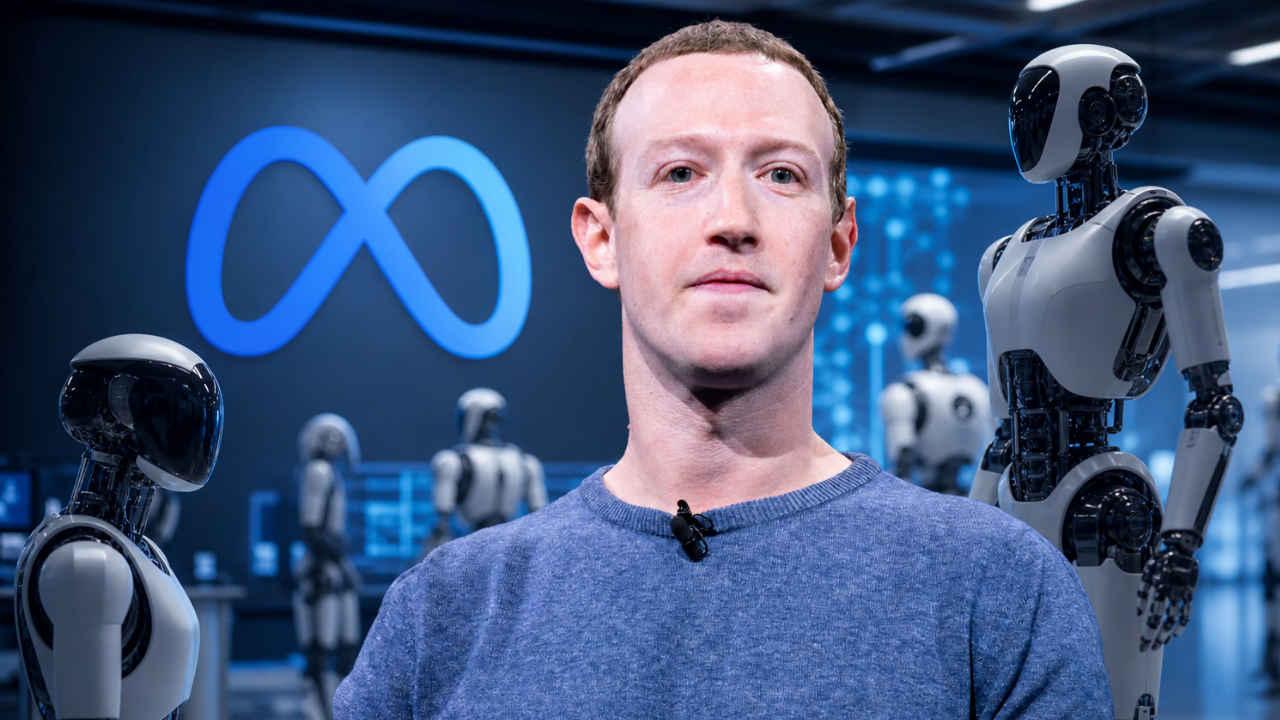
Meta has acquired humanoid robotics startup Assured Robot Intelligence for an undisclosed sum, the social media giant said. "We acquired Assured Robot Intelligence, a company at the frontier of robotic intelligence designed to enable robots to understand, predict, and adapt to human behaviors in complex and dynamic environments," a Meta spokesperson told TechCrunch in an emailed statement. ARI's team, including its co-founders, will join Meta's AI unit, the Superintelligence Labs research division. ARI had raised an undisclosed seed round from AI seed firm AIX Ventures. The startup was building foundation models for humanoid robots to perform all types of physical labor such as household chores. Co-founder Xiaolong Wang was previously a researcher at Nvidia, and an associate professor at UC San Diego, with a list of prestigious awards to his name. Co-founder Lerrel Pinto, who previously taught at NYU and co-founded the kid-size humanoid startup Fauna Robotics before Amazon snapped it up last month, has also won a string of prestigious awards. ARI will help Meta with its humanoid ambitions. "This team, led by Lerrel Pinto and Xiaolong Wang, will bring a deep expertise in how we can design our models and frontier capabilities for robot control and self-learning to whole-body humanoid control." Meta researchers have been working on humanoid robotics tech for years. A leaked memo from a year ago discussed Meta's ambitions to build such a robot, including AI models and hardware, aimed at consumers. Even if Meta never releases a consumer humanoid product, many AI experts these days believe that the path to artificial general intelligence (AGI) -- the theoretical point at which AI reaches or surpasses human-level intelligence across all domains -- will require training AI models in the physical world, where robots learn through direct interaction rather than data alone. The ARI and Fauna deals reflect a broader industry sprint -- one where forecasts vary wildly, from Goldman Sachs's projection of $38 billion by 2035 to Morgan Stanley's estimate of $5 trillion by 2050 -- a spread that reflects both the enormous potential and the uncertainty around tech that's still finding its footing.
[2]
Meta Acquires Robotics AI Company to Help Build Humanoid Technology
Meta Platforms Inc. has acquired Assured Robot Intelligence, a startup developing artificial intelligence models for robots, as part of a major initiative to build humanoid technology. The social networking giant closed the acquisition Friday, according to a spokesperson. Meta said the startup is "at the frontier of robotic intelligence designed to enable robots to understand, predict and adapt to human behaviors in complex and dynamic environments." Financial terms weren't disclosed. The Assured Robot Intelligence team, which includes co-founders Lerrel Pinto and Xiaolong Wang, will join the Meta Superintelligence Labs research division. The staff will work closely with Meta Robotics Studio, a team launched last year to work on underlying technology for humanoids. Meta is making a significant investment in humanoids -- futuristic robots that can move like humans and assist with physical tasks. The emerging sector has been gaining steam at many of the industry's biggest companies, including Tesla Inc., Alphabet Inc.'s Google and Amazon.com Inc. Wang was previously a researcher at Nvidia Corp., while Pinto was a co-founder of Fauna Robotics before leaving in 2025. Amazon acquired Fauna in March to help bolster its own humanoid robot effort. Assured Robot Intelligence employees were concentrated in San Diego and New York. At Meta, the group "will bring a deep expertise in how we can design our models and frontier capabilities for robot control and self-learning to whole-body humanoid control," the spokesperson for the social media company said. Meta's robotics team, which aims to eventually use technology from the startup, is working on in-house humanoid hardware and the underlying AI that powers it. That includes developing sensors, software and other technology for robots that it will make available to others in the industry, meaning they could ultimately be used by a range of companies. Meta's goal is to provide what Google's Android operating system and Qualcomm Inc.'s chips did for the phone industry by building a foundation for the rest of the market, Bloomberg News reported last year.
[3]
Meta acquires Assured Robot Intelligence to build the Android of humanoid robots
Meta acquired Assured Robot Intelligence, a startup co-founded by former Fauna Robotics co-founder Lerrel Pinto and former Nvidia researcher Xiaolong Wang, to bolster its humanoid robotics platform strategy. The deal, which brings whole-body robot control models and tactile sensor technology into Meta Superintelligence Labs, reveals Meta's ambition to be the Android of humanoids: provide the intelligence layer and let others build the machines. Lerrel Pinto co-founded Fauna Robotics, a startup that built an approachable bipedal robot called Sprout. He left in 2025. Amazon acquired Fauna in March, along with its 50 employees and its $50,000, three-and-a-half-foot-tall dancing humanoid, to enter the consumer robotics market. Pinto then co-founded Assured Robot Intelligence with Xiaolong Wang, a former Nvidia researcher and associate professor at UC San Diego who won the MLSys 2024 Best Paper Award for work on AI model optimisation. On Friday, Meta acquired ARI and both founders joined Meta Superintelligence Labs. The acquisition closed the same day it was announced. Financial terms were not disclosed. The interesting question is not what Meta paid for a startup whose employees were concentrated in San Diego and New York. It is what Meta intends to do with the technology, and what that intention reveals about the company's theory of how the humanoid market will develop. The platform Meta's stated goal for robotics is to replicate what Google's Android operating system and Qualcomm's chips did for the smartphone industry: build the foundation that everyone else builds on. The company launched Meta Robotics Studio last year, hired former Cruise CEO Marc Whitten to lead the effort, and began recruiting roughly 100 engineers to develop in-house humanoid hardware alongside the AI models that power it. CTO Andrew Bosworth has described humanoid robots as Meta's next bet of comparable scale to augmented reality, a category in which Meta has already spent tens of billions through its Reality Labs division. The ARI acquisition adds a specific capability to this effort: robot control models that enable humanoids to understand, predict, and adapt to human behaviour in unstructured environments. The platform strategy is explicit. Meta intends to develop sensors, software, and AI models for robots and make them available to the rest of the industry, meaning the technology could be used by manufacturers that Meta does not own or control. This is the Android model applied to physical machines. In smartphones, Google gave away the operating system and captured value through search, advertising, and the Play Store ecosystem. In robotics, Meta would give away the intelligence layer and capture value through the data, the model ecosystem, and the integration with Meta's existing platforms, where 3.3 billion people already interact daily. Meta has been acquiring AI talent aggressively, hiring five founding members of Thinking Machines Lab, including a researcher whose six-year package reportedly reached $1.5 billion. The ARI acquisition fits the same pattern: small team, frontier capability, immediate integration into the Superintelligence Labs research division. The technology ARI's technical contribution centres on what the company calls "robotic intelligence designed to enable robots to understand, predict and adapt to human behaviors in complex and dynamic environments." In practice, this means AI models for whole-body humanoid control, the ability to coordinate a robot's limbs, balance, and movement in response to real-time sensory input from an unpredictable physical world. Wang's award-winning work on activation-aware weight quantisation, the same technique that made Nebius's $643 million acquisition of Eigen AI valuable this week, is relevant here: compressing AI models so they run efficiently on the limited compute available inside a robot, rather than requiring a connection to a remote data centre. The company also developed e-Flesh, a tactile sensor that measures deformations in 3D-printable microstructures using magnets and magnetometers. Tactile sensing is one of the unsolved problems in humanoid robotics. A robot that can see its environment through cameras and lidar still cannot feel the difference between gripping an egg and gripping a tennis ball without tactile feedback. The gap between how robots learn in simulation and how they perform in the physical world remains the central obstacle to deployment at scale. ARI's work on self-learning for robot control, combined with its sensor technology, addresses both sides of that gap: better models and better sensory input. The market The humanoid robotics market has moved from speculative to competitive in the span of 18 months. Tesla plans to begin large-scale production of its Optimus V3 humanoid between July and August, with annual capacity targets of one million units by late 2026 and a price point between $20,000 and $30,000. 1X Technologies has opened a factory in Hayward, California, to produce 10,000 NEO humanoid robots in its first year, with first-year production capacity selling out within five days of preorders opening. Apptronik has raised $520 million at a $5 billion valuation, partnering with Google DeepMind and its Gemini Robotics models. Amazon has made two robotics acquisitions in a single month. Unitree is targeting 20,000 humanoid shipments in 2026. Morgan Stanley projects the global humanoid robot market will reach $38 billion by 2035 and $5 trillion by 2050. The competitive dynamics are clarifying into three tiers. The first tier is vertically integrated manufacturers, companies like Tesla and 1X that design, build, and sell the complete robot. The second tier is platform providers, companies that supply the intelligence layer, the operating system, or the key components that multiple manufacturers use. The third tier is the component suppliers, chipmakers and sensor companies that sell to both. Meta is positioning itself in the second tier, and it is not alone. Google, through DeepMind's Gemini Robotics programme and its partnership with Apptronik, is pursuing a similar platform strategy. Europe is developing its own approach to the humanoid race, with companies and research institutions pursuing strategies that emphasise safety, industrial precision, and regulatory compliance over the speed-to-market approach favoured by American and Chinese competitors. The bet Meta's history with hardware platforms is instructive. The company missed mobile. Facebook Home, its 2013 attempt to become the default interface on Android phones, was discontinued within a year. The company then spent more than $50 billion on Reality Labs attempting to own the next computing platform through virtual and augmented reality, a bet that has yet to produce returns at anything approaching the scale of its advertising business. The Ray-Ban Meta smart glasses are the closest the company has come to a successful hardware product outside of its core social media platforms, and even those are essentially an accessory for Meta's AI assistant rather than a standalone computing device. The robotics bet is different in one respect. Meta is not attempting to manufacture the hardware at scale itself. It is attempting to provide the intelligence, the models, the sensor technology, and the software stack, and let others build the machines. This is a lower-capital, higher-leverage strategy than the Reality Labs approach, and it plays to Meta's genuine strengths in AI research, open-source model distribution, and platform economics. But it depends on the humanoid market developing the way the smartphone market developed: with hundreds of manufacturers needing a common software platform. If the market instead consolidates around a few vertically integrated players, each with proprietary AI, the Android model does not apply. Tesla is not looking for an operating system. Neither is 1X. The companies that might want Meta's intelligence layer are the ones that do not yet exist, the humanoid equivalents of Samsung and Xiaomi and Oppo, manufacturers that can build bodies but need someone else to provide the brain. Meta is betting those companies are coming. The ARI acquisition is the latest investment in making sure that when they arrive, Meta's technology is what they reach for first.
[4]
Meta acquires robot software startup Assured Robot Intelligence - SiliconANGLE
Meta acquires robot software startup Assured Robot Intelligence Meta Platforms Inc. has acquired Assured Robot Intelligence Inc., a provider of artificial intelligence software for robots. The social media giant announced the deal today without disclosing the financial terms. However, it did specify that the acquisition is designed to advance its efforts to develop humanoid robots. Assured Robot Intelligence's single-page website doesn't provide information about its AI software. The San Diego-based company was founded by prominent AI researchers Lerrel Pinto and Xiaolong Wang. Pinto previously co-founded Fauna Robotics Inc., a humanoid robot startup that was acquired by Amazon.com Inc. in March. Wang, in turn, is a former Nvidia Corp. researcher and an associate professor at UC San Diego. Last year, Wang gave an academic talk about a humanoid robot control system developed by his team. The system enables users to view footage from a robot's cameras through a virtual reality headset. When the direction of the wearable changes with the turn of the user's head, the robot repositions its cameras accordingly. That technology may have been a factor behind Meta's decision to swoop in. Last year, the company launched a pair of smart glasses called the Meta Ray-Ban Display. Meta may be looking to develop humanoid robots that users can control remotely using smart glasses. The Meta Ray-Ban Display features a built-in screen that can theoretically show footage from a robot's cameras. Furthermore, the device ships with a wristband called the Neural Band that enables users to control it with hand gestures. Future versions of the accessory could be theoretically repurposed to control a humanoid robot's arms. The Assured Robot Intelligence team will join Meta Superintelligence Labs, the business unit that leads the Facebook parent's AI development efforts. The group trained the Muse Spark large language model that the company debuted last month. Additionally, it includes the Meta Robotics Studio, the team that leads Meta's humanoid robot initiative. Last year, Bloomberg reported that the company doesn't plan to launch its own humanoid robot. Instead, it hopes to supply components and software to other market players. The report compared the role that Meta hopes to play to Qualcomm Inc.'s position in the mobile ecosystem. The latter company supplies chips to many Android handset makers. The MIA500 machine learning chip that Meta debuted last month may be part of its plan for the robotics market. It's an inference accelerator that can provide 10 petaflops of performance when processing FP8 data. In theory, Meta could develop a power-efficient version of the chip optimized for humanoid robots and sell it to other companies. The social media giant stated that Assured Robot Intelligence will help its engineers develop robot control systems and AI model architectures. Additionally, the startup's team will explore new self-learning techniques. Self-learning is an AI training approach that teaches neural networks to perform new tasks through trial and error.
[5]
Meta acquires Assured Robot Intelligence to advance humanoid technology By Investing.com
Investing.com -- Meta Platforms completed the acquisition of Assured Robot Intelligence on Friday, a startup focused on developing artificial intelligence models for robots. The purchase is part of Meta's broader effort to build humanoid technology. Meta described the startup as operating at the frontier of robotic intelligence, designed to enable robots to understand, predict and adapt to human behaviors in complex and dynamic environments. The company did not disclose the financial terms of the deal. The Assured Robot Intelligence team will join Meta Superintelligence Labs, the company's research division. Co-founders Lerrel Pinto and Xiaolong Wang will work alongside Meta Robotics Studio, a team established in 2025 to develop underlying technology for humanoids. Wang previously worked as a researcher at Nvidia, while Pinto co-founded Fauna Robotics before departing in 2025. Amazon acquired Fauna in March to support its own humanoid robot development. Assured Robot Intelligence had employees based in San Diego and New York. A Meta spokesperson said the group will contribute expertise in designing models and frontier capabilities for robot control and self-learning to whole-body humanoid control. This article was generated with the support of AI and reviewed by an editor. For more information see our T&C.
[6]
Meta Platforms Acquires Humanoid Robot Startup Assured Robot Intelligence
Meta Platforms acquired Assured Robot Intelligence, a startup trying to build humanoid robots. The company declined to disclose the terms of the deal. The acquisition was reported earlier by Bloomberg. "We acquired Assured Robot Intelligence, a company at the frontier of robotic intelligence designed to enable robots to understand, predict, and adapt to human behaviors in complex and dynamic environments," a Meta spokesperson said in a Friday statement. The startup's team, led by Lerrel Pinto and Xiaolong Wang, will join Meta to focus on optimizing its models for robotics applications, the spokesperson said. Disclosure of Meta's deal comes two days after the company boosted its projected capital expenditures for this year, citing expectations of higher component prices and additional artificial-intelligence data-center costs. The company raised its projected capital spending by $10 billion to a new range of $125 billion to $145 billion for 2026. Meta has shifted resources away from its augmented reality initiative known as the Metaverse and toward AI. Last month, the company released a new large language model called Muse Spark, which Meta has said is competitive with leading models from Google, OpenAI, and Anthropic. Investors have viewed Meta's spending plans with some skepticism. Shares retreated following the company's earnings release on Wednesday, and the stock is down 9.4% in the last five days. Shares ended the week at $608.75 each. Chief Executive Mark Zuckerberg has outlined a vision to supply "personal superintelligence" to billions of people. Mizuho analysts wrote in a note earlier this week that though Zuckerberg's vision remains light on details, the picture is coming increasingly into view. "It remains vague, but we can see his agentic consumer focused vision start to take shape," the analysts wrote. "The improving confidence from management was palpable." Write to Elias Schisgall at [email protected]
Share
Copy Link
Meta completed the acquisition of Assured Robot Intelligence, bringing co-founders Lerrel Pinto and Xiaolong Wang into its Superintelligence Labs. The deal positions Meta to become the intelligence layer for humanoid robots, mirroring Android's role in smartphones. With the humanoid market projected between $38 billion by 2035 and $5 trillion by 2050, Meta aims to provide the foundation others build on.
Meta has acquired Assured Robot Intelligence, a robotics AI company developing foundation models for humanoid robots, in a deal that closed Friday
1
. Financial terms were not disclosed, though the startup had raised an undisclosed seed round from AIX Ventures1
. The acquisition brings co-founders Lerrel Pinto and Xiaolong Wang into Meta Superintelligence Labs, where they will work closely with Meta Robotics Studio, a team launched in 2025 to develop underlying technology for humanoids .
Source: Bloomberg
Meta described Assured Robot Intelligence as operating "at the frontier of robotic intelligence designed to enable robots to understand, predict, and adapt to human behaviors in complex and dynamic environments"
1
. The team will contribute expertise in designing AI models for robots and frontier capabilities for robot control and self-learning to whole-body humanoid control .Meta's stated goal for robotics mirrors what Google's Android operating system and Qualcomm's chips accomplished for the smartphone industry: build the foundation that everyone else builds on . The company intends to develop sensors, software, and AI models for robots and make them available to the rest of the industry, meaning the technology could be used by manufacturers Meta does not own or control
3
.This platform strategy positions Meta to provide the intelligence layer while letting others build the machines
3
. Meta hired former Cruise CEO Marc Whitten to lead the effort and began recruiting roughly 100 engineers to develop in-house humanoid hardware alongside the AI software for robots that powers it3
. CTO Andrew Bosworth has described humanoid robots as Meta's next bet of comparable scale to augmented reality, a category where Meta has already spent tens of billions through its Reality Labs division3
.The acquisition adds specific capabilities in whole-body humanoid control, the ability to coordinate a robot's limbs, balance, and movement in response to real-time sensory input from an unpredictable physical world
3
. Xiaolong Wang, a former Nvidia researcher and associate professor at UC San Diego, won the MLSys 2024 Best Paper Award for work on AI model optimization3
. His award-winning work on activation-aware weight quantization enables AI models to run efficiently on the limited compute available inside a robot, rather than requiring a connection to a remote data center3
.Lerrel Pinto co-founded Fauna Robotics, which built an approachable bipedal robot called Sprout . He left in 2025, and Amazon acquired Fauna in March, along with its 50 employees and its $50,000, three-and-a-half-foot-tall dancing humanoid, to enter the consumer robotics market . Pinto then co-founded Assured Robot Intelligence with Wang, bringing together expertise from both academic AI researchers and practical robotics development
1
.Assured Robot Intelligence employees were concentrated in San Diego and New York . The company developed e-Flesh, a tactile sensor technology that measures deformations in 3D-printable microstructures using magnets and magnetometers
3
. Tactile sensing addresses one of the unsolved problems in humanoid robotics: enabling a robot to feel the difference between gripping different objects without tactile feedback3
.
Source: SiliconANGLE
Related Stories
The humanoid robotics market has moved from speculative to competitive rapidly. Tesla plans to begin large-scale production of its Optimus V3 humanoid between July and August, with annual capacity targets of one million units by late 2026 and a price point between $20,000 and $30,000
3
. Industry forecasts vary wildly, from Goldman Sachs's projection of $38 billion by 2035 to Morgan Stanley's estimate of $5 trillion by 2050, a spread that reflects both the enormous potential and the uncertainty around technology that's still finding its footing1
.Many AI experts believe that the path to Artificial General Intelligence (AGI), the theoretical point at which AI reaches or surpasses human-level intelligence across all domains, will require training AI models in the physical world, where robots learn through direct interaction rather than data alone
1
. Meta Superintelligence Labs will explore new self-learning techniques, an AI training approach that teaches neural networks to perform new tasks through trial and error4
.
Source: TechCrunch
The acquisition fits Meta's pattern of acquiring AI talent aggressively, having previously hired five founding members of Thinking Machines Lab, including a researcher whose six-year package reportedly reached $1.5 billion
3
. The ARI deal follows the same pattern: small team, frontier capability, immediate integration into the research division3
. With 3.3 billion people already interacting daily on Meta's platforms, the company could capture value through data, the model ecosystem, and integration with existing platforms3
.Summarized by
Navi
15 Feb 2025ā¢Technology

19 Jun 2025ā¢Business and Economy

27 Jun 2025ā¢Business and Economy

1
Entertainment and Society

2
Policy and Regulation

3
Technology