Microsoft's MatterGen: AI-Powered Material Design Breakthrough


3 Sources
[1]
Microsoft's New AI Model Can Help Design Better Batteries, Semiconductors
Microsoft has released MatterGen's source code on GitHub The open-source AI model is available with an MIT licence MatterGen is a diffusion-based generative AI model Microsoft researchers unveiled a new artificial intelligence (AI) model last week that can design new inorganic materials with
[2]
Microsoft Unveils MatterGen, an AI Breakthrough for Materials Discovery
Microsoft on Thursday launched MatterGen, a generative AI tool designed to revolutionise how we understand material discovery, marking a transformative moment in materials science. "Our MatterGen model applies generative AI to create new compounds with unprecedented precision," said Satya Nadella,
[3]
Microsoft just built an AI that designs materials for the future. Here's how it works.
Join our daily and weekly newsletters for the latest updates and exclusive content on industry-leading AI coverage. Learn More Microsoft Research introduced a powerful new artificial intelligence system today that generates novel materials with specific desired properties, potentially accelerating
Share
Copy Link
Microsoft unveils MatterGen, an open-source AI model that revolutionizes inorganic material design, potentially accelerating advancements in energy storage, semiconductors, and carbon capture technologies.

Microsoft Unveils MatterGen: A Game-Changer in AI-Powered Material Design
Microsoft Research has introduced MatterGen, a groundbreaking artificial intelligence model that promises to revolutionize the field of materials science. This open-source large language model (LLM) is designed to generate new inorganic materials with specific desired properties, potentially accelerating advancements in various industries
1
2
3
.How MatterGen Works
MatterGen employs a diffusion-based generative AI architecture, similar to those used in image and video generation models like DALL-E and Stable Diffusion. This architecture provides a better spatial and geometric understanding of shapes and designs, making it ideal for material design
1
3
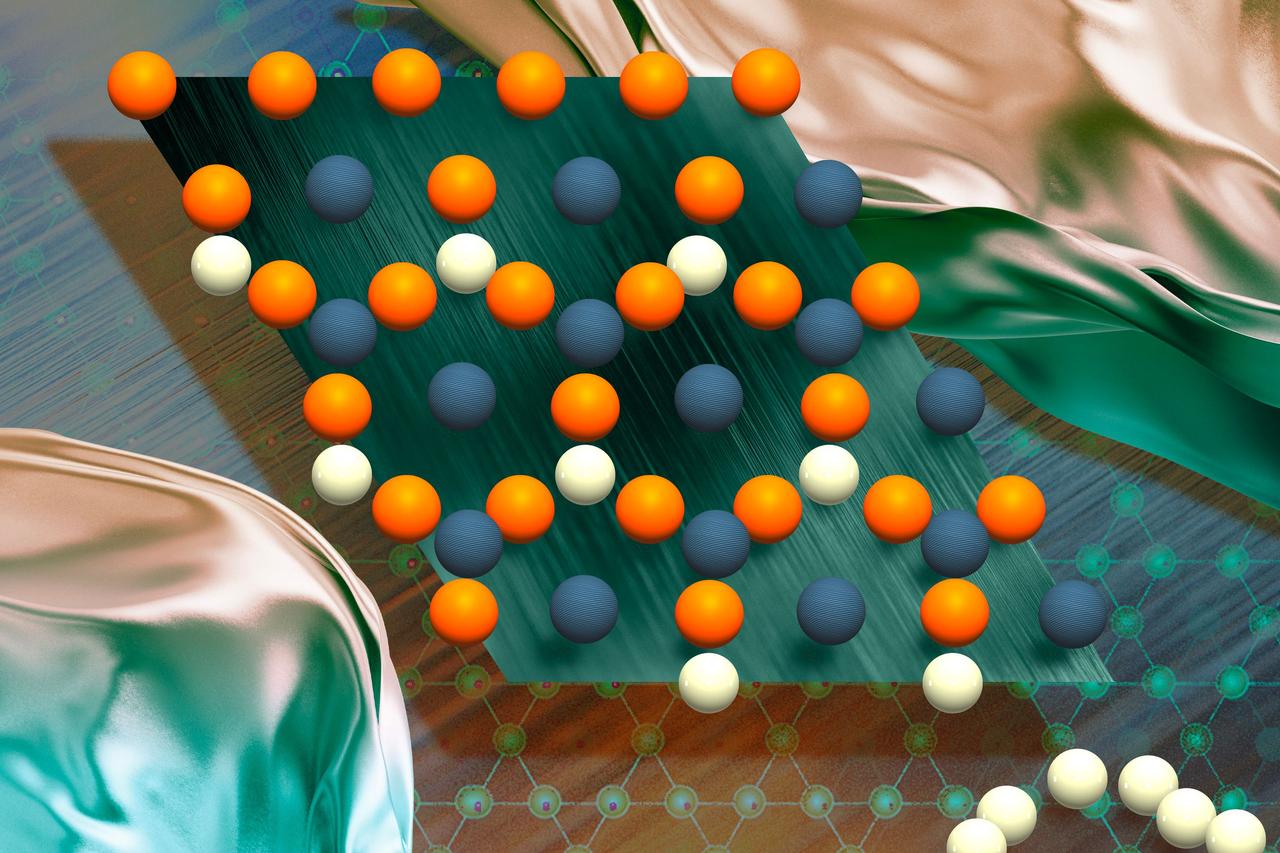
.The AI model was trained on a dataset of over 600,000 stable inorganic crystal structures compiled from the Materials Project and Alexandria databases. It can generate crystalline structures across the periodic table, combine different elements, and refine atom types, coordinates, and periodic lattices
1
2
.Advantages Over Traditional Methods
Traditional material design is a slow, methodical process relying on human knowledge and intuition. MatterGen offers several advantages:
- Speed: It can generate and simulate material designs at a high speed
1
. - Novelty: Materials produced by MatterGen are more than twice as likely to be novel and stable compared to previous AI approaches
3
. - Precision: Generated materials are more than 15 times closer to the local energy minimum, indicating better physical feasibility
3
. - Flexibility: The model can be fine-tuned for specific properties, such as particular crystal structures or electronic characteristics
3
.
Real-World Validation
In collaboration with Prof. Li Wenjie's team at the Shenzhen Institutes of Advanced Technology, MatterGen was challenged to design a material with a specific compression resistance (200 GPa bulk modulus). The AI successfully designed a new material, TaCr₂O₆, which was then synthesized and found to match the AI's predictions closely
2
3
.Potential Applications
MatterGen's capabilities could have far-reaching implications for various industries:
- Energy storage: Designing better battery materials for electric vehicles
1
3
. - Semiconductors: Improving efficiency and performance of electronic devices
1
. - Carbon capture: Developing materials to combat climate change
1
. - Renewable energy: Creating more efficient solar cell materials
3
.
Related Stories



Open-Source Approach and Industry Impact
Microsoft has released MatterGen's source code on GitHub under an MIT license, encouraging collaboration and innovation within the scientific community
1
2
. This open-source approach could accelerate the adoption and improvement of the technology across various fields.The integration of MatterGen with other AI simulation tools, such as MatterSim, further enhances its potential for scientific discovery
2
. Industry experts, including Christopher Stiles from the Johns Hopkins University Applied Physics Laboratory, have expressed interest in understanding MatterGen's impact on materials discovery2
.AI in Materials Science: A Growing Trend
MatterGen is part of a broader trend of AI applications in materials science. Other tech giants have also made significant contributions:
- Google DeepMind: Discovered 2.2 million new crystals using deep learning
2
. - Meta: Released the Open Materials 2024 (OMat24) dataset containing over 118 million examples of material simulations and structures
2
. - Amazon: Partnered with Orbital Materials to develop new materials for data center decarbonization
2
.
As part of Microsoft's AI for Science initiative, MatterGen represents a significant step forward in using AI to accelerate scientific discovery. While the path from computationally designed materials to practical applications still requires extensive testing and refinement, the technology shows immense promise for transforming industries and driving innovation in material design
3
.References
Summarized by

Navi
Related Stories
Recent Highlights



Recent Highlights
Today's Top Stories



Don’t drown in AI news. We cut through the noise - filtering, ranking and summarizing the most important AI news, breakthroughs and research daily. Follow topics that matter to you and stay ahead.


