MIT's SCIGEN: Steering AI to Create Breakthrough Quantum Materials


3 Sources
[1]
New tool makes generative AI models more likely to create breakthrough materials
The artificial intelligence models that turn text into images are also useful for generating new materials. Over the last few years, generative materials models from companies like Google, Microsoft, and Meta have drawn on their training data to help researchers design tens of millions of new
[2]
New tool steers AI models to create materials with exotic quantum properties
The artificial intelligence models that turn text into images are also useful for generating new materials. Over the last few years, generative materials models from companies like Google, Microsoft, and Meta have drawn on their training data to help researchers design tens of millions of new
[3]
Can AI Help Invent the Next Superconductor? MIT and Samsung Researchers Think So - Decrypt
Both reflect a push for "physics-aware AI" to accelerate discovery in quantum computing, energy, and semiconductors. What if an AI system could propose a recipe for a new material that conducts electricity with zero resistance at room temperature -- a holy grail for quantum computing and
Share
Copy Link
MIT researchers develop SCIGEN, a tool that guides generative AI models to create materials with exotic quantum properties, potentially accelerating breakthroughs in quantum computing and materials science.
MIT Researchers Develop SCIGEN: A Game-Changer for Quantum Materials Design
In a significant leap forward for materials science and quantum computing, researchers at the Massachusetts Institute of Technology (MIT) have introduced SCIGEN, a groundbreaking tool that enables generative AI models to create materials with exotic quantum properties
1
. This innovation addresses a critical challenge in the field, where existing AI models from tech giants like Google, Microsoft, and Meta have struggled to design materials with unique quantum characteristics such as superconductivity or distinctive magnetic states2
.The Power of Constraints in AI-Driven Materials Design
SCIGEN, short for Structural Constraint Integration in GENerative model, works by imposing specific design rules or constraints on popular generative AI models. These constraints guide the models to create materials with unique structures that give rise to quantum properties. Mingda Li, MIT's Class of 1947 Career Development Professor and senior author of the study, emphasizes the importance of this approach: 'We don't need 10 million new materials to change the world. We just need one really good material'
1
.Focusing on Archimedean Lattices
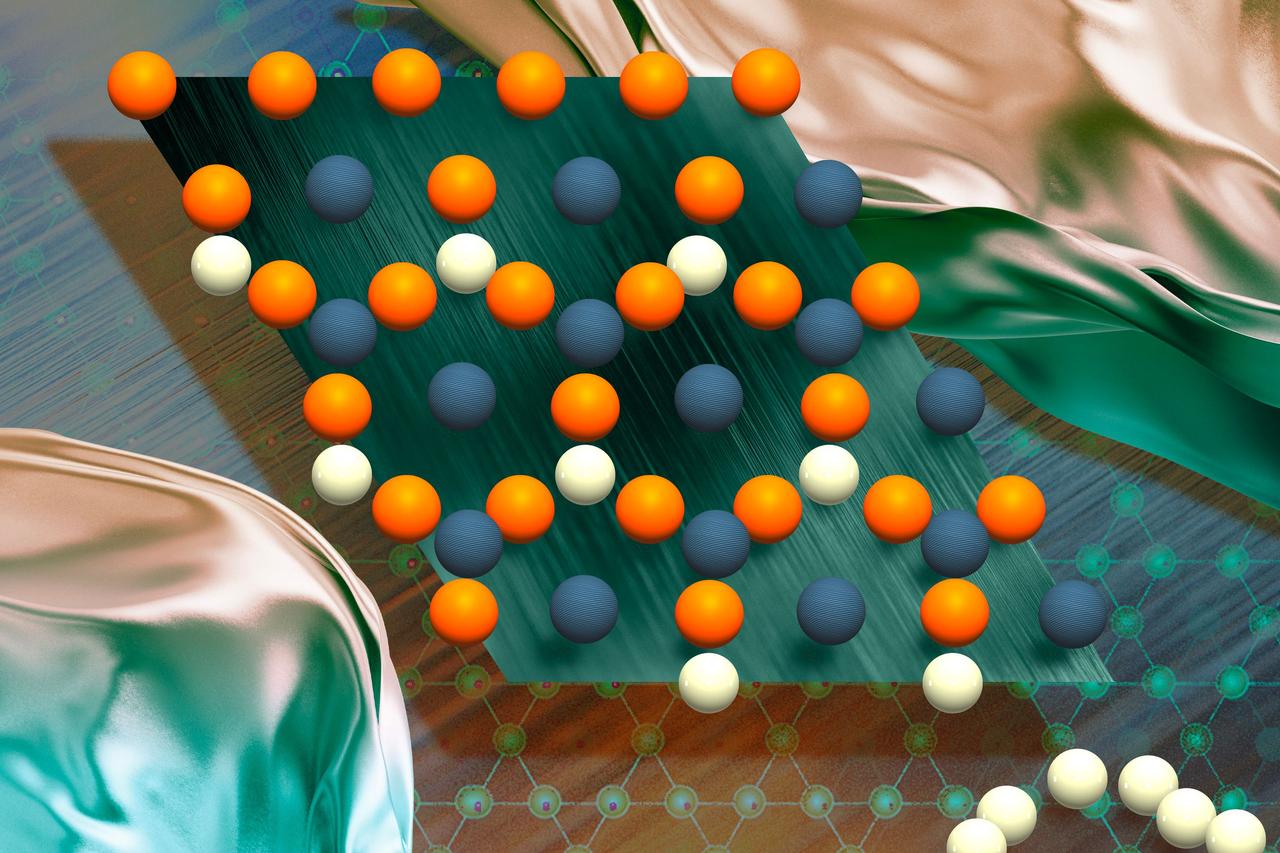
The researchers applied SCIGEN to a popular AI materials generation model called DiffCSP, instructing it to generate materials with Archimedean lattices. These unique geometric patterns are collections of 2D lattice tilings of different polygons, known for their potential to lead to various quantum phenomena
2
. The model generated over 10 million material candidates with Archimedean lattices, from which the team synthesized two actual materials with exotic magnetic traits.Implications for Quantum Computing and Beyond
The development of SCIGEN could have far-reaching implications for quantum computing and materials science. For instance, after a decade of research into quantum spin liquids, a class of materials that could revolutionize quantum computing, only a dozen material candidates had been identified. SCIGEN's ability to generate materials with specific lattice structures, such as Kagome lattices, could accelerate the discovery of materials that mimic the behavior of rare earth elements, which are of high technical importance
1
.Related Stories



The Broader Trend: Physics-Aware AI for Science
SCIGEN is part of a broader trend towards 'physics-aware AI for science.' This approach aims to combine the creative power of generative AI with the constraints of physical laws to accelerate scientific discovery. Samsung researchers have developed a parallel effort called PaRS (Physics-aware Rejection Sampling), which filters the output of large language models to ensure compliance with known physical laws
3
.Potential Impact Across Industries
The implications of these advancements extend beyond quantum computing. In the energy sector, new catalysts could make hydrogen production cleaner and cheaper. In electronics, novel semiconductors could push past silicon's current limitations. If tools like SCIGEN and PaRS can help surface even a handful of viable candidates, the impact could ripple across multiple industries
3
.As these methods continue to develop, they promise to accelerate materials discovery not by chance, but through machine-guided design, potentially ushering in a new era of technological breakthroughs.
References
Summarized by

Navi
Related Stories
Recent Highlights



Recent Highlights
Today's Top Stories



Don’t drown in AI news. We cut through the noise - filtering, ranking and summarizing the most important AI news, breakthroughs and research daily. Follow topics that matter to you and stay ahead.


