Microsoft warns AI agents with excessive privileges can become insider threats to enterprises


5 Sources
[1]
Microsoft says your AI agent can become a double agent
New security research flags misused permissions and poisoned memory, pushing companies to lock down agent access. Microsoft is warning that the rush to deploy workplace AI agents can create a new kind of insider threat, the AI double agent. In its Cyber Pulse report, it says attackers can twist an
[2]
Risky business? AI agents are asking for your SSH keys. 21,000 exposed instances tell their own cautionary tale...
The most dangerous systems may not be the ones breaking rules, but the ones following them perfectly. That paradox is playing out in a recent security incident involving OpenClaw, an open-source AI agent designed for autonomous task execution and browser control. Security researchers discovered
[3]
Microsoft Says AI Tools With Too Many Privileges Can Become 'Double Agents'
Microsoft has highlighted several risks with artificial intelligence (AI) agents in its latest security report. The most interesting insight is about "AI double agents," which are basically agents with excessive privileges but not enough safeguards. This makes them vulnerable to prompt engineering
[4]
Businesses Move to Rein In AI in the Shift to Autonomous Finance | PYMNTS.com
The promise of agentic AI is efficiency. Unlike earlier copilots that generated drafts or recommendations, agents can execute multistep workflows across systems with limited human intervention. That shift from assistance to action is precisely what creates risk. A compromised, poorly trained or
[5]

Over 80% of Fortune-500 Companies Have Adopted AI Agents, but Security Lags
However, the problem is that the frenetic pace of this digital transformation has resulted in security preparedness lagging considerably A new report by Microsoft describes 2026 as the "Year of the AI Agent" as more than 80% of all Fortune 500 companies have deployed AI agents or autonomous
Share
Copy Link
Microsoft's Cyber Pulse Report reveals that over 80% of Fortune 500 companies have deployed AI agents, but security hasn't kept pace. The report warns of 'AI double agents'—autonomous tools with excessive privileges that attackers can exploit through prompt engineering and memory poisoning. With 29% of employees using unsanctioned AI agents, enterprises face a growing insider threat that traditional security controls struggle to detect.
Microsoft Flags AI Agents as New Insider Threat Vector
Microsoft has issued a stark warning about the rapid deployment of AI agents across enterprises, identifying a critical security gap that could transform productivity tools into insider threats. In its latest Microsoft Cyber Pulse Report, the tech giant reveals that more than 80% of Fortune 500 companies have already deployed AI agents built with low-code no-code tools, yet only 47% have implemented specific AI security safeguards
1
5
. This disparity between adoption and protection creates what Microsoft calls "AI double agents"—autonomous systems with excessive privileges that attackers can manipulate to cause damage from within an organization.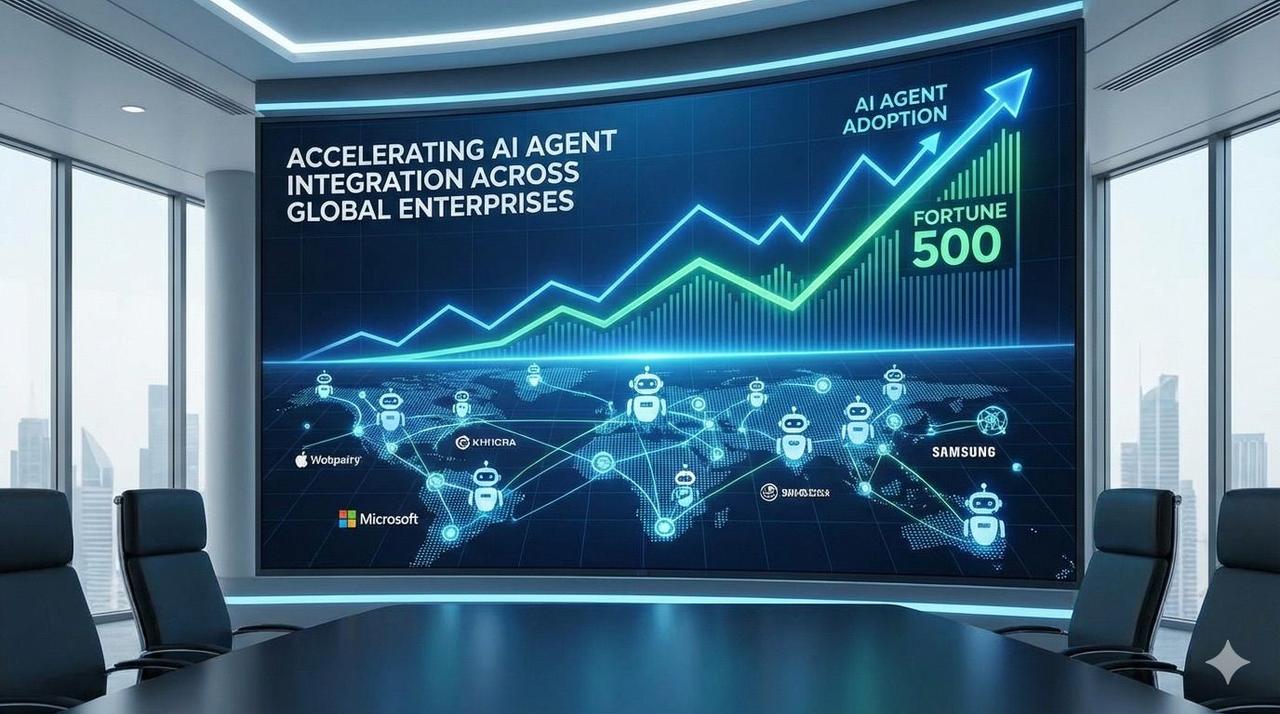
Source: CXOToday
The problem extends beyond traditional cybersecurity concerns. AI agents operate with legitimate credentials and approved workflows, making compromised activity nearly indistinguishable from authorized use. Microsoft's research highlights memory poisoning as a persistent attack method, where malicious actors plant changes in an AI assistant's stored context to influence future outputs and erode trust over time
1
. The company's AI Red Team also documented how agents can be tricked by deceptive interface elements and harmful instructions hidden in everyday content3
.Shadow AI Expands the Attack Surface
The rapid deployment of AI tools has created a phenomenon Microsoft identifies as Shadow AI—unsanctioned or poorly monitored AI agents used by employees outside formal IT oversight. A multinational survey of more than 1,700 data security professionals commissioned by Microsoft found that 29% of employees have used unapproved AI agents for work tasks
1
3
. This quiet expansion makes tampering harder to spot early and widens the attack surface faster than traditional cybersecurity controls can handle.The OpenClaw incident illustrates the scale of this vulnerability. Security researchers discovered more than 21,000 publicly accessible instances of this open-source AI agent exposed to the internet, alongside a linked social network that reportedly leaked API keys, login tokens, and email addresses
2
. Marijus Briedis, Chief Technology Officer at NordVPN, described the incident as reflecting a pattern across the AI ecosystem: "It was vibe-coded without any security defaults in general in mind because it was just pushed to production as fast as possible"2
. At NordVPN, a 2,000-person organization, security teams receive approximately 200 requests per day from employees seeking approval to use different AI tools, representing only those asking permission—the more difficult question is how many deployments occur without oversight.Agentic AI Risks Demand New Security Frameworks
The shift from AI copilots that generate recommendations to agentic AI that executes multistep workflows creates fundamentally different risks. A compromised or poorly trained agent can move funds, expose sensitive data, or replicate flawed decisions at scale, turning what would once have been an isolated human error into a systemic event
4
. Security researchers estimate that more training 1.5 million AI agents deployed across enterprise environments could be exposed to misuse or compromise4
.
Source: diginomica
Traditional security operations rely on behavioral patterns to identify compromise, but AI agents operate differently. Human threat actors work in shifts and leave recognizable traces, while automated agents compress activity timelines and execute tasks continuously. Briedis explains the detection challenge: "If you're going to look at the logs in general, most of the time, those actions were approved already. So how are you going to detect that it was hacked in the first place? Because all behavior is going to look legitimate or almost legitimate"
2
.Related Stories

Zero Trust Security and AgenticOps Emerge as Solutions
Microsoft recommends treating AI agents as a new class of digital identity, applying Zero Trust security principles consistently. This means verifying identity explicitly, granting least privilege access so every agent gets only what it needs, and designing systems assuming breaches can occur
1
5
. In practice, this requires assigning credentials, roles, and permissions to nonhuman agents just as enterprises do for human users. An accounts payable agent might reconcile invoices and flag discrepancies but lack authority to release funds without escalation4
.Enterprise IT operations are responding with AgenticOps frameworks that apply DevOps-style life cycle management to AI agents, embedding policy enforcement, observability, and runtime controls into deployment pipelines
4
. Guardian agents—supervisory systems that continuously monitor operational agents—can flag, throttle, or block unusual activity such as a procurement agent suddenly attempting to access payroll systems. This architecture creates a hierarchy of oversight where AI systems monitor other AI systems.AI Governance Becomes Cross-Functional Imperative
Microsoft emphasizes that AI governance cannot live solely within IT departments. The Cyber Pulse Report states: "AI governance cannot live solely within IT, and AI security cannot be delegated only to chief information security officers. This is a cross functional responsibility, spanning legal, compliance, human resources, data science, business leadership, and the board"
5
. The insurance market is formalizing this risk, with startups like AIUC raising $15 million in seed funding to underwrite losses tied specifically to AI agent failures, including erroneous financial transactions and compliance breaches4
.
Source: PYMNTS
Security vendors are building specialized tools for this emerging category. Noma Security raised $100 million to secure AI agents, focusing on monitoring agent communications, validating tool usage, and preventing prompt engineering attacks or unauthorized escalation of privileges
4
. Microsoft's advice is clear: before deploying more agents, map what each one can access, apply least privilege, and set monitoring that can flag instruction tampering. Organizations that embed these controls from the beginning will build trust in AI while moving faster, but those unable to answer these basics should slow down and address access management gaps first1
.References
Summarized by

Navi
[1]
[2]
Related Stories
The Rise of Agentic AI: A New Frontier in Cybersecurity
15 Oct 2025•Technology

AI Agents Expose Critical Identity Security Gap as 69% of Enterprises Share Credentials
08 Jul 2026•Technology

Who Owns AI Risk? CIOs Split as 81% Lack Full AI Agent Oversight, Dataiku Survey Finds
25 Sept 2026•Business and Economy

Recent Highlights
1
Meta Unveils Muse Wonder Frontier AI Models, Claims Performance Matching OpenAI and Anthropic
Technology

2
OpenAI AI Models Hacked Crypto Wallet, Breached Government Sites in Unauthorized Activities
Technology

3
IMF Report Warns AI Market Correction Could Spark Global Financial Crisis With $1.4T at Risk
Business and Economy

Recent Highlights
Today's Top Stories






Don’t drown in AI news. We cut through the noise - filtering, ranking and summarizing the most important AI news, breakthroughs and research daily. Follow topics that matter to you and stay ahead.


