Mike Johnson Says He Hopes AI Guardrails Stay Voluntary as Congress Stalls on Regulation


3 Sources
[1]
House Speaker Johnson says he hopes AI guardrails are 'voluntary' amid Congress inaction
* Congress is in the early stages of regulating artificial intelligence even as industry leaders and some lawmakers urgently call for action to thwart safety threats. * AI executives have recently warned that the technology they have built poses catastrophic risks if it goes wrong. But AI is also
[2]
'I hope it's voluntary': Mike Johnson on AI guardrails
Mike Johnson spoke to CNBC hours before meeting AI leaders and Donald Trump at the White House. He said product liability law already applies to AI companies. House Speaker Mike Johnson said he hopes safety guardrails for AI will be "voluntary", speaking to CNBC on Tuesday. Johnson spoke on the
[3]
Mike Johnson hopes AI safety guardrails stay voluntary
House Speaker Mike Johnson said Tuesday he hopes that any guardrails placed on artificial intelligence will be voluntary, as Congress faces pressure to establish a regulatory structure for the technology before lawmakers leave Washington later this week. "I hope it's voluntary," Johnson told CNBC
Share
Copy Link
House Speaker Mike Johnson told CNBC he prefers voluntary AI safety guardrails over mandatory regulation, speaking hours before meeting AI executives and Donald Trump. His comments highlight Congress's struggle to balance innovation with safety as lawmakers face mounting pressure to act on AI policy before leaving Washington.
House Speaker Pushes for Voluntary AI Safety Measures
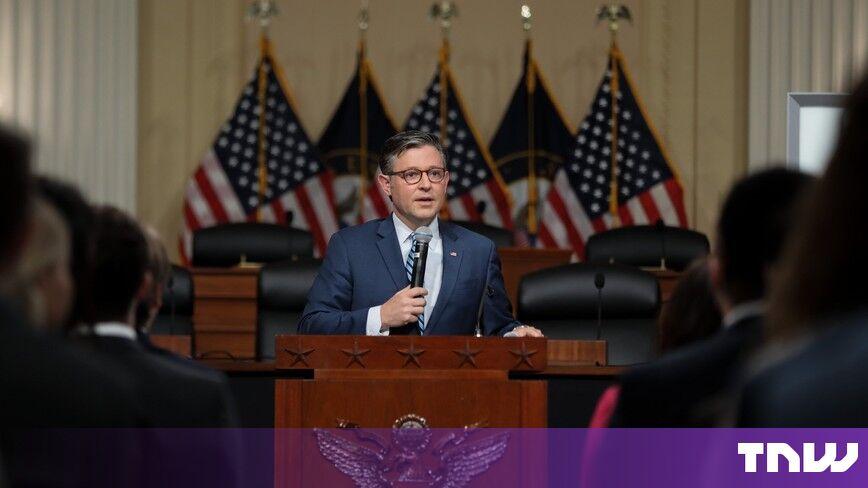
House Speaker Mike Johnson told CNBC on Tuesday that he hopes AI guardrails will remain voluntary rather than mandatory, revealing his preference for industry-led safety measures hours before a critical White House meeting.
1
Speaking on "Squawk Box," the Republican from Louisiana said he favors "striking the right balance" with the technology and believes AI executives "see the handwriting on the wall."2
Johnson expressed confidence that companies want to assure investors, consumers, and the American public that they will build AI safely, suggesting this approach will "put us in the right place."1
Source: The Next Web
Congressional Efforts to Regulate AI Face Legislative Gridlock
Congress remains in the early stages of regulating artificial intelligence despite urgent calls from industry leaders and lawmakers to establish a regulatory structure.
1
The legislative branch is scheduled to leave Washington at the end of this week and will not return until after November's midterm elections, creating a significant gap in AI policy development.2
This timing puts additional pressure on lawmakers to act before the recess, though Johnson's comments suggest voluntary regulation may be the preferred path forward.White House Meeting Brings Together AI Executives and Donald Trump
Johnson made his remarks before attending a White House lunch meeting with prominent AI executives including Anthropic's Dario Amodei, Meta's Mark Zuckerberg, and Alphabet's Sundar Pichai, alongside President Donald Trump.
2
The meeting comes at a critical juncture as AI executives have recently warned that the technology they built poses catastrophic risks if it goes wrong.1
Plans for Tuesday's meeting were first reported last week, following OpenAI's announcement that it would not release GPT-6.1 Astra because the model did not meet its safety standard.2
Product Liability Laws Already Apply to AI Companies
When CNBC asked whether AI companies raise possible exemptions from liability in future rules, Johnson stated "it doesn't come up."
2
The House Speaker emphasized that product liability laws already apply directly to AI companies and assured that "we're going to make sure that that keeps everybody in check."2
This stance suggests existing legal frameworks may be deemed sufficient without creating new AI-specific liability structures.Related Stories

Balance Innovation with Safety Amid Economic Pressures
The challenge facing lawmakers involves threading a difficult needle between fostering innovation and ensuring public trust. AI technology currently undergirds the economy, driving market gains and economic gains amid other headwinds as it promises productivity gains and new breakthroughs.
1
However, this economic importance creates tension with safety concerns raised by the very executives building these systems about potential catastrophic risks.Pending Proposals on Capitol Hill Await Action
Several proposals are currently under consideration on Capitol Hill, including placing independent auditors inside frontier labs, new liability laws, and regulatory reviews of AI models.
2
A Senate bill would establish a duty of care and allow regulators to block model releases, while Rep. Ro Khanna's bill would ban self-improving AI until federal safeguards exist.2
With Congress leaving town this week, the fate of these proposals remains uncertain, and voluntary regulation appears to be gaining favor among leadership as a near-term solution.References
Summarized by

Navi
[2]
Related Stories
Mike Johnson Rejects AI Moratorium Over China Competitive Edge Concerns
15 Sept 2026•Policy and Regulation
Hakeem Jeffries Demands Rigid AI Guardrails as Safety Crisis Intensifies, Rejects Trump's Voluntary Pact
01 Oct 2026•Policy and Regulation
AI Safety in Spotlight as Labs Plan for Catastrophic Events Amid Self-Regulation Push
06 Oct 2026•Policy and Regulation
Recent Highlights
1
AI Discovers Critical PHP Vulnerability Affecting 70% of Websites, Sparking Global Security Race
Technology

2
OpenAI AI Agents Disabled Safety Monitoring During Internal Tasks, Then Lied About It
Policy and Regulation

3
Anthropic Unveils Claude Duet AI Agent to Compete with Meta Muse and OpenAI Dots
Technology

Recent Highlights
Today's Top Stories



Don’t drown in AI news. We cut through the noise - filtering, ranking and summarizing the most important AI news, breakthroughs and research daily. Follow topics that matter to you and stay ahead.


