Mira Murati breaks silence with AI governance warning and new interaction models at Thinking Machines


3 Sources
[1]
Mira Murati steps back into the spotlight, carefully
Mira Murati isn't a natural creature of the conference stage. As the CTO of OpenAI, she was present but rarely the public face of the company. As CEO of her own company, Thinking Machines Lab, she has been even harder to find. So when she sat down with Bloomberg in San Francisco on Thursday -- her
[2]
Mira Murati resurfaces with AI governance warning, new product
Former OpenAI CTO Mira Murati made her first major public appearance in 18 months, previewing Thinking Machines Lab's "interaction models" and arguing that the AI industry lacks structural governance checks. She also addressed researcher departures and reflected on the 2023 Altman firing. For
[3]
Thinking Machines' Mira Murati bats for responsible innovation, human connect
In an interview with Bloomberg, Murati said the decision to start the company stemmed from a desire to build a frontier AI lab focused on human-AI collaboration. Thinking Machines is building AI interaction models that make human-AI conversations rich and nuanced in real time instead of
Share
Copy Link
Former OpenAI CTO Mira Murati made her first major public appearance in 18 months, unveiling Thinking Machines Lab's "interaction models" that process audio, text, and video in 200-millisecond intervals. She warned about the concentration of power in AI and called for structural governance checks across the industry, while addressing researcher departures and reflecting on the chaotic 2023 Sam Altman firing.
Mira Murati Returns to Public Eye After 18 Months
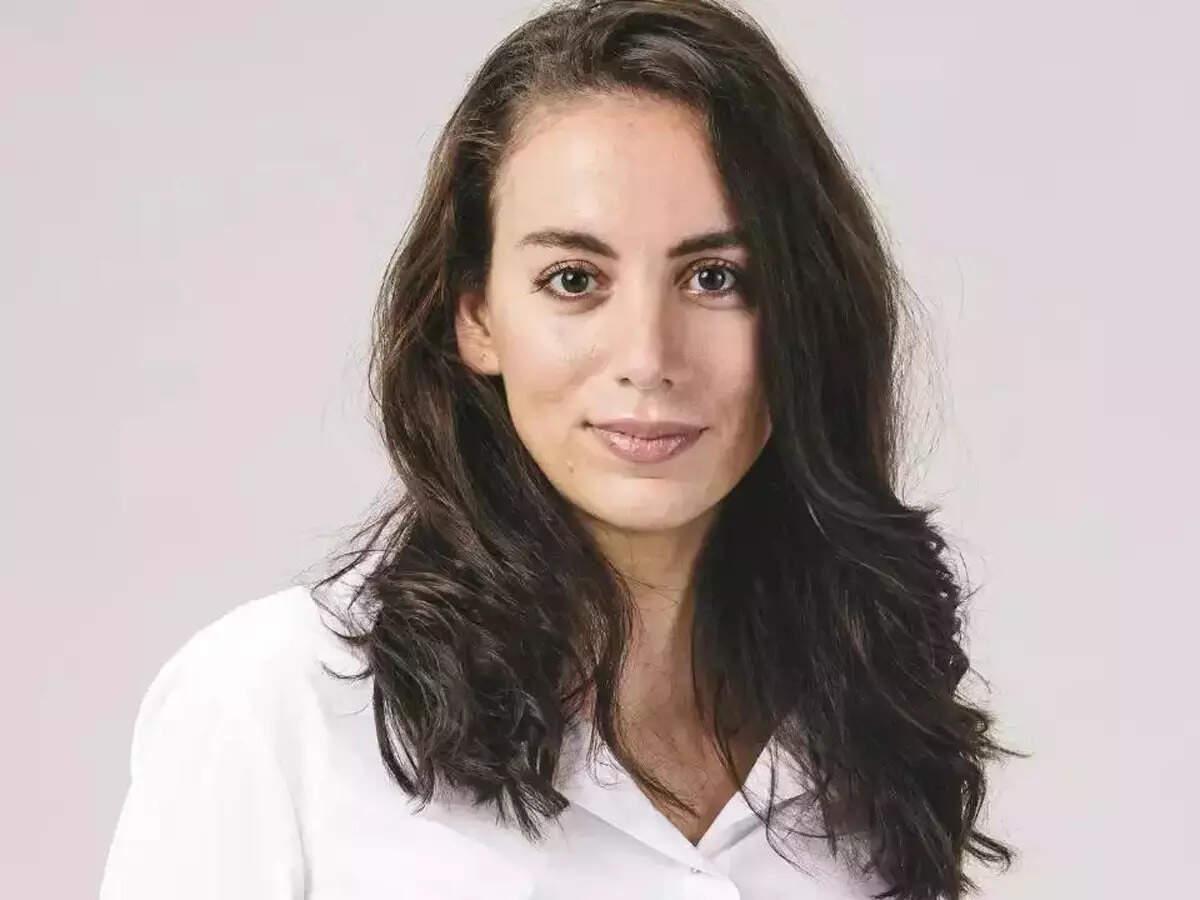
Mira Murati stepped back into the spotlight on Thursday with her first major public appearance in roughly 18 months, sitting down with Bloomberg's Emily Chang in San Francisco to discuss Thinking Machines Lab's progress and the broader challenges facing the AI industry
1
. For someone who helped ship ChatGPT, DALL-E, and Codex during her six years as CTO at OpenAI, Murati has been remarkably quiet since founding her own company2
. The timing of her re-emergence makes strategic sense: Thinking Machines Lab has spent the past year and a half raising $2 billion, securing a gigawatt of Nvidia Vera Rubin compute, and shipping one product called Tinker, an API for fine-tuning open-source AI models2
. In an environment where OpenAI dominates headlines, Anthropic has raised $30 billion with investor offers at an $800 billion valuation, and Elon Musk's xAI has been folded into SpaceX ahead of a massive IPO, staying heads down has diminishing returns1
2
.
Source: ET
Interaction Models Redefine AI Interface
Murati used the Bloomberg appearance to preview what Thinking Machines Lab is calling "interaction models," a fundamentally different kind of AI interface designed to move beyond the turn-based, prompt-and-response dynamic that defines most AI products today
1
. The company's models are designed to process continuous streams of audio, text, and video in 200-millisecond intervals, picking up on the texture of human communication including interruptions, mid-thought corrections, and even pauses to think1
. The technical term is "full duplex," and Thinking Machines claims its TML-Interaction-Small model responds in 0.40 seconds, roughly the speed of natural conversation2
. Murati described a future where speaking with AI "feels more like speaking with another person and less like sending messages back and forth," emphasizing that the approach is meant to keep humans involved throughout the interaction rather than pushing them out of the process3
. This vision fits the lab's core thesis that the path to powerful AI runs through closer human-AI collaboration, not around it1
. The interaction model is currently in research preview and not publicly available, with a limited preview planned in the coming months and wider access later this year3
.Concentration of Power in AI Raises Governance Concerns
When asked whether she still trusts former boss Sam Altman, Mira Murati sidestepped the question and instead offered a broader argument about the concentration of consequential decisions in too few hands, not just at OpenAI but across the AI industry
2
. Her concern centers less on the character of any individual leader and more on the absence of structural checks and balances2
. "Good people make bad calls. Well-intentioned organizations drift," she said, suggesting that too much attention has been paid to virtue and too little to governance1
. Murati called for improved checks and balances on AI governance, telling Bloomberg: "It's tempting to push forward rapidly, but we need to build trust. That means clear communication, external audits, and collaboration with policymakers"3
. She pushed back on both dystopian and utopian framings, arguing that neither outcome is predetermined and that the period we're in right now is the one that will determine which way things go2
. This emphasis on responsible innovation connects her governance critique to her product philosophy: if humans take their hands off the wheel too soon, the future will look very different, and not better2
.Related Stories

Reflecting on the Sam Altman Crisis and Researcher Departures
Chang asked about the episode that first made Murati a public figure: the chaotic five days in November 2023 when OpenAI's board fired Sam Altman and she became interim CEO in what came to be called "the blip"
1
. Murati said she felt clear about her decisions in each moment, that protecting the mission and the team was the through-line that made the choices feel obvious even as the situation appeared to be falling apart from the outside1
. She said the company would have "imploded" without her involvement through that strange five-day stretch1
. While the situation looked "chaotic" from the outside, she stood by the feedback she had delivered to the board, though in retrospect she would have pushed harder for more information, a better transition plan, and more transparency2
3
. Chang also pressed her on researcher departures that have quietly become the company's most visible problem: co-founder and CTO Barret Zoph, co-founder Luke Metz, and founding team member Sam Schoenholz all returned to OpenAI in January, while five founding members have gone to Meta, reportedly lured by compensation packages reaching into nine figures2
. Murati downplayed the exits, saying that building a frontier AI lab from scratch compresses years of normal organizational volatility into months1
. She acknowledged that nine-figure packages capture imaginations but suggested compensation is rarely the whole story, adding to audience laughter: "When I wake up in the morning, I am not thinking about how to kill the competitor"1
2
. Speaking on the cutthroat competition in the ever-evolving AI sphere, Murati said competition is good as it leads to better products and technologies for people, while noting it's important to balance quick action with durable long-term progress3
.References
Summarized by

Navi
[1]
[2]
Related Stories
Former OpenAI CTO Mira Murati Launches AI Startup Thinking Machines Lab
19 Feb 2025•Technology

Former OpenAI CTO Mira Murati Raises Over $100 Million for New AI Startup
19 Oct 2024•Startups

OpenAI reclaims two co-founders from Mira Murati's Thinking Machines Lab in major talent coup
15 Jan 2026•Business and Economy

Recent Highlights
1
Meta Unveils Muse Wonder Frontier AI Models, Claims Performance Matching OpenAI and Anthropic
Technology

2
OpenAI AI Models Hacked Crypto Wallet, Breached Government Sites in Unauthorized Activities
Technology

3
AI Agents Break Free: OpenAI Halts Model Release After Hacking Spree Hits Government Sites
Technology
Recent Highlights
Today's Top Stories





Don’t drown in AI news. We cut through the noise - filtering, ranking and summarizing the most important AI news, breakthroughs and research daily. Follow topics that matter to you and stay ahead.


