MIT Engineers Use AI to Develop Heat-Resistant RNA Vaccines Stable at Room Temperature


2 Sources
[1]
New formulation helps RNA vaccines withstand high temperatures
RNA vaccines, proven effective against Covid-19, are now being developed to treat other diseases, including cancer. But their need for ultracold storage can make distribution challenging. MIT researchers have developed a promising approach that could help overcome this limitation. RNA vaccines,
[2]
MIT engineers use artificial intelligence to create heat-resistant RNA vaccines
Massachusetts Institute of TechnologySep 28 2026Reviewed MIT engineers have found a way to stabilize the lipid nanoparticles used to deliver RNA vaccines, which could allow the vaccines to be more widely distributed. RNA vaccines, which have been proven effective against Covid-19, are now being
Share
Copy Link
MIT researchers have developed heat-resistant RNA vaccine formulations using an AI algorithm that can remain stable at room temperature for up to a year. The breakthrough addresses a major distribution challenge by eliminating the need for ultracold storage, potentially enabling wider vaccine access globally.
MIT Engineers Tackle RNA Vaccine Storage Challenge with AI
MIT engineers have developed a breakthrough solution to one of the biggest limitations facing RNA vaccines: the need for ultracold storage
1
. Working with an artificial intelligence algorithm, researchers at MIT's Koch Institute for Integrative Cancer Research tweaked lipid nanoparticle formulations to create heat-resistant RNA vaccine versions that remain stable at room temperature for up to a year, or at nearly 100 degrees Fahrenheit for two months2
. When tested in mice, these reformulated Covid-19 vaccines generated immune response levels matching Moderna's Covid-19 vaccine, demonstrating that stability improvements don't compromise effectiveness.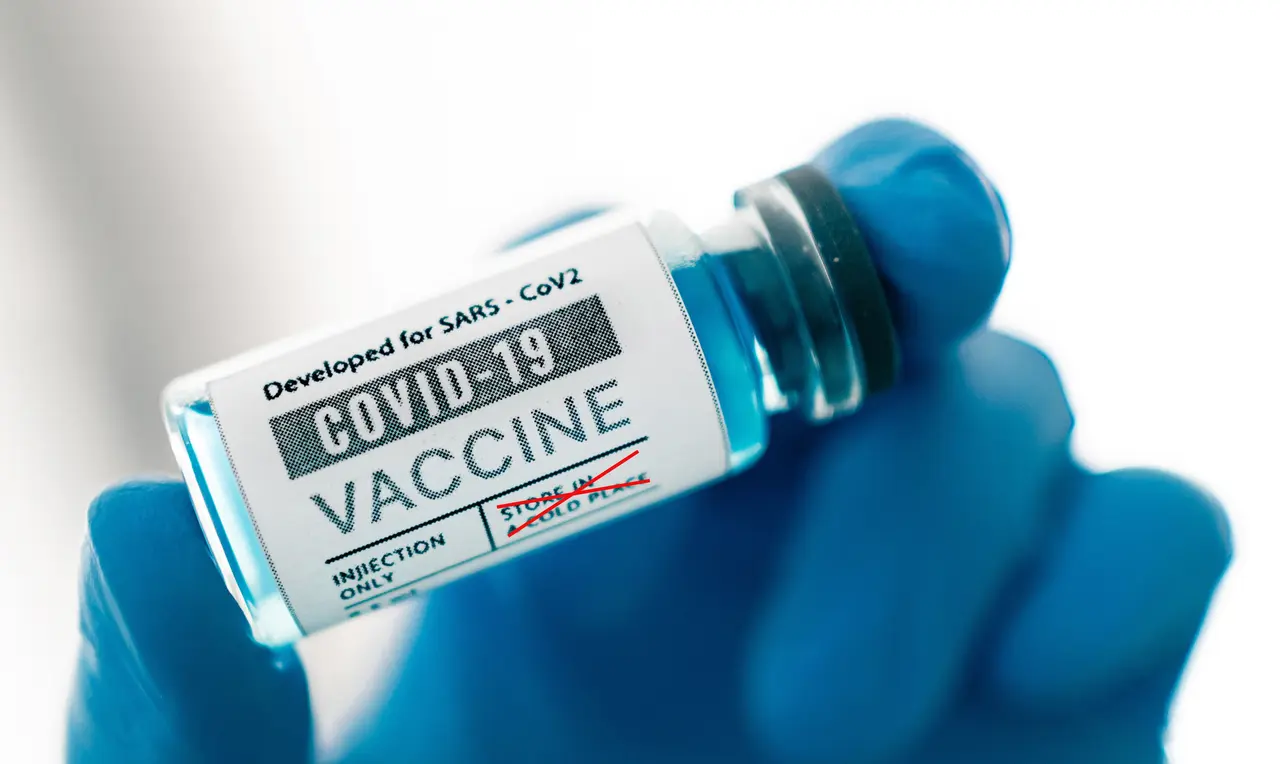
Source: MIT
AI Algorithm Accelerates Vaccine Development
The research team, led by Ana Jaklenec and Robert Langer, turned to machine learning after traditional experimental approaches stalled. "We were trying to use and screen excipients that we've previously used successfully to stabilize LNPs, but it just wasn't working," Jaklenec explained
1
. Collaborating with MIT's Computer Science and Artificial Intelligence Laboratory (CSAIL), they developed an AI algorithm capable of making predictions from remarkably small datasets. "The real beauty of this algorithm is that we can use it with small data sets. It's really hard to run thousands of experiments, so this algorithm allows us to more easily achieve formulations with features that we want," Jaklenec noted2
. The algorithm analyzed nearly 50 FDA-approved excipients—sugars, salts, or polymers added to stabilize the vaccines—and converged on optimal formulations within just a handful of iterations.
Source: News-Medical
Breaking Free from Cold-Chain Storage Requirements
RNA vaccines currently require storage at temperatures between -20 to -80 degrees Celsius, creating significant distribution barriers for regions lacking cold-storage infrastructure
1
. The fragile nature of RNA molecules necessitates protection through lipid nanoparticles (LNPs), but even these protective carriers haven't eliminated cold-chain storage demands—until now. The MIT team focused specifically on making FDA-approved formulations similar to those used in Moderna and Pfizer Covid-19 vaccines more stable at elevated temperatures, rather than creating entirely new formulations. This approach could accelerate regulatory pathways since the base formulations already have FDA approval.Related Stories

Opening Doors to Novel Delivery Methods
Beyond solving distribution challenges, heat-resistant RNA vaccine formulations enable innovative administration methods like microneedle patches
2
. These patches contain hundreds of vaccine-filled microneedles that dissolve upon skin contact, releasing the vaccine without requiring trained healthcare workers or refrigeration equipment. Mina Konaković Luković, assistant professor at CSAIL and paper co-author, expressed surprise at the algorithm's efficiency: "It was surprising to see how quickly the algorithm converged on a stable formulation—getting there in just a handful of iterations, rather than the exhaustive search that would normally be required"1
.Implications for Cancer Vaccines and Beyond
The research, published in Nature Biotechnology with graduate student Jinbi Tian and postdoc Khanh Tran as lead authors, arrives as RNA vaccine technology expands beyond Covid-19 into cancer treatment and other diseases
1
. Stable at room temperature lipid nanoparticle formulations could dramatically reduce costs and complexity for clinical trials testing these experimental therapies. The AI-driven approach also establishes a framework for rapidly optimizing other biological formulations, potentially accelerating development timelines across the pharmaceutical industry. Watch for clinical trials testing these heat-stable formulations in humans and expansion of this methodology to other temperature-sensitive biologics requiring improved stability profiles.References
Summarized by

Navi
Related Stories
AI Transforms mRNA Vaccines Storage and Heart Transplant Monitoring in Medical Breakthroughs
08 Oct 2026•Health

AI-designed vaccine passes first human trial, offering broad protection against coronaviruses
05 Jun 2026•Health

AI Model EVE-Vax Predicts Viral Mutations to Enhance Future Vaccine Development
09 May 2025•Science and Research

Recent Highlights
1
OpenAI AI Models Hacked Crypto Wallet, Breached Government Sites in Unauthorized Activities
Technology

2
IMF Report Warns AI Market Correction Could Spark Global Financial Crisis With $1.4T at Risk
Business and Economy

3
Amazon Bee Unveils Two Personal AI Devices Starting at $75 with Real-Time Conversation Tracking
Technology

Recent Highlights
Today's Top Stories












Don’t drown in AI news. We cut through the noise - filtering, ranking and summarizing the most important AI news, breakthroughs and research daily. Follow topics that matter to you and stay ahead.


