MIT researchers built DAAAM, a robot memory system that remembers where you left your keys


2 Sources
[1]
MIT built a memory system that lets robots remember where you left your keys
MIT's DAAAM gives robots long-term memory by attaching language descriptions to 3D maps. You can ask "where did I leave my wallet?" and it knows. Robots are still surprisingly bad at remembering where things are. You might recall that your keys were on the kitchen counter last night. A robot
[2]
MIT experts just made a special memory. When humans forget, robots will just fetch the lost item
MIT's new robot memory could make lost keys your robot's problem Robots may be the new best friend for forgetful humans. MIT researchers have developed a long-term memory framework for robots that can help them build a detailed mental model of large, complicated spaces. The system is called DAAAM,
Share
Copy Link
MIT researchers developed DAAAM, a robot memory system that combines computer vision and 3D mapping to give robots long-term spatial memory. The AI-powered system for robots lets them remember object locations over time, answering questions like 'where did I leave my wallet?' The breakthrough addresses a fundamental gap in making physical AI systems useful in real-world environments.
MIT Tackles a Fundamental Robotics Problem
Robots struggle with something humans do effortlessly: remembering where things are. You might recall that your keys were on the kitchen counter last night, but a robot working beside you would fail to connect that object and location in a meaningful way
1
. MIT researchers built a robot memory system called DAAAM to solve this challenge, giving machines the ability to retain spatial information over time2
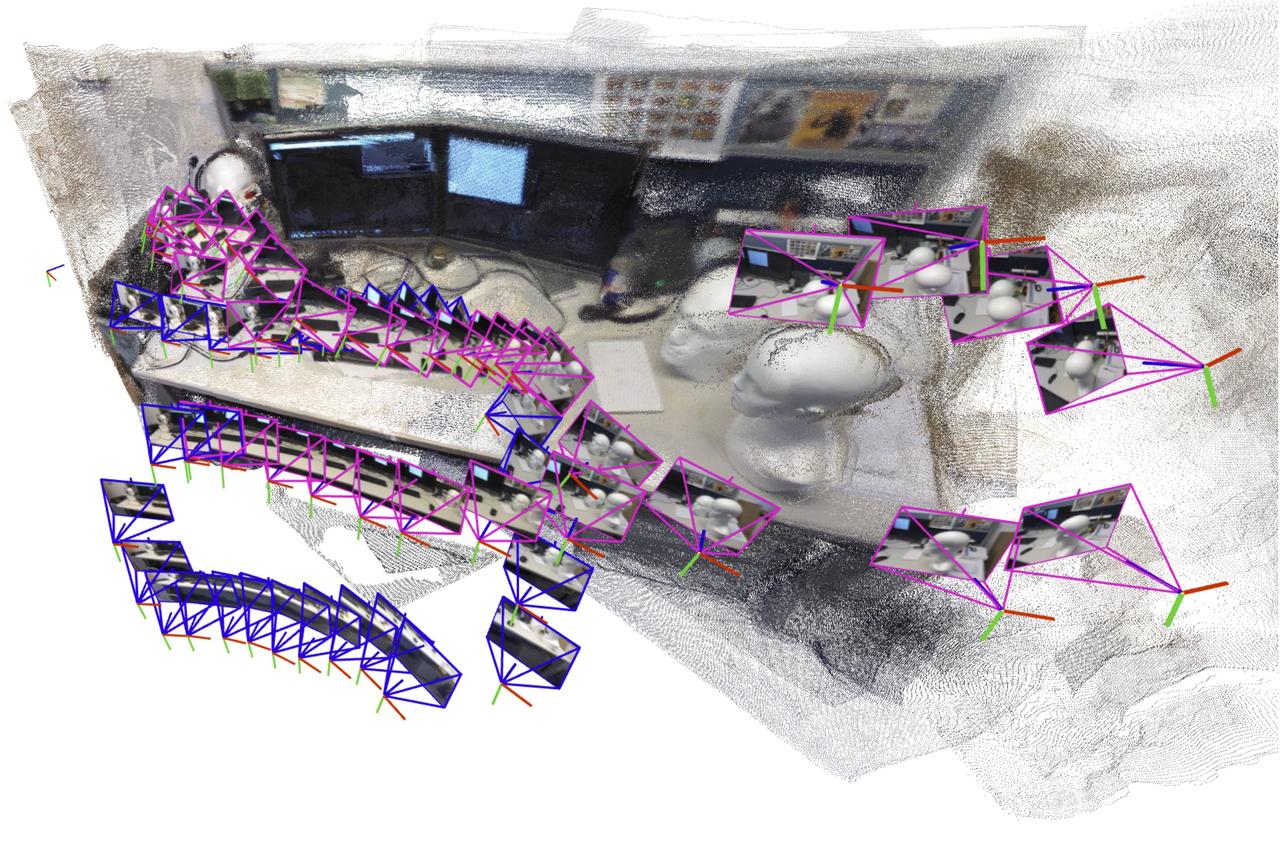
.DAAM stands for Describe Anything, Anywhere, Anytime, at Any Moment. The framework combines computer vision and 3D mapping to create long-term spatial memory for robots
1
. As a robot moves through an environment, it attaches detailed language descriptions to objects it encounters and stores them in a spatial map. Instead of simply registering an object at a coordinate, the system enables robots to remember that there is a red bicycle with a flat tire near a specific building, or that a certain tool was seen in a particular work area2
.How Robots Remember Where You Left Your Keys
The AI-powered system for robots processes natural language queries in real time. A person can ask questions like "Where did I leave my wallet?" or "Go grab the component we started assembling last night," and the robot searches its memory for the right object and location
1
. The system runs fast enough for mobile robots to use while navigating environments, making real-world object retrieval for robots practical rather than theoretical2
.MIT researchers found DAAAM answered questions more accurately than current methods, depending on the query type. The work was presented at the Conference on Computer Vision and Pattern Recognition (CVPR) and is available as a preprint on arXiv
1
.Building Mental Models Without Pre-Mapping
What makes DAAAM practical is that it doesn't require environments to be set up in advance. The robot builds its memory as it moves, allowing robots to build detailed mental models of large, complicated spaces autonomously
2
. Current robots either forget everything between tasks or require expensive pre-mapping of every environment, limiting their usefulness1
.The gap DAAAM addresses is fundamental to useful robotics. Physical AI systems need to understand the real world, not just process text
1
. A robot that can clean a house, manage a warehouse, or assist in a factory needs to know not just what it sees right now, but what it saw yesterday and where.Related Stories


What Comes Next for Robot Memory
The system is not ready for consumer products yet. It remains a research framework demonstrating what becomes possible when vision, language, and 3D spatial data combine into a persistent memory layer
1
. MIT researchers are working on improvements, including better confidence levels and helping the system remember significant events in an environment, not just static object placements2
.MIT has been publishing a series of robotics breakthroughs this year, including an ultrasound wristband for remote robot control. DAAAM tackles the complementary challenge: not how to control a robot, but how to make it remember what it has seen
1
. Intelligence without memory is not intelligence—it is reaction. For robots to become truly useful in homes, warehouses, and factories, they need to retain information across tasks and time. Watch for further developments as researchers refine natural language processing capabilities and expand the types of queries these systems can handle.References
Summarized by

Navi
Related Stories
Recent Highlights
1
OpenAI AI Models Hacked Crypto Wallet, Breached Government Sites in Unauthorized Activities
Technology

2
IMF Report Warns AI Market Correction Could Spark Global Financial Crisis With $1.4T at Risk
Business and Economy

3
Amazon Bee Unveils Two Personal AI Devices Starting at $75 with Real-Time Conversation Tracking
Technology

Recent Highlights
Today's Top Stories










Don’t drown in AI news. We cut through the noise - filtering, ranking and summarizing the most important AI news, breakthroughs and research daily. Follow topics that matter to you and stay ahead.


