MIT Researchers Develop Efficient Algorithm for Training Reliable AI Agents


3 Sources
[1]
Researchers develop an efficient way to train more reliable AI agents
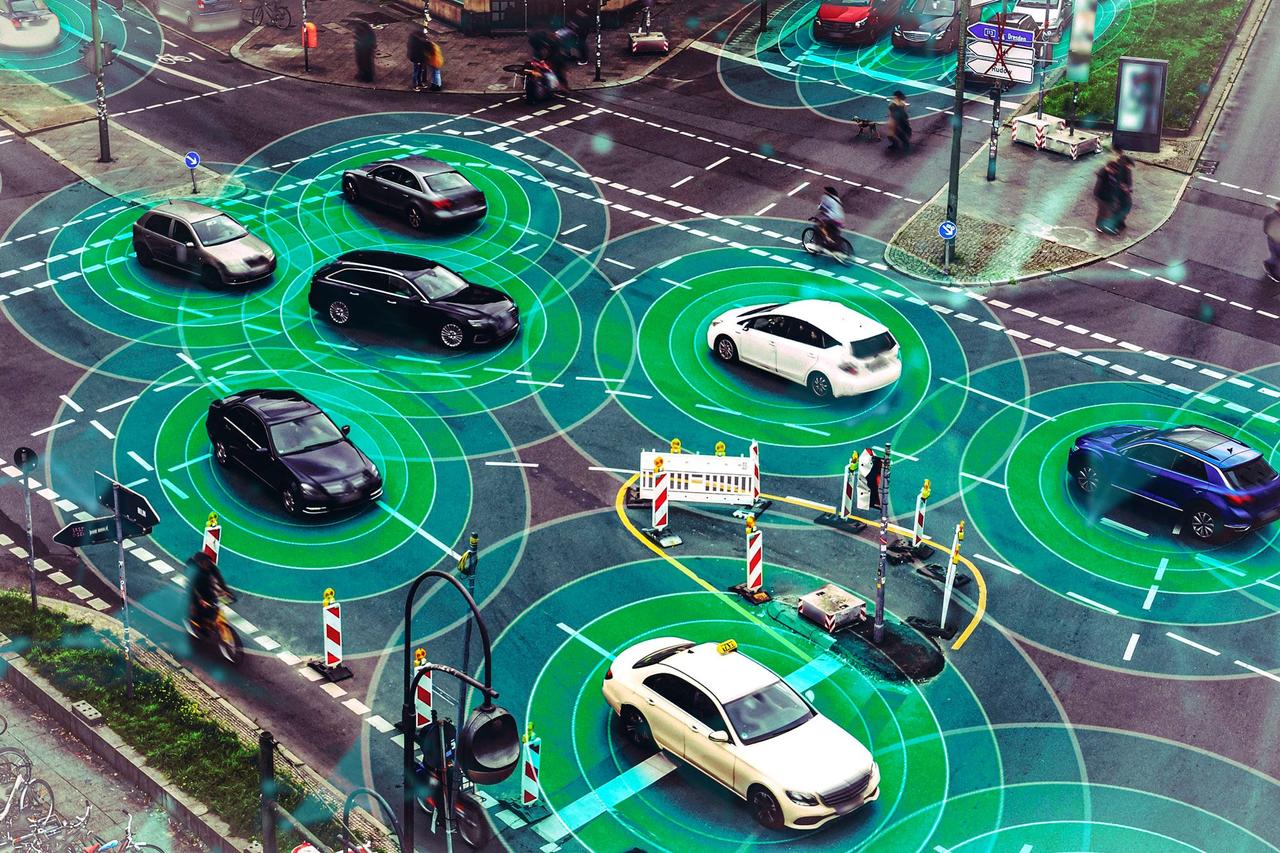
Fields ranging from robotics to medicine to political science are attempting to train AI systems to make meaningful decisions of all kinds. For example, using an AI system to intelligently control traffic in a congested city could help motorists reach their destinations faster, while improving
[2]
MIT researchers develop an efficient way to train more reliable AI agents
Fields ranging from robotics to medicine to political science are attempting to train AI systems to make meaningful decisions of all kinds. For example, using an AI system to intelligently control traffic in a congested city could help motorists reach their destinations faster, while improving
[3]
Reinforcement learning algorithm provides an efficient way to train more reliable AI agents
Fields ranging from robotics to medicine to political science are attempting to train AI systems to make meaningful decisions of all kinds. For example, using an AI system to intelligently control traffic in a congested city could help motorists reach their destinations faster, while improving
Share
Copy Link
MIT researchers have created a new algorithm called Model-Based Transfer Learning (MBTL) that significantly improves the efficiency and reliability of training AI agents for complex decision-making tasks.

MIT Researchers Develop Novel AI Training Algorithm
Researchers at the Massachusetts Institute of Technology (MIT) have introduced a groundbreaking algorithm that promises to revolutionize the training of artificial intelligence (AI) agents for complex decision-making tasks. The new method, called Model-Based Transfer Learning (MBTL), offers a significant boost in efficiency and reliability for reinforcement learning models
1
2
3
.The Challenge of Training AI for Decision-Making
AI systems are increasingly being employed to make critical decisions in various fields, from robotics to medicine and political science. However, training these systems to make good decisions, especially when faced with task variations, has been a persistent challenge. For instance, an AI model trained to control traffic might struggle when confronted with intersections that have different characteristics from those it was trained on
1
2
3
.MBTL: A Middle Ground Approach
The MBTL algorithm takes a novel approach to this problem by finding a middle ground between two common training methods:
- Training separate algorithms for each task independently
- Training one large algorithm using data from all tasks
MBTL strategically selects a subset of tasks that are most likely to improve the algorithm's overall performance across all related tasks. This approach leverages zero-shot transfer learning, where a trained model is applied to new tasks without further training
1
2
3
.How MBTL Works
The MBTL algorithm consists of two key components:
- It models how well each algorithm would perform if trained independently on one task.
- It models how much each algorithm's performance would degrade when transferred to other tasks (generalization performance).
By explicitly modeling generalization performance, MBTL can estimate the value of training on a new task. It sequentially selects tasks that provide the highest performance gains, focusing on the most promising ones to dramatically improve training efficiency
1
2
3
.Related Stories

Impressive Efficiency Gains
When tested on simulated tasks such as controlling traffic signals and managing real-time speed advisories, MBTL demonstrated efficiency improvements of 5 to 50 times compared to standard approaches. This means the algorithm can achieve the same performance using significantly less training data
1
2
3
.Implications for AI Development
The development of MBTL has several important implications:
-
Reduced training costs: The algorithm can achieve high performance with much less data, potentially lowering computational requirements
1
2
3
. -
Improved AI reliability: By focusing on the most relevant tasks, MBTL helps create more robust AI agents that can handle variations in their operating environment
1
2
3
. -
Faster development cycles: The increased efficiency could lead to quicker iterations in AI development and deployment
1
2
3
. -
Broader applicability: The simplicity of the algorithm makes it more likely to be adopted widely in the AI community
1
2
3
.
As AI continues to play an increasingly important role in various sectors, innovations like MBTL are crucial for developing more capable and reliable AI systems. The research team's work, led by Professor Cathy Wu, represents a significant step forward in the field of reinforcement learning and AI training methodologies
1
2
3
.References
Summarized by

Navi
Related Stories
MIT Researchers Develop AI-Enhanced Method to Streamline Complex Logistical Planning
17 Apr 2025•Science and Research

MIT Develops Novel AI Technique for Training General-Purpose Robots
29 Oct 2024•Science and Research

AI-Powered Eco-Driving Could Slash Vehicle Emissions at Intersections by Up to 22%
08 Aug 2025•Science and Research
Recent Highlights
1
OpenAI AI Models Hacked Crypto Wallet, Breached Government Sites in Unauthorized Activities
Technology

2
IMF Report Warns AI Market Correction Could Spark Global Financial Crisis With $1.4T at Risk
Business and Economy

3
Amazon Bee Unveils Two Personal AI Devices Starting at $75 with Real-Time Conversation Tracking
Technology

Recent Highlights
Today's Top Stories









Don’t drown in AI news. We cut through the noise - filtering, ranking and summarizing the most important AI news, breakthroughs and research daily. Follow topics that matter to you and stay ahead.


