MIT Researchers Develop New Method to Improve Reliability of Radiologists' Diagnostic Reports


2 Sources
[1]
New method assesses and improves the reliability of radiologists' diagnostic reports
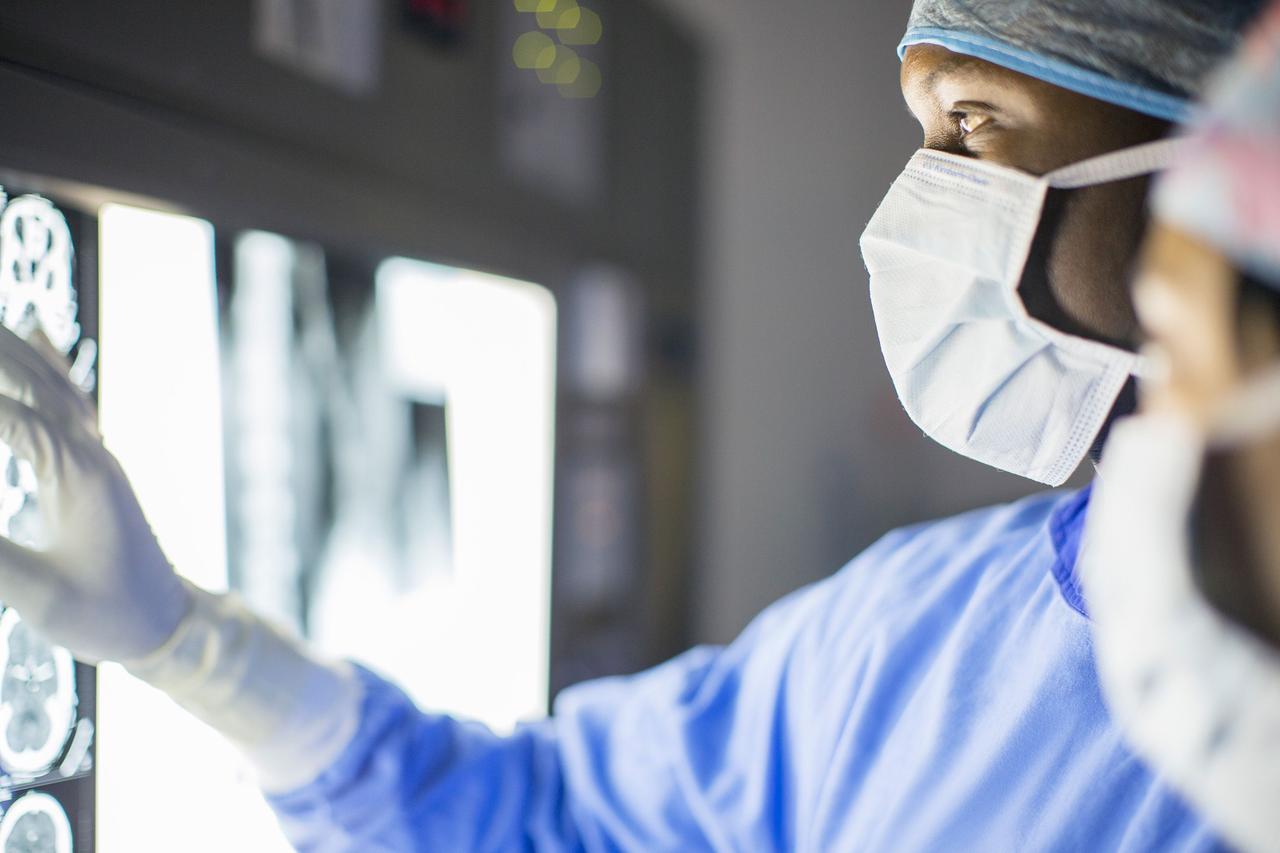
Caption: A new calibration method developed by MIT researchers can improve the accuracy of clinical reports written by radiologists by helping them express their confidence more reliably. Due to the inherent ambiguity in medical images like X-rays, radiologists often use words like "may" or
[2]
Assessment method may improve the reliability of radiologists' diagnostic reports
Due to the inherent ambiguity in medical images like X-rays, radiologists often use words like "may" or "likely" when describing the presence of a certain pathology, such as pneumonia. But do the words radiologists use to express their confidence level accurately reflect how often a particular
Share
Copy Link
MIT researchers have created a framework to quantify and improve the reliability of radiologists' certainty phrases in diagnostic reports, potentially enhancing patient care and medical decision-making.

MIT Researchers Develop Framework to Improve Radiologists' Diagnostic Accuracy
A team of researchers from MIT, in collaboration with clinicians from Harvard Medical School-affiliated hospitals, has developed a novel method to assess and enhance the reliability of radiologists' diagnostic reports. This groundbreaking approach aims to improve the accuracy of clinical information, potentially leading to better patient care and more informed medical decision-making
1
.The Challenge of Uncertainty in Radiology
Radiologists often use ambiguous language when describing pathologies in medical images due to the inherent uncertainty in interpretation. Words like "may" or "likely" are commonly employed to express varying levels of confidence. However, a new study reveals that radiologists tend to be overconfident when using phrases like "very likely" and underconfident with terms like "possibly"
2
.A Novel Approach to Quantifying Certainty
The researchers' framework treats certainty phrases as probability distributions rather than single percentages. This approach captures the nuances of natural language more accurately than traditional methods. For instance, the phrase "consistent with" is represented by a distribution that peaks sharply in the 90-100% range, while "may represent" has a broader, bell-shaped distribution centered around 50%
1
.Improving Calibration and Reliability
To enhance the reliability of radiologists' reports, the team developed a calibration map that suggests more appropriate certainty terms for specific pathologies. This optimization process adjusts the frequency of certain phrases to better align confidence with reality. For example, changing "present" to "likely present" in some cases could improve overall calibration
2
.Implications for Clinical Practice
The words radiologists use significantly impact patient care and treatment decisions. A report indicating a "possible" pneumonia might lead to further testing, while a "likely" pneumonia could result in immediate treatment initiation. By improving the reliability of these reports, the new framework could enhance the quality of critical clinical information and ultimately benefit patients
1
.Related Stories

Applications Beyond Radiology
The researchers demonstrated that their technique could also be applied to large language models, providing a more nuanced representation of confidence than classical methods. This application could encourage users to verify the correctness of AI-generated statements, particularly when models express high confidence
2
.Future Directions
The research team plans to continue collaborating with clinicians to further improve diagnoses and treatment strategies. As the medical field increasingly relies on AI and machine learning, ensuring the accuracy and reliability of both human and machine-generated reports becomes crucial for advancing patient care and medical decision-making
1
2
.References
Summarized by

Navi
Related Stories
Stanford's RadGPT: AI Model Simplifies Radiology Reports for Patients
28 Jun 2025•Health

MIT Researchers Enhance AI Trustworthiness for High-Stakes Medical Imaging
02 May 2025•Science and Research
Northwestern's Generative AI System Revolutionizes Radiology, Boosting Efficiency by Up to 40%
06 Jun 2025•Health

Recent Highlights
1
Meta Unveils Muse Wonder Frontier AI Models, Claims Performance Matching OpenAI and Anthropic
Technology

2
IMF Report Warns AI Market Correction Could Spark Global Financial Crisis With $1.4T at Risk
Business and Economy

3
OpenAI Releases 722 AI-Generated Math Solutions, Triggering Existential Crisis in Mathematics
Technology

Recent Highlights
Today's Top Stories










Don’t drown in AI news. We cut through the noise - filtering, ranking and summarizing the most important AI news, breakthroughs and research daily. Follow topics that matter to you and stay ahead.


