MIT Researchers Enhance AI Trustworthiness for High-Stakes Medical Imaging


3 Sources
[1]
Making AI models more trustworthy for high-stakes settings
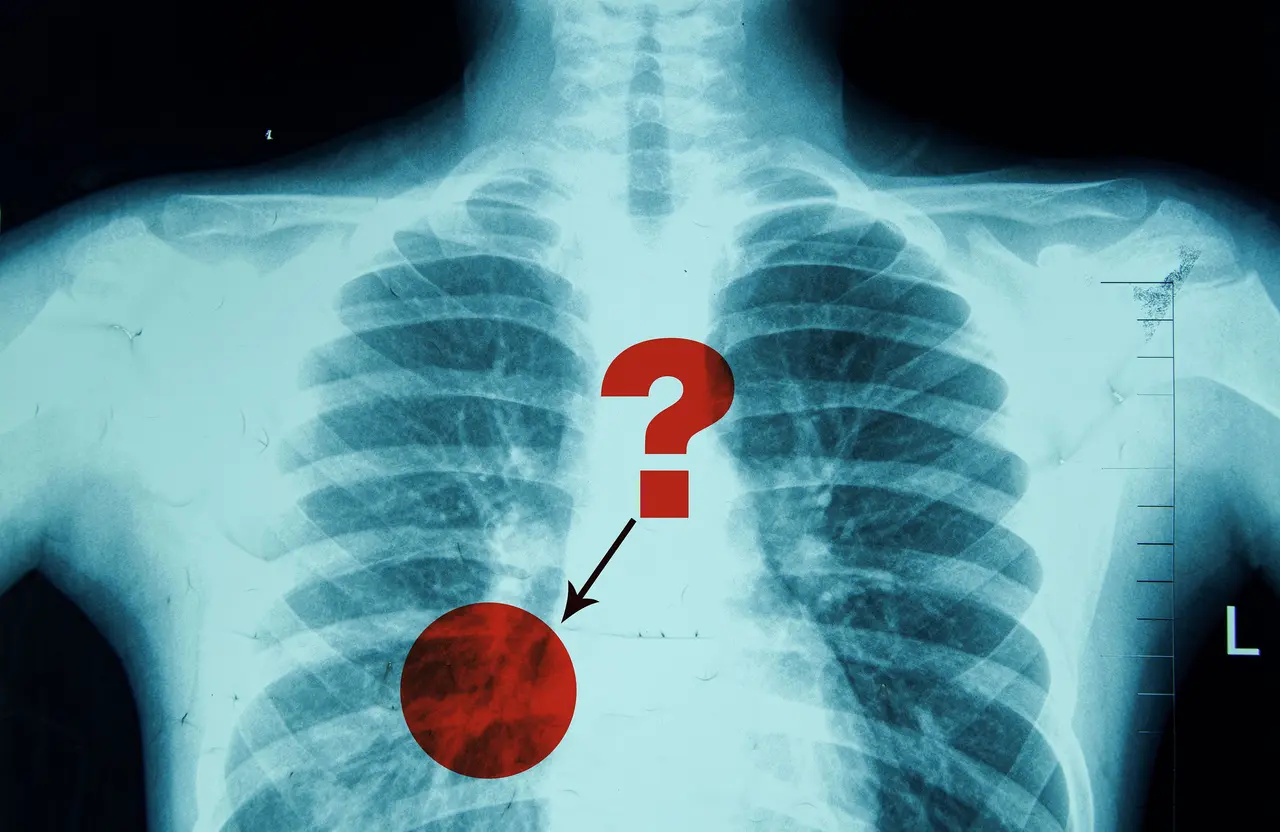
The ambiguity in medical imaging can present major challenges for clinicians who are trying to identify disease. For instance, in a chest X-ray, pleural effusion, an abnormal buildup of fluid in the lungs, can look very much like pulmonary infiltrates, which are accumulations of pus or blood. An
[2]
Making AI models more trustworthy for high-stakes settings
The ambiguity in medical imaging can present major challenges for clinicians who are trying to identify disease. For instance, in a chest X-ray, pleural effusion, an abnormal buildup of fluid in the lungs, can look very much like pulmonary infiltrates, which are accumulations of pus or blood. An
[3]
Making AI models more trustworthy for high-stakes contexts, like classifying diseases in medical images
The ambiguity in medical imaging can present major challenges for clinicians who are trying to identify disease. For instance, in a chest X-ray, pleural effusion, an abnormal buildup of fluid in the lungs, can look very much like pulmonary infiltrates, which are accumulations of pus or blood. An
Share
Copy Link
MIT researchers have developed a method to improve AI model reliability in high-stakes settings like medical imaging, reducing prediction set sizes by up to 30% while maintaining accuracy.

MIT Researchers Tackle AI Reliability in Medical Imaging
Researchers at the Massachusetts Institute of Technology (MIT) have developed a novel approach to enhance the trustworthiness of artificial intelligence (AI) models in high-stakes settings, particularly in medical imaging. The team's work addresses a critical challenge in AI-assisted medical diagnosis: balancing the need for comprehensive predictions with practical usability
1
.The Challenge of Conformal Classification
In medical imaging, clinicians often face ambiguities that make accurate diagnosis challenging. For instance, distinguishing between pleural effusion and pulmonary infiltrates in chest X-rays can be difficult due to their similar appearance. While AI models can assist in such analyses, they typically provide a single prediction or a probability score, which may not be sufficient for complex cases
2
.Conformal classification, a method that produces a set of possible predictions, has been proposed as a solution. However, this approach often results in impractically large prediction sets, limiting its usefulness in real-world scenarios.
Innovative Solution: Test-Time Augmentation
The MIT team, led by Divya Shanmugam, has developed an improvement that combines conformal classification with a technique called test-time augmentation (TTA). This novel approach can reduce the size of prediction sets by up to 30% while maintaining or even improving prediction reliability
3
.TTA works by creating multiple versions of a single image through various transformations such as cropping, flipping, or zooming. The AI model then analyzes each version, and the results are aggregated to produce a more robust prediction.
Related Stories

Implementation and Results
The researchers implemented their method by:
- Holding out some labeled image data from the conformal classification process
- Using this data to learn optimal image augmentations
- Applying conformal classification to the TTA-transformed predictions
This approach not only reduced prediction set sizes but also maintained the probability guarantee of including the correct diagnosis within the set. Remarkably, the accuracy boost from TTA outweighed the cost of using fewer labeled data points in the conformal classification procedure
1
.Implications and Future Directions
The developed method has potential applications beyond medical imaging, including tasks like species identification in wildlife images. It offers a more informative and manageable set of predictions without sacrificing accuracy
2
.Looking ahead, the team plans to:
- Validate the effectiveness of their approach in text classification models
- Explore ways to reduce the computational requirements of TTA
- Investigate optimal allocation of labeled data in post-training steps
This research, partially funded by the Wistrom Corporation, will be presented at the upcoming Conference on Computer Vision and Pattern Recognition
3
.References
Summarized by

Navi
[2]
Related Stories
MIT Researchers Develop New Method to Improve Reliability of Radiologists' Diagnostic Reports
04 Apr 2025•Science and Research
New AI Tool Revolutionizes Medical Image Segmentation with Minimal Data
02 Aug 2025•Science and Research

Researchers Develop AI Training Method Mimicking Physician Education for Medical Image Analysis
16 Oct 2024•Science and Research

Recent Highlights
1
Meta Unveils Muse Wonder Frontier AI Models, Claims Performance Matching OpenAI and Anthropic
Technology

2
IMF Report Warns AI Market Correction Could Spark Global Financial Crisis With $1.4T at Risk
Business and Economy

3
OpenAI Releases 722 AI-Generated Math Solutions, Triggering Existential Crisis in Mathematics
Technology

Recent Highlights
Today's Top Stories










Don’t drown in AI news. We cut through the noise - filtering, ranking and summarizing the most important AI news, breakthroughs and research daily. Follow topics that matter to you and stay ahead.


