MIT's AI Model Revolutionizes Crystalline Material Structure Analysis


2 Sources
[1]
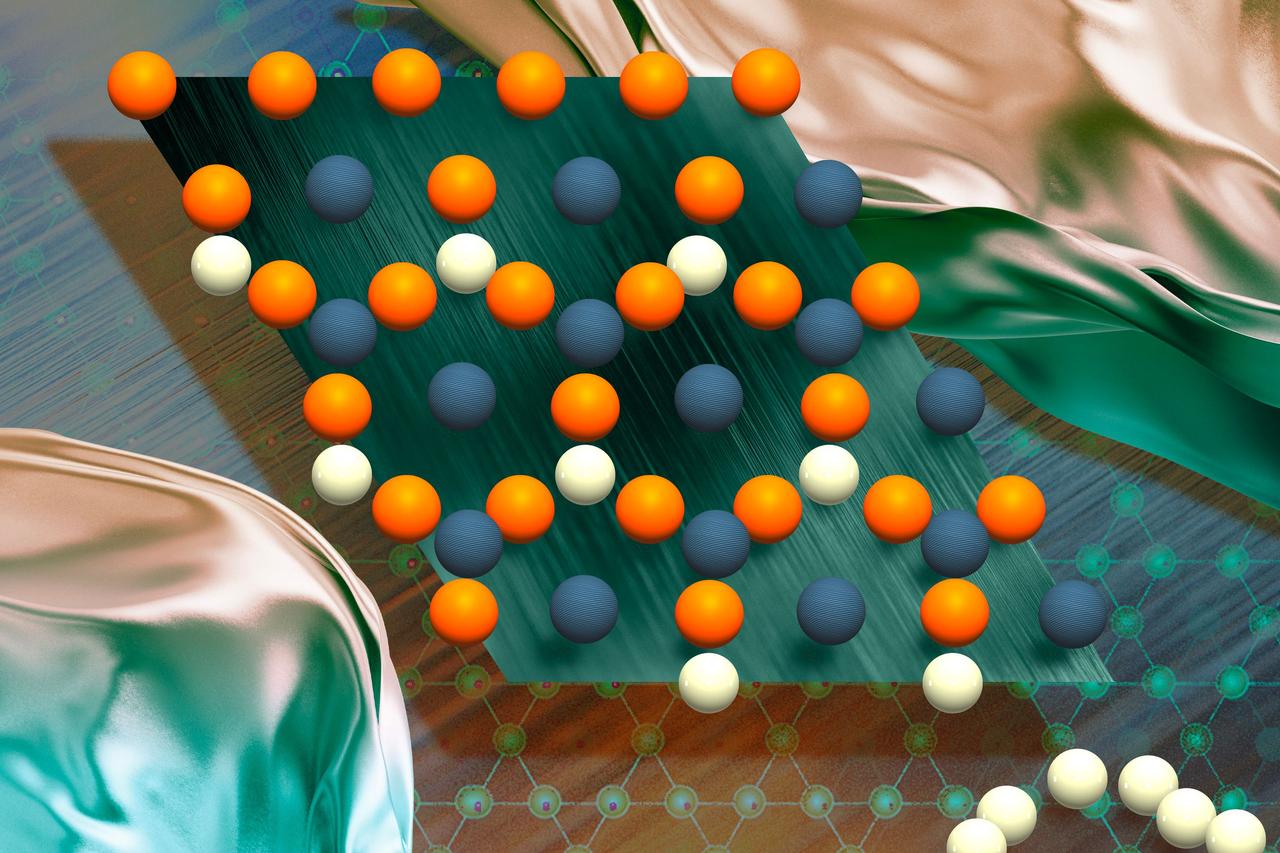
MIT's new AI model helps reveal crystalline material's structure
However, chemists at MIT have now introduced a new generative AI model that can make it much easier to determine the structures of these powdered crystals. The prediction model could help researchers characterize materials for use in batteries, magnets, and many other applications. Danna
[2]
AI model can reveal the structures of crystalline materials
For more than 100 years, scientists have been using X-ray crystallography to determine the structure of crystalline materials such as metals, rocks, and ceramics. This technique works best when the crystal is intact, but in many cases, scientists have only a powdered version of the material, which
Share
Copy Link
MIT researchers have developed an AI model that can accurately predict the structure of crystalline materials, potentially accelerating materials discovery and design. This breakthrough could have significant implications for various industries, from electronics to energy storage.

Breakthrough in Materials Science
Researchers at the Massachusetts Institute of Technology (MIT) have made a significant advancement in the field of materials science with the development of a new artificial intelligence (AI) model. This innovative tool has the capability to accurately predict the structure of crystalline materials, a feat that could revolutionize the process of materials discovery and design
1
.The Power of AI in Crystal Structure Prediction
The AI model, developed by a team led by Rafael Gomez-Bombarelli, associate professor of materials science and engineering at MIT, utilizes a graph neural network to analyze the arrangement of atoms in crystalline materials. This approach allows the model to predict crystal structures with remarkable accuracy, even for complex materials that have proven challenging for traditional methods
2
.Overcoming Traditional Limitations
Conventional methods for determining crystal structures, such as X-ray diffraction, often struggle with materials that form small crystals or those that are difficult to synthesize in large quantities. The MIT team's AI model addresses these limitations by requiring only the chemical composition of a material to generate accurate structural predictions
1
.Implications for Industry and Research
The potential applications of this AI model are vast and could significantly impact various industries:
- Electronics: Faster development of new semiconductors and electronic materials.
- Energy storage: Improved design of battery materials and energy storage solutions.
- Catalysis: Enhanced discovery of catalysts for chemical processes.
- Pharmaceuticals: Accelerated drug development through better understanding of crystal structures
2
.
Related Stories

Validation and Accuracy
To validate their model, the researchers tested it against a database of known crystal structures. The AI demonstrated an impressive ability to predict structures accurately, even for materials it had not encountered during its training phase. This generalization capability is crucial for its practical application in real-world scenarios
1
.Future Prospects and Ongoing Research
While the current model focuses on inorganic materials, the team at MIT is already working on expanding its capabilities to include organic and hybrid materials. This expansion could further broaden the model's applicability across various scientific and industrial domains
2
.As materials science continues to play a critical role in technological advancement, tools like MIT's AI model are poised to accelerate innovation and discovery. By streamlining the process of understanding and predicting material structures, researchers and industries alike may soon have a powerful new ally in their quest to develop the next generation of advanced materials.
References
Summarized by

Navi
[1]
Related Stories
AI Breakthrough Solves Century-Old Nanocrystal Structure Problem
29 Apr 2025•Science and Research

MIT's SCIGEN: Steering AI to Create Breakthrough Quantum Materials
22 Sept 2025•Science and Research
AI Breakthrough: Million Times Faster Optical Property Predictions for Advanced Materials
09 Oct 2024•Science and Research

Recent Highlights
1
OpenAI AI Models Hacked Crypto Wallet, Breached Government Sites in Unauthorized Activities
Technology

2
IMF Report Warns AI Market Correction Could Spark Global Financial Crisis With $1.4T at Risk
Business and Economy

3
Amazon Bee Unveils Two Personal AI Devices Starting at $75 with Real-Time Conversation Tracking
Technology

Recent Highlights
Today's Top Stories












Don’t drown in AI news. We cut through the noise - filtering, ranking and summarizing the most important AI news, breakthroughs and research daily. Follow topics that matter to you and stay ahead.


