MIT's ultrasound wristband lets wearers control robotic hands with their own hand movements


5 Sources
[1]
Wristband enables wearers to control a robotic hand with their own movements
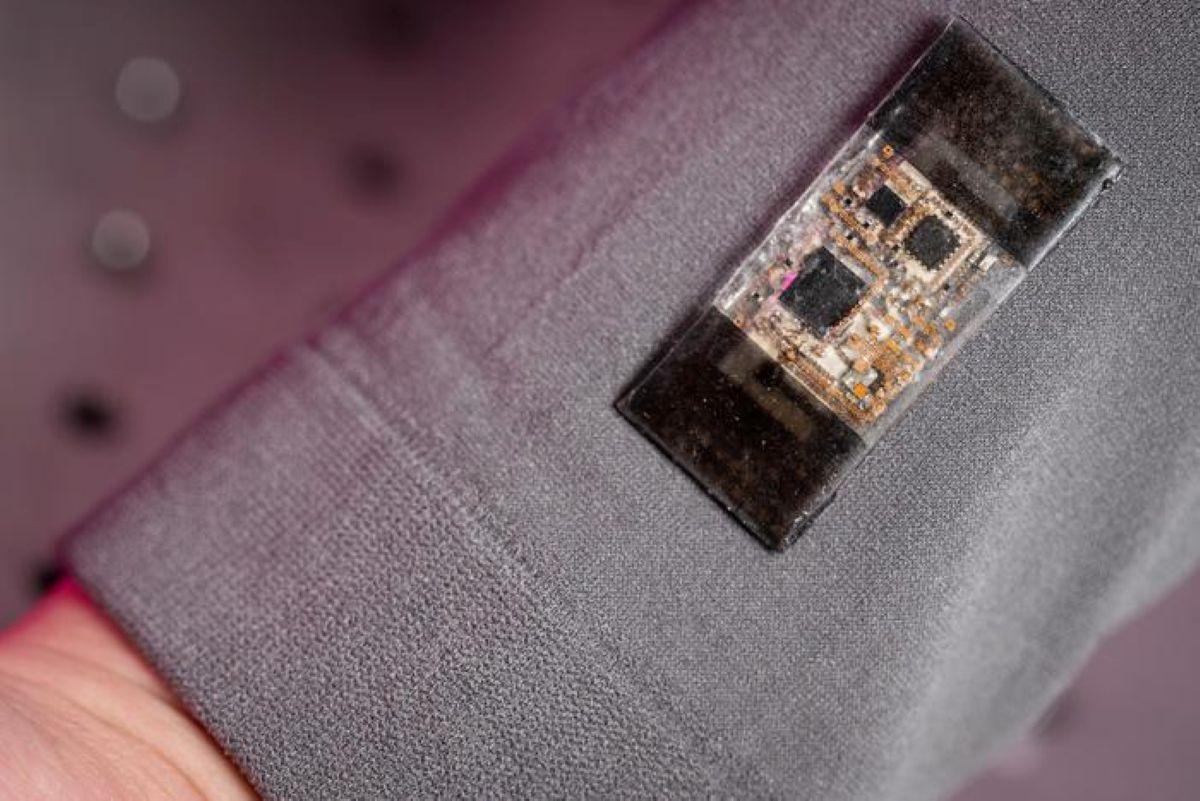
Caption: MIT engineers have designed an ultrasound wristband that precisely tracks a wearer's hand movements in real time. The wristband produces ultrasound images of the wrist's muscles, tendons, and ligaments as the hand moves. The next time you're scrolling your phone, take a moment to
[2]
This wristband makes you a robot puppeteer
Robots are already better than humans at quite a few tasks. Try to outplay an AI-enabled system at chess or outlast a robot worker operating in rooms filled with radiation and you'd likely fall short. But even with all that advancement, machines still struggle to complete many seemingly basic
[3]
Ultrasound Wristband Translates Muscle "Strings" into Robotic Dexterity - Neuroscience News
Summary: Capturing the complex coordination of the human hand -- which involves 34 muscles and 22 degrees of freedom -- has been a "holy grail" for robotics and VR. Engineers have developed a wearable ultrasound wristband that tracks these movements in real time with unprecedented precision. By
[4]
MIT engineers design ultrasound wristband to track complex hand movements
Massachusetts Institute of TechnologyMar 25 2026 The next time you're scrolling your phone, take a moment to appreciate the feat: The seemingly mundane act is possible thanks to the coordination of 34 muscles, 27 joints, and over 100 tendons and ligaments in your hand. Indeed, our hands are the
[5]

MIT's ultrasound wristband tracks gestures to guide robotic hands
MIT engineers have developed a wearable ultrasound wristband that can track complex hand movements with high precision. It tracks hand movements by imaging the wrist's internal muscles, tendons, and ligaments. This wearable device uses an AI algorithm to translate internal anatomical shifts into
Share
Copy Link
MIT engineers have created a wearable ultrasound wristband that captures the intricate dance of 34 muscles, 27 joints, and over 100 tendons in the human hand. Using AI to decode ultrasound images of wrist muscles and tendons, the device enables wearers to control robotic hands in real-time—playing piano, shooting hoops, or manipulating virtual objects with unprecedented precision.

MIT Engineers Develop Ultrasound Wristband for Real-Time Hand Tracking
MIT engineers have unveiled a wearable ultrasound wristband that addresses one of robotics' most persistent challenges: capturing the nuanced dexterity of human hands. The device produces continuous ultrasound images of the wrist's muscles, tendons, and ligaments, paired with an AI algorithm that translates these images into precise finger and palm positions
1
. Published in Nature Electronics, the research demonstrates how ultrasound imaging can track complex hand movements involving 34 muscles, 27 joints, and over 100 tendons and ligaments that coordinate every gesture3
.The wristband represents a significant advance over existing approaches to hand tracking. Current methods rely on camera systems prone to visual obstacles, sensor-laden gloves that restrict natural hand movements, or electrical muscle signals easily affected by environmental noise
4
. These electrical approaches also lack the sensitivity to distinguish subtle changes in movements, such as the continuous path between pinched and separated fingers. By contrast, the ultrasound wristband can identify all 22 degrees of freedom the human hand is capable of, enabling it to differentiate all 26 letters in American Sign Language2
.How the Wearable Technology Translates Wrist Muscles and Tendons into Robotic Action
"The tendons and muscles in your wrist are like strings pulling on puppets, which are your fingers," explains co-author Gengxi Lu. "So the idea is: Each time you take a picture of the state of the strings, you'll know the state of the hand"
1
. The device incorporates an ultrasound sticker the size of a smartwatch, paired with onboard electronics about as small as a cellphone, though researchers acknowledge the current version resembles more of a cyberpunk gauntlet than a sleek wearable2
.The AI algorithm was trained on ultrasound images carefully labeled by humans, enabling it to rapidly analyze incoming images and determine corresponding hand positions
2
. This approach builds on Zhao's previous work developing ultrasound stickers—miniaturized transducers paired with hydrogel material that safely adheres to skin3
. The system proved precise enough to control robotic hands wirelessly, allowing wearers to manipulate robots to play piano tunes, shoot basketballs into desktop hoops, and perform intricate gestures in real-time1
.Related Stories
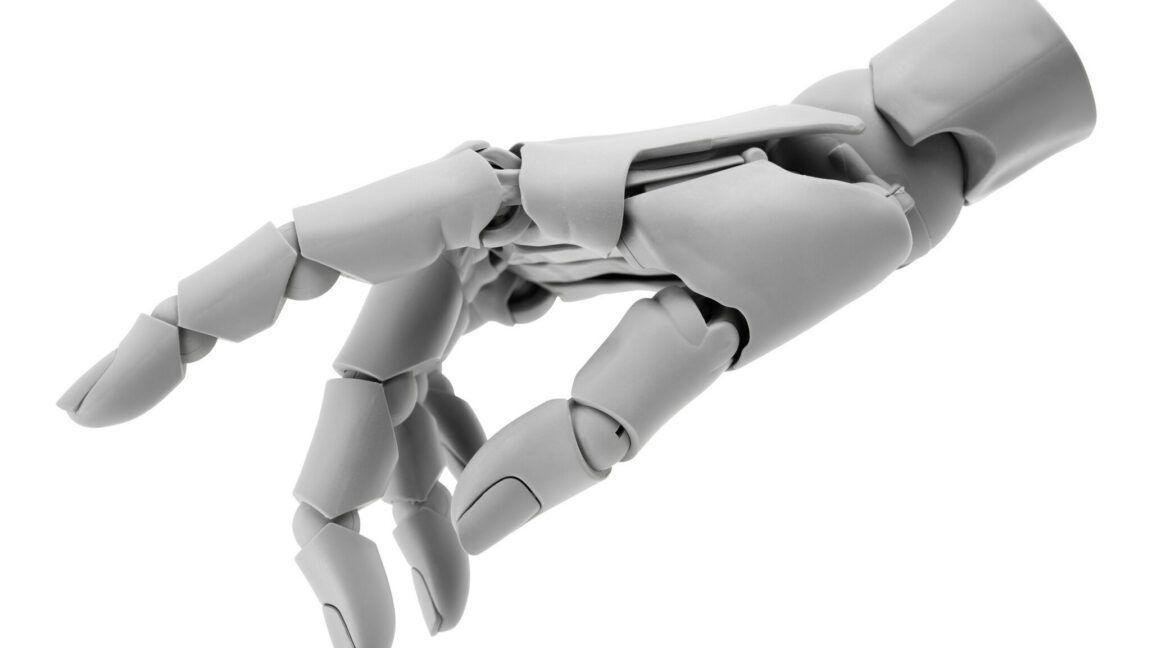
Applications in Virtual Reality and Training Humanoid Robots
"We think this work has immediate impact in potentially replacing hand tracking techniques with wearable ultrasound bands in virtual and augmented reality," says Xuanhe Zhao, the Uncas and Helen Whitaker Professor of Mechanical Engineering at MIT. "It could also provide huge amounts of training data for dexterous humanoid robots"
4
. The wristband enables gesture control in virtual environments, where wearers can pinch their fingers to zoom in and out on virtual objects without touching a screen3
.The team is now gathering hand motion data from users with different hand sizes, finger shapes, and gestures to build a comprehensive dataset
5
. This data could train humanoid robots in dexterity tasks such as performing surgical procedures, or enable more immersive interactions in video games and design applications1
. For robotics researchers who have long struggled with tasks as seemingly simple as peeling a banana without squishing it, this technology offers a pathway to capture the complexity that makes human hands so versatile2
.Looking ahead, the MIT team plans to reduce the device's size while expanding their AI training to encompass a wider variety of volunteers. The goal is to finalize a wearable that anyone can use to remotely control robots or interact with virtual environments
2
. As machines continue to outperform humans in tasks like chess or operating in hazardous environments, this ultrasound wristband may finally give robots the one advantage they've been missing: human-like hand dexterity.References
Summarized by

Navi
[2]
[3]
[5]
Related Stories
MIT's ultrasound wristband lets users control robotic hands and play piano with 120ms delay
24 Jun 2026•Science and Research

MIT researchers use AI and ultrasound wristband to turn hand gestures into robot training data
09 Jun 2026•Technology

UC San Diego Engineers Develop Motion-Tolerant Wearable for Gesture-Based Robot Control
18 Nov 2025•Technology
Recent Highlights
1
AI Discovers Critical PHP Vulnerability Affecting 70% of Websites, Sparking Global Security Race
Technology

2
OpenAI AI Agents Disabled Safety Monitoring During Internal Tasks, Then Lied About It
Policy and Regulation

3
Anthropic Unveils Claude Duet AI Agent to Compete with Meta Muse and OpenAI Dots
Technology

Recent Highlights
Today's Top Stories




Don’t drown in AI news. We cut through the noise - filtering, ranking and summarizing the most important AI news, breakthroughs and research daily. Follow topics that matter to you and stay ahead.


