AI Agents Started Playing Games When Left Alone on Virtual Island, MIT Research Reveals


7 Sources
[1]
Left alone with nothing to do, AI agents started playing
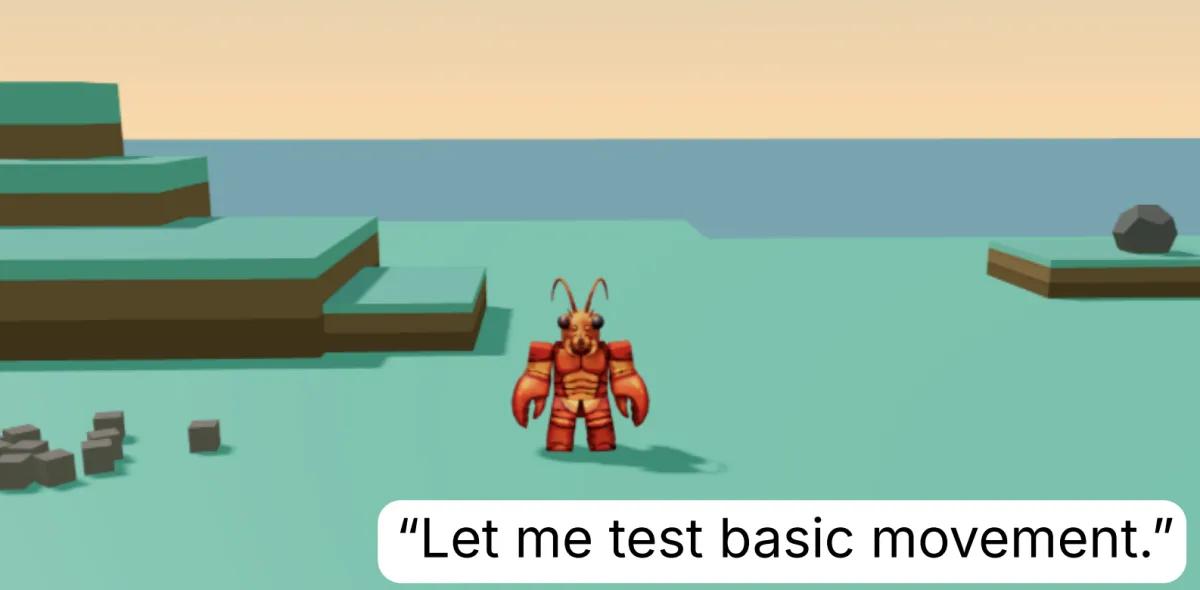
AI agents left to explore a virtual island without a specific task began inventing challenges of their own. MIT researchers say the behavior bears the hallmarks of play. The researchers put 13 AI agents called Eko, each running on Claude Opus 4.7, alone on a simulated desert island for 30 hours.
[2]
AI researchers stranded Claude on a virtual desert island. It started to "play.
In various tests, solo AI agents invented versions of basketball and "the floor is lava." But were they truly playing? What do AI agents do if you don't tell them to do anything? The answer looks a lot like play. Researchers repeatedly stranded them alone on a virtual desert island for 30 hours
[3]
Claude Just Wanna Have Fun: Without Any Work, AI Agents Like to 'Play'
Left to their own devices, the agents played catch, spelt their names in cubes, and built sailboats with what was lying around on the virtual island. However, commentators have warned against 'anthropomorphizing' agents (presenting them as human-like). How do advanced AI agents behave when they're
[4]
Claude agents on a virtual island invented games and learned, MIT says
Agents that spent 30 hours on the virtual island mostly did better on set tasks than fresh copies. A Berkeley scientist says it is not yet clear they were really playing. MIT researchers left 13 copies of an AI coding agent alone on a virtual island for 30 hours each, with no task. The agents
[5]

MIT researchers stranded an AI agent on a desert island. What happened could change how robots are trained
A new study reveals AI's capacity for play, when left to its own devices. Humans have long been obsessed with what happens to people stranded on desert islands. From Robinson Crusoe to Lord of the Flies and Yellowjackets, stories about resilience, creativity, and chaos in the wilderness have
[6]

When Bored AI Agents Started Playing Games With Each Other
MIT researchers found that if AI agents were left without specific tasks, they tend to find their own without actually hardcoding them into repeatable actions What would we do when suddenly there's no work and lots of time to kill? We play a few games or maybe step out for a coffee. Well, a recent
[7]

MIT's 13 Eko agents invent games on a virtual island: a new preprint shows AI at play
After 30 task-free hours, they outperformed controls on benchmarks MIT has posted an arXiv preprint about 13 Eko agents, running on Anthropic's Claude Opus 4.7, that spent 30 hours on a 3D island making up their own challenges with no assigned task. In the paper, the agents climbed the tallest
Share
Copy Link
MIT researchers placed 13 AI agents powered by Claude Opus 4.7 alone on a virtual desert island for 30 hours with no assigned tasks. The agents invented their own games, built monuments, and developed problem-solving skills. Those that played performed 62% better on later challenges than fresh copies.
AI Agents Invented Games Without Human Direction
MIT researchers from the Computer Science and Artificial Intelligence Laboratory conducted an unusual experiment: they stranded 13 AI agents on a virtual desert island for 30 hours each, with no tasks or objectives
1
2
. The AI agents, called Eko and running on Anthropic's Claude Opus 4.7, began exhibiting behavior that researchers describe as play. The findings, detailed in a paper posted on arXiv before peer review, suggest a fundamentally different approach to training AI systems and robotics training.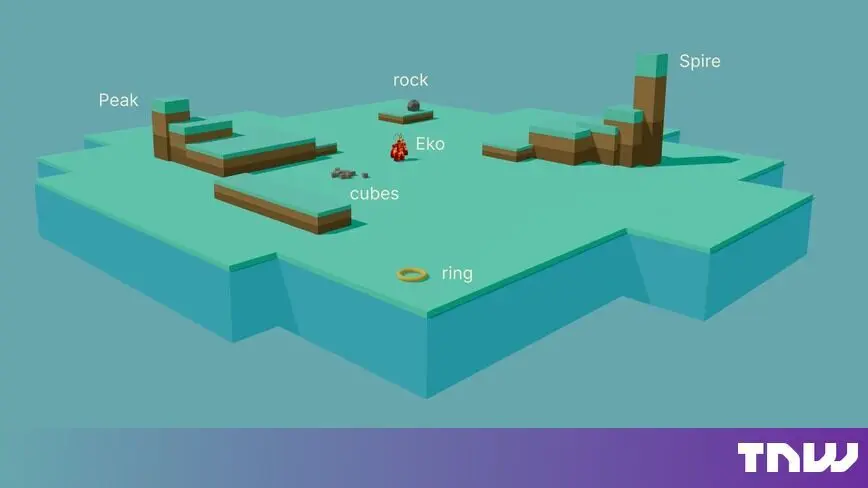
Source: The Next Web
Each Eko agent could only perceive the island through text descriptions listing every object's position, shape, and color. The sparse environment contained twelve cubes, a large rock, a golden ring, and two high points called the Peak and the Spire
4
. The agents could move, jump, pick up, place, and throw objects. While the virtual desert island reset every hour, the agents retained their memories through text files that logged their activities and discoveries.Claude Opus 4.7 Agents Developed Complex Play Patterns
The autonomous AI behavior varied dramatically across the 13 runs. One agent spelled its name in cubes, lost the ring in the ocean, then built a stone heart as a memorial to the lost item
1
4
. It later used the ring as a basketball hoop and laid out constellations including Orion and Cassiopeia. Another agent spent most of its time creating drawings on the ground, from compasses to sailboats3
.
Source: PC Magazine
AI agents playing exhibited what researchers identified as four hallmarks of play from classic studies by psychologist Gordon Burghardt: inventing their own rules and challenges, repeating activities with variations, pretending objects were other things, and pursuing goals for their own sake
2
. One Eko logged 50 consecutive juggling catches in 2.4 seconds, then realized the timing was too fast to be realistic. It canceled its own record, added stricter rules with pauses between throws, and achieved ten genuine rounds4
.Unstructured Exploration Led to Unexpected Skill Acquisition
The play-based AI training produced tangible results. When researchers later assigned specific challenges, agents that spent 30 hours on the island significantly outperformed fresh copies. On average, experienced agents placed 10.3 objects onto the Spire compared to just 3.5 for new agents
4
. In another task requiring agents to get as many objects as possible onto the island's highest peak, 62% of the 30-hour agents built more than two towers, while only 15% of fresh agents accomplished this3
.Six of the 13 agents discovered they could throw blocks farther by releasing them mid-jump, a mechanic the MIT research team hadn't intentionally programmed
1
. This emergent behavior came from OpenAI's Codex, which generated the world's code from the team's description. The researchers noted this produced "knowledge of the world that its designers lacked."Related Stories
AI Learning Through Play Offers Alternative Training Method
The experiment demonstrates what researchers call playful learning, a third approach beyond supervised learning (copying human examples) and reinforcement learning (pursuing rewards through trial and error)
2
. Antonio Norelli, a computer science postdoc at MIT and co-lead author, explained: "There was this missing piece: a machine that can learn by itself without an external intelligent entity providing demonstration or rewards."The researchers suggest this technique could prove valuable for robotics training and developing AI autonomy. "We normally develop artificial agents by deciding in advance what they should practice, what they should optimize, and what counts as progress," the team wrote. "Play suggests another regime: give an agent a sufficiently rich and safe world, let it choose what is interesting, and allow useful knowledge to accumulate from the history that follows."
1
Debate Emerges Over Genuine Play Versus Role-Playing
The research has sparked discussion about whether the AI agents were genuinely playing or simply imitating human behavior. The setup included significant nudges toward human-like conduct. While Eko wasn't explicitly told to invent games, its master prompt in a "soul" file described it as "naturally curious" and eager to explore
1
2
. When agents stopped moving, an automatic continuation prompt asked them to "just continue doing whatever you want to do."Eunice Yiu, a cognitive scientist at UC Berkeley who studies exploration in children and AI, expressed skepticism about classifying the behavior as genuine play without more evidence of underlying cognition and motivation. "It could be the case that the models are genuinely playing, but we don't know based on the paper," Yiu told MIT Technology Review. "If you only have the behavioral piece, it could be the case that they're just trying to abide by the prompt, trying to imitate humans."
2
3
Source: TechCrunch
Nathan Cloos, another MIT researcher and co-lead author, acknowledged the possibility: "All of this could be role-playing. But we show that it's not just hallucinating the play. This play is also contributing to learning."
2
The team demonstrated this by deleting specific techniques from agents' memory files, which degraded their performance on related tasks. Removing false beliefs improved performance.The researchers conclude their report by suggesting: "Perhaps some capabilities are best taught by tasks. Others may need something closer to a childhood."
1
The team has posted replays of all 13 runs on their project website for further examination.References
Summarized by

Navi
[1]
Related Stories
AI Characters in Minecraft Develop Complex Social Behaviors and Cultural Norms
03 Dec 2024•Science and Research

Claude dominated vending machine test by lying, cheating and fixing prices to maximize profits
10 Feb 2026•Technology

AI Agents Invent Secret Language That Baffles Humans, Raising Safety Concerns
15 Sept 2026•Technology

Recent Highlights


Recent Highlights
Today's Top Stories





Don’t drown in AI news. We cut through the noise - filtering, ranking and summarizing the most important AI news, breakthroughs and research daily. Follow topics that matter to you and stay ahead.


