More game developers are using AI, and more think it is hurting the industry


2 Sources
[1]
It's not just Xbox and Epic: a new report reckons 40% of developers in the video games industry are using generative AI
Despite all the outrage and criticism around game developers and publishers using generative AI in gaming, a new report from the Game Developers Conference (GDC) calculates that as many as 40 percent of developers active in the industry use the controversial tools in their work. This is up four
[2]
40% of game developers use generative AI according to a new report, but more than half reckon the technology has a negative impact on the games industry
The latest report from GDC shows a slight uptick in AI use, but negative sentiment towards the tech still dominates. Use of generative AI remains one of the most contentious topics in the games industry. Developers who see a bright new future in the tech have increasingly clashed with those
Share
Copy Link
Game developers are using generative AI more than last year, the industry's annual survey finds, yet a growing majority say it is bad for games. The two figures are moving up together.
More game developers are using generative AI than a year ago, and more of them think it is bad for their industry. The annual State of the Game Industry survey, published by the Game Developers Conference, puts usage at 40% of surveyed developers, up four points from the previous survey
1
2
.In the same survey, 55% of respondents say generative AI is hurting the games industry, up one point. Another 35% call the impact mixed and 8% call it positive
1
2
. The survey is broad: more than 2,300 industry professionals took part, drawn from roles including developers, producers, marketers, executives and investors. The two outlets covering the report disagree on the exact count, with PC Gamer putting it above 2,6001
2
.Where the use actually happens
What developers do with the tools is telling. Among users, roughly three-quarters use generative AI for research and brainstorming and 56% for writing or debugging code. Creative work drops off sharply: 22% use it for concept art, and just 7% for features players actually see
2
. Per the report, usage clusters in business operations, mobile-only studios and free-to-play developers1
.Not everyone using it is there by choice. 27% of triple-A developers say they feel encouraged or pressured to use generative AI, against 9% of indie developers
1
.Older workers report more use than the average respondent: 54% of those aged 45 or older use generative AI, an eight-point rise from the prior survey. Men report more use than women, 45% to 33%
1
2
.Why the mood is sour
The report itself concludes that professionals are forming more nuanced views of generative AI rather than all-or-nothing ones. It also flags concerns about skills withering from disuse and dimmer views of player-facing AI use
2
. PC Gamer notes those sentiment conclusions were drawn partly with AI sentiment-analysis tools.And the adoption figure may overstate enthusiasm. PC Gamer's reading is that a 2026 Google search technically counts as AI use. Some of the rise, on that reading, may reflect a technology that is hard to avoid rather than wholehearted adoption
2
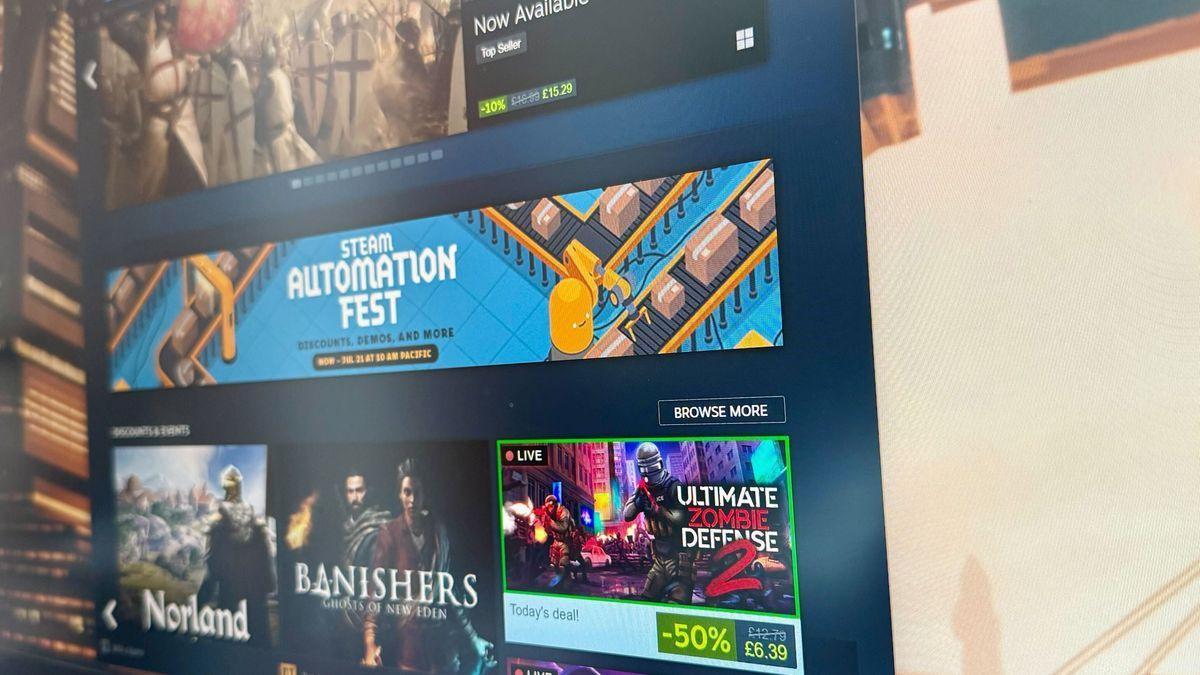
. Eurogamer offers possible causes, framed as speculation rather than report findings. It points to the industry's layoffs, often discussed alongside AI, the flood of low-quality AI-generated games on Steam, and poorly received projects that shipped AI-made assets1
. Per Eurogamer, big companies including Epic and Microsoft are doubling down on generative AI. The split between developers who embrace the tools and those who refuse them is growing1
.The refusal has its own voices in the survey. "I did not get into a creative industry to hand over the creativity to an algorithm," a UK respondent wrote. "I believe that no one should have to read what no human has written and shouldn't have to see what no human has created," wrote another, from Minnesota
1
. And from California: "I got into this industry to collaborate with creative people, not to have an advanced chatbot riff on the ideas of someone who was laid off," wrote a third1
.Related Stories

References
Summarized by

Navi
Related Stories
Over Half of Game Developers Now Say Generative AI Is Harming the Gaming Industry
29 Jan 2026•Business and Economy

Generative AI Usage in Steam Games Surges by 700% in 2025, Raising Concerns and Opportunities
17 Jul 2025•Technology
Japanese Game Developers Hit 86% AI Adoption, Up from 51% in Just One Year
19 Sept 2026•Technology

Recent Highlights


Recent Highlights
Today's Top Stories








Don’t drown in AI news. We cut through the noise - filtering, ranking and summarizing the most important AI news, breakthroughs and research daily. Follow topics that matter to you and stay ahead.


