Motional targets 2026 for driverless robotaxi service in Las Vegas with AI-first reboot


3 Sources
[1]
Motional puts AI at center of robotaxi reboot as it targets 2026 for driverless service | TechCrunch
Nearly two years ago, Motional was at an autonomous vehicle crossroads. The company, born from a $4 billion joint venture between Hyundai Motor Group and Aptiv, had already missed a deadline to launch a driverless robotaxi service with partner Lyft. It had lost Aptiv as one of its financial
[2]
I took a ride in Hyundai's new fully-autonomous robotaxi - and it's surprisingly good at navigating the wild streets of Las Vegas
Stroll a parking lot in Las Vegas and you are bound to bump into a company on the brink of making a major autonomous driving breakthrough. Yet not many go on to survive the difficult early years and emerge out of the other side with a successful business. Fortunately, this year's CES 2026 was a
[3]
Hyundai Is Launching Its Own Robotaxi Service. Can It Win Where Cruise Failed?
The effort could boost Hyundai's own autonomy game, but it faces stiff competition from Waymo -- which is also about to use Ioniq 5 AVs. The Hyundai Ioniq 5 has been conscripted into robotaxi service before. It's the autonomous vehicle of choice for a few startups, and soon, it will provide
Share
Copy Link
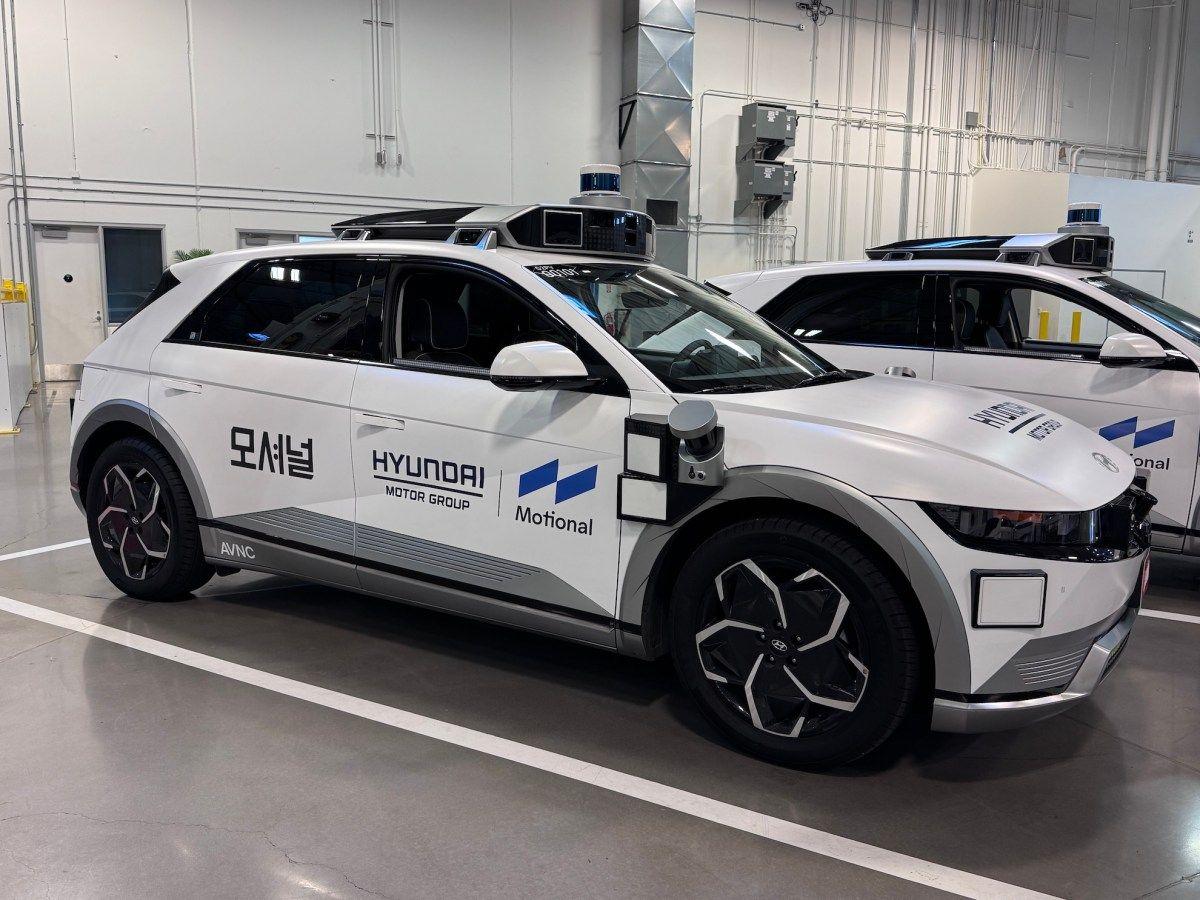
Motional has rebooted its robotaxi plans with an AI-first approach, targeting a commercial driverless service in Las Vegas by the end of 2026. The Hyundai-backed company shifted from classic robotics to foundation models after pausing operations in 2024. Following layoffs that reduced staff from 1,400 to under 600, Motional now integrates neural networks with traditional software to tackle autonomous driving challenges.
Motional Reboots Robotaxi Plans With AI-First Approach
Motional has emerged from a turbulent restructuring period with ambitious plans to launch a commercial driverless service in Las Vegas by the end of 2026
1
. The company, now majority-owned by Hyundai Motor Group after Aptiv reduced its stake in the joint venture, paused commercial activities in 2024 to fundamentally transform its approach to autonomous driving1
. This decision came after missing deadlines with partner Lyft and facing mounting losses that prompted several rounds of layoffs, including a 40% restructuring cut in May 2024 that reduced the workforce from approximately 1,400 employees to fewer than 6001
.
Source: TechCrunch
The pivot represents a fundamental shift in how Motional develops its self-driving technology. CEO Laura Major explained that while the company had achieved a safe, driverless system, there remained "a gap to getting to an affordable solution that could generalize and scale globally"
1
. The company has already opened a robotaxi service with a human safety operator behind the wheel to its employees and plans to offer public rides with an unnamed ride-hailing partner later this year before removing safety operators by year's end1
.Artificial Intelligence Transforms Autonomous Driving Capabilities
The core of Motional's transformation centers on advancements in AI that have reshaped the autonomous vehicle industry. Previously, Motional relied on individual machine learning models to handle perception, tracking, and semantic reasoning, while using rules-based programs for other operations within the software stack
1
. This created what Major described as a complex web of software that proved time-consuming and expensive to develop and deploy1
.The company now leverages neural networks, foundation models, and vision-language-action models that allow for end-to-end architecture while maintaining smaller models for developers
1
2
. This approach enables faster adaptation to new environments without complete redevelopment. "For example, the traffic lights might be different in the next city you go to, but you don't have to redevelop or re-analyze those. You just collect some data, train the model, and it's capable of operating safely in that new city," Major explained1
. This transition addresses both scalability and cost-effective deployment, two critical factors that have challenged other autonomous vehicle companies.Fully-Autonomous Robotaxi Demonstrates Progress Navigating Las Vegas
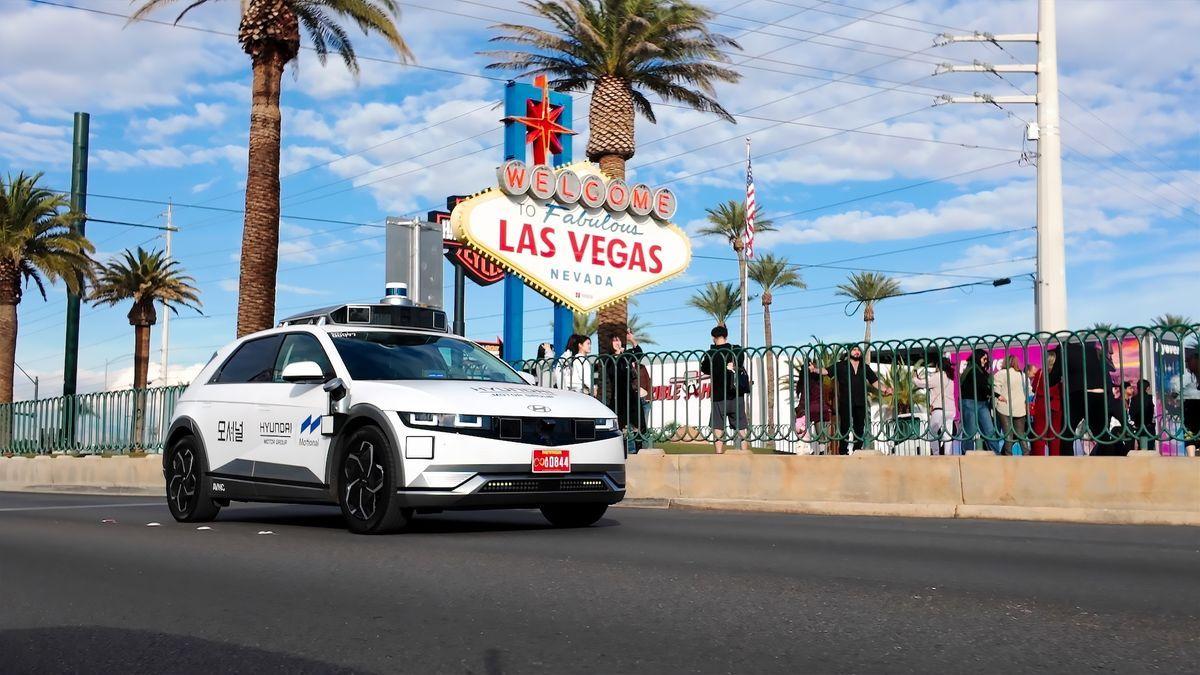
Recent demonstrations of the Hyundai Ioniq 5 robotaxi showcase tangible progress in handling complex urban scenarios. The vehicle successfully navigated the notoriously challenging Las Vegas Strip, including maneuvering through the bustling pickup and drop-off area of the Aria Hotel
1
. During test rides, the autonomous vehicle demonstrated the ability to navigate around stopped taxis, change lanes, and manage interactions with dozens of pedestrians and obstacles—scenarios that previously required human safety operator intervention1
.
Source: TechRadar
The Ioniq 5 is assembled at Hyundai's smart factory in Singapore and comes equipped with more than 30 sensors, including cameras, radar, and lidar arrays
2
3
. Unlike Tesla's planned Cybercab or the Zoox autonomous pod, it retains its steering wheel and pedals while adding automatically opening doors and screens for rear passengers to monitor their journey2
3
.However, challenges remain. During one demonstration, a disengagement occurred when another vehicle cut in front at traffic lights, forcing the safety operator to take control momentarily
2
. Adam Griffin, Vice President of Operations and Head of Safety at Motional, noted that such instances requiring teleoperator intervention are becoming increasingly rare2
. These edge cases represent exactly the type of challenging scenarios that AI models are designed to handle more effectively than traditional robotics approaches.Related Stories


Competing Against Waymo in Autonomous Vehicle Market
Motional faces formidable competition as it attempts to establish its robotaxi service. Waymo, the clear market leader, plans to expand to more than two dozen cities by the end of 2026—the same timeframe in which Motional aims to launch operations in a single city
3
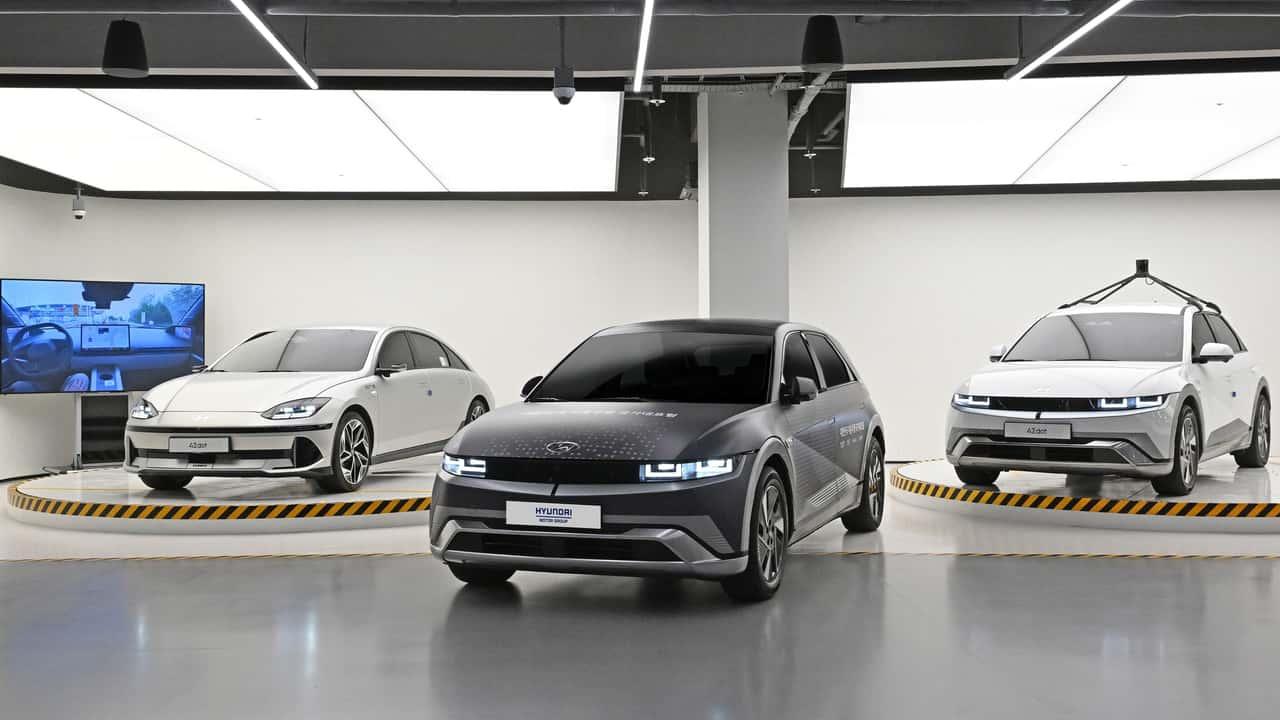
. Ironically, Waymo is also preparing to deploy the Hyundai Ioniq 5 to replace its aging Jaguar I-Pace fleet, though Motional will be first to deploy Hyundai's electric vehicle in autonomous service2
.The autonomous vehicle landscape is littered with cautionary tales. General Motors shut down Cruise after losing $10 billion, while Ford and Volkswagen abandoned Argo AI just as its robotaxi service appeared ready to launch
3
. Motional itself has delivered over 130,000 rides to the public through the Lyft and Uber networks and driven more than two million autonomous miles with zero at-fault incidents2
. Yet commercial success remained elusive until this strategic reset.Major emphasized that Hyundai's commitment extends beyond immediate robotaxi deployment. "I think Hyundai is committed to robotics and autonomy and AI. They see it having a profound impact on the world," she told InsideEVs
3
. This long-term vision connects to Hyundai's broader bets on humanoid robotics through its Boston Dynamics subsidiary, with plans to deploy robot workers in factories this decade3
. The integration of AI-driven autonomous technology developed for robotaxis could eventually flow into personal vehicles, creating a pathway for Hyundai to differentiate its consumer offerings while pursuing the autonomous taxi market.References
Summarized by

Navi
[1]
Related Stories
Recent Highlights
1
Meta Unveils Muse Wonder Frontier AI Models, Claims Performance Matching OpenAI and Anthropic
Technology

2
IMF Report Warns AI Market Correction Could Spark Global Financial Crisis With $1.4T at Risk
Business and Economy

3
OpenAI Releases 722 AI-Generated Math Solutions, Triggering Existential Crisis in Mathematics
Technology

Recent Highlights
Today's Top Stories







Don’t drown in AI news. We cut through the noise - filtering, ranking and summarizing the most important AI news, breakthroughs and research daily. Follow topics that matter to you and stay ahead.


