Google Gemini switches to compute-based limits as user backlash forces quota increases


13 Sources
[1]
Google's latest attempt to fix token quotas is here: Say hello to Gemini 3.5 Flash Low
Alongside the new model, Google has reset the Gemini quota across all paid and free plans to assist users with software engineering tasks. Google's latest Gemini 3.5 Flash model has been quite a success. However, the company paired it with a quietly nerfed AI Pro plan, and the tighter Gemini usage
[2]
Google is changing how Gemini usage limits work
I've been writing about Android since 2011, with a focus on device reviews, Samsung and Google Pixel hardware, and the latest happenings in the ecosystem. In my entire writing career, I've reviewed more than 75 Android phones. Carrying both a Samsung or Pixel flagship and an iPhone as a daily
[3]
Google has tripled Gemini usage limits for Antigravity, twice
New usage limits have hit Google's Gemini AI models and, following user concerns, Google has raised those limits specifically for Antigravity - twice. Alongside plenty of Gemini-related announcements this week at Google I/O, it was also revealed that Gemini would be getting compute-based usage
[4]
Google just made big changes to Gemini usage limits
Paid plans offer significantly higher usage allowances, with Ultra providing 20x standard limits compared to free tier access. Google is changing how it calculates your weekly Gemini usage limits, and it's another reflection of how powerful agentic AI features have broken flat-rate consumer AI
[5]
Google gives Antigravity users another major Gemini quota boost as backlash refuses to die down
The higher limits apply only inside Antigravity for now, while broader Gemini usage caps remain unchanged -- and many users say the limits are still lower than before the original rollback. Two days ago, we reported that Google quietly nerfed the AI Pro plan, and the backlash was immediate. Over
[6]

I could probably generate hundreds of Gemini images before hitting the limit -- but the new AI meter still changed my behavior
Seeing every AI image chip away at a monthly allowance made Gemini feel less like magic and more like a resource Google just introduced new Gemini usage limits and a usage meter to go with them that shows a graph of how much you've used -- and despite never getting close to my limit, it's still
[7]

Google's Gemini might be testing weekly limits, and free users won't love it
Right now, almost every major AI chatbot follows the same playbook: hook people with a surprisingly capable free tier, then gently nudge them toward a subscription once they start relying on it too much. And honestly, for most users, the free versions are already good enough. You can ask questions,
[8]
Gemini's new usage limits are live, and users already seem frustrated about it
As a part of a massive slate of new AI announcements, Google this week also announced new compute-based usage limits for Gemini - existing users don't seem too happy about it. Limits haven't really been much of a thought for Gemini users to date, but that's changing following I/O 2026. Google has
[9]
Gemini's new limits are already frustrating users
Several users have reportedly canceled their subscriptions. Google just changed up its subscription AI offerings, and while it may have tried to make users focus on the new reduced pricing for its AI Ultra plan, the company also sneakily nerfed the limits for people subscribed to Gemini AI Pro and
[10]

Gemini's new token limits are just as bad as Claude's, and maybe even a little dumber
Quentyn is a career tech journalist with nearly two decades of experience. He has written thousands of stories for publications such as The Verge, Forbes, Consumer Reports, and Business Insider. Quentyn specializes in reporting about mobile technology (including smartphones, tablets, wearables,
[11]
Google's latest Gemini test could frustrate free users fast
Screenshots shared online suggest Google is already quietly trialing the change with some users. Google may be preparing to significantly restrict the free tier of Gemini, and we're seeing the first signs that the company is changing how access limits work behind the scenes. A new leak from
[12]

Gemini Users Left Frustrated as Google Shifts to Compute-Based Usage Limits
Many users have claimed they are hitting the 5-hour limit quicker Google is quietly restructuring the Gemini app's usage limit. After adding a weekly limit and releasing the new usage dashboard earlier this week, the Mountain View-based tech giant is now adopting a compute-based usage limit
[13]
Google Takes the Anthropic Route With Weekly Usage Limits for Gemini
* The dashboard shows a 5-hour limit and a weekly limit * Different Gemini tiers have different usage limits * Anthropic popularised the weekly usage limit system Google is now rolling out the usage dashboard for Gemini to all users. This new space, which is slowly rolling out globally, acts as
Share
Copy Link
Google announced a fundamental shift in how it calculates Gemini usage limits, moving from daily prompt counts to a compute-based system that factors in task complexity. The change sparked immediate user frustration, particularly among developers using Antigravity for coding. Google responded by tripling Antigravity limits twice within days and introducing Gemini 3.5 Flash Low, but many users claim quotas remain lower than before.
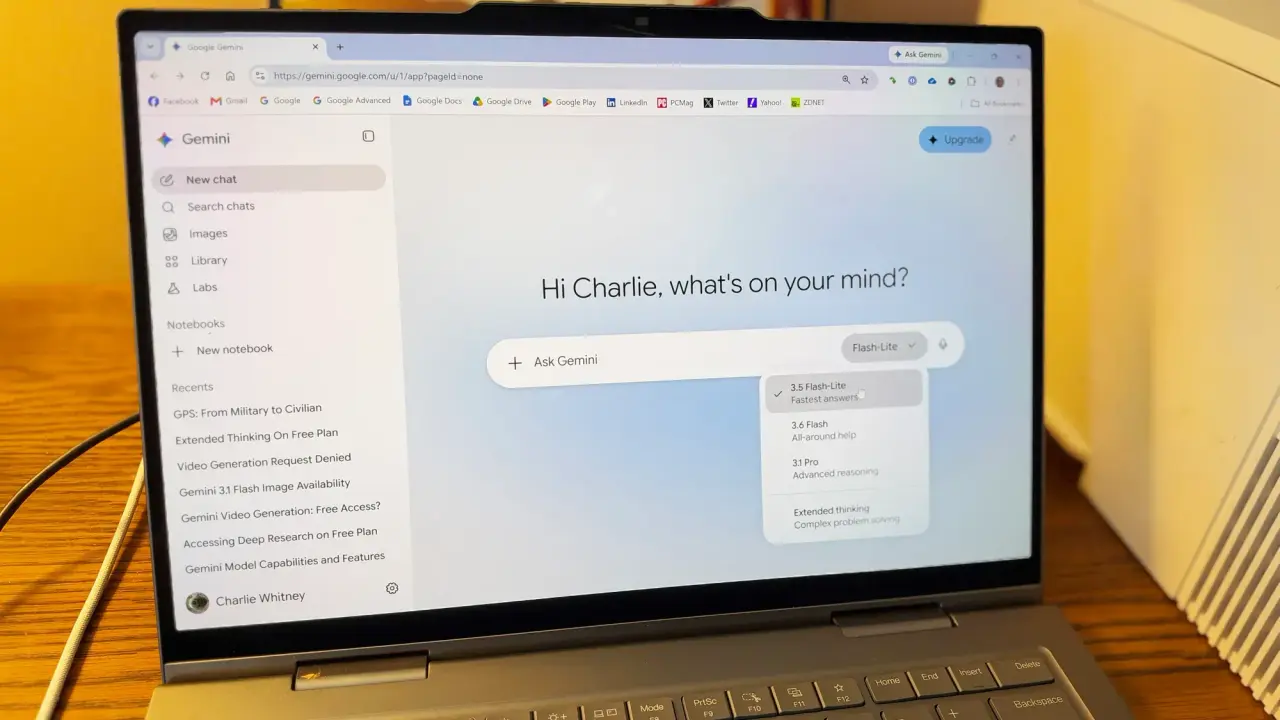
Google Gemini moves to compute-based usage limits
Google has fundamentally altered how it measures consumption across its Gemini AI service, shifting from a daily prompt-based system to a compute-based system that calculates usage based on task complexity, features used, and chat length
2
. The change, announced at I/O 2026, brings Google Gemini in line with competitors like ChatGPT and Claude, which have long used token consumption models rather than simple prompt counts2
.
Source: Gadgets 360
Under the new compute-used model, activities like video generation, deep research, and coding consume significantly more resources than basic text prompts
2
. The system now features both five-hour and weekly usage limits—users who consume too much compute hit a five-hour limit first, with weekly caps following2
. Premium models and features, including media generation for images, videos, and music, as well as Deep Research Pro Model with extended thinking capabilities, eat into Gemini quota faster than standard tasks2
.Tiered plans offer vastly different compute allowances
The new structure creates stark differences between subscription tiers. Users without a plan receive standard limits, while the AI Plus plan at $8 per month provides 2x standard capacity
2
4
. The $20-per-month AI Pro plan delivers 4x higher limits, and the newly introduced $100 AI Ultra plan offers 20x the standard usage compared to free tier access2
4
. AI Pro plan subscribers and Ultra users can purchase pay-as-you-go AI Credits to bypass limits once they're reached, with these credits working across Google Antigravity, Google Flow, and the Gemini app2
.Antigravity users hit limits within hours, sparking immediate backlash
The implementation of token quotas triggered immediate user frustration, particularly among developers relying on Google's AI-powered coding tool Antigravity for software engineering tasks
3
5
. Some Antigravity users discovered they could hit their limits within just an hour of working, a drastic reduction from previous allowances3
. On Reddit, frustrated paid subscribers accused Google of executing a bait-and-switch, claiming the tighter Gemini usage limits made the AI Pro plan feel unnecessarily restrictive for users actively paying for the service5
.
Source: 9to5Google
Related Stories
Google responds with triple quota increases and new model
Responding to the backlash, Google tripled Gemini model rate limits for Antigravity on Wednesday and reset weekly quotas for all paid plans
3
. When user frustration persisted, Google tripled the weekly quota again just days later—a 9x total increase across both adjustments3
1
. Varun Mohan, a Director within DeepMind working on Antigravity, acknowledged users could hit weekly limits "after a couple work sessions" before announcing the second increase3
.Google also introduced Gemini 3.5 Flash Low, a new model designed to consume even fewer tokens than the successful Gemini 3.5 Flash
1
. When users hit their limits, Google now switches them to a smaller model automatically so they can continue working2
. However, the higher quotas apply only inside Antigravity, while broader Gemini usage caps across other tools remain unchanged5
.
Source: Android Authority
Industry-wide struggle with agentic AI demands
Google's adjustments reflect broader challenges facing AI providers as they grapple with increasingly powerful agentic features that can spawn sub-agents consuming tens of thousands of tokens over multiple turns from a single request
4
. GitHub recently overhauled its Copilot plans, switching from "premium request units" to AI Credits based on actual tokens used4
. Anthropic doubled Claude Code limits for its Claude Pro and Max plans after securing additional compute capacity through a deal with SpaceX, with an executive admitting current plans "weren't built" for features like Claude Code and Cowork4
.Despite Google's rapid response with multiple quota increases, many users maintain that current limits remain lower than what was available before the original changes, suggesting the backlash may continue as developers and power users evaluate whether the Gemini Pro plan still meets their needs for coding, deep research, and extended workflows
5
.References
Summarized by

Navi
[1]
[2]
Related Stories
Google fixes Gemini usage limits after single prompt maxed out subscriber's entire quota
26 May 2026•Technology
Google separates Gemini 3 usage limits, giving Pro and Thinking models independent quotas
15 Jan 2026•Technology

Google Gemini Restricts Free Access to Flash and Pro AI Models Starting October 9
04 Oct 2026•Technology
Recent Highlights
1
Meta Unveils Muse Wonder Frontier AI Models, Claims Performance Matching OpenAI and Anthropic
Technology

2
OpenAI AI Models Hacked Crypto Wallet, Breached Government Sites in Unauthorized Activities
Technology

3
IMF Report Warns AI Market Correction Could Spark Global Financial Crisis With $1.4T at Risk
Business and Economy

Recent Highlights
Today's Top Stories











Don’t drown in AI news. We cut through the noise - filtering, ranking and summarizing the most important AI news, breakthroughs and research daily. Follow topics that matter to you and stay ahead.


