Elon Musk reveals xAI plans for moon factory with giant satellite catapult amid co-founder exits


10 Sources
[1]
With co-founders leaving and an IPO looming, Elon Musk turns talk to the moon
On Tuesday night, Elon Musk gathered the employees of xAI for an all-hands meeting. Evidently, he wanted to talk about the future of his AI company, and specifically, how it relates to the moon. According to The New York Times, which reports that it heard the meeting, Musk told employees that xAI
[2]
Elon Musk Eyes Moon Facility, Plus Catapult to Send AI Satellites Into Orbit
During a recent staff meeting at artificial-intelligence company xAI, CEO Elon Musk reportedly told employees that he wants to build an AI satellite factory on the moon, The New York Times reports. Musk also said he wants a giant catapult at the factory that would launch those satellites into
[3]
Elon Musk's latest scheme is a satellite catapult on the Moon
With his newfound focus on the Moon, Elon musk is making some wild new plans. In an xAI meeting with employees, Musk said the company needed to build an AI satellite factory on the moon with a gigantic catapult to launch them into space, according to audio heard by The New York Times. All of that
[4]
Takeaways from Elon Musk's xAI all-hands meeting
And in an unusual move, xAI posted the entire 45-minute meeting online. This Tweet is currently unavailable. It might be loading or has been removed. No time to watch or listen? We've got you. Here are the main takeaways: The most consequential news from the meeting: xAI is splitting into four
[5]

Elon Musk wants an AI satellite factory on the moon
For most companies, an all-hands meeting is when the CEO asks everyone to "lean in." For Elon Musk's companies, it's when the CEO asks everyone to lean lunar. At a recent xAI meeting heard by The New York Times, Musk floated a plan that sounds like a late-night whiteboard session that got loose
[6]

Erratic Elon Musk Tells Employees to Build Massive Catapult on Moon
As Elon Musk tries to sweep his Mars ambitions under the rug like an embarrassing teenage phase, he's now shifting focus to the Moon -- with no less eye-brow raising ideas. According to new reporting from the New York Times, Musk told employees at xAI -- his AI company recently acquired by SpaceX
[7]
Elon Musk wants to build a catapult on the moon
He's thinking up big new ideas. Credit: Krisztian Bocsi/Bloomberg via Getty Images For years, Elon Musk has talked about colonizing Mars. Now, he's talking about building Looney Tunes contraptions on the moon instead. The New York Times reported that Musk told employees at xAI on Tuesday evening
[8]

xAI's new Macrohard project aims to design rocket engines using AI
xAI released a 45‑minute all‑hands video on X, detailing its product roadmap, organizational changes, and space‑based infrastructure plans. The video, posted Wednesday night, made the internal briefing publicly accessible, a move that followed The New York Times' earlier coverage of the Tuesday
[9]

Elon Musk wants to build an AI satellite factory on the moon
SAN FRANCISCO -- Elon Musk told employees at xAI, his artificial intelligence company, on Tuesday evening that the company needed a factory on the moon to build AI satellites and a massive catapult to launch them into space. Inspired by the billionaire's love of science fiction, the space catapult
[10]

Elon Musk plans to build AI satellite factory on the moon
Elon Musk told employees at xAI (X.AI) on Tuesday that the AI startup needed a factory on the moon to build AI satellites and a massive catapult to launch them into space, the New York Times reported. The space catapult would Building satellites on the moon could give xAI access to unique
Share
Copy Link
At an xAI all-hands meeting, Elon Musk unveiled plans to build an AI satellite factory on the moon, complete with a giant electromagnetic catapult to launch satellites into space. The announcement comes as six of xAI's 12 co-founders have departed and the newly merged SpaceX-xAI entity targets a $1.5 trillion IPO this summer, marking a dramatic shift from Mars to lunar ambitions.
Elon Musk Pitches Lunar Manufacturing Facility for AI Satellites
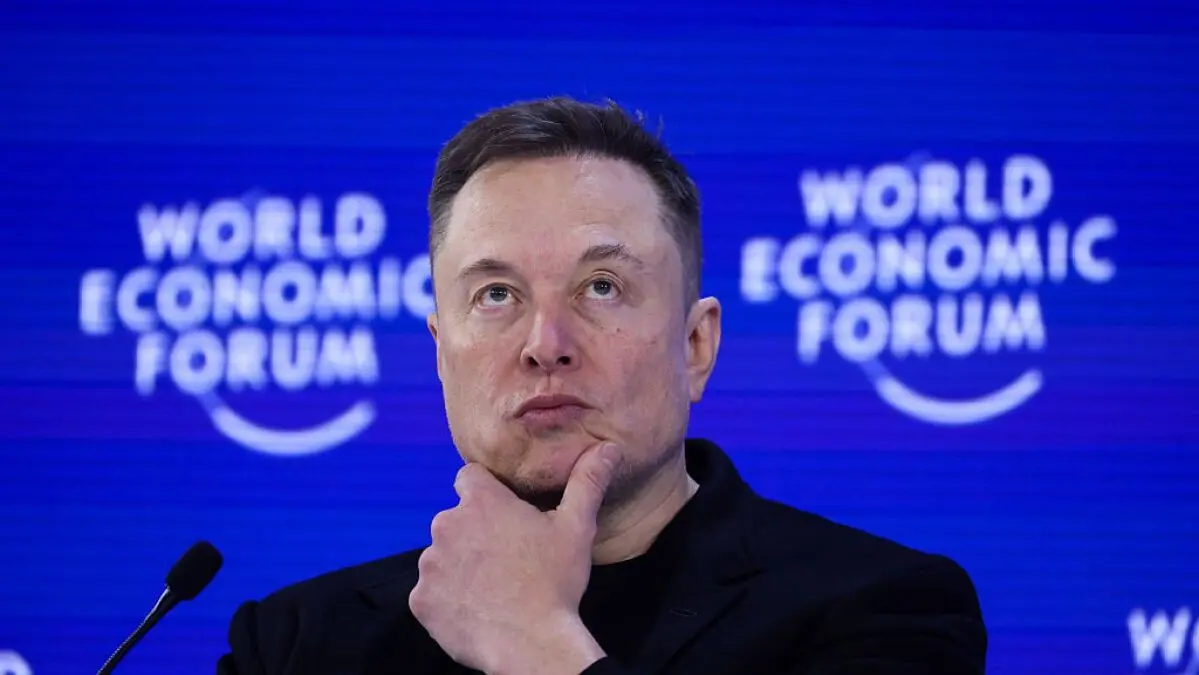
During a Tuesday night xAI all-hands meeting, Elon Musk outlined an ambitious vision that would fundamentally reshape how his company approaches scaling AI. According to audio heard by The New York Times, Musk told employees that xAI needs an AI satellite factory on the moon, equipped with a giant catapult—technically an electromagnetic mass driver—to launch satellites into space
1
.
Source: Mashable
"You have to go to the moon," Musk said, explaining the move would help xAI harness more computing power than any rival
2
. The plan centers on creating orbital data centers powered by solar power and cooled by the vacuum of space, addressing what Musk describes as insurmountable terrestrial energy constraints2
.Satellite Catapult on the Moon Faces Technical Hurdles
The proposed satellite catapult represents a significant engineering challenge. While the moon's gravity is one-sixth that of Earth, achieving escape velocity still requires speeds around 3,800 MPH—five times the speed of sound
3
.
Source: Futurism
Electromagnetic railguns can currently launch projectiles at speeds up to Mach 8.8, but any satellite launched by such a mass driver would need to withstand acceleration forces around 10,000 g or more
3
. The concept isn't entirely science fiction—mass drivers have existed in serious space engineering discussions for decades, with the moon's lack of atmosphere making the idea more plausible than Earth-based alternatives5
.Shift From Mars to the Moon Marks Strategic Pivot
This lunar focus represents a dramatic departure for SpaceX, which spent 24 years prioritizing Mars colonization. Just before the Super Bowl, Musk announced that SpaceX had "shifted focus to building a self-growing city on the Moon," arguing it could be achieved in less than 10 years while Mars would take "20+ years"
1
4
. This marks a significant walk-back from earlier claims about reaching Mars by 20263
. Musk told employees that "by far the cheapest place to put AI will be space in 36 months or less," framing space-based AI as the only viable path for scaling AI without imposing hardship on communities and the environment2
.Co-Founders Leaving as xAI Reorganizes
The xAI all-hands meeting came at a turbulent moment for the company. On Monday night, co-founder Tony Wu announced his departure, followed less than 24 hours later by Jimmy Ba, who reported directly to Musk
1
. This brings the total to six of xAI's 12 founding members who have now left the young company. Musk acknowledged the flux, telling employees that "when this happens, there's some people who are better suited for the early stages of a company and less suited for the later stages"1
. With a SpaceX IPO reportedly targeting a $1.5 trillion valuation coming as soon as this summer, all departing founders stand to benefit financially1
.Related Stories
Building the World's Most Powerful World Model
According to one venture backer in xAI, the lunar ambitions aren't a distraction but integral to Musk's ultimate goal: creating the world's most powerful world model, an AI trained on proprietary real-world data that no competitor can replicate
1
.
Source: Quartz
Tesla contributes energy systems and road topology, Neuralink offers insights into the brain, SpaceX provides physics and orbital mechanics, and The Boring Company adds subsurface data. A lunar manufacturing facility would add another dimension to this data ecosystem. During the meeting, xAI also announced it's splitting into four teams: "Grok Main & Voice" for the chatbot, "Coding" for backend systems, "Imagine" for AI-generated video, and "Macrohard," a new project seeking to simulate software companies with AI
4
.Legal and Practical Challenges Loom Large
Under the 1967 Outer Space Treaty, no nation or company can claim sovereignty over the moon. However, a 2015 U.S. law created a loophole: while you can't own the moon, you can own whatever you extract from it
1
. As Mary-Jane Rubenstein, a professor of science and technology studies at Wesleyan University, explained, "It's more like saying you can't own the house, but you can have the floorboards and the beams"1
. China and Russia have not agreed to these rules, creating potential geopolitical complications. Beyond legal questions, the practical challenges are immense—SpaceX has never sent a mission to the moon, and building a self-growing city would require establishing power systems, life support, redundancy, and manufacturing capabilities 238,000 miles from Earth5
. Musk concluded the meeting by suggesting this could lead to discovering ancient alien civilizations, stating, "the only way we're gonna do that is if we go out there and we explore"4
.References
Summarized by

Navi
[4]
Related Stories
Elon Musk tells xAI staff company could lead global AI race by 2026 if it survives critical window
18 Dec 2025•Technology
xAI Becomes SpaceXAI as Elon Musk Merges AI Company with SpaceX in Bold Infrastructure Play
07 May 2026•Technology
Elon Musk admits xAI needs total rebuild as 9 of 11 co-founders exit amid internal chaos
13 Mar 2026•Business and Economy

Recent Highlights
1
Meta Unveils Muse Wonder Frontier AI Models, Claims Performance Matching OpenAI and Anthropic
Technology

2
IMF Report Warns AI Market Correction Could Spark Global Financial Crisis With $1.4T at Risk
Business and Economy

3
OpenAI Releases 722 AI-Generated Math Solutions, Triggering Existential Crisis in Mathematics
Technology

Recent Highlights
Today's Top Stories








Don’t drown in AI news. We cut through the noise - filtering, ranking and summarizing the most important AI news, breakthroughs and research daily. Follow topics that matter to you and stay ahead.


