14 Sources
[1]
NVIDIA CEO Jensen Huang at Dell Technologies World: "Demand Is Going Parabolic, Utterly Parabolic
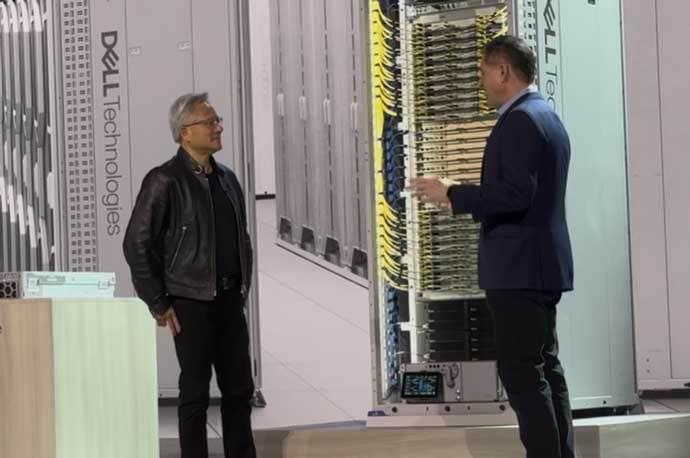
Huang joined Dell CEO Michael Dell on stage Monday to unveil the latest updates to the Dell AI Factory with NVIDIA -- delivering a full-stack platform for autonomous agents, from deskside workstations to data center racks. Agentic AI inference at one-tenth the cost per token with NVIDIA Vera Rubin NVL72. Agent sandboxes run 50% faster on NVIDIA Vera than traditional CPUs -- while enterprise data queries are up to 3x faster with the Vera CPU. And 5,000 enterprises like Lilly, Samsung, and Honeywell are running AI workloads on Dell AI Factories with NVIDIA, turning ambition into production at scale. That's the picture Michael Dell painted Monday morning at Dell Technologies World. Dell sized the stakes: worldwide AI infrastructure spending could reach $3-4 trillion by 2030, with token consumption projected to grow 3,400% in the same window. "There is a massive AI investment boom that's already underway, and a productivity boom is beginning, and in some companies, including ours," Dell said. "The rate of change has gone parabolic, and it's not slowing down." Then, the Dell chairman and CEO welcomed NVIDIA founder and CEO Jensen Huang to the keynote stage -- with a look at the NVIDIA portfolio behind him, from a deskside Dell Pro Max with GB10 workstation to a Dell PowerRack with NVIDIA Vera Rubin NVL72. "We've now arrived at the era of useful AI, which is the reason why demand is going parabolic, utterly parabolic," Huang said. "What took months now takes weeks. What took weeks now takes days. And what takes days now takes hours. It's a big deal in productivity, but a gigantic leap in computation requirements." The message: Enterprise AI has moved past pilots into agentic AI and inference deployments at scale. The platform for what's next is the Dell AI Factory with NVIDIA -- running frontier models and autonomous agents securely behind the enterprise perimeter. A New AI Factory for the Agentic Era The accelerated computing news leads the refresh: The Dell PowerEdge XE9812, built on NVIDIA Vera Rubin NVL72, delivers up to 10x lower cost-per-token than Blackwell for massive-scale agentic AI inferencing. It's joined by PowerEdge XE9880L, XE9885L and XE9882L servers -- the first Dell systems built on NVIDIA HGX Rubin NVL8, supporting up to 144 GPUs per rack with 100% direct liquid-cooled compute nodes and up to 5.5x the performance of HGX B200. In addition, networking gets the new Dell PowerSwitch portfolio with NVIDIA Quantum-X800 InfiniBand, featuring liquid-cooled, co-packaged optics and NVIDIA Spectrum-6 Ethernet. Dell is also introducing Dell PowerRack, a fully integrated system - compute, networking and storage engineered as one - with thermal design, power management and software optimization built to work together from the ground up. The result is accelerated AI and HPC workloads at enterprise scale, without the integration overhead of component assembly. On the CPU side, Dell PowerEdge M9822 and R9822 servers bring NVIDIA Vera CPUs to the enterprise AI factory. Purpose-built for agentic AI, Vera runs data pipelines, analytics, sandboxed tools and code workloads where each step waits on the last. With 1.2 TB/s memory bandwidth and predictable performance under load, Vera completes agentic workloads 50% faster than x86 processors, helping PowerEdge systems increase AI factory output with faster agent responses and shorter feedback loops. "Vera CPU has the highest single-threaded performance of any CPU in the world," Huang said. "It has three times the memory bandwidth -- as a result, Starburst, DuckDB, all these databases run incredibly fast, because the agents are pounding on the databases, so the CPU had better be super fast." Starburst, a new data engine in the Dell AI Data Platform with NVIDIA, delivers 3x faster query throughput on NVIDIA Vera CPU for large-scale SQL analytics. Enterprise data provides the fuel for the AI factory. Dell's update to its AI Data Platform with NVIDIA centers on accelerated data engines built on NVIDIA CUDA-X libraries -- including cuDF for structured data and cuVS for unstructured data. Multiple customers for Dell AI Factory with NVIDIA were featured in the keynote. Diogo Rau, executive vice president and chief information and digital officer of Lilly, joined early in the keynote -- discussing Lilly's AI-driven advancements and innovation in life sciences, powered by AI infrastructure deployed at scale with Dell and NVIDIA. He described technology as key to delivering cutting-edge science, at scale. "I think we're on the verge of maybe being able to end disease as we know it," Rau said. "Something like that was completely unimaginable 20 years ago, but today we can imagine it." A video from Samsung followed -- highlighting use cases for R&D chip design and manufacturing running on Dell AI Factory with NVIDIA. Honeywell chief technology officer Suresh Venkatarayalu joined Michael Dell to walk through the company's move from public cloud to on-premises AI -- using the Dell AI Factory and Dell AI Data Platform with NVIDIA for industrial AI use cases, digital twins and automation from data center to the edge. "For me, partnering with Dell and NVIDIA is not just about getting infrastructure," Venkatarayalu said. It's the full AI stack, he explained: scalable, secured, and trusted by customers. And in financial services, Hudson River Trading, the algorithmic trading firm, is expanding its Dell deployment to power AI-driven research -- running Dell PowerEdge XE9685L servers with NVIDIA accelerated computing and NVIDIA Spectrum-X Ethernet to scale with the firm's data, models and ambition. Agents and Models On Premises -- Securely Dell's own AI adoption survey, cited from the keynote stage, found that 67% of AI workloads now run outside the cloud -- on premises, on device, at the edge or in colocation -- and that 88% of respondents are running at least one AI workload on-premises. The on-premises AI announcements answered a question Dell put to the room directly: "How do you deploy the world's best AI models where you need them, with security and governance built in?" The answer rests on NVIDIA Confidential Computing -- delivered together with Fortanix, Google, Red Hat, and other partners -- as the foundation for securely deploying frontier models inside the enterprise without exposing model IP or data. This enables enterprises to protect AI models and sensitive data in use while capturing the token efficiency, performance, and cost advantages of on-premises AI infrastructure. Frontier Proprietary Models, Protected by Confidential Computing Google Distributed Cloud (GDC) with Gemini 3.0 is now available in preview on Dell PowerEdge XE9780 servers, accelerated by NVIDIA Blackwell and secured by NVIDIA Confidential Computing -- giving enterprises a private confidential computing environment for advanced AI. SpaceXAI will also bring the latest SpaceXAI models on-premises to the Dell AI Factory, with NVIDIA Confidential Computing keeping model weights and enterprise data protected end-to-end. Open Frontier Models, Running Natively on the Dell AI Factory NVIDIA Nemotron models -- frontier-class open intelligence -- run on Dell AI Factory infrastructure for enterprises that want open-weight models tuned to their own domains and data. Reflection's open-source frontier AI models are also coming on premises, purpose-built for regulated industries, governments and sovereign entities. Additional open models -- MiniMax-M2.7, DeepSeek Pro, DeepSeek-V4, GLM 5.1 and Kimi K2.6 with NVIDIA NVFP4 optimization -- are available on the Dell Enterprise Hub on Hugging Face, joining Gemma 4, NVIDIA Nemotron Super 3, Mistral Small 4 and Arcee Trinity-Large-Thinking. In this new agentic era, enterprises also need agents to work securely across the hybrid and on-premises environments where their data, systems, and workflows already live. OpenAI Codex will connect with the Dell AI Data Platform, to help customers bring Codex closer to the internal context that makes agents useful: codebases, documentation, business systems, operational knowledge, and team workflows. Dell and OpenAI will also explore how Codex can connect with the Dell AI Factory. Ecosystem of Software Partners Dell announced several new software partnerships for common enterprise AI use cases ranging from agentic AI and code assistants to computer vision. This includes Palantir's sovereign AI OS reference architecture with NVIDIA, announced in March, which now runs on Dell infrastructure -- for on-premises deployment of Palantir Ontology and AIP, integrated with the NVIDIA Sovereign AI OS Reference Architecture. In addition, ServiceNow customers will be able to leverage the Dell AI Factory to bring together infrastructure and enterprise workflow automation, enabling organizations to discover, govern, and operationalize AI focused on business outcomes. Dell also announced new solutions with a wide range of AI leaders and software innovators -- including Fogsphere, Ipsotek, Mistral AI, Poolside, and Uneeq -- as well as security partnerships with CrowdStrike and Fortanix. Agents From Deskside to Data Center The most personal news: Dell Deskside Agentic AI with the NVIDIA NemoClaw stack, NVIDIA OpenShell runtime and NVIDIA Nemotron open models run on Dell Pro Max with GB10 and GB300 powered by the NVIDIA Grace Blackwell architecture, as well as Dell Pro Precision systems powered by NVIDIA RTX PRO Blackwell workstation platforms. The customization layer: NVIDIA Nemotron, NVIDIA Agent Toolkit, and NVIDIA NeMoClaw -- the agent orchestration harness Huang described on stage as the connective layer between local models and enterprise data -- provide the foundation for building enterprise autonomous agents, enabling organizations to customize models, orchestrate agent workflows, and securely connect agents to enterprise data and tools The security layer: NVIDIA OpenShell -- an open source runtime for development and deployment of autonomous agents with security and privacy controls -- enables corporate policy enforcement at the infrastructure layer and is integrated with leading enterprise software platforms. NVIDIA OpenShell is now supported across the entire Dell AI Factory with NVIDIA, giving developers a secure runtime to build, deploy and govern AI agents from workstations to servers. Dell also highlighted support for the NVIDIA AI-Q Blueprint, giving enterprises a reference example to deploy multi-agent workflows for deep research -- accelerating the path from development to pilot to production. Day Two On day two of Dell Technologies World, Dell's Chief Operations Officer Jeff Clarke and Infrastructure Solutions Group President Arthur Lewis will go deeper on Vera CPU, Vera Rubin, Confidential Computing and Nemotron -- with a live demo of Dell Deskside Agentic AI. The themes Huang and Dell set Monday -- safe, long-running agents, full-stack factories, secure on-premises deployment -- set up the broader announcements NVIDIA will bring to GTC Taipei at COMPUTEX, running June 1-4.
[2]
Dell overhauls data center portfolio with AI-focused storage, servers and cyber resilience tools - SiliconANGLE
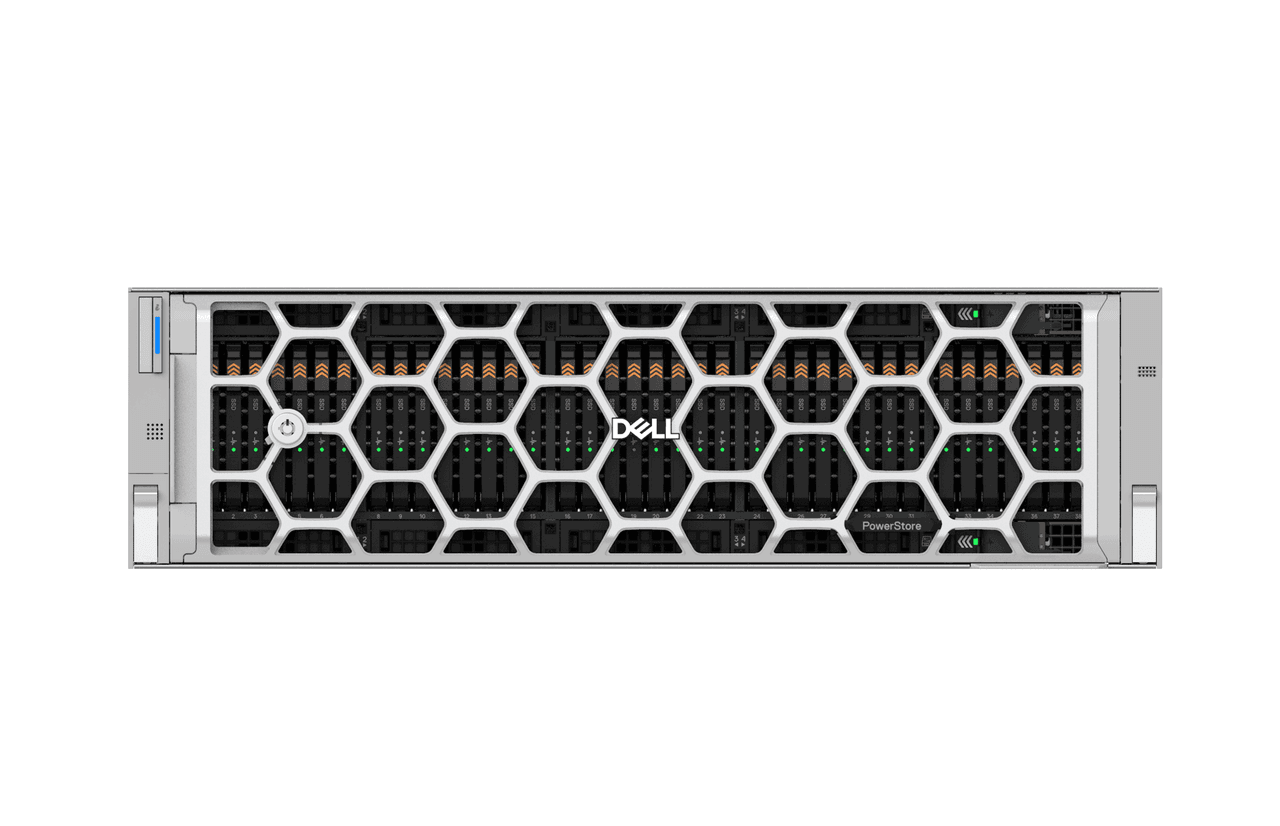
Dell overhauls data center portfolio with AI-focused storage, servers and cyber resilience tools Dell Technologies Inc. today unveiled a broad set of storage, compute, cyber resilience and automation upgrades designed to help enterprises modernize data centers for artificial intelligence workloads while continuing to support traditional applications. The announcements, made at Dell Technologies World in Las Vegas, include a major refresh of the company's PowerStore storage line, new PowerEdge servers, expanded cyber recovery offerings and new AI-driven automation. Dell executives positioned the updates as a response to mounting pressure on enterprise infrastructure as organizations attempt to scale AI workloads without disrupting existing operations. A central component of the news is PowerStore Elite (pictured), which the company described as the largest overhaul of the PowerStore platform since its 2020 introduction. It's "the biggest leap forward in the platform's history," said Varun Chhabra, senior vice president of infrastructure and telecom marketing at Dell. Chhabra said enterprises are struggling with rapidly changing infrastructure economics, increasing data growth and supply chain pressures while being expected to modernize without disruption. "Customers aren't just asking us what performs the best," he said. "They're asking if their platform and infrastructure choices will make sense as their needs evolve at a speed that they've never seen before." PowerStore Elite introduces new hardware and software enhancements that Dell said deliver up to three times more input/output operations, throughput and density than previous generations. The system can scale up to 5.8 petabytes of effective storage capacity in a single 3U appliance and supports both Triple-Level Cell and Quad-Level Cell flash media using standard Non-Volatile Memory Express drives. Chhabra said the density improvements are particularly notable. "With 40 drive slots in a single chassis, we can now store up to 5.8 petabytes in 3U," he said. A U is the metric used to measure the vertical height of equipment inside a server rack, with one U equal to 1.75 inches. Dell also increased its storage data reduction guarantee from 5:1 to 6:1, calling it an industry-best figure. The company said the platform is designed to support continuous modernization through modular upgrades and mixed-generation clustering that allows customers to add new systems without downtime or data migration. "PowerStore Elite is not just a faster array," Chhabra said. "It is a new class of modern data platform built to help customers lead through change, not just react to it." Dell is also expanding its PowerEdge server portfolio with 11 new systems targeting AI, high-performance computing and enterprise consolidation workloads. The new 18th-generation PowerEdge lineup includes liquid-cooled systems for dense AI deployments as well as air-cooled platforms designed to support large-scale consolidation without major data center retrofits. Chhabra described the release as "its most significant refresh in years." According to Dell, the servers deliver up to 70% higher performance and a 13-to-1 consolidation ratio compared with earlier generations. The company also highlighted new cyber resilience capabilities to combat excalating ransomware attacks and AI-driven threats. PowerProtect One is a unified cyber resilience platform that combines management, orchestration and protection storage into a single environment. Chhabra said it's meant to address increasing customer demands for simpler recovery operations and integrated protection. "Fragmented tools and manual workflows slow the response that companies can have to attacks and increase the risk that their business faces," he said. Dell said PowerProtect One can reduce deployment time by as much as 75% and cut management overhead in half. The company also announced Dell Cyber Detect, an AI-powered ransomware detection system that analyzes data at the byte level to identify corruption and determine the last known clean copy after an attack. Dell said the technology was trained on thousands of ransomware variants and can identify compromised data with 99.99% accuracy. Dell is also expanding its private cloud and automation portfolio. New versions of Dell Private Cloud add support for VMware Cloud Foundation 9.1, Microsoft Corp.'s Azure Local and Nutanix Inc. integrations with Dell PowerStore storage. Customers are increasingly looking for lower-cost alternatives to hyperconverged infrastructure, said Caitlin Gordon, Dell's vice president of product management for private cloud and AI solutions. She said Dell Private Cloud can yield up to 65% cost savings compared to hyperconverged infrastructure. Dell also unveiled new agentic AI capabilities for the Dell Automation Platform, including a conversational interface and intelligent software agents designed to automate infrastructure operations. The new chat interface, called generative UI, "gives a customer the ability to simply talk to the platform," Gordon said. Most of the newly announced products will begin shipping throughout the second half of 2026 and into 2027.
[3]
Dell targets enterprise AI execution gap with local agentic AI systems and integrated AI infrastructure - SiliconANGLE
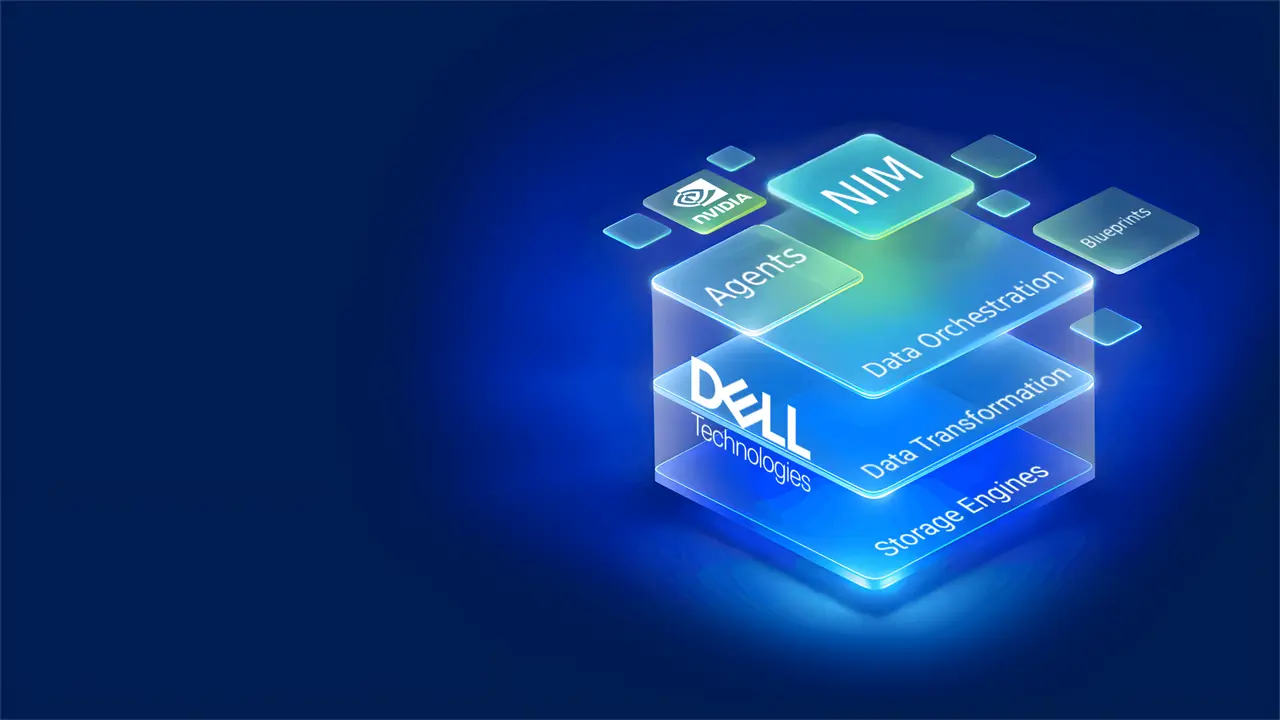
Dell targets enterprise AI execution gap with local agentic AI systems and integrated AI infrastructure Dell Technologies Inc. today is kicking off its Dell Technologies World conference by expanding its artificial intelligence portfolio with enhancements aimed at helping enterprises move AI projects from experimentation into large-scale production, with a particular focus on agentic AI, data orchestration, rack-scale infrastructure and on-premises deployment. The announcements build on the company's Dell AI Factory with Nvidia initiative, which Dell said now has more than 5,000 customers globally. The centerpiece of the news is Dell Deskside Agentic AI, a new offering that combines Dell workstations, Nvidia Corp.'s NemoClaw software stack, and Dell services to enable enterprises to develop and run AI agents locally rather than relying exclusively on cloud infrastructure. Dell executives framed the announcements as a response to mounting enterprise frustration over the complexity and cost of deploying generative and agentic AI systems at scale. "Most enterprises don't have an AI ambition problem," said Sam Grocott, senior vice president of product marketing at Dell Technologies, during a media briefing. "They have an AI execution problem." He said enterprises are increasingly struggling with data management, energy consumption, sovereignty concerns and escalating cloud costs as AI workloads expand. In response, customers are demanding infrastructure that spans "from the desk side to the data center, to the edge, and all the way out to the cloud." The new deskside offering is designed to address growing concerns about the economics of agentic AI. Unlike conventional chatbots, agentic systems can autonomously execute multi-step workflows and continuously consume inference tokens, which are the chunks of data large language models use to generate results. That can create potentially enormous cloud bills. "We had a single developer burn through 1 billion tokens in 24 hours," said Jon Siegal, senior vice president of Dell's client solutions group. "That was a $3,400 cloud bill." Dell said the deskside systems allow organizations to run open-weight AI models locally while keeping sensitive data inside their own environments. That translates into spending reductions of as much as 87% compared with using public cloud over a two-year period. The offering includes several hardware configurations, ranging from compact Dell Pro Max systems for smaller models to high-end workstation towers capable of supporting models with up to 1 trillion parameters. Dell is also integrating Nvidia OpenShell across the Dell AI Factory portfolio to provide what Siegel called "a secure sandbox for running, building, testing and fine-tuning agents" locally. Beyond agentic AI, Dell also announced a series of updates to its Dell AI Data Platform (pictured, stack view) intended to help enterprises prepare and manage data for AI applications. Many organizations remain stuck in pilot phases because their data is fragmented across silos and difficult to govern, said Varun Chhabra, senior vice president of infrastructure and telecom marketing. "Most customers are not short on AI ideas," he said. "One of the hidden bottlenecks that we find when we talk to customers is the ability to get their data strategy right." Among the updates are enhanced orchestration and search capabilities that Dell said can index billions of unstructured files and accelerate vector indexing up to 12-fold. The company also announced graphics processing unit-accelerated SQL analytics capabilities developed with Nvidia and Starburst Data Inc. that promise up to six times faster query performance on Nvidia Blackwell graphics processors. Dell also unveiled support for Nvidia Omniverse, a scalable development platform for physical AI, digital twins, and 3D simulation. The integration enables customers to combine enterprise storage and semantic search capabilities with digital twin and physical AI workflows. On the infrastructure side, Dell introduced PowerRack, a turnkey rack-scale system that integrates computing, networking, storage, cooling and management into pre-engineered units for AI and high-performance computing deployments. Chhabra said customers increasingly want integrated systems instead of assembling components from multiple vendors. "With Dell PowerRack, customers no longer need to buy components and hope they work together," he said. The company also announced new cooling systems, including PowerCool CDU C7000, which it described as the first rack-mount cooling distribution unit capable of supporting Nvidia's upcoming Vera Rubin NVL72 platform in a compact 4U form factor. Dell is also using the event to further expand its ecosystem partnerships as well. New collaborations include integrations with Google LLC, OpenAI LLC, Palantir Technologies Inc., ServiceNow Inc. and Hugging Face Inc.. Under the new partnerships, Dell said Google Gemini models will be available through Google Distributed Cloud on Dell infrastructure, while OpenAI's Codex coding agent will integrate with Dell's AI Data Platform and AI Factory infrastructure. Palantir's Foundry and Artificial Intelligence Platforms are also being brought on-premises to Dell infrastructure. A new Dell AI Ecosystem program will validate partner applications on Dell infrastructure and accelerate deployment. "It gives them that reach and presence in the market by working through Dell," said Caitlin Gordon, vice president of product management for private cloud and AI solutions at Dell Most of the new announced products and integrations will become available throughout 2026, with some offerings shipping immediately.
[4]
Dell pushes local Agentic AI with new Deskside-to-data center strategy
Dell Technologies has announced a new push toward locally deployed agentic AI systems at Dell Technologies World 2026, introducing Dell Deskside Agentic AI in partnership with NVIDIA. The company says the strategy is designed to help enterprises run autonomous AI agents closer to their own infrastructure for better privacy, governance, and lower operational costs instead of relying entirely on cloud-based AI services. At Dell Technologies World 2026, Dell Technologies announced a new expansion of the Dell AI Factory with NVIDIA focused on production-ready agentic AI deployments, introducing Dell Deskside Agentic AI alongside broader support for NVIDIA OpenShell and AI-Q 2.0 infrastructure. The announcement reflects a growing enterprise shift toward running AI agents closer to local infrastructure rather than relying entirely on cloud-based deployments. Dell says the approach is designed to address rising AI inference costs, data sovereignty concerns, and the operational complexity of scaling autonomous AI systems. The centerpiece of the launch is Dell Deskside Agentic AI, a solution built around Dell high-performance workstations, NVIDIA NemoClaw software, and Dell Services. The platform is designed to let enterprises deploy and run autonomous AI agents locally while maintaining tighter control over sensitive data and infrastructure costs. According to Dell, the solution supports workloads ranging from 30-billion-parameter models up to trillion-parameter AI systems depending on hardware configuration. The lineup includes systems such as Dell Pro Max with GB10 for smaller-scale agent prototyping, Dell Pro Precision 9 workstation towers for larger enterprise AI workloads, and Dell Pro Max with GB300 powered by NVIDIA Grace Blackwell technology for frontier-scale inference deployments. Dell says the solution is aimed at enterprise use cases including coding assistants, research agents, and AI deployments in regulated sectors where privacy and governance remain critical requirements. Another major part of the announcement is the expansion of NVIDIA OpenShell support across the full Dell AI Factory stack. OpenShell acts as a sandboxed runtime environment for AI agents, allowing enterprises to build, deploy, monitor, and govern autonomous AI systems with security and privacy controls across both workstations and data center infrastructure. Dell also introduced support for NVIDIA AI-Q 2.0, positioned as a reference architecture for deploying multi-agent workflows across enterprise environments. The platform is designed for industries such as financial services, manufacturing, and the public sector where AI systems often require on-premise deployments and stricter operational controls. The company says Dell Deskside Agentic AI can significantly reduce enterprise AI costs compared to cloud-based APIs, with Dell citing internal and third-party analysis claiming organizations could reduce spending by as much as 87% over two years depending on workload type and deployment scale. Jeff Clarke, Chief Operating Officer at Dell Technologies, said enterprises increasingly need AI systems that operate closer to their data rather than fully in the cloud, positioning local AI infrastructure as a long-term enterprise deployment model. Justin Boitano said the collaboration between Dell and NVIDIA is focused on creating a unified infrastructure stack that allows enterprises to develop AI locally while scaling securely across larger AI factory deployments. Dell confirmed that Dell Deskside Agentic AI, NVIDIA OpenShell integration, and the Dell-NVIDIA AI-Q 2.0 Reference Architecture are available immediately.
[5]
Michael Dell, Jensen Huang: Boldest Statements From Dell Technologies World 2026
Dell CEO Michael Dell and Nvidia CEO Jensen Huang said agentic AI is driving a leap from 20%-30% gains to 20x-30x productivity, ushering in a new era of 'useful AI' for the enterprise. Dell Technologies founder, Chairman and CEO Michael Dell and Nvidia founder and CEO Jensen Huang told thousands of Dell Technologies World attendees that the agentic AI revolution is driving dramatic gains in productivity, opening the door to a new era of "useful AI" for enterprise customers. Dell (pictured right) said the agentic AI revolution has taken productivity gains from generative AI that were 20 percent to 30 percent and driven that to an almost unimaginable 20 to 30 times productivity gains. "Not long ago AI meant assistants that could write faster and summarize better and answer questions, but that was from the age of 20 percent to 30 percent productivity gains," said Dell. "It was valuable and kind of amazing but really only the beginning. Now we're deploying agentic AI autonomous agents that plan, reason, execute and adapt and close a loop." Dell said the time has come for businesses to "completely rethink and reimagine" workflows for the agentic AI era. "That is going to lead us to gains of 20 times and 30 times in terms of productivity improvement," he said. "So who gets there first will rapidly distance themselves from all the rest, and the companies that do not become agentic AI-driven businesses I think will struggle to survive." Huang (pictured left), for his part, said the agentic AI revolution has taken a software job that used to take one month for a whole team to complete to one week. "The amount of software work that we do in our company now supported by agents is incredible," he said. "One engineer, a really good engineer today, is working with an agent, but a really great engineer in the future is going to be orchestrating a whole bunch of agents. We're going to be orchestrating a whole bunch of sub-agents to do work. We've now arrived at the era of useful AI, which is just really exciting for all of us because until now it's been novel." Calling Huang a "great partner and friend, a true leader and visionary of the AI age," Dell said the next era of AI infrastructure is going to "built by deep partnerships between companies that are advancing accelerated computing and the companies that know how to deploy it across the real world." Huang, for his part, said: "I'm here every year selling Dell!"
[6]
Dell Technologies Unveils Production-Ready Agentic AI Platform from Deskside to Data Center
With the NVIDIA OpenShell runtime now supported across the entire Dell AI Factory with NVIDIA, enterprises benefit from a single security and policy enforcement layer from deskside workstations to Dell PowerEdge XE servers. Dell Technologies introduces Dell Deskside Agentic AI, a new addition to the Dell AI Factory with NVIDIA that gives workgroups the ability to deploy and scale agentic AI workflows locally without the cost, latency and data sovereignty constraints of cloud-only approaches. With the NVIDIA OpenShell runtime now supported across the entire Dell AI Factory with NVIDIA, enterprises benefit from a single security and policy enforcement layer from deskside workstations to Dell PowerEdge XE servers.
[7]
Dell Steps Up Agentic AI Charge, Unleashes Blizzard Of Dell AI Factory With Nvidia Offerings
Dell Technologies kicked off Dell Technologies World with a blizzard of new Dell AI Factory with Nvidia improvements, including a Dell Deskside Agentic AI product. Dell Technologies Monday kicked off its Dell Technologies World show with a blizzard of new Dell AI Factory with Nvidia improvements, including a Dell Deskside Agentic AI product, aimed at making agentic AI more affordable than public cloud. Dell said its new Dell Deskside Agentic AI system, which runs the Nvidia NemoClaw secure operations layer to run agents securely on local infrastructure, provides 87 percent savings versus public cloud spend for running, building, testing and fine-tuning agentic AI solutions with a three-month break-even versus public cloud. While enterprise IT leaders are excited about the "potential game- changing benefits of agentic AI," there is "trepidation and concerns," particularly around controlling costs, said Dell Senior Vice President of Client Solutions Group Marketing Jon Siegal. "Super users are burning through tokens at such a high rate that they have sticker shock from their cloud bills," he said. "We've seen this at Dell firsthand where we actually had a single developer burn through 1 billion tokens in 24 hours. That was a $3,400 cloud bill." Dell is "answering the call" of customers with seamless agentic AI workflows across the Dell AI Factory with Nvidia, said Siegal. Among the other major Dell AI Factory with Nvidia announcements aimed at kicking the agentic AI revolution into high gear are: * The Dell AI Data Platform with support for Nvidia Omniverse, allowing customers to run "digital twins and physical AI on enterprise-grade data" *A new "seamless" Dell AI Factory with Nvidia Agentic AI Workflow Development platform, including "fully integrated" support for Nvidia's AI-Q 2.0 Blueprint for multiagent workflows * Dell PowerRack, a turnkey rack-scale solution that unites compute, networking and storage engineered as scalable units validated as a single system * Dell PowerRack For Networking, a turnkey rack prebuilt and validated with all networking, power and cooling ready to go, aimed at speeding up AI fabric rollouts * Dell Exascale storage with Support For PowerFlex Software- Defined Infrastructure, opening the door for customers to use PowerFlex for high-performance AI workloads * Dell PowerCool CDU C7000, which efficiently cools Nvidia Vera Rubin NVL72, 72 Nvidia GPUs connected together in an AI supercomputing architecture The Dell AI Factory with Nvidia AI blitz builds on just over a two-year-old partnership that has resulted in more than 320 releases of Dell AI Factory with Nvidia offerings, said Siegal. "More than 160 of those releases will have landed since Dell Technologies World last year," he said. "That is roughly one meaningful update every two days, and the pace hasn't slowed. It has actually accelerated." In its fiscal year ended Jan. 30, Dell shipped more than $25 billion in AI-optimized servers and entered the new fiscal year with a record backlog of $43 billion. Alan Ashby, senior director of data center solution sales for Dell, who has worked with the Nvidia team for 20 years, said Dell- Nvidia is an extraordinary partnership. "We are super close," he said. "I talk with the Nvidia channel team almost on a daily basis on how we can better support partners together. What we have seen over the last year and a half with the Nvidia team is how do we go do things together and support each other more than we have ever done before. If an Nvidia team is setting up a meeting, they make sure there is a Dell person in the room. If there is a Dell meeting getting set up with a partner, we make sure there is an Nvidia person in the room. We are coming at this as one team together to make sure we are both successful." The two companies' product offerings and partner rebates and incentives are all aligned, said Ashby. "It's been really fun to watch [the relationship] morph, adjust and change," Ashby said. "They have some great individuals on the Nvidia team. We work incredibly close to help go drive these solutions together." Dell partners, for their part, said the Dell-Nvidia partnership is driving dramatic sales growth in the channel. Future Tech Enterprise, a Fort Lauderdale, Fla.-based Dell Titanium partner, is experiencing triple-digit sales growth with Dell AI Factory with Nvidia solutions, said Future Tech Enterprise CEO Bob Venero. Future Tech Enterprise had a plan to exceed $1 billion in revenue within a three-year time frame, but the growth the company is experiencing with Dell AI Factory with Nvidia is going to collapse the time to hit that target in half, said Venero. "We're crushing it," he said. "In 30 years of doing this there have been impactful technologies like the internet boom and the cloud, but there has never been such a widely impacted technology offering that is going to essentially change the way companies do everything within their organization, whether it is finance, sales, integration or factory floors. AI going to expedite three, four and fivefold what companies are doing with productivity if they do it smartly." The Dell-Nvidia partnership pushing the AI envelope is "second to none," said Venero. "When you look at the engineering ingenuity Dell has built in its server line supporting HPC and AI and combine that with Nvidia's Blackwell GPUs, there is literally nobody that can compete with them," he said. "We have proven that in many cases, including a lighthouse project that we did where we were able to stand up a complete and functional Dell AI Factory with Nvidia with the new Nvidia Blackwell GPUs within three months." That Future Tech Enterprise solution for aerospace and defense contractor Northrup Grumman included Dell PowerEdge servers featuring Nvidia Blackwell GPUs with Red Hat OpenShift AI. Ahead, the $4 billion-plus Dell Titanium Black partner, Dell's highest-level tier, No. 27 on the CRN 2025 Solution Provider 500, for its part, just closed a $100 million Dell-Nvidia deal that featured Dell servers, Nvidia GPUs and Dell PowerScale storage, said Ahead co-founder and Executive Vice Chairman Stephen Ayoub. That deal took two years to complete with 60 "extremely technical" meetings. "We had over 1,000 hours of presales invested in that solution," he said. C.R. Howdyshell, CEO of Independence, Ohio-based Advizex, a Myriad360 company, which has invested heavily in driving next- generation AI solutions to its customers, said the Dell-Nvidia partnership is bringing more cost-effective AI solutions to enterprise customers. "Dell and Nvidia are allowing customers to get into a best-in-class AI solution at a reasonable investment," he said. "Nvidia knows Dell has an advantage when it comes to scale and execution, especially with the channel. It's a unique relationship." Advizex's AI solution funnel is up 100 percent this year, and the company is aiming to grow its Dell-Nvidia AI business by 50 percent over the next year, said Howdyshell. "The appetite for customers to understand more about AI is extremely high," he said. "Customers are looking for validation of AI use cases and education on how they can execute them. We have invested in resources that can help customers do both of those things." Holland Barry, field CTO for DXC, the $12.64 billion systems integration behemoth, No. 14 on the 2025 CRN Solution Provider 500, said Dell AI Factory with Nvidia is maximizing AI agent token economics to deliver more price-competitive AI agent solutions to customers. "That's where Dell AI Factory with Nvidia comes in," he said. "That's where these private [on-premises data center] deployments come into play. We can get a lot better bang for the buck at a higher performance in certain use cases by deploying in one of the private data center environments." Bob Olwig, executive vice president of global partner alliances for World Wide Technology, the $20 billion global solution provider behemoth, said Dell is making it easier for customers to "deploy, consume and operate" AI on-premises with its Dell AI Factory with Nvidia solutions. "It's really AI in a box," he said. Jason Kranitz, president at Integrated Media Technologies (IMT), Burbank, Calif., No. 200 on the CRN 2025 Solution Provider 500, said AI combined with the unstructured data explosion with video is a massive opportunity for IMT to bring Dell AI Factory with Nvidia solutions to customers. "The opportunity is bigger than it has ever been and with Dell having the supply chain and being able to absolutely crush the ability to have and deliver the right compute with the right amount of [Nvidia] GPUs -- and the fact that its PowerScale platform integrates flawlessly into their AI data platform and into the Dell AI Factory -- there is absolutely no limit to where the partnership between IMT and Dell can go," he said.
[8]
Dell Technologies introduces Dell PowerStore Elite Storage Platform
Dell Technologies has introduced Dell PowerStore Elite, a new class of its modern storage platform engineered to increase performance and efficiency. Combining software innovation with a refreshed hardware architecture, PowerStore Elite supports block, file, virtual machines, and container workloads. It features mixed-generation clustering, allowing current customers to integrate the new platform without operational disruption. The platform addresses critical IT challenges, including rapid data growth, expanding AI workloads, and escalating cyber threats. Additionally, global flash supply volatility has placed new pressure on infrastructure planning. PowerStore Elite aims to help enterprises modernize their storage infrastructure while minimizing operational complexity and risk. The platform's updated software provides up to three times the performance and throughput of previous generations. Key advancements include: PowerStore Elite utilizes Intel Xeon Scalable processors with up to 50% more CPU cores, DDR5 memory, PCIe Gen 5, and a 200Gb RDMA node interconnect. Available in three models -- the 1500, 5500, and 9500 -- the system fits up to 40 drives and 5.8 petabytes of effective capacity into a single 3U chassis. By using industry-standard E3 NVMe flash rather than proprietary media, the platform triples previous densities while avoiding vendor lock-in. Connectivity includes up to 40 network ports supporting 64Gb Fibre Channel and 200/400Gb Ethernet. Dell has elevated its data reduction guarantee to an industry-best 6:1 ratio through improved data path efficiency and hardware-assisted compression. To protect customer investments, new systems cluster seamlessly with older PowerStore models to enable zero-downtime data migration. An updated Lifecycle Extension (LCE) program offers data-in-place upgrades, a dedicated technical advisor, and promotional capacity expansions. Built-in AI features automate up to 95% of manual operations, balancing workloads and tuning performance in real time. For fleet-wide management, Dell AIOps uses predictive analytics to resolve issues up to 10 times faster. For enhanced security, Dell Cyber Detect integrates byte-level, AI-powered ransomware detection directly into the array, identifying clean data copies with 99.99% accuracy to ensure rapid recovery. PowerStore Elite serves as a foundation for private clouds, supporting stacks from Broadcom, Microsoft, Nutanix, and Red Hat. It also offers flexible replication across Ethernet and Fibre Channel to ensure seamless data mobility between on-premises systems and multicloud environments.
[9]
Dell Technologies Rewrites the Rules of Storage Modernization and Performance with Dell PowerStore Elite
Software and hardware innovations deliver breakthrough performance today and architectural flexibility to evolve as IT needs change Dell Technologies introduces Dell PowerStore Elite, a new class of modern storage platform that delivers breakthrough performance and efficiency through software-driven innovation and a fully refreshed hardware platform. PowerStore Elite supports block, file, virtual machines and container workloads with mixed-generation clustering that lets existing customers adopt the latest PowerStore without disruption. Why it matters Enterprise storage decisions have never been more important. Data is exploding. AI workloads are expanding. Cyber threats are intensifying. Flash supply dynamics are putting new pressure on infrastructure planning. And IT teams are expected to modernize through all of it, without adding complexity, risk or operational overhead. PowerStore Elite is built for this moment. It's an intelligent, open storage platform combining AI-driven software, next generation hardware and non-disruptive modernization so customers can keep storage infrastructure modern as future requirements change. Software-driven innovation at the core PowerStore Elite's software advancements deliver up to 3x more performance1 and 3x more throughput2 than previous generation systems on a unified platform built to adapt as workloads evolve: * Eliminate performance tradeoffs: PowerStore Elite delivers enterprise-class performance on either TLC or QLC media, so customers choose based on capacity and cost, rather than tier. New Autonomous Data Path intelligence applies per-I/O machine learning to optimize for QLC and future SSDs, and log-structured metadata extends usable capacity and endurance on high-capacity drives. * Higher efficiency, lower overhead: Unaligned deduplication for unstructured data and enhanced compression offloads increases usable capacity with zero performance or workload impact. * I/O-level telemetry: Delivers deep visibility into every read and write operation, speeding root cause analysis and laying the groundwork for forthcoming inline ransomware detection capabilities. * Software-driven performance gains: Metadata Acceleration serves reads up to 70% faster for all PowerStore customers 3 accelerating the lookups behind file searches and everyday operations that slow down as your data grows. Next-generation hardware, standards-based by design PowerStore Elite's refreshed hardware, based on Intel Xeon Scalable processors with up to 50% more Intel CPU cores 4, DDR5 memory, PCIe Gen 5 support and a new 200Gb RDMA node interconnect improves internal load balancing and failover. Available in three new models, Dell PowerStore 1500, 5500 and 9500, PowerStore Elite packs up to 40 drives and 5.8 petabytes of effective capacity into a single 3U chassis.5 It delivers up to 3x the density of prior generations6 on low-profile E3 NVMe flash. Because that flash is industry-standard rather than proprietary, customers benefit from broader supply, competitive pricing and freedom from vendor lock-in, a meaningful advantage in today's constrained supply environment. Up to 40 network ports per appliance, with 64Gb FC (128Gb-ready) and 200/400Gb Ethernet-ready connectivity, provide the flexibility to consolidate workloads at scale. Industry-best 6:1 data reduction guarantee Dell's data reduction guarantee has long been a competitive advantage. With advancements in data path efficiency and hardware-assisted compression, PowerStore Elite raises the bar from 5:1 to a new industry-best 6:1 guarantee7 that helps customers offset costs with predictable, long-term storage economics, even in supply constrained environments. Stay modern without starting over PowerStore Elite integrates into existing environments without forcing customers to rethink how they operate. New systems cluster with earlier PowerStore deployments, data and workloads move without downtime, and capacity or performance can be added incrementally where it delivers the most value. Lifecycle Extension (LCE) reinforces this model by turning modernization into an ongoing benefit. Existing customers can transition to PowerStore Elite more cost-effectively, while new deployments get a predictable path to stay current. Customers receive data-in-place upgrades with deployment included, a dedicated technical advisor and buy-three-get-one-free capacity expansions, all backed by 24/7 Dell ProSupport or ProSupport Plus. AI-powered simplicity From individual arrays to fleet-wide operations, PowerStore Elite puts AI to work where it matters most. Built-in intelligence reduces manual effort by up to 95%,8 continuously balancing workloads, tuning performance and improving efficiency in real time. At the fleet level, Dell AIOps capabilities extend that intelligence across the entire environment with predictive insight and automation, allowing administrators to offload manual reporting, performance trending and capacity planning. With AIOps, customers can resolve issues up to 10x faster than traditional approaches9. Dell Cyber Detect is a new integrated offering that extends AI-powered ransomware detection directly into Dell PowerStore. Trained on thousands of ransomware variants and inspecting data at the byte level with 99.99% accuracy,10 it pinpoints the last known clean copy so organizations can recover fast. Built to evolve with customer needs Beyond raw performance, PowerStore is built to adapt as enterprise workloads evolve, extending its capabilities across private cloud, containers and modern application environments. * Private cloud foundation: PowerStore is a proven foundation for private clouds, with a wide range of supported cloud stack software from vendors like Broadcom, Microsoft, Nutanix and Red Hat, so customers can run their existing stack without rearchitecting. Customers can deploy PowerStore through Dell Private Cloud on open, disaggregated infrastructure that scales compute and storage independently on infrastructure that delivers up to 65% cost savings versus HCI.11 Read more about the latest Dell Private Cloud updates here. * Modern app support: PowerStore delivers unified scale-up and scale-out architecture supporting block, file, virtual machines and container workloads across a four-appliance cluster. Dynamic core allocation instantly adjusts CPU resources as workloads fluctuate, while NAS server mobility simplifies consolidation and load balancing. * Seamless cloud mobility: Organizations can meet any RTO/RPO with complete replication flexibility across Ethernet and Fibre Channel, allowing for fluid data mobility between on-premises infrastructure and multicloud environments. Arthur Lewis, president, Infrastructure Solutions Group, Dell Technologies : "Private clouds are only as powerful as the storage underneath them. Nearly 20,000 customers trust PowerStore to run their business and with PowerStore Elite, customers get a generational leap in performance and density on a container-based architecture built to evolve with their workloads. That's what future-proofed infrastructure actually looks like. PowerStore Elite isn't just the next generation, it's the new gold standard." Scott Sinclair, Practice Director, Omdia: "The storage market is being reshaped by AI growth, ransomware pressure and a tightening flash supply, and enterprises can't afford infrastructure decisions that lock them into a single path. PowerStore Elite's standards-based E3 NVMe, combined with a 6:1 data reduction guarantee and mixed-generation clustering, gives customers real flexibility on cost, capacity, and timing. That's the kind of optionality buyers should be demanding right now." Kevin Weissman, Global Solutions Architect, WWT: "Our customers are looking for infrastructure that won't limit their growth a few years down the road. PowerStore Elite delivers that future‑proof foundation with extreme performance, intelligent software, and the 6:1 guarantee to protect their business as requirements evolve."
[10]
Dell Technologies World 2026: Biggest Dell AI Factory With Nvidia Innovation
Dell Technologies unveiled a blizzard of agentic AI Dell AI Factory with Nvidia offerings, including a breakthrough Dell Deskside Agentic AI product aimed at making agentic AI more cost-effective and secure. "We are introducing some real exciting innovations here that help customers accelerate agentic AI from early experimentation at deskside all the way to production in the data center," said Dell Senior Vice President of Client Solutions Group Marketing Jon Siegal in a press conference. The Dell AI Factory with Nvidia innovation directly addresses customer concerns around the cost and data privacy of AI agent solutions, said Siegal. The Dell Deskside Agentic AI platform, for example, provides an 87 percent reduced spend versus public cloud spend for running, building, testing and fine-tuning agentic AI solutions. What's more, Dell said the break-even versus using public cloud APIs is just three months. While enterprise IT leaders are excited about the "potential game- changing benefits of agentic AI" there is "trepidation and concerns," particularly around controlling costs, said Siegal. "Super users are burning through tokens at such a high rate that they have sticker shock from their cloud bills," he said. "We've seen this at Dell firsthand where we actually had a single developer burn through 1 billion tokens in 24 hours. That was a $3,400 cloud bill." Customers are also concerned that "sensitive company data could be exposed or misused in some way due to security risks, data privacy concerns, etc. and just the lack of guardrails," Siegal said. Dell is "answering the call" of customers with seamless agentic AI workflows across the Dell AI Factory with Nvidia, said Siegal. Dell touts the Dell AI Factory with Nvidia as the "first and only" end-to-end enterprise AI platform that scales from the desktop to the largest data center deployments. The Dell AI Factory with Nvidia partnership, which is just over two years old, has resulted in more than 320 releases of Dell AI Factory with Nvidia offerings, said Siegal. "More than 160 of those releases will have landed since Dell Technologies World last year," he said. "That is roughly one meaningful update every two days, and the pace hasn't slowed. It has actually accelerated." Dell Technologies Senior Vice President of Product Marketing Sam Grocott, for his part, said Dell is aiming to reduce the "complexity and decision-making" with regard to where agents and agentic workflows should be run, whether it is on-premises, at the edge or in the public cloud. On-premises AI adoption is becoming a bigger factor, driven by data "sovereignty, security performance and increasing cost and how you take advantage and take control of the token economics," said Grocott. "These four areas are absolutely connected and absolutely what we are solving for [with the Dell Technologies World announcements]. "The historic easy button of just running it all in the cloud is not going to last as we go forward in terms of cost, economics, security, sovereignty, etc.," said Grocott. "What we have really done leveraging the 5,000 [Dell AI Factory with Nvidia] customers we've got around the world today is we have learned from them. We have documented them. We have got a set of best practices. We have got a set of Dell AI Factory services that we go to market with to help our customers really decide essentially in a hybrid AI world where some AI workloads run in the cloud, some run on-prem, some run in the data center, some run deskside. We are really helping customers lock in on making sure they run their agentic AI workloads in the right place with the right model at the right tier." Grocott said Dell is making sure that customers "don't make a simple, but very expensive, a very insecure, a very risky decision by just doing AI" in one place. "That's not the right way going forward," he said. "Right place, right model, right tier is our best practice that we are educating our enterprise customers on now." Here are the biggest Dell AI Factory with Nvidia announcements from Dell Technologies World.
[11]
Dell Technologies Reimagines the Modern Data Center for the AI Era
Dell Technologies introduces a new generation of storage, compute, cyber resilience and automation innovations built to power the modern data center. Why it matters AI is scaling faster than most data centers were built to handle and the applications running the business can't wait. Enterprises don't have the luxury of choosing between what's next and what's now. Dell's latest storage, compute, cyber resilience and automation innovations are built to deliver both. Eliminate storage tradeoffs Dell PowerStore Elite is an intelligent, open storage platform that combines AI-driven software, next generation hardware and non-disruptive modernization. The platform triples performance1 and density2 compared to prior generations, packs up to 5.8 petabytes of effective capacity into a single 3U appliance3 and is backed by an industry-best 6:1 data reduction guarantee.4 Built on industry-standard E3 flash, PowerStore Elite reduces cost per workload while keeping every component, including drives, controllers and networking, modular and field-upgradable, so organizations can evolve their infrastructure without downtime or data migration. Redefine compute and cooling The 18th generation of PowerEdge servers deliver up to 70% better performance5 and 13-to-1 consolidation6 through advanced air-and liquid-cooling designs. Organizations gain dramatically more compute in the same footprint with unified management and security built in. Unify cyber resilience From AI-powered attacks to ransomware, today's cyber threats are growing more sophisticated and disruptive. Organizations need threat detection, unified protection management and rapid recovery working together as a single operational model. Simplify and automate the full stack Dell introduces software innovations that deliver cloud simplicity and agentic intelligence for infrastructure management. The Dell Automation Platform serves as the common foundation, powering private cloud deployments and expanding AI-driven automation capabilities. Private Cloud Everywhere AI-Driven Automation Arthur Lewis, president, Infrastructure Solutions Group, Dell Technologies: "AI doesn't wait, and neither can the infrastructure under it. The modern data center is defined by intelligent software that makes IT simpler, and we're delivering it end-to-end. PowerStore Elite, next-generation PowerEdge servers, PowerProtect One and the agentic automation across Dell Private Cloud give customers a complete, software-driven foundation to run their most demanding workloads today and keep evolving for what comes next." Matt Kimball, VP & Principal Analyst, Moor Insights & Strategy: "IT teams are being asked to support AI, defend against increasingly sophisticated threats, and modernize infrastructure - often without adding headcount. Dell's approach stands out because it addresses the operational reality across the full stack. PowerStore Elite helps eliminate the traditional storage refresh cycle, PowerEdge enables meaningful infrastructure consolidation and PowerProtect One simplifies cyber resilience. Together, these technologies reduce operational complexity, which remains one of the largest hidden costs in enterprise IT."
[12]
Dell launches deskside agentic AI solution with NVIDIA By Investing.com
LAS VEGAS - Dell Technologies (NYSE:DELL) announced Monday the launch of Dell Deskside Agentic AI, a solution designed to enable enterprises to deploy agentic AI workflows locally using Dell workstations and NVIDIA technology. The solution, part of the Dell AI Factory with NVIDIA, includes Dell high-performance workstations paired with the NVIDIA NemoClaw software stack and Dell Services. The system handles AI models ranging from 30 billion to 1 trillion parameters, according to a company press release statement.Investors have responded enthusiastically to Dell's AI initiatives, with the stock delivering a 115% return over the past year and trading at a P/E ratio of 27.5. According to InvestingPro, which offers comprehensive analysis including Pro Research Reports for over 1,400 US stocks, Dell remains a prominent player in the Technology Hardware, Storage & Peripherals industry with a market cap of $155 billion. Dell offers three workstation configurations: the Dell Pro Max with GB10 for models up to 200 billion parameters, the Dell Pro Precision 9 with Intel Xeon 600 processors and up to five NVIDIA RTX PRO Blackwell Workstation Edition GPUs for models up to 500 billion parameters, and the Dell Pro Max with GB300 for models up to 1 trillion parameters. The solution integrates NVIDIA OpenShell, a sandboxed runtime environment for building and deploying AI agents. OpenShell is now supported across Dell's AI infrastructure, from workstations to Dell PowerEdge XE servers running on Canonical Ubuntu and Red Hat AI platforms. Dell stated that organizations using the solution can break even versus public cloud API costs in as little as three months, citing analysis by Signal 65 and Futurum Group. The company claims potential cost reductions of up to 87% compared to cloud APIs over two years, based on validated third-party analysis. The system also supports NVIDIA AI-Q 2.0 blueprint, available as the Dell-NVIDIA AI-Q 2.0 Reference Architecture powered by Dell AI Data Platform, targeting regulated industries including financial services, public sector and manufacturing. "Dell Deskside Agentic AI gives every workgroup a secure local environment to run agents, keep costs predictable and keep IP inside the building," said Jeff Clarke, chief operating officer at Dell Technologies. All components of the Dell Deskside Agentic AI solution are available now. In other recent news, Dell Technologies reported significant developments in its business operations and financial outlook. Dell's board of directors has approved a proposal to change the company's state of incorporation from Delaware to Texas, aligning its legal domicile with its operational headquarters. This move comes as Dell continues to expand its presence in Texas, where its global headquarters and largest concentration of U.S. workforce are based. On the financial front, U.S. business equipment borrowings, including those from Dell Technologies, rose by 12.5% in March, reaching $10.8 billion, according to the Equipment Leasing and Finance Association. In terms of analyst activity, UBS downgraded Dell's stock rating to Neutral from Buy, citing valuation concerns after a strong 12-month performance. However, the firm raised its price target to $243. Meanwhile, BofA Securities raised its price target on Dell to $246, maintaining a Buy rating, highlighting the company's exposure to AI. Evercore ISI also increased its price target to $240, maintaining an Outperform rating, following a $1.4 billion purchase agreement with Boost Run for AI-related infrastructure. These developments reflect Dell's ongoing strategic adjustments and market positioning, especially in the AI sector. This article was generated with the support of AI and reviewed by an editor. For more information see our T&C.
[13]
Dell Technologies Closes the Gap Between AI Ambition and AI Outcomes
Dell AI Factory with NVIDIA advancements span agentic AI, data orchestration, next-generation infrastructure and an expanding open ecosystem built to advance enterprise AI from experiment to reality Dell Technologies announces a broad set of advancements to the Dell AI Factory with NVIDIA, delivering the foundation enterprises need to move from AI ambition to realized outcomes. With more than 5,000[i] customers already deploying the Dell AI Factory, these portfolio additions are designed to help organizations adopt AI with confidence, scale with purpose, and achieve results on infrastructure they control, with data they trust. Why it matters Most enterprises don't have an AI ambition problem. They have an AI execution problem. Data availability and quality remain the top implementation challenges across organizations at every stage of AI maturity.[ii] Without a trusted, AI-ready data foundation, even the best infrastructure falls short. Pilots stall before they reach production, and the promise of agentic AI remains out of reach. Dell and NVIDIA address this with a simplified, integrated approach that can accelerate time-to-value by up to 84%[iii] and gives enterprises the confidence to scale. Agentic AI at for every workload As agentic AI workloads grow in complexity, cloud costs are becoming increasingly unpredictable. Organizations are seeking a more controlled approach to deploying autonomous AI where performance, data sovereignty and cost efficiency are paramount. Dell Deskside Agentic AI, a new solution powered by Dell's high-performance workstations and NVIDIA NemoClaw, allows enterprises to more securely build and run autonomous agents locally with data that never leaves the device. Supported by end-to-end Dell services, the solution is designed for specialized groups in software engineering, academic research and regulated industries, converting variable cloud token costs into a controlled infrastructure investment. With Dell Deskside Agentic AI, organizations can break even versus public cloud API costs in as little as three months.[iv] NVIDIA OpenShell, the secure runtime for autonomous agents, is now supported across the entire Dell AI Factory with NVIDIA. This allows organizations to build, deploy and govern agents with privacy controls, from Dell Pro Precision towers and Dell Pro Max with GB10 and GB300 through to Dell PowerEdge XE servers. The Dell-NVIDIA AI-Q 2.0 Reference Architecture, powered by the Dell AI Data Platform with NVIDIA, extends this foundation with a production-ready multi-agent research workflow for regulated industries. Read more here. Turning enterprise data into AI fuel AI is only as good as the data it can find, trust and act on. Dell is announcing significant advancements to the Dell AI Data Platform that make enterprise data AI-ready at scale across the full lifecycle, from discovery and preparation to analytics and AI-driven experiences. * Unify and orchestrate AI data pipelines at scale: Enhancements to the Dell AI Data Platform's orchestration and search capabilities index billions of unstructured files and connect them into governed pipelines, accelerating data discovery and dataset creation for AI. Integrated services for Dell AI Data Platform help customers tackle challenges like data preparation, skills gaps and operational complexity so they can move from pilots to production faster. * Accelerate SQL analytics for NVIDIA Blackwell and future NVIDIA Vera CPU platforms: Within Dell AI Data Platform, the Dell Data Analytics Engine, powered by Starburst, brings GPU-accelerated SQL analytics to enterprise AI, delivering up to 6x faster query performance on NVIDIA Blackwell GPUs today[v] with support designed for future platforms including Vera. This accelerates insights for both traditional data analytics and data-intensive agentic AI applications. * Higher density, lower TCO: The new Dell ObjectScale X7700 ultra-dense appliance delivers up to 45%[vi] more HDD capacity than the previous generation, with flexible compute-to-storage scaling and improved TCO. Forthcoming 245 TB all-flash drive support will more than triple[vii] ObjectScale flash density. * Power digital twins and AI-driven experiences with unified data: Within Dell AI Data Platform with NVIDIA, Dell storage and search engines integrate with NVIDIA Omniverse libraries to combine scalable object storage with semantic, vector-based asset search. This helps connect PLM systems and repositories directly into Omniverse, feeding digital twins and physical AI training and validation workflows with trusted, well-organized data. Next-generation infrastructure built for the demands of modern AI Dell is expanding its AI infrastructure portfolio with new systems built for modern enterprise AI workloads. As the top rack-scale infrastructure provider,[viii] shipping more than twice the number of rack-scale servers compared to the closest competitor,[ix] Dell is adding PowerRack to the industry's broadest AI infrastructure portfolio.[x] Dell PowerRack is a fully integrated system - compute, networking and storage engineered as one - with thermal design, power management and software optimization built to work together from the ground up. The result is accelerated AI and HPC workloads at enterprise scale, without the integration overhead of component assembly. Dell PowerRack for storage and networking are simplified, rack‑scale platforms delivering factory‑integrated dedicated Dell Exascale storage and Dell PowerSwitch networking with a system‑level approach to performance, power and cooling, managed consistently through the Dell Integrated Rack Controller. Additional infrastructure updates include: * The industry's only 4-in-1 storage built for extreme-scale[xi]: Dell is adding PowerFlex to Dell Exascale Storage, completing a unified rack architecture for Dell PowerRack that supports block (PowerFlex), file (PowerScale, Lightning File System), and object (ObjectScale) for AI, HPC and demanding enterprise workloads. * Compact, mountable rack workstation: The Dell Pro Precision 7 R1 brings high-performance computing to space-constrained environments in a 1U form factor with NVIDIA RTX PRO Blackwell Max-Q Workstation Edition GPUs and up to 64TB of storage. * Unified rack management: New releases of the Dell Integrated Rack Controller and Dell OpenManage Enterprise deliver a unified control plane for integrated compute, with expanded remote device connectivity and orchestration across the entire rack. * Next-generation cooling: The Dell PowerCool CDU C7000 is the first rack-mount cooling distribution unit to meet the cooling needs for the NVIDIA Vera Rubin NVL72 platform in a compact 4U, 19" form factor, and extends Dell's cooling capacity and support for up to 40°C facility water. Scalable solutions with an expanding open ecosystem The new Dell AI Ecosystem Program gives AI software providers a structured path to validate solutions on Dell AI Factory infrastructure, turning fragmented innovation into proven, deployable outcomes. For enterprises, this means lower-risk paths to production-scale AI, faster POC-to-production and the ability to run AI solutions where data lives. Bringing AI leaders and frontier models to the enterprise helps organizations maintain control over their data, models and operations within their trusted environments. * Google and Dell are collaborating to bring Gemini 3 Flash models on Google Distributed Cloud on Dell PowerEdge XE9780 servers. This fully integrated, on-premises solution allows enterprises to run advanced generative AI workloads within a private, confidential computing environment. By leveraging a secure BIOS and robust security attestation, organizations can more seamlessly meet strict data protection, residency, and sovereignty requirements. The collaboration supports the latest Gemini models -- featuring expanded 1M+ context windows and advanced AI tools like Gemini CLI -- delivering the security and control modern enterprises demand. * Dell Enterprise Hub on Hugging Face gives enterprises on-premises access to a curated collection of the latest open-weight models, including MiniMax-M2.7, DeepSeek Pro, DeepSeek-V4, GLM 5.1 and Kimi K2.6, optimized for Dell AI Factory infrastructure. As the industry moves toward highly efficient architectures delivering frontier-level reasoning at long context lengths, this collaboration shifts the tokenomics of enterprise AI, giving organizations a trusted, more secure path to deploy the most capable open models where their data lives, at a fraction of the cost. * OpenAI and Dell Technologies are collaborating to help more enterprises deploy Codex in the environments where their most important data, systems, and workflows already live. Through this collaboration, Codex will connect with the Dell AI Data Platform, which many businesses already use to store, organize, and govern enterprise data on-premises. The collaboration will help customers bring Codex closer to the internal context that makes agents useful: codebases, documentation, business systems, operational knowledge, and team workflows. Dell and OpenAI will also explore how Codex can connect with the Dell AI Factory, which businesses use to power their AI workloads. * Palantir's Foundry and AIP platform is coming on-premises to the Dell AI Factory, where Palantir's Ontology layer will be deployed on Dell ObjectScale and PowerFlex to ingest data from enterprise sources and automate business workflows using AI models deployed on the Dell AI Factory. This will allow enterprises and sovereign entities to connect all their data sources across their enterprise, define and dynamically manage relationships between those data sources and optimize their business operations with the full weight of AI, all within their organization boundaries. * Reflection's open-source frontier AI models are coming on-premises on the Dell AI Factory. Open models help enterprises in regulated industries including governments and sovereign entities to deploy AI in fully controlled environments. Reflection's frontier-level quality models deployed on the Dell AI Factory, integrated with the Dell AI Data Platform, will help customers securely extract knowledge from on-premises data sources. * SpaceXAI and Dell deliver Grok's advanced reasoning and multimodal capabilities as more secure, enterprise-grade AI assistants, deployable fully on-premises or in a hybrid approach. In addition, ServiceNow customers will be able to leverage the Dell AI Factory to bring together infrastructure and enterprise workflow automation, enabling organizations to discover, govern, and operationalize AI focused on business outcomes New validated AI solutions for common enterprise outcomes spanning agentic AI with Mistral, computer vision with Fogsphere and Ipsotek, an Eviden business, immersive AI with UneeQ Digital Humans, and code assistants with Poolside -- are deployable directly from the Dell Automation Platform catalog. New security solutions and services using CrowdStrike, Fortanix and F5 provide full-stack, 24/7 protection and confidential AI across AI infrastructure, data, models and applications for more resilient AI foundations. JFrog and Dell deliver a central hub for securely managing AI models, MCPs, Agent Skills and software artifacts at scale. Michael Dell, chairman and chief executive, Dell Technologies, said "With the advent of Agentic AI, every organization now faces the same challenge to turn intelligence into impact at speed or become obsolete. At Dell Technologies, we're helping customers turn their data into AI fuel on infrastructure they control with security, governance and cost efficiency." Jensen Huang, founder and CEO of NVIDIA, said "Agentic AI has arrived - enterprise AI adoption is going parabolic. Dell and NVIDIA are building the full-stack AI factory for this moment, with accelerated computing, networking, storage, software and services that scale from the desktop to the data center -- turning AI's potential into unprecedented productivity for enterprises everywhere."
[14]
Dell accelerates in enterprise AI with 1,000 new clients for its AI Factory portfolio
While AI-branded consumer PCs are still struggling to gain traction with the general public, Dell is primarily capturing demand in servers, storage, networking, and software leveraging the Nvidia ecosystem. Eli Lilly, Honeywell, and Samsung Electronics feature among the major clients using these solutions for applications that range from drug discovery to semiconductor plant optimization. In its latest announcement, Dell placed particular emphasis on Dell Deskside Agentic AI, a solution designed to run AI agents locally within enterprises rather than relying solely on cloud-hosted APIs. Powered by Dell workstations, the Nvidia NeMo software stack, and the group's services, this offering can handle models ranging from 30 billion to 1 trillion parameters. Dell claims it can enable companies to reach a break-even point compared to cloud API costs within three months, and reduce certain inference expenses by up to 87% over two years. To facilitate scaling, Nvidia NIM Agent Blueprints are now supported across the entire Dell AI Factory. This aims to enable teams to develop, test and govern AI agents in a secure environment before expanding them toward the data center. Dell targets at least $50bn in AI server sales for FY 2027. Future success will depend on its ability to convert this demand into sustainable margins as competition intensifies across the entire AI infrastructure chain.
Share
Copy Link
Dell Technologies unveiled a sweeping AI infrastructure overhaul at Dell Technologies World, introducing deskside-to-data center solutions for agentic AI. The company claims enterprises can achieve 20x-30x productivity gains while cutting cloud costs by up to 87%. Over 5,000 companies including Lilly, Samsung, and Honeywell now run AI workloads on Dell AI Factory with NVIDIA.
Dell Technologies unveiled a comprehensive overhaul of its enterprise AI infrastructure at Dell Technologies World in Las Vegas, addressing what executives describe as a critical execution gap preventing companies from scaling AI workloads beyond experimentation. The announcements center on Dell AI Factory with NVIDIA, which now serves over 5,000 customers globally including Lilly, Samsung, and Honeywell
1
. Sam Grocott, senior vice president of product marketing at Dell Technologies, framed the challenge bluntly: "Most enterprises don't have an AI ambition problem. They have an AI execution problem"3
. The company's response spans hardware, software, and services designed to move AI agents from pilot phases into production at scale.
Source: CRN
NVIDIA CEO Jensen Huang joined Michael Dell on stage to emphasize the transformative potential of agentic AI, declaring "We've now arrived at the era of useful AI, which is the reason why demand is going parabolic, utterly parabolic"
1
. Michael Dell outlined the economic stakes, projecting worldwide AI infrastructure spending could reach $3-4 trillion by 2030, with token consumption projected to grow 3,400% in the same window1
. The productivity implications are equally dramatic. Dell told attendees that agentic AI has pushed gains from the 20%-30% improvements seen with generative AI to 20x-30x productivity gains5
. "Who gets there first will rapidly distance themselves from all the rest, and the companies that do not become agentic AI-driven businesses I think will struggle to survive," Dell warned5
.The centerpiece of Dell's announcement is Dell Deskside Agentic AI, a solution combining Dell workstations, NVIDIA NemoClaw software, and Dell services to enable enterprises to develop and run AI agents locally rather than relying exclusively on cloud infrastructure. The deskside-to-data center strategy addresses mounting concerns about the economics of autonomous agents. Jon Siegal, senior vice president of Dell's client solutions group, illustrated the problem with a striking example: "We had a single developer burn through 1 billion tokens in 24 hours. That was a $3,400 cloud bill"
3
. Dell claims the deskside systems can reduce spending by as much as 87% over two years compared to public cloud deployments4
. The offering includes configurations ranging from compact Dell Pro Max systems for smaller models to high-end workstation towers supporting models with up to 1 trillion parameters4
.
Source: SiliconANGLE
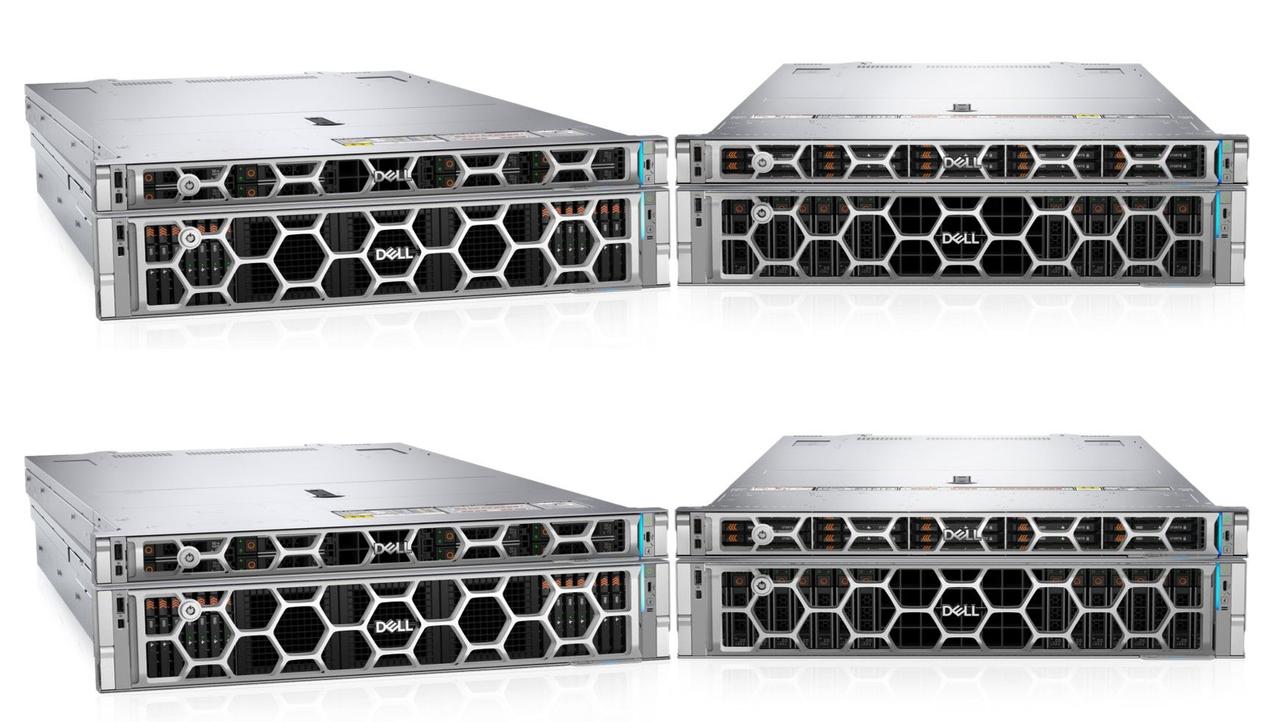
Dell's data center portfolio received its most significant refresh in years, with 11 new PowerEdge servers and the Dell PowerEdge XE9812 built on NVIDIA Vera Rubin NVL72, delivering up to 10x lower cost-per-token for massive-scale agentic AI inference
1
. Agent sandboxes run 50% faster on NVIDIA Vera than traditional CPUs, while enterprise data queries are up to 3x faster with the Vera CPU1
. The new systems deliver up to 70% higher performance and a 13-to-1 consolidation ratio compared with earlier generations2
. Dell also introduced PowerRack, a fully integrated system combining compute, networking, and storage engineered as one unit, eliminating the integration overhead of component assembly1
.Related Stories

Source: SiliconANGLE
Dell unveiled PowerStore Elite, described as the largest overhaul of the PowerStore platform since its 2020 introduction
2
. The system scales up to 5.8 petabytes of effective storage capacity in a single 3U appliance and delivers up to three times more input/output operations, throughput, and density than previous generations2
. Dell increased its storage data reduction guarantee from 5:1 to 6:1, calling it an industry-best figure2
. On cyber resilience, Dell announced PowerProtect One, a unified platform that can reduce deployment time by as much as 75% and cut management overhead in half2
. Dell Cyber Detect, an AI-powered ransomware detection system trained on thousands of ransomware variants, can identify compromised data with 99.99% accuracy2
.Multiple enterprise customers demonstrated how they're using Dell AI Factory with NVIDIA to move beyond experimentation. Diogo Rau, executive vice president and chief information and digital officer of Lilly, described technology as key to delivering cutting-edge science at scale, stating "I think we're on the verge of maybe being able to end disease as we know it"
1
. Samsung highlighted use cases for R&D chip design and manufacturing, while Honeywell's chief technology officer discussed the company's move from public cloud to on-premises infrastructure1
. These deployments signal a broader shift as enterprises prioritize data sovereignty, governance, and cost control. Varun Chhabra, senior vice president of infrastructure and telecom marketing, noted that customers are struggling with rapidly changing infrastructure economics and supply chain pressures while being expected to modernize without disruption2
. The message from Dell Technologies World is clear: high-performance computing for AI has moved from novelty to necessity, and enterprises that fail to deploy autonomous agents at scale risk falling behind competitors who master AI execution.Summarized by
Navi
[1]
[2]
[3]
09 Apr 2025•Technology

16 Oct 2024•Technology

20 May 2025•Technology

1
Technology

2
Business and Economy

3
Health