Nandan Nilekani Says Small Businesses Will Anchor Job Creation as AI Reshapes Employment


3 Sources
[1]
Nandan Nilekani: Move job creation to small businesses to AI-proof economy, says Nandan Nilekani
Says mass startup growth can anchor jobs as AI flattens revenue, headcount at big cos Artificial intelligence could put more jobs at risk in large, structured companies than in smaller businesses, making millions of small firms critical for future employment creation in India, Nandan Nilekani,
[2]
Startups, Small Businesses Will Drive Job Creation In AI Era: Nandan Nilekani
As AI reshapes the nature of work and raises concerns about job displacement, startups and small businesses will become the key engines of employment creation, Infosys cofounder Nandan Nilekani said at the Global Fintech Fest (GFF) 2026 today. Nilekani said large companies, with their structured
[3]
Global Fintech Fest 2026: Nandan Nilekani says millions of small firms can AI-proof jobs
Nandan Nilekani foresees artificial intelligence posing greater job risks for large structured companies. He emphasizes that millions of small businesses are essential for generating future jobs. These dynamic roles in smaller firms are less susceptible to AI automation. India's formal startup
Share
Copy Link
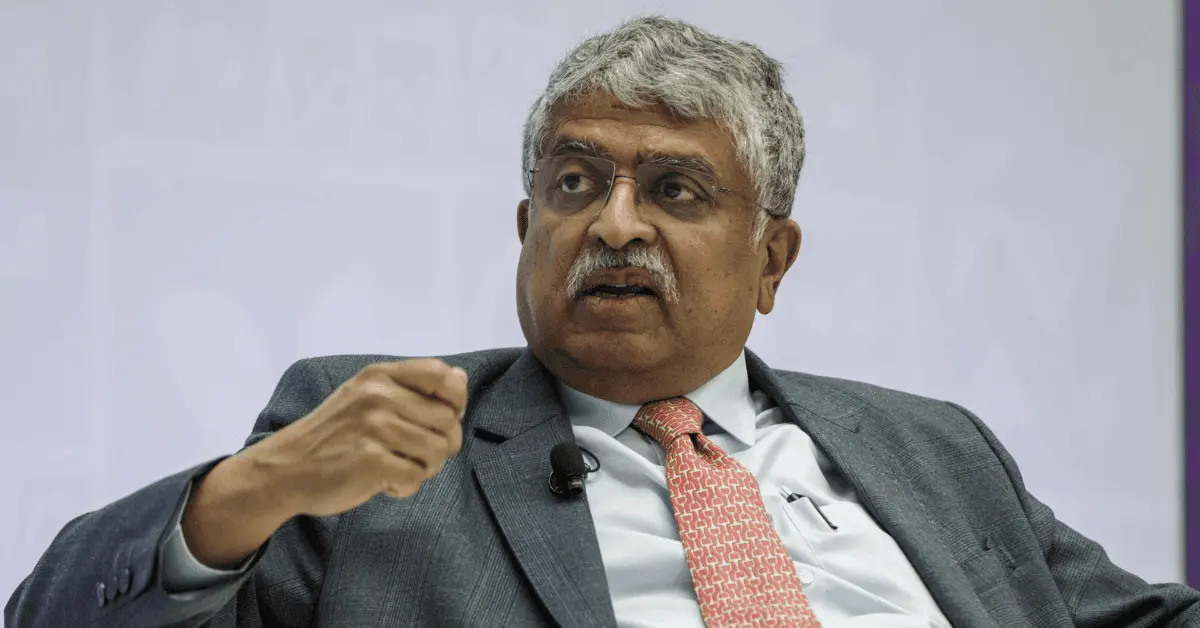
Infosys chairman Nandan Nilekani argues that millions of small businesses and startups will become the primary engines of job creation as AI automation threatens employment at large corporations. Speaking at Global Fintech Fest 2026, he outlined how India's startup ecosystem could grow from 150,000 to 1 million firms by 2035.
Small Businesses Critical for AI-Proof Economy
Nandan Nilekani, non-executive chairman of Infosys, delivered a stark warning about AI's impact on employment while speaking at the Global Fintech Fest 2026
1
2
. Large corporations with structured roles and processes face greater vulnerability to AI automation, making job displacement at these companies more likely than at smaller firms. He emphasized that creating an AI-proof economy requires shifting job creation to millions of small businesses rather than relying on a few large corporations3
.
Source: Inc42
Dynamic Roles Resist Automation
The fundamental difference lies in how work is structured. In large companies, tasks and roles follow standardized patterns that make them easier to automate through AI. Small businesses operate differently—employees in these firms perform varied, dynamic tasks that change throughout the day
3
. This variability makes these positions harder to automate, creating natural protection against job displacement in the AI era. Nilekani stated that billions of jobs across millions of small companies are actually safer than a few million jobs concentrated in large corporations2
.Mass Startup Growth Anchors Employment Future
India's startup ecosystem demonstrates the potential for entrepreneurship-driven job creation. The country had approximately 10,000 startups in 2015, which expanded to around 150,000 in 2025
2
3
. Nilekani projects this number could reach 1 million by 2035, with these startups gaining access to diverse capital sources. Both the emerging startup world and traditional small businesses will serve as the employers of the future, he noted2
.Tokenization Expands Access to Capital
Nilekani outlined how technology should level the playing field by giving small businesses access to capital, markets, and capabilities traditionally reserved for larger enterprises
2
. Tokenization has evolved from an emerging concept to practical applications, with the RBI exploring tokenization of certificates of deposit and both RBI and SEBI working on tokenized corporate bonds. This represents the next layer of India's digital infrastructure evolution, building on systems like Aadhaar and UPI that made identity and payments digitally accessible at population scale2
.Finternet Architecture Enables Asset Portability
Three pilots using the Finternet architecture demonstrate how tokenization can work across different asset classes. One pilot tokenizes cattle by capturing identity, ownership, health, and milk productivity data in digital credentials that can be shared with lenders for credit. Another tokenizes warehouse receipts with details about stored produce quantity and quality. The third pilot focuses on tokenizing loan documents across marketplaces using smart contracts to standardize transactions
2
. All three use common digital infrastructure designed to work across asset classes and public blockchains.Related Stories
AI Agents Create Demand for Tokenized Assets
While tokenization handles issuance, AI agents can create demand by executing transactions on behalf of businesses. An AI agent could convert an invoice into a token, identify potential lenders, and offer the asset to them. This combination of tokenized assets on public blockchains supported by agentic transactions gives small businesses capabilities previously available mainly to large enterprises
2
. A token establishing an asset's identity and value, paired with an AI agent continuously seeking financing or market opportunities, could transform access to capital for smaller firms.Policy Frameworks Support Digital Asset Evolution
Nilekani's remarks came one day after Maharashtra Chief Minister Devendra Fadnavis announced the state is working to establish India's first state-level legal framework for blockchain-based tokenization of land and other immovable assets under the proposed Maharashtra Digitisation and Exchange of Land Token Asset (DELTA) Act
2
. This regulatory development signals growing institutional support for tokenization as a tool to expand financial access and economic participation across India's business landscape.References
Summarized by

Navi
[1]
Related Stories
Nandan Nilekani Advocates for Practical AI Applications in India, Discourages Pursuit of Large Language Models
25 Feb 2025•Technology

AI's Impact on Employment: Economic Survey Highlights Uncertainty and Challenges
22 Jul 2024

Infosys Founder Narayana Murthy Criticizes AI Hype in India, Calls for True Innovation
13 Mar 2025•Technology

Recent Highlights



Recent Highlights
Today's Top Stories







Don’t drown in AI news. We cut through the noise - filtering, ranking and summarizing the most important AI news, breakthroughs and research daily. Follow topics that matter to you and stay ahead.


