3 Sources
[1]
NBA will put AI in charge to tackle bad ref calls and fan fury
Bad referee calls have become one of the NBA's most frustrating recurring storylines, especially during the playoffs when every possession gets dissected online within seconds. Now, the league appears ready to lean much harder into artificial intelligence in an attempt to reduce controversial officiating decisions and calm growing fan anger around inconsistent calls. According to recent comments from Adam Silver, the NBA is actively exploring how AI can improve officiating, replay analysis, and decision-making during games. The discussion comes at a time when criticism surrounding referees has intensified across the league, particularly as social media clips and slow-motion replays make every missed whistle instantly visible to millions of fans. The NBA wants AI to assist officials instead of replacing them Speaking about the future of officiating, Silver suggested AI could eventually help identify incorrect calls in real time and support referees during games rather than fully replacing human officials. The league reportedly sees artificial intelligence as a tool that could improve consistency, reduce human error, and make officiating decisions more accurate under pressure. Recommended Videos The NBA already relies heavily on technology through replay centers, player tracking systems, and advanced analytics. However, AI integration would take that much further by potentially analyzing movement patterns, contact, positioning, and foul situations instantly during live gameplay. One of the league's biggest concerns appears to be maintaining trust in officiating. Referee criticism has exploded in recent years as fans increasingly accuse officials of inconsistency, bias, or simply missing obvious calls during critical moments. The rise of sports betting has also intensified scrutiny around officiating decisions, since controversial calls can directly affect wagers alongside game outcomes. Silver acknowledged that officiating remains one of the most difficult parts of professional basketball because referees must make split-second decisions while tracking ten players moving at extreme speed. AI, according to the NBA's thinking, could act as an additional layer of support capable of processing far more visual information simultaneously than a human crew. At the same time, the league does not appear interested in removing referees entirely. Instead, AI would likely function more as an intelligent assistant integrated into replay systems, game reviews, and real-time officiating support. Why this matters The NBA's interest in AI reflects a much broader trend happening across professional sports. Leagues worldwide are increasingly experimenting with technology to reduce controversy and improve fairness. Tennis already uses automated line-calling systems, football leagues are heavily dependent on VAR, and baseball continues to expand automated strike-zone testing. Basketball may now be heading toward its own AI-assisted officiating era. For fans, the appeal is obvious. Fewer missed calls could mean fewer games overshadowed by officiating controversies rather than actual basketball. However, the idea is also controversial. Many fans already complain that replay reviews slow games down too much. Introducing AI into officiating could create concerns around over-analysis, delays, or removing the human element that has always existed in sports. What happens next The NBA is still in the early stages of exploring how AI could fit into officiating workflows, and there is currently no timeline for full implementation. Still, the league's direction is becoming increasingly clear. As AI tools improve, the NBA appears determined to use technology more aggressively to protect the credibility of officiating and reduce fan frustration. Whether AI can actually solve the referee problem is another question entirely. But for a league constantly battling viral outrage over bad calls, even partial improvements may be enough to justify the experiment.
[2]
NBA Commissioner Announces Plans to Let AI Take Over for Lazy Referees
Can't-miss innovations from the bleeding edge of science and tech Anyone who's sat through this year's NBA playoffs has probably noticed: the basketball league has a big problem with its referees. There's the poor flopping management for starters, where players try to exaggerate or fabricate physical contact with opposing teams in order to draw penalty calls. Flopping has become something of an epidemic over the 2026 playoffs, with certain suspects flailing to the floor on one in every ten field goal attempts. Then there are the missed non-physical violations. During a critical game five matchup in Oklahoma City earlier this week, refs flubbed a major out-of-bounds call at a crucial point in the later half of the game. Making matters worse, they refused to overturn the call even after huddling to review their decision. That kicked off some major discourse online about the call in particular, and the quality of NBA refs in general. Like his refs, NBA commissioner Adam Silver evidently has his eyes elsewhere. Speaking on the Pat McAfee Show, Silver used that game five controversy as a springboard to soft-launch a new AI initiative, which he says could take over for human refs in critical moments. "The officiating is incredible," Silver said, defending NBA officials. "I think, in terms of replay, I think we're going to get to the point fairly quickly where, for example out-of-bounds... where, just like [when] you're a tennis fan and they have Hawk-Eye... we're gonna move to a system like that, where that whole category of calls will be automatic." Hawk-Eye refers to a Sony-owned camera system which uses high-speed sensors to help refs in sports like baseball, cricket, and soccer make accurate calls on close plays. While Sony advertises the service as accurate within 0.1 inches, it's had quite a few controversies itself, and is certainly no substitute for solid refereeing in the moment -- a distinction other major league sports commissioners seem well aware of. According to Silver, however, the NBA's automated system would supplement referees for line calls, not augment them. "Those calls will be done by an AI automated system, with cameras lined around the court, and it'll take all those so-called objective calls out of the hands of the referees," Silver explained. "It'll just be instantaneous, it'll be automatic, just play on, y'know, let's go, Spurs in-bounds, and you move on." Whether such a system is immediately in the works for the 2026-2027 season was not immediately clear, but the theory seems to be that AI would free up officials to pay more attention to physical issues, like flopping. But poor refereeing, many fans argue, could be better resolved by urging human officials to enforce existing rules and simply admit when they get calls wrong -- not by cramming AI into the product. "Idc how much I complain about the refs, I don't want AI in my basketball game," one Los Angeles Lakers fan grumbled on X-formerly-Twitter. "Smh." "It's like everything he says is supposed to be a way to decrease confidence in the product," mused writer and New York Knicks devotee Noah Kulwin. "Worst commish in sports or worst commish in sports?" More on AI automation: AI Is Giving Your Boss Tools to Be More Monstrous Than Ever Before
[3]
Adam Silver says NBA will soon use AI for certain calls -- here's how it could work
NBA commissioner Adam Silver said the league will use AI to automate a category of calls such as out-of-bounds decisions to speed up games and reduce disputes over possession. Silver compared the system to Hawk-Eye technology used in tennis, where electronic line-calling quickly determines whether a ball has landed in or out. "We're going to move to a system like that where that whole category of calls will be automatic," Silver said on ESPN's "The Pat McAfee Show" on Wednesday. "It's going to be Laker ball, Knick ball, whatever it is. Those calls will be done by an AI, automated system with cameras lined around the court." The technology would make such decisions instantaneous and allow referees to focus on calls for contact and fouls. "It will take all those so-called objective calls out of the hands of the referees," he said. "You won't have to deal with challenges on those calls." Silver did not provide an exact timeline for the introduction of the system but said it would be "fairly quickly." The NBA has increasingly leaned on replay review and centralized decision-making to improve officiating accuracy, though reviews can slow the pace of games. Silver said referees would remain essential for interpreting physical contact, where judgment is required to determine whether a player has been impeded. "There's often contact on every play, but that doesn't mean there's a foul on every play," Silver said. "That's something that can't just be done on camera."
Share
Copy Link
The NBA plans to implement an AI-powered automated system for objective calls like out-of-bounds decisions, commissioner Adam Silver revealed. Similar to Hawk-Eye technology used in tennis, the system would make instantaneous rulings while human referees focus on judgment calls involving contact and fouls. The move comes amid growing fan frustration over controversial calls during the 2026 playoffs.
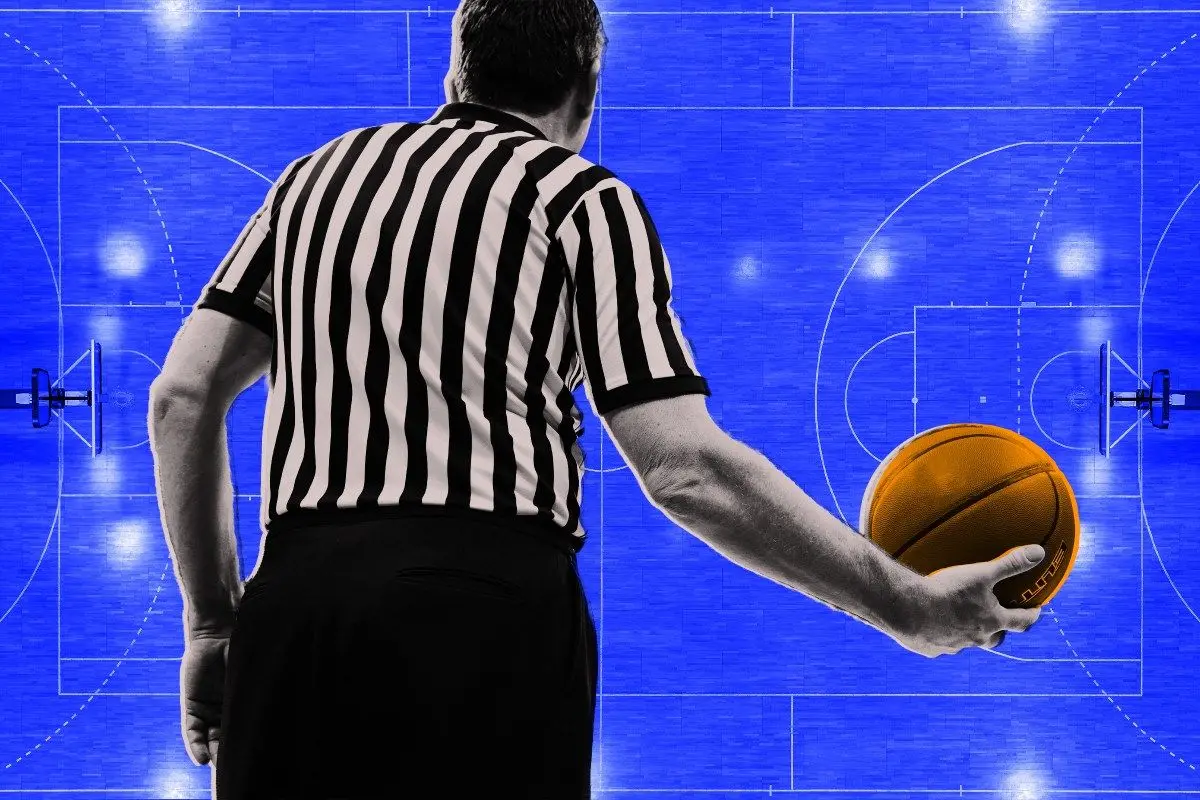
The NBA is moving forward with plans to integrate AI officiating into games, with commissioner Adam Silver announcing that an AI-powered automated system will soon handle objective calls like out-of-bounds decisions
1
. Speaking on ESPN's "The Pat McAfee Show," Adam Silver said the technology would make such rulings instantaneous, allowing referees to concentrate on more complex judgment calls involving physical contact and fouls3
. The announcement comes as referee performance has faced intense scrutiny during the 2026 playoffs, with controversial calls and missed calls generating viral outrage across social media platforms.Silver compared the planned system to Hawk-Eye technology used in tennis, where electronic sensors quickly determine whether a ball has landed in or out
2
. "Those calls will be done by an AI automated system, with cameras lined around the court, and it'll take all those so-called objective calls out of the hands of the referees," Silver explained2
. The system would use cameras positioned around the court to analyze plays and deliver immediate rulings without requiring replay reviews or challenges. "It'll just be instantaneous, it'll be automatic, just play on, y'know, let's go, Spurs in-bounds, and you move on," Silver said2
. This approach would eliminate the need for officials to huddle over out-of-bounds decisions, a category of calls that has sparked significant controversy.While AI for certain calls would handle clear-cut situations, human referees would maintain control over more nuanced aspects of officiating. Silver emphasized that interpreting physical contact requires human judgment that cameras cannot replicate. "There's often contact on every play, but that doesn't mean there's a foul on every play," Silver noted
3
. This means officials would still make decisions on flopping, charging fouls, and other situations where context matters beyond what automated systems can detect. The NBA's approach aims to assist human referees rather than replace them entirely, using technology to reduce human error on objective calls while preserving the interpretive element of officiating1
.Related Stories
The push toward automated officiating reflects mounting pressure on the league to address fan anger over inconsistent calls. During a critical game five matchup in Oklahoma City earlier this week, referees made a major out-of-bounds error at a crucial moment and refused to overturn the call even after reviewing it
2
. Such incidents have intensified as social media clips and slow-motion replays make every missed whistle instantly visible to millions of fans1
. The rise of sports betting has further amplified scrutiny, since controversial calls can directly affect wagers alongside game outcomes1
. Flopping has also become an epidemic during the 2026 playoffs, with certain players flailing to the floor on one in every ten field goal attempts2
.While Silver did not provide an exact timeline, he indicated the system would be deployed "fairly quickly"
3
. Fan reactions have been mixed, with some welcoming technology that could reduce officiating controversies while others worry about removing the human element from sports. "Idc how much I complain about the refs, I don't want AI in my basketball game," one Los Angeles Lakers fan wrote on X2
. The NBA already relies heavily on replay and officiating support systems through centralized replay centers, player tracking systems, and advanced analytics1
. This move mirrors trends across professional sports, as tennis uses automated line-calling, football leagues depend on VAR, and baseball expands automated strike-zone testing1
. Whether AI can actually solve the league's officiating challenges remains uncertain, but the NBA appears determined to use technology more aggressively to protect the credibility of its games.Summarized by
Navi
[1]
1
Business and Economy

2
Technology

3
Policy and Regulation