4 Sources
[1]
Neill Blomkamp's new zombie AI 'film' is just slop warmed over
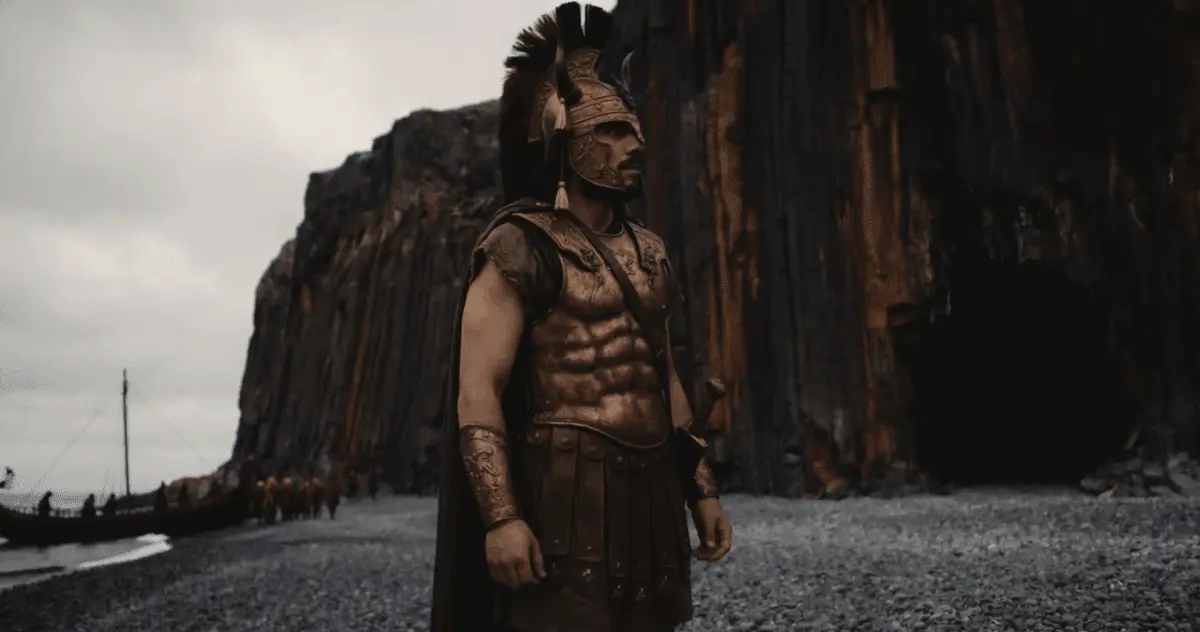
On Monday, District 9 and Gran Turismo director Neill Blomkamp unveiled his latest project: a 13-minute sci-fi short titled Nightborne that's loosely based on Peter Watts' 2014 novel Echopraxia. The short comes from Blomkamp's new AI startup / production company, Barley Studios, and features characters whose voices and faces are modeled after human actors. But every single one of Nightborne's shots was made with ByteDance's Seedance 2.0 text-to-video generator. In an X post about the short, Blomkamp described it as a "test start" meant to demonstrate what generative AI is capable of, and he said that he wants "to tackle a full feature in this format" at some point in the future. Blomkamp seems to think that Nightborne is a strong proof of concept that might get people intrigued to see what he prompts next. But as polished as the "film" might be compared to most of the AI-generated videos floating around the internet today, it still bears many of the hallmarks we associate with slop. And even though a team of real people was involved in the project's production, Nightborne is such a terrible watch that one would be hard-pressed to call it the future of moviemaking. Set against the backdrop of a military conflict between the US and Syria, Nightborne tells the story of an American pilot who sustains life-threatening injuries when her helicopter is shot down. Though most of the pilot's body is badly injured, she's still technically alive and her head is intact. Those things make her the ideal candidate for Project Nightborne -- a governmental program that turns brain-dead soldiers into remote controlled, weaponized zombies. And because the military has an endless supply of bodies at its disposal, the pilot is one of many uniformed ghouls being trained for war in secret. Like basically every other AI-generated film that has come before it, Nightborne is really a collection of very short video clips that have been edited together to tell a simple story. Nightborne frequently cuts from shots of its zombified main character to documentary-style interviews with people involved in Project Nightborne. These cuts give the film -- which was edited by Austyn Daines -- a way to obfuscate the fact that Seedance 2.0 is only capable of generating a few seconds of video footage at a time. And the way the film's dialogue is mixed almost (but not quite) makes it seem like you're listening to real people speaking. When you really take a good look at Nightborne's visuals and listen closely to its audio, it's easy to pick up on how much gen AI is in the mix. Signs in the background are often written in complete gibberish, and characters deliver their lines with unusual emphases that make them come across like people who don't actually know what they're saying. According to Blomkamp, "real concept artists" contributed work to the project, and 32 human actors agreed to have their likenesses used on-screen. But that human input doesn't seem like it's anywhere near enough to keep Nightborne from feeling more like machine-made content than a piece of art. Aside from it coming from the same director who dreamt up Alive in Joburg -- an imaginative exercise in using VFX to explore ideas about apartheid-era bigotry -- there's nothing remarkable about Nightborne. Blomkamp's creative voice feels almost nonexistent as the short's story unfolds, and if Seedance 2.0 wasn't part of the equation, people probably wouldn't be talking about it. Though Seedance 2.0 can clearly churn out videos of people emoting, Nightborne highlights how the model still doesn't have any sort of real understanding of the minute details that make human performances feel organic and truly alive. Whatever emotive nuance you might see in the short is really just a reflection of the videos Seedance 2.0 has been trained on, and not exactly something that it can take credit for. Aside from zombies, Nightborne doesn't have all that much in common with its source material. But it's a lot like Jia Zhangke's Jia Zhangke's Dance short and Ruairí Robinson's viral AI video depicting Tom Cruise and Brad Pitt fighting -- both of which were created with Seedance 2.0. Each of these projects has demonstrated that traditional filmmakers tend to know how to downplay gen AI's technical limitations, but their skills can only do so much to offset the technology's innate weaknesses. Though text-to-video models may be getting more sophisticated, they haven't advanced enough to produce finished works that audiences are excited to see. Nightborne's announcement was almost immediately met with a wave of backlash from people who saw the film as a sign of Blomkamp being washed. And while Blomkamp might have thought that Nightborne would generate some positive buzz for himself, it seems much more like he's wandered into an unfortunate situation similar to the one Darren Aronofsky created with his terrible AI series about the Revolutionary War. The most interesting thing about Nightborne is the way its story can be interpreted as commentary on the technology that was used to make it. Project Nightborne is all about individuals in positions of power repurposing dead people's bodies without their consent in order to generate labor on the cheap. Generative AI isn't as (immediately or obviously) destructive as killer zombie soldiers, but those pushing for the technology's use are driven by a desire that's similar to the one motivating Nightborne's villains.
[2]
Neill Blomkamp irks fans with his new AI-short film
Filmmaker Neill Blomkamp built his reputation on sci-fi films like the critically heralded District 9, and the divisive Chappie and Elysium. His latest, "Nightborne," a 13-minute short film generated almost entirely by artificial intelligence, is getting a largely negative reception. Loosely adapted from the 2006 hard sci-fi novel Echopraxia, "Nightborne" was built using ByteDance's Seed 2.0 video model, which animated the faces and voices of 32 real people who signed likeness agreements. Per the video's own description, human artists produced the concept art, presumably so it could then be fed into the machine. The plot of "Nightborne" follows a US Army pilot, who, after being shot down in the Middle East, is pronounced brain-dead and reanimated by the military as a mind-controlled super-soldier. There are also scenes of a journalist speaking with a film crew about his discoveries, as well as scenes of the scientist running the program. That the short turns real human beings into digital puppets to tell a story about the military turning a human being into a soulless killing machine is an irony apparently lost on Blomkamp and his collaborators. Blomkamp's fans have not been kind in response. Comment sections on Instagram and YouTube skew heavily negative, with many mourning what they see as Blomkamp's fall from grace. "Guys, be nice to Neill, he spent the entire afternoon prompting this," read one top comment on YouTube. "It's actually impressive how you can throw this much talent at a project, and it still ends up looking like soulless slop," read another. Whatever one thinks of AI-generated films on their own merits, Blomkamp now joins Darren Aronofsky as another high-profile director betting on generative AI as cinema's next act. That bet is facing real headwinds, considering Christopher Nolan's The Odyssey just posted a $100+ million opening weekend. A reminder that audiences are still very much willing to show up for something people actually made. Or you can watch the AI-generated version that Elon Musk wants to make.
[3]
District 9 and Gran Turismo director has made a fully AI film, and the internet is not holding back
Acclaimed sci-fi director Neill Blomkamp has shared his work on an AI film. The director behind District 9, Elysium, and Gran Turismo posted a 14-minute-long short film that he made entirely with artificial intelligence on YouTube, which is a mash-up between a military movie and a zombie thriller. Entitled 'Nightbourne', it features 32 AI characters, based on real actors, and tells the story of a helicopter pilot shot down and killed in action. However, it seems the army is actually building zombies to make super soldiers. It's a cool idea in theory, but it seems no one is happy with the execution or the fact that Blomkamp has used AI software Seedance 2.0 to make it. "Wow Neill thank you for showing us that even in the hands of an established director AI slop looks indistinguishable from everyone else's AI slop," replied one on Twitter. "Holy fuck this somehow looks even worse than you can possibly imagine lmao," another simply replied as a third wrote: "Waited 17 years for District 10, and now this? Come on, man." Others have been pointing out some of the inconsistencies in the film. Posting on YouTube, several viewers spotted inconsistencies with things like the injury placement, seeming duplication of AI actors, and strange reactions that feel "uncanny". Not only this, but there are some pretty strange line-readings and even moving buildings in the backgrounds of shots. It doesn't seem like any of this will be stopping Blomkamp, though, as he also announced his plans to make a fully AI feature-length film. He has also founded a studio purely for AI called Barley Studios. Blomkamp's film isn't the only AI movie knocking around. Recently, it was announced that another studio is remaking The Odyssey too, but they already admit it won't be at the same level as Christopher Nolan's epic. For more movies out in 2026, check out our guides to upcoming movies and movie release dates you need to know about.
[4]
'I Want to Tackle a Full Feature In This Format' -- District 9 Director Faces Backlash After Revealing AI-Generated Short Film
Famed sci-fi director Neill Blomkamp is facing backlash after unleashing his first full test film made with AI. Blomkamp, best known for works like District 9, Chappie, and Elysium, published the thirteen-minute-long short film to YouTube on July 19, and responses have been brutal. The proof-of-concept follows a US Army pilot who gets grievously injured after her aircraft is shot down during a field mission in Syria. As part of the shadowy 'Nightborne' program, a 'control implant' is inserted in her brainstem that essentially turns her into a mindless zombie acting on orders of the US Government. This marks the inaugural release of Barley Studios, an AI-focused film studio founded by Blomkamp, who says the short was fully generated in Seedance 2.0 and directed by him through prompts. As per the video's description, 32 real people provided the voices and faces for the characters therein under likeness agreements. Concept art for the project, however, was provided by human artists. NIGHTBORNE is set in the world of Peter Watts' 2014 novel Echopraxia, which features all manner of science fiction fare like alien life, vampires, and of course, zombies. While Watts has yet to offer a public comment on Blomkamp's latest adaptation of his work, the internet has spoken -- and made its stance extremely clear. Comments across social media are blasting the test film, poking fun at the dialogue (we couldn't help but laugh at 'Oh s**t, well, I think she's going to make it, so that's good'), various visual inaccuracies, and jarring camerawork. "No thank you. What a crazy fall from grace for such a beloved filmmaker," one wrote on YouTube. "Wow Neill, thank you for showing us that even in the hands of an established director, AI slop looks indistinguishable from everyone else's AI slop!" another said on X/Twitter. "Bro, we just wanted District 10," another said. Blomkamp has yet to respond to the outrage surrounding his latest project, but offered more insight into NIGHTBORNE on his personal Instagram account. "I've been experimenting with AI for a couple of years, and it's now at the point where I want to tackle a full feature in this format," he explained. "Barley Studios will be my new AI studio for creating my own films, the way Oats Studios was for traditional film and VFX." It's worth noting that, while Watts hasn't spoken out following the release of NIGHTBORNE, he did mention working with Blomkamp back in 2025, telling Forbes that he and Niell had a "long and tortured history" with adapting his book, Blindisight (a prequel to Echopraxia). And with this latest proof-of-concept, it's looking even more tortured than ever. Unfortunately for hopeful fans, Blomkamp isn't sure if District 10 will actually happen, despite confirming that he was writing a script for the sequel film in 2021. In August 2023, the director admitted that the future of the movie is uncertain, saying, "I don't know if I even want to make that right now, but at some point down the line, it'll probably get made." This is the latest AI movie making waves online after Odysseus: The Fall, an AI-generated film retelling the Odyssey, sparked similar reactions from audiences, especially in comparisons to Nolan's highly-lauded movie adaptation of the same source material that blew the top off the box office on opening weekend. Virginia (she/her) is IGN's News Editor. With ten years of experience reporting on games and entertainment, she's got a storied background in the fighting game community, influencer news, and viral online trends. Find her on Twitter at @TheeMissGlaze.
Share
Copy Link
District 9 director Neill Blomkamp unveiled Nightborne, a 13-minute AI-generated short film created entirely with ByteDance's Seedance 2.0. The sci-fi project features 32 actors under likeness agreements but has been met with overwhelming negative reactions. Fans criticize the film as 'soulless slop' while Blomkamp announces plans for a full AI feature through his new studio, Barley Studios.
Neill Blomkamp, the acclaimed director behind District 9 and Elysium, released Nightborne on July 19, marking his first fully AI film experiment and sparking immediate controversy across the creative industries
1
. The 13-minute AI-generated short film was created entirely using ByteDance Seedance 2.0, a text-to-video model that generated every single shot in the production1
. Loosely based on Peter Watts' 2014 novel Echopraxia, the project represents the inaugural release from Barley Studios, Blomkamp's new AI-focused production company designed to explore generative AI in cinema4
.The sci-fi short film follows a US Army pilot who sustains life-threatening injuries when her helicopter is shot down during a mission in Syria
4
. Though her body is severely damaged, her brain remains intact, making her an ideal candidate for Project Nightborne—a secret governmental program that transforms brain-dead soldiers into remote-controlled, weaponized zombies1
. The narrative unfolds through a mix of action sequences and documentary-style interviews with people involved in the zombie AI program, creating what Blomkamp describes as a "test start" for AI filmmaking1
.
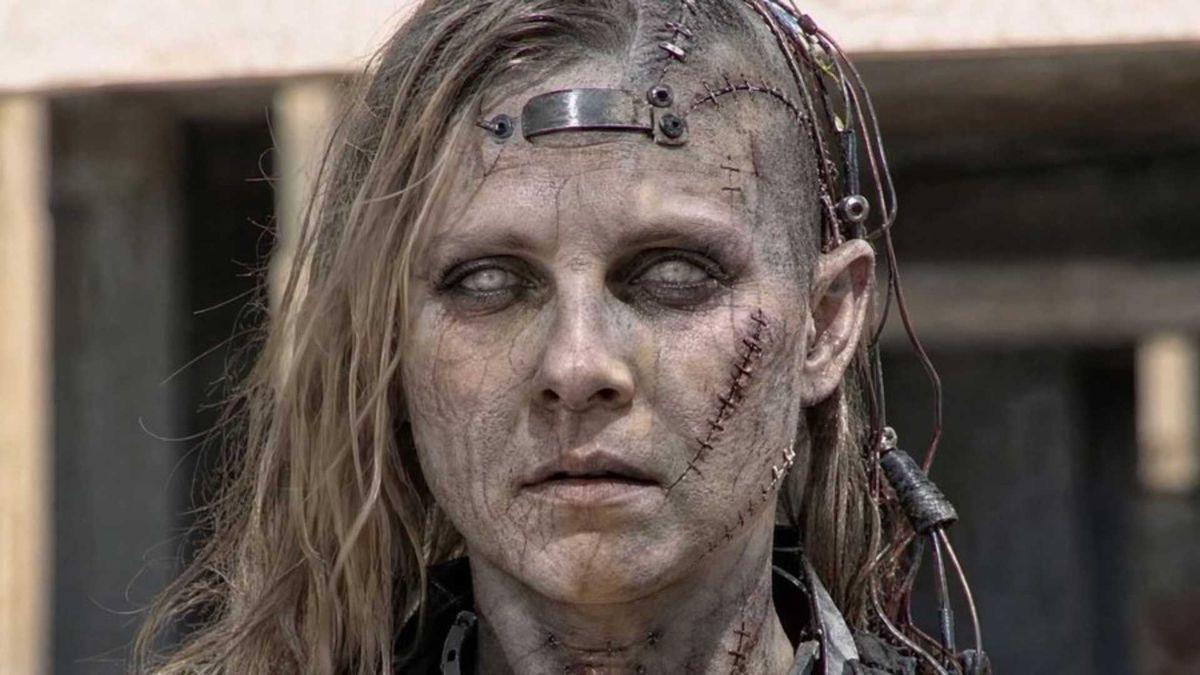
Source: GamesRadar
While 32 real people signed likeness agreements to have their voices and faces used on-screen, and concept artists contributed work to the project, the human input appears insufficient to overcome the technology's inherent weaknesses
1
2
. Viewers quickly identified numerous inconsistencies: background signs written in complete gibberish, injury placements that shift between shots, apparent duplication of AI actors, and even buildings that move in the background3
. Characters deliver lines with unusual emphases that make them sound like people who don't actually understand what they're saying1
.The film's structure reveals the limitations of current text-to-video models. Nightborne is essentially a collection of very short video clips edited together by Austyn Daines, with frequent cuts between scenes designed to obscure the fact that Seedance 2.0 can only generate a few seconds of footage at a time
1
. While the model can produce videos of people emoting, it lacks understanding of the minute details that make human performances feel organic and truly alive1
.The response to Nightborne has been overwhelmingly negative, with comment sections on Instagram and YouTube skewing heavily critical
2
. "Guys, be nice to Neill, he spent the entire afternoon prompting this," read one top comment on YouTube, while another stated, "It's actually impressive how you can throw this much talent at a project, and it still ends up looking like soulless slop"2
. On Twitter, users wrote, "Wow Neill thank you for showing us that even in the hands of an established director AI slop looks indistinguishable from everyone else's AI slop"3
.Many fans expressed frustration that Blomkamp—who built his reputation on imaginative sci-fi like the critically acclaimed District 9—would pursue AI filmmaking instead of long-awaited projects. "Waited 17 years for District 10, and now this? Come on, man," one viewer lamented
3
. The irony that the short turns real human beings into digital puppets to tell a story about the military turning a human being into a mind-controlled super-soldier was apparently lost on Blomkamp and his collaborators2
.
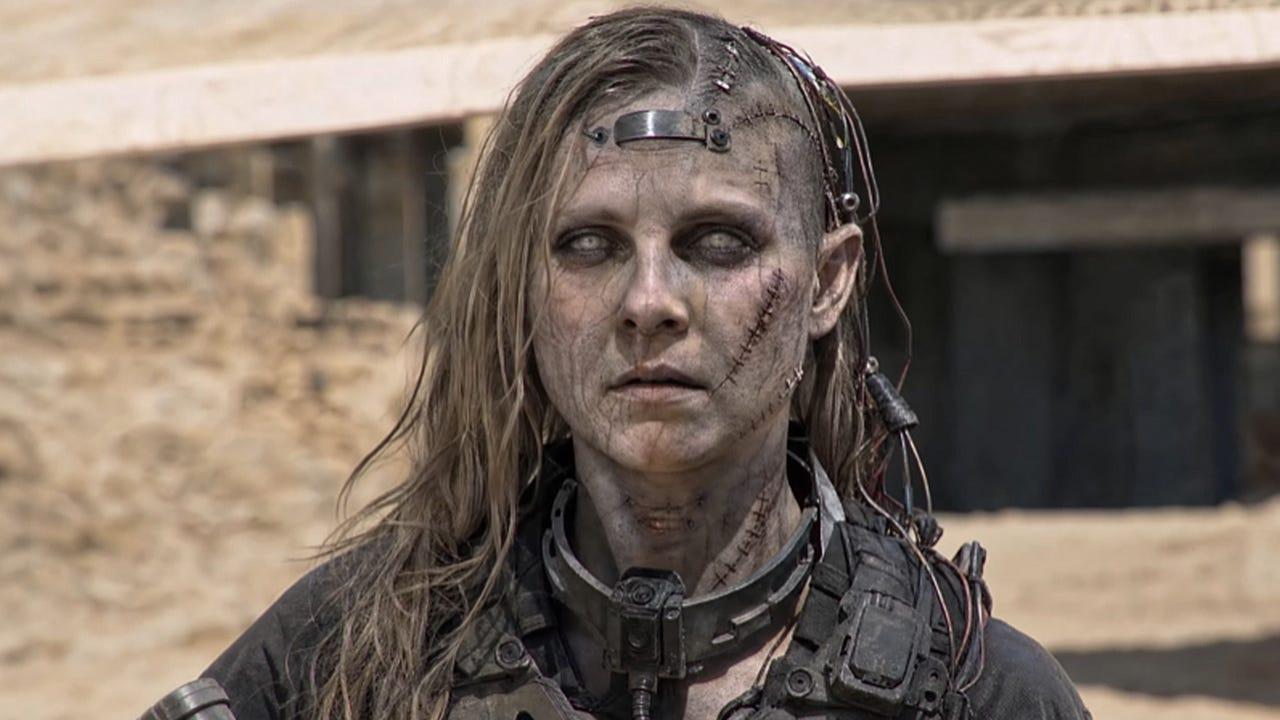
Source: IGN
Related Stories
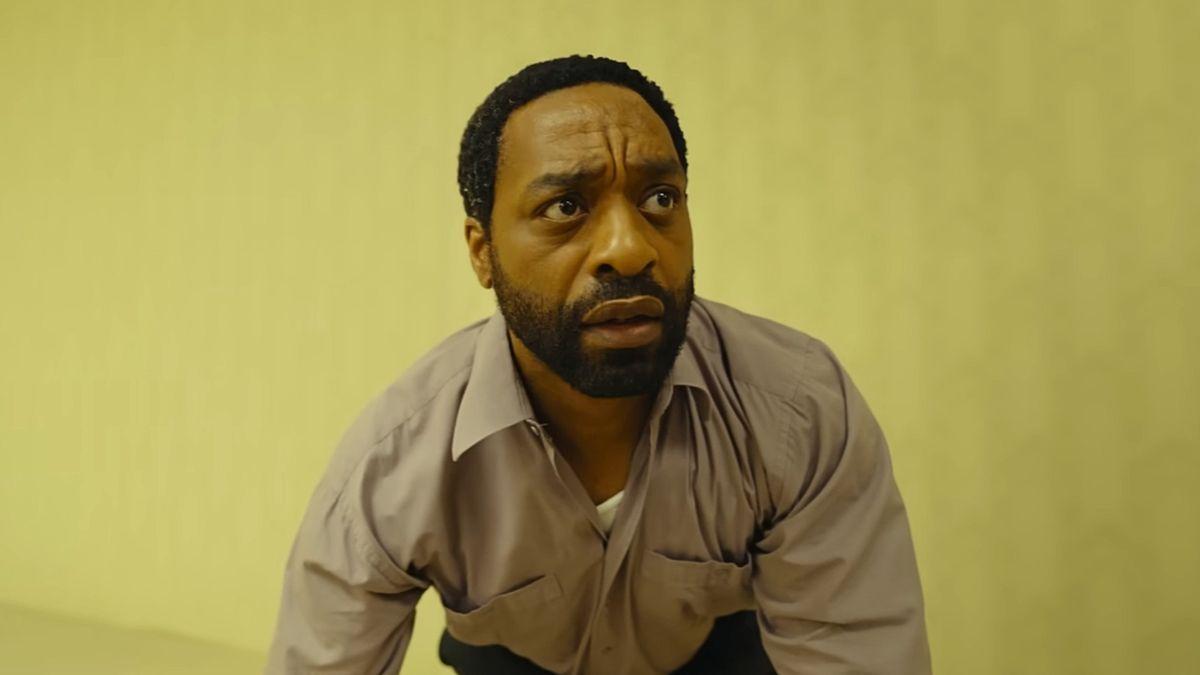
Despite the harsh reception, Blomkamp remains committed to AI filmmaking. "I've been experimenting with AI for a couple of years, and it's now at the point where I want to tackle a full feature in this format," he explained on Instagram
4
. Barley Studios will function as his new AI studio for creating films, similar to how Oats Studios operated for traditional film and VFX4
. He has announced plans to make a fully AI feature-length film, though he has yet to respond to the outrage surrounding Nightborne3
4
.

Source: The Verge
Blomkamp now joins Darren Aronofsky as another high-profile director betting on generative AI as cinema's next act
2
. However, this bet faces significant headwinds. Christopher Nolan's The Odyssey recently posted a $100+ million opening weekend, demonstrating that audiences remain willing to show up for films that people actually made2
. While text-to-video models may be getting more sophisticated, they haven't advanced enough to produce finished works that audiences are excited to see1
. Traditional filmmakers like Blomkamp may know how to downplay generative AI's technical limitations through skillful editing, but their expertise can only do so much to offset the technology's innate weaknesses1
.Summarized by
Navi
[3]
19 May 2026•Entertainment and Society

20 Feb 2026•Entertainment and Society

15 Jul 2026•Entertainment and Society

1
Technology

2
Policy and Regulation

3
Science and Research