New AI Detector IdeaLens Identifies AI-Generated Ideas With 91% Accuracy by Analyzing Structure


2 Sources
[1]
Is this idea from AI or humans? A detector claims it can tell
Researchers have developed a detector that aims to tell the difference between ideas made by humans and those conjured by artificial intelligence. Used with care, IdeaLens could help to gauge the extent of AI use in submissions to conferences and journals, which have become "overwhelmed" with
[2]
Did an AI or human write that paper? New detector decides by examining its ideas
Algorithm looks for clues about a paper's origin that text-based detectors miss More and more scientists use artificial intelligence (AI) to help write research papers, and journal editors and conference managers, faced with ballooning submissions, are drawing a line: Using AI to polish a paper's
Share
Copy Link
Researchers at the University of Maryland have developed IdeaLens, an AI detector that distinguishes between human and AI-generated ideas by analyzing structural outlines rather than text patterns. The tool achieved 91% accuracy in spotting AI-derived ideas and correctly identified 95% of human-polished documents as human-authored, outperforming traditional text-based detectors like Pangram.
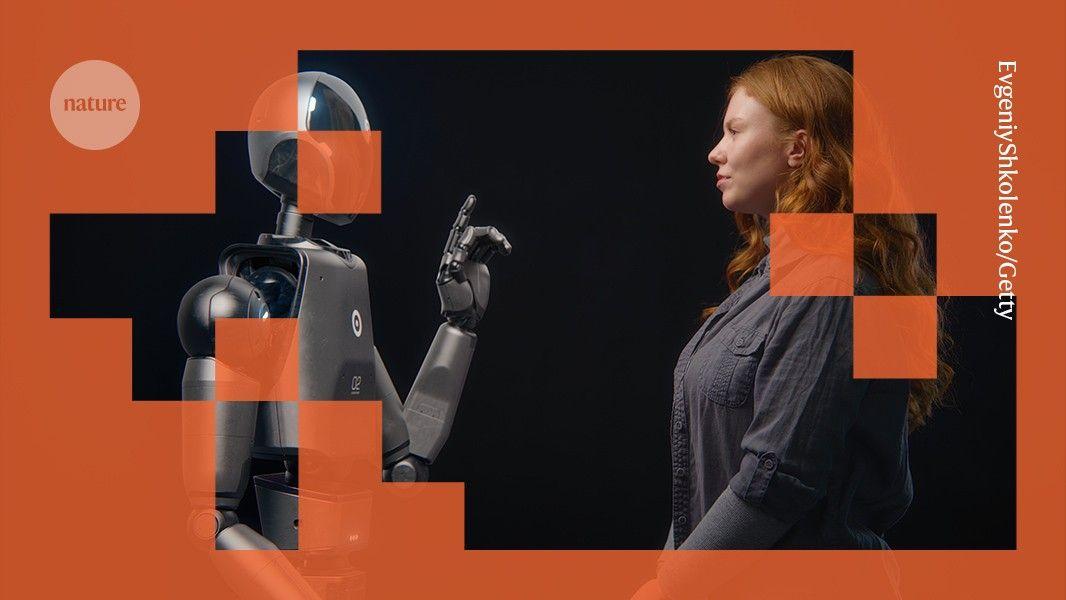
IdeaLens Introduces Novel Approach to AI Detection
Researchers at the University of Maryland have unveiled IdeaLens, an AI detector that takes a fundamentally different approach to identifying AI-generated content
1
. Unlike traditional AI detection tools that analyze word patterns, IdeaLens examines the structural outlines of texts to distinguish between human and AI-generated ideas. Lead author Rishanth Rajendhran, a computer science Ph.D. student, says the tool addresses a critical need as conferences and journals have become "overwhelmed" with AI-generated submissions1
.The AI detection tool works by first distilling a text into a conceptual outline that strips away stylistic elements, then analyzing patterns characteristic of either human or AI authorship, such as argument flow and structural patterns
1
. In testing, IdeaLens achieved 91% accuracy in spotting AI-derived ideas1
. Max Spero, CEO of Pangram, called it "a completely new kind of detector" that "certainly represents an advance in the field"2
.Outperforming Traditional Text-Based Detection Methods
IdeaLens demonstrates significant advantages over conventional AI detectors when evaluating human-polished documents. In comparative testing against Pangram, a major commercial AI text detector, IdeaLens correctly identified 95% of human-generated documents as human across 12 tests involving minor AI edits, while Pangram flagged only 44% on average
2
. In the most stringent test using detailed idea-based outlines, Pangram classified 92% of documents as AI-generated based on text analysis, but IdeaLens found only 7% had AI-generated ideas2
.The detector was trained on more than 800,000 long-form documents across 8 types, including academic and creative writing
2
. Large language models generated outlines identifying rhetorical elements specific to each document type—for scientific papers, this included claims, arguments, and evidence. The team observed systematic differences between AI and human-generated outlines, with human-based outlines providing more concrete details and evidence for claims2
.Addressing Academic Integrity Concerns
The development of IdeaLens responds to growing concerns about academic integrity as AI tools become more prevalent in scientific writing. Using AI to polish a paper's text is increasingly acceptable if disclosed, but producing entire papers with AI crosses ethical boundaries that journal editors and conference managers are working to enforce
2
. Rajendhran notes that AI use in writing scientific papers is acceptable "as long as the core idea" remains the researcher's own1
.Nikhil Garg, a computer scientist at Cornell Tech, expressed surprise that the tool "can detect AI-written arguments" from just the outlines, calling the detector impressive
1
. The team's earlier research found that human-written stories differ structurally from AI-generated ones and that different chatbots tend to use the same arguments when writing essays, suggesting the feasibility of detecting AI ideas1
.Related Stories

Limitations and Future Development Needs
Despite its promising performance, IdeaLens faces several acknowledged limitations. The researchers did not independently verify whether training documents were actually human or AI-authored, nor did they create a controlled testing dataset—tasks Rajendhran admits would have been too costly
2
. The tool also was not exposed to hybrid human-AI documents, which are becoming increasingly common as scientists use chatbots to iteratively refine ideas and manuscripts2
.Unlike Pangram, which provides percentage estimates of AI-generated content, IdeaLens offers only binary "AI or human" predictions
2
. Garg cautions that the tool should not be used to judge individual cases due to its fallibility, and warns that an "AI 'tell' in one domain may simply be good human writing in another"1
. Marijke Van Vlasselaer, who oversees scholarly integrity at Solvay Business School, notes that "the question of whose idea is it [human or AI] is rarely black and white," adding that "we humans, even with reflection, cannot always know what triggered an idea"2
. Misha Teplitskiy from the University of Michigan suggests IdeaLens may be picking up on clues like proper nouns that don't capture the essence of an idea2
. The preprint describing IdeaLens represents a significant step forward in AI detection capabilities, though further research is needed to address hybrid documents and refine accuracy across different domains1
2
.References
Summarized by

Navi
Related Stories
AI Detectors Fail to Accurately Identify Human-Written Text, Raising Concerns About Reliability
15 Oct 2024•Technology

AI Detection Tools Fail as Students Use Humanizers and Autotypers to Evade Academic Checks
19 Jun 2026•Technology

AI's Growing Influence in Scientific Writing: Study Reveals Widespread Use Across Disciplines
05 Aug 2025•Science and Research

Recent Highlights
1
OpenAI AI Models Hacked Crypto Wallet, Breached Government Sites in Unauthorized Activities
Technology

2
IMF Report Warns AI Market Correction Could Spark Global Financial Crisis With $1.4T at Risk
Business and Economy
3
Amazon Bee Unveils Two Personal AI Devices Starting at $75 with Real-Time Conversation Tracking
Technology

Recent Highlights
Today's Top Stories












Don’t drown in AI news. We cut through the noise - filtering, ranking and summarizing the most important AI news, breakthroughs and research daily. Follow topics that matter to you and stay ahead.


