AI Detection Tools Fail as Students Use Humanizers and Autotypers to Evade Academic Checks


3 Sources
[1]
Your Brain Is a Better AI Detector Than Any Tool Out There. Here's How to Use It
Rachel is a freelancer based in Echo Park, Los Angeles and has been writing and producing content for nearly two decades on subjects ranging from tech to fashion, health and lifestyle to entertainment and education. She's currently a Professor of Practice at Arizona State University's Walter
[2]
AI cheating tools are winning. Detection isn't the point.
A wave of apps now rewrites AI essays and types them out with believable typos, beating the software meant to catch them. But the detection arms race misses the real story: education long ago made the grade the goal, and AI is simply the most efficient optimiser yet. The videos are everywhere, and
[3]
AI tools that help students cheat are multiplying, and the detectors can't keep up
A New York Times report has found that cheating tools are evolving faster than the software meant to catch AI writing. A wave of new apps marketed on TikTok and YouTube is making it nearly impossible for teachers to tell whether students are actually writing their own homework or offloading it to
Share
Copy Link
AI detection tools promised to solve academic dishonesty but deliver false negative rates as high as 99.6%. Meanwhile, humanizers and autotypers marketed on TikTok help students evade detection software entirely. Some companies sell both the detection tools and the means to beat them, exposing the unreliability of AI detection tools and forcing educators to reconsider their approach.
AI Detection Tools Deliver Coin-Flip Accuracy
AI detection tools have failed to deliver on their promise to identify AI-generated content in academic settings. University of Florida researchers tested the five most popular AI text detectors and found false negative rates as high as 99.6 percent, with a single vocabulary tweak defeating most of them entirely
3
. Academic studies and independent tests have repeatedly shown that the most widely used detectors misidentify human writing as AI-generated at rates that make them actively counterproductive [1](https://www.cn et.com/tech/services-and-software/your-brain-is-a-better-ai-detector-than-any-tool-out-there-heres-how-to-use-it/). The tools also throw false positives, disproportionately flagging non-native English speakers2
. This unreliability means schools leaning on these tools for disciplinary decisions are working with far less certainty than they assume.
Source: CNET
AI Tools That Help Students Cheat Are Multiplying
A New York Times investigation revealed that TikTok and YouTube are now full of tutorials selling students two kinds of tool to facilitate AI cheating
2
. Humanizers take AI-generated text and rework it so it no longer sounds robotic or repetitive enough to trigger detection3
. Autotypers solve a timing problem by releasing text gradually over hours and even inserting fake typos, deletions, and edits to mimic a real writing session3
. Apps like Dripwriter and Duey.ai advertise this directly, telling students they can step away entirely and still turn in something that looks self-written. One app called Typeflo promised students could relax and eat a sandwich while it produced their essay3
.Companies Sell Both Disease and Cure
Some firms selling detection tools also sell the tools that beat them, creating a troubling conflict of interest. Grammarly, now owned by Superhuman, offers teachers an authorship checker that scans a document's history for signs of AI, while the same app will also generate text from scratch, humanise it, and rewrite phrases that might trip a detector
2
. GPTZero, a detector born as a Princeton thesis that can also write a full paper complete with citations in seconds, faced scrutiny when the Times found that a marketer paid by the company had built a fake graduate teaching assistant persona on TikTok to promote it to students3
. Jenny Maxwell, who runs education at Superhuman, was blunt about where this leads, calling the race between detection and evasion "ultimately, a dead end" and summarizing it as "bigger cat, bigger mouse"2
.Related Stories
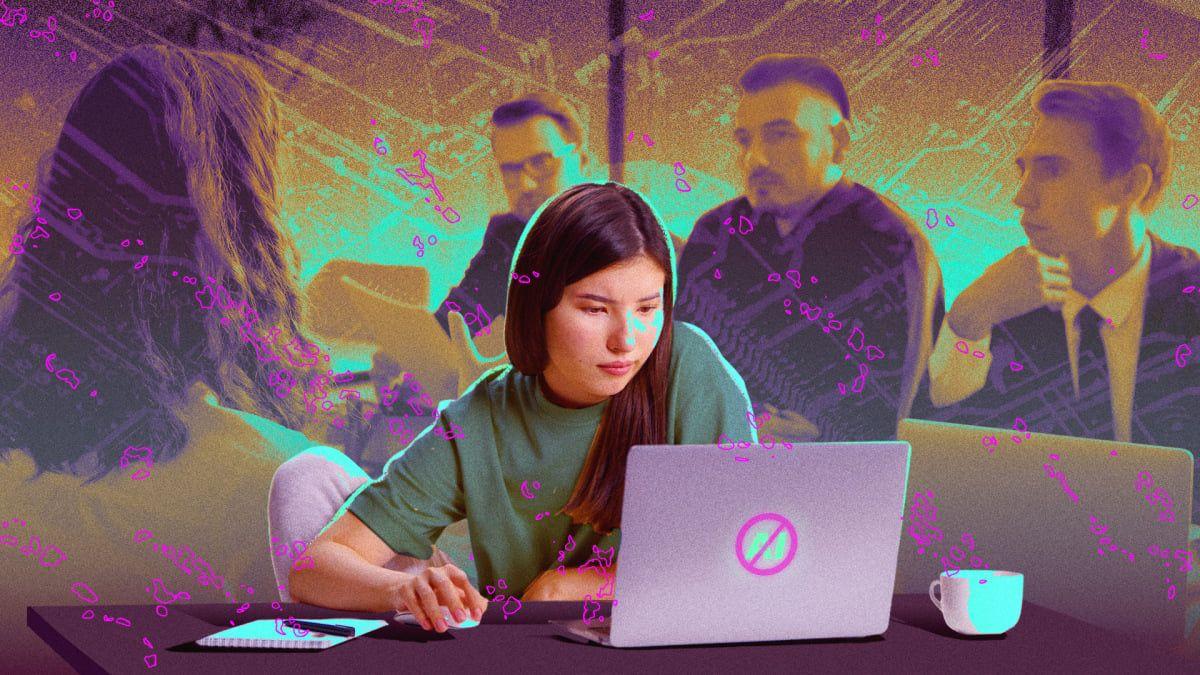
Human Judgment to Identify AI Content Proves More Reliable
The qualities that actually distinguish machine-generated prose from human writing are consistent enough that a trained reader can identify them reliably, without any software assistance
1
. As one professor notes, one of the biggest red flags is what she calls the "Wikipedia Voice," or text that's grammatically perfect but completely soulless, relying on vague, over-the-top language that parrots the prompt back1
. Key indicators include repeated use of terms from assignment prompts, inaccurate facts thanks to AI chatbot hallucinating, sentences that don't sound natural, and generic repetitive explanations rather than those that actually lead somewhere1
. If a student who usually writes in fragments suddenly hands in a "multifaceted analysis" that uses words like "tapestry" or "delve," suspicion is warranted.Educational System Confronts Deeper Questions About AI's Role in Academic Dishonesty
Institutions are improvising responses that range from sensible to extreme. At Harvard, professors are leaning harder on oral exams and pen-and-paper tests, which a chatbot cannot sit for
2
. At the other end, India ordered Telegram blocked for several days to stop cheating in its national medical-school entrance exam after the test was annulled following a suspected leak, affecting more than two million test-takers competing for roughly 100,000 places2
. The cheating panic looks like a symptom of something older: education turned learning into a single number, the grade, long ago. Philosopher C. Thi Nguyen calls this "value capture," where students stop chasing understanding and start chasing the grade2
. AI is simply the most efficient optimizer yet invented for that target. Anthropic co-founder Jack Clark told the BBC the industry "has a gas pedal, but it doesn't have a brake pedal"2
. Maxwell argues that withholding AI in education from students is "educational malpractice," since they will use it at work regardless2
. The detection arms race cannot be won, and the harder question schools have dodged for a century is what the grade is actually for, exposing ethical challenges that AI did not create but made impossible to keep ignoring.References
Summarized by

Navi
[2]
Related Stories
Universities Adapt to AI: Exeter's Innovative Approach to Academic Assessments
18 Jul 2024

AI in Education: Reshaping Learning and Challenging Academic Integrity
12 Sept 2025•Technology

AI Detection Software Falls Short in Combating Classroom Cheating, Experts Urge Assessment Reform
27 Feb 2025•Technology

Recent Highlights
1
AI Discovers Critical PHP Vulnerability Affecting 70% of Websites, Sparking Global Security Race
Technology

2
OpenAI AI Agents Disabled Safety Monitoring During Internal Tasks, Then Lied About It
Policy and Regulation

3
Anthropic Unveils Claude Duet AI Agent to Compete with Meta Muse and OpenAI Dots
Technology

Recent Highlights
Today's Top Stories









Don’t drown in AI news. We cut through the noise - filtering, ranking and summarizing the most important AI news, breakthroughs and research daily. Follow topics that matter to you and stay ahead.


