New AI Method Gauges Reliability in Breast Cancer Diagnosis by Measuring Uncertainty for Each Patient


3 Sources
[1]
Supercomputer helps design more reliable AI for breast cancer diagnosis
Pittsburgh Supercomputing CenterOct 21 2026Reviewed While AI offers the ability to improve human experts' ability to diagnose and treat diseases like breast cancer, well-publicized errors across the broader AI field are cause for concern. A team from the University of Pittsburgh has used PSC's
[2]
How trustworthy is AI breast cancer detection? New method gauges uncertainty for individual patients
While AI offers the ability to improve human experts' ability to diagnose and treat diseases like breast cancer, well-publicized errors across the broader AI field are cause for concern. A team from the University of Pittsburgh has used PSC's flagship Bridges-2 supercomputer to design a deep neural
[3]
New Approach Gauges Reliability of AI Breast Cancer Diagnosis | Newswise
Weighting for Uncertainty Helps Pitt Team Factor for Individual Patients, not just Populations Newswise -- While AI offers the ability to improve human experts' ability to diagnose and treat diseases like breast cancer, well-publicized errors across the broader AI field are cause for concern. A
Share
Copy Link
University of Pittsburgh researchers developed uncertainty-weighted learning for AI breast cancer diagnosis that provides confidence scores for individual patients. Using the Bridges-2 supercomputer, the team created a deep neural network that assesses diagnostic reliability alongside predictions, addressing critical concerns about AI trustworthiness in medical imaging.
University of Pittsburgh Tackles AI Reliability Crisis in Medical Imaging
Researchers at the University of Pittsburgh have developed a breakthrough approach to address a critical weakness in AI breast cancer diagnosis: the inability to gauge confidence in individual predictions
1
2
. Led by Shandong Wu, a professor of radiology at the University of Pittsburgh School of Medicine, the team presented their findings at the Society of Photo-Optical Instrumentation Engineers (SPIE) annual meeting in February 2026 in Vancouver, Canada2
. The research addresses growing concerns about AI reliability in healthcare, where even rare diagnostic errors can have catastrophic consequences for patients.Why Uncertainty-Weighted Learning Matters for Patient Safety
Traditional deep neural networks excel at providing accurate diagnoses across patient populations but struggle with a fundamental limitation: they cannot reliably indicate how confident they are about individual patient diagnoses
1
3
. "I'm trying to develop effective AI models or methodology that can make AI model development easier, make breast cancer diagnosis more accurate, and make this model, make medical imaging AI models in general, more trustworthy and thus more clinically useful," Wu explained1
. This gap becomes critical in life-threatening diseases where clinicians need to know not just what the AI predicts, but how much they should trust that prediction for the specific patient in front of them.Uncertainty-Weighted Learning Transforms Deep Neural Network Architecture
Jiren Li, a PhD student working with Wu and research assistant professor Dooman Arefan, pioneered the uncertainty-weighted learning (UWL) approach that fundamentally redesigns how deep neural networks process mammogram images
2
3
. The UWL architecture generates both a diagnosis and an associated uncertainty score when analyzing breast mammogram images1
. This confidence score becomes integral to the learning process itself, guiding the model to handle uncertain samples more effectively during training. The innovation addresses the reality that while AI can be correct most of the time, giving wrong answers with equal confidence undermines clinical utility and patient trust.Bridges-2 Supercomputer Enables Computational Breakthrough
Implementing uncertainty-weighted learning for AI breast cancer diagnosis required substantial computational resources that only advanced supercomputing infrastructure could provide. The team utilized the Bridges-2 supercomputer at Pittsburgh Supercomputing Center through an allocation from ACCESS, the NSF's network of supercomputing sites
2
3
. Bridges-2 features 47 GPU nodes containing 384 late-model GPUs, with each node providing between 128 and 2,000 gigabytes of RAM—dramatically exceeding the 64 GB found in high-end laptops1
3
. Processing high-resolution mammogram images demands this level of GPU memory to prevent slowdowns from repeatedly accessing data storage during computations.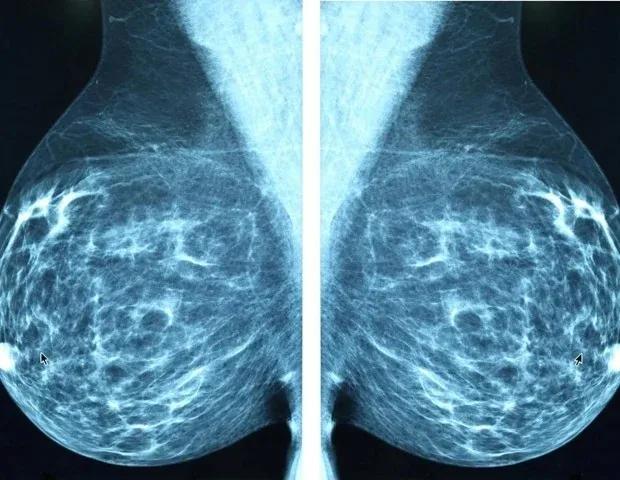
Source: News-Medical
Related Stories

Medical Imaging AI Requires Specialized Infrastructure
"Bridges-2 is critical for the success of these studies, because as you can imagine, this is all using large-scale, high-resolution, heterogeneous radiology imaging data, and in order to build this AI model, we need GPUs, memory, and larger storage to make this possible," Wu noted
1
3
. The computational challenges stem from the nature of breast mammograms themselves—large, high-resolution images that require graphics processing units with substantial shared memory access. PSC's Ocean active project data storage system provided the necessary capacity to host complete libraries of imaging data for AI model training and testing, enabling the team to develop and evaluate multiple AI models over several years.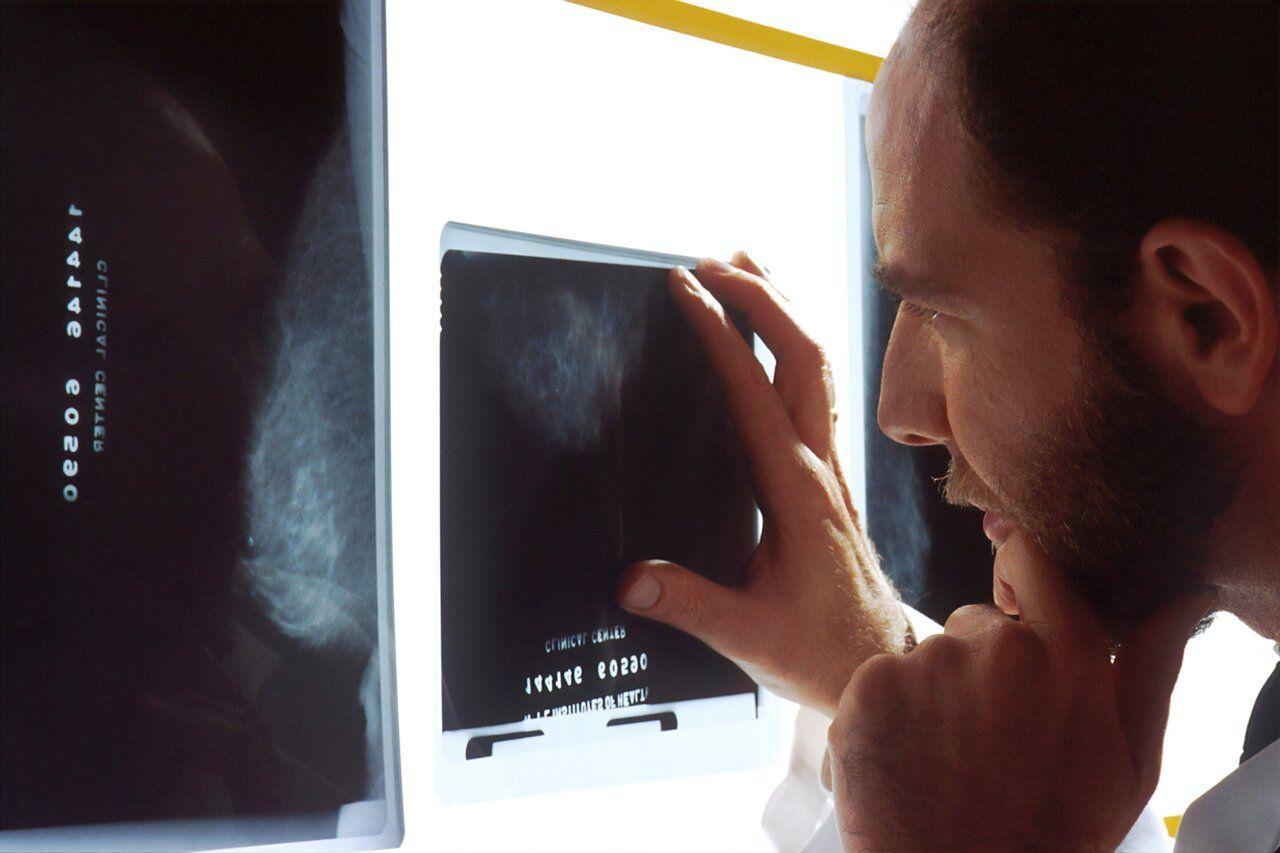
Source: Medical Xpress
Broader Implications for Trustworthy AI in Healthcare
The development arrives at a pivotal moment for AI reliability across industries. While AI powers beneficial applications from online shopping to fraud prevention, high-profile failures—including AI-generated misinformation, autonomous vehicles failing to recognize pedestrians, and biased algorithmic behavior—have raised legitimate concerns about trustworthiness
2
3
. In medical imaging, where AI assists radiologists in identifying breast cancer earlier and predicting treatment needs, the stakes are particularly high. The uncertainty-weighted learning approach offers a path forward: rather than simply improving average accuracy, it provides clinicians with the context they need to make informed decisions about individual patients, potentially transforming how AI tools achieve clinical utility in healthcare settings where lives depend on getting the diagnosis right.References
Summarized by

Navi
[2]
Related Stories
AI boosts breast cancer detection by 10% in major UK screening studies, flags hidden cancers
10 Mar 2026•Health
Johns Hopkins Researchers Develop MIGHT: A Powerful New AI Algorithm for Early Cancer Detection
19 Aug 2025•Health

AI Enhances Mammography for Improved Breast Cancer Risk Prediction
06 Dec 2024•Health

Recent Highlights


Recent Highlights
Today's Top Stories








Don’t drown in AI news. We cut through the noise - filtering, ranking and summarizing the most important AI news, breakthroughs and research daily. Follow topics that matter to you and stay ahead.


