7 Sources
[1]
Brookfield and NextEra to build $100bn AI campus on ex-nuclear weapons site
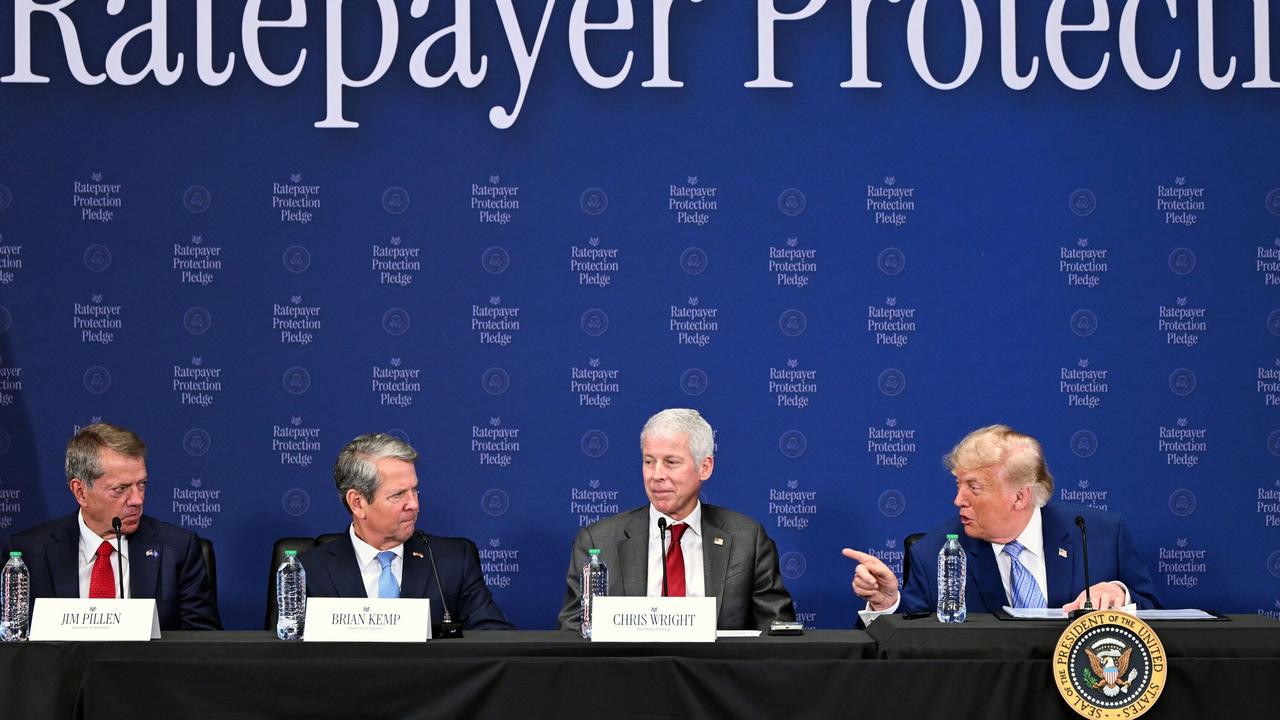
Brookfield is teaming up with the US's largest electric utility to build a massive data centre and energy complex on a former nuclear enrichment facility that played an important role in America's nuclear weapons programme during the cold war. The $100bn industrial transformation project spearheaded by the Canadian investments group and Florida-based NextEra Energy will involve the construction of 2 gigawatts of natural gas power plants and 2.6 gigawatts of battery storage capacity at the facility, which is situated in Paducah, western Kentucky. The electricity generated by the gas plants is enough capacity to power 1.5mn homes. The US Department of Energy has agreed to provide leases over the more than 3,500-acre government-owned site, where nuclear enrichment activities ceased in 2013, according to a person familiar with the matter. It is the latest in a swath of multibillion-dollar AI data centre mega-projects that have been announced in the US, as the Trump administration races to fulfil a key policy goal -- winning the AI race against China. The campus will be privately funded and the commercial partners have agreed to fulfil the terms of President Donald Trump's ratepayer protection pledge -- an initiative aimed to ensure technology companies fully fund the energy and infrastructure costs of data centre build-out rather than consumers. It is understood Brookfield has already begun talks with hyperscalers to become an anchor for the campus, according to a person close to the project. Bruce Flatt, chief executive of Brookfield, said the Paducah site would be the seed of the company's plan to invest $100bn in AI infrastructure. "By advancing this project in line with the White House Ratepayer Protection Pledge, we are ensuring innovation and affordability go hand in hand while creating high-quality jobs, attracting new investment and strengthening the local economy," Flatt said, referring to a commitment by utility companies and data centre developers to cover the cost of power infrastructure needed for the facilities. Some elements of the project are expected to become operational in 2028 and it is forecast to be completed by the start of 2032. The mega-project's use of federal lands comes as communities around the US protest over the construction of data centres. High-profile projects like Blackstone's QTS recently withdrew from a 22mn square feet facility in Prince William County, Virginia, after a slew of lawsuits and opposition. NextEra Energy recently initiated one of the largest mergers on record with Virginia utility Dominion, to build out its data centre footprint. The Florida developer and utility capitalised on the renewables build-out under President Joe Biden, but has since sought to diversify its business with natural gas and digital infrastructure. "Thanks to President Trump, the US government is leveraging its assets -- like our federal lands -- to add power generation, create jobs and ensure the United States wins the AI race," said secretary of energy Chris Wright. Brookfield has placed itself at the forefront of the AI and energy boom in the US. In October it signed an $80bn deal with the US government which aims to build a fleet of nuclear reactors. The Canadian investment group, which manages $1tn in overall assets, is one of the world's largest property investors with a sprawling portfolio of office towers, data centres, apartments and logistics warehouses. It is also a large backer of renewable energy projects, managing more than $100bn in such assets. In recent years, it has acquired large insurance companies in the US and Europe, helping it secure additional low-cost policyholder capital to make massive commitments to build data centres. The Kentucky project will be connected to the main electricity grid, with Big Rivers Electric Power Corporation providing wholesale electric service. NextEra chief executive John Ketchum said the project was "a proof point for how AI infrastructure should be built in America", and that it would provide "new jobs, new energy resources, a more reliable grid and not a dollar of added cost on an existing customer's electric bill".
[2]
NextEra and Brookfield plan a $100bn data campus in Kentucky
The tie-up would pair the largest US utility with a $100bn AI-infrastructure fund, in a state fast becoming a magnet for data centres. NextEra Energy and Brookfield plan to build a data-centre campus in Kentucky worth as much as $100 billion, Bloomberg reported. The project would rank among the largest single commitments yet in the American build-out of computing capacity for artificial intelligence. The companies are joining the largest utility in the United States with one of the deepest pools of infrastructure capital, at a moment when the binding constraint on AI is no longer chips but the power and land to run them. Brookfield has been assembling exactly this kind of firepower. The asset manager launched a $100 billion AI-infrastructure programme in late 2025 and has since expanded a separate power partnership with Bloom Energy to $25 billion, positioning itself as a financier of the electricity that data centres devour. NextEra brings the other half. Its roughly $67 billion takeover of Dominion made it the biggest utility in the country, and it has told investors it expects to add as much as 30 gigawatts of generation for data centres by 2035. Its fuel mix tells its own story. Once known mainly for wind and solar, NextEra now plans openly around gas and nuclear as well, a pragmatic turn driven by data centres that need power around the clock rather than only when the wind blows. Kentucky is the where, and it is not an accident. The state has moved fast to court data centres, with utilities reporting dozens of projects under discussion and lawmakers passing measures, including a nuclear-energy bill this spring, to make it easier to power them. The draw is cheap, plentiful power and available land. As hyperscalers exhaust the easy sites near existing grids, they have pushed into states like Kentucky, following the same logic that took Meta to El Paso and others deep into the rural interior. The scale of these projects is hard to picture. A campus of this size would draw power on the order of a large city, and single Kentucky data centres already in planning are projected to use as much electricity as hundreds of thousands of homes. That is where the friction lives. The same build-out is pushing up power bills for households and factories in parts of the country, as demand from data centres competes with everyone else on the grid. For Kentucky, the pitch is jobs and investment. Data campuses employ relatively few people once built, but the construction phase and the tax base appeal to a state that has courted them hard, even as some residents worry about the strain on power and water. The financing structure reflects a new reality. Utilities and infrastructure funds, not just the tech giants, increasingly front the capital, because the sums involved have grown beyond what even the hyperscalers want to carry on their own balance sheets. Bloomberg frames the campus as a plan worth up to $100 billion, but the timeline, the anchor tenants, and the split between gas and nuclear are the questions that will decide whether it is built as billed. The label also invites caution. Announced values in the AI build-out have a way of being spread across many years and revised as they go, and a campus of this scale would be constructed in phases, not all at once. From Nvidia's web of deals to utility capital plans running into the trillions, the money committed to AI infrastructure has reached a scale that makes even a $100 billion campus part of a larger pattern, and Kentucky has just been named as one of the places that pattern gets built.
[3]
NextEra and Brookfield plan $100 billion AI data center in Kentucky
NextEra $NEE Energy and Brookfield announced a partnership on Wednesday to develop a $100 billion data center campus at the U.S. Department of Energy's Paducah Site in western Kentucky, a former uranium enrichment facility. The privately funded project will redevelop land at the Paducah Site, a facility that dates to 1952 when it was originally established to enrich uranium for Cold War purposes, the companies said. Once complete, the campus is expected to support up to 1.8 gigawatts of utility capacity and over 1.2 gigawatts of compute capacity. NextEra Energy will build and own the generation assets serving the campus, with plans calling for as much as 2 gigawatts of natural gas capacity paired with as much as 2.6 gigawatts of battery energy storage systems. Brookfield will own and operate the data center campus. The project is designed to add power generation resources in stages as the campus expands. The partnership also includes Big Rivers Electric Power Corporation, Jackson Purchase Energy Cooperative, and Paducah Power System. Big Rivers Electric Power Corporation will provide wholesale electric service, while Jackson Purchase Energy Cooperative will deliver retail service. The project is expected to create approximately 8,000 construction jobs and 600 full-time operations jobs, the companies said. Construction is expected to wrap up in 2032. The companies said the project fulfills the Trump administration's Ratepayer Protection Pledge, meaning the data center's power infrastructure costs will not be passed on to existing residential or small-business electricity customers. The power service arrangement will also require additional oversight and approval from the Kentucky Public Service Commission. "The Department of Energy Paducah Site will be the seed of our plan to invest $100 billion in AI infrastructure," Brookfield CEO Bruce Flatt said in a statement. NextEra Energy Chairman, President and CEO John Ketchum said in a statement that the data center "will bring its own power, pay for its own power infrastructure and create good-paying jobs for local workers." The DOE selected Brookfield to lease and develop the site following a Request for Offers issued in November 2025, and separately selected NextEra Energy to build the dedicated generation resources, the companies said. The project remains subject to the negotiation and execution of definitive documentation. The Paducah Site already has transmission capacity, water infrastructure, fiber connectivity, and road access from its previous operations, which the companies said will accelerate the development timeline. U.S. Energy Secretary Chris Wright called the project a "crucial roadmap for future projects in the United States" in a statement.
[4]
Federal government to turn a Kentucky uranium plant into an AI data center and gas power complex
The U.S. Department of Energy is harnessing the artificial intelligence boom in its bid to convert another Cold War-era uranium enrichment site, tapping private equity to fund a $100 billion data center complex that will include its own new natural gas and battery storage power plant in Kentucky. The department selected investment firm Brookfield Asset Management to develop and operate the data center at the government-owned Paducah Gaseous Diffusion Plant. In March, the department announced a similar project at its Portsmouth Gaseous Diffusion Plant in Ohio. Both are undergoing extensive cleanup, decontamination and decommissioning after decades of fueling the nation's nuclear weapons and power plants. The project is in line with the Trump administration's efforts to make artificial intelligence superiority over China a top national security and economic priority. The federal government is transforming former DOE sites into "engines of innovation and economic growth" to "ensure the United States wins the A.I. race," Energy Secretary Chris Wright said in a statement Wednesday. "There will be a lot of new natural gas power plants, a large data center, thousands of jobs and tens of billions of dollars of investment in rural western Kentucky," Wright said on the Fox News show "Fox & Friends." Earlier in July, the Department of Energy said it had picked engineering contractor Amentum to negotiate a lease to develop an AI data center and on-site power plant at South Carolina's Savannah River Site, a massive complex where the federal government once produced materials used in nuclear weapons, primarily tritium and plutonium-239. Real estate, energy and data center services are cornerstones in the investment portfolio of New York-headquartered Brookfield, which reports that it has more than $1 trillion in assets under management. A Brookfield spokesperson estimated that 30% of the $100 billion in spending would go toward construction of the data center and power components, with the rest of the money being spent on the equipment in the data centers, including servers, routers and semiconductor chips. Discussions were ongoing with commercial partners to use the data center space, Brookfield spokesperson Simon Maine said. Other partners in the Paducah project are power generation and transmission giant NextEra Energy and local utilities. Florida-based NextEra Energy will build and own the power generation components, which are to include 2 gigawatts of natural gas-fired generation, upgrades to transmission networks and 2.6 gigawatts of battery energy storage to support a new 1.8 gigawatt AI data center campus, the department said. The plant would be the largest gas-fired power plant in Kentucky. A single gigawatt, according to a general industry standard for utilities, can power about 750,000 homes. A power service agreement must be approved by state utility regulators, and excess electricity would be delivered to the regional grid. Construction was expected to be complete in 2031, the department said. Cleanup is continuing at the roughly 3,550-acre Paducah plant site, which was on a list of 16 federal sites released last year as locations where the department could invite technology companies to build data management and storage capacity. It shut down in 2013 and the gaseous diffusion process to enrich uranium is considered obsolete. The department has projected that cleanup at the Paducah site would be completed in 2065 at a cost of about $17 billion, including demolishing buildings, disassembling uranium converters, removing refrigerant and treating a large plume of groundwater contamination. In the meantime, the department is working on plans to provide some of the uranium waste being stored for decades at the Paducah site to a pair of companies seeking to use newer technologies to re-enrich it for use in power plants. Group raises questions about projects A newly formed group called Protect McCracken County has raised questions about the uranium enrichment and data center projects, saying that the work is being carried out beside a river that 5 million people downstream drink from without an independent study of the impact. Byron Gary, a senior attorney for the environmental and public health advocacy group Kentucky Resources Council, said any plans to develop the contaminated Paducah site or to withdraw water from the water table underneath it must be carefully executed. He said the construction of a such a large gas-fired power plant -- which emits planet-warming greenhouse gases -- would have implications for climate change and that his organization would want to be certain that regular ratepayers are not forced to subsidize the power plants and transmission upgrades there. Gary also said his organization will want to make sure that the Department of Energy does not circumvent permitting processes as a way to get around environmental protection laws. "There shouldn't be a justification to get around that and end up potentially dumping a lot more burden on a rural community that can't afford it," Gary said. ___ Follow Marc Levy at https://twitter.com/timelywriter.
[5]
NextEra, Brookfield plan $100 billion Kentucky data center campus
NextEra, the largest US utility, would deliver 2 gigawatts of natural gas-fired power and 2.6 GW of battery storage capacity to support the data center, while Brookfield would own and operate the 1.8 GW campus, the companies said. NextEra Energy, Brookfield and other companies are developing a $100 billion data center campus at a former uranium enrichment site in Paducah, Kentucky, the companies said on Wednesday. Soaring US electricity demand is pushing companies to invest heavily in artificial intelligence data centers and other technologies straining an aging US electric grid. NextEra, the largest US utility, would deliver 2 gigawatts of natural gas-fired power and 2.6 GW of battery storage capacity to support the data center, while Brookfield would own and operate the 1.8 GW campus, the companies said. One gigawatt can power about 750,000 homes. The campus would be located on the Department of Energy's Paducah Site, which was constructed in 1952 to produce enriched uranium but was later shuttered. NextEra said the project fulfills the Trump administration's "Ratepayer Protection Pledge," which seeks to ensure that companies building and using data centers pay above and beyond normal rates so that costs are not passed on to average households. "The Department of Energy Paducah Site will be the seed of our plan to invest $100 billion in AI infrastructure," Brookfield CEO Bruce Flatt said in a statement. The project is expected to be completed by 2032.
[6]
Brookfield, NextEra to Develop $100 Billion Data Center Campus in Kentucky
Brookfield Asset Management and power company NextEra Energy are teaming to build a $100 billion AI data center on the site of a Cold War-era uranium-enrichment plant. A partnership of energy, infrastructure and utility companies plan to develop a data center campus on the Department of Energy's Paducah site in western Kentucky, repurposing the land as part of a privately-funded project that aims to create a center for innovation and energy generation. When fully constructed in 2032, the campus plans to support up to 1.8 gigawatts of utility capacity and more than 1.2 gigawatts of compute capacity, which the companies aid will be backed by up to 4.6 gigawatts of dedicated generation resources that will be paid for and built specifically for the project. The partnership brings together Brookfield, NextEra Energy, non-profit utilities Big Rivers Electric Power and Jackson Purchase Energy Cooperative, and local Paducah Power System. "It's difficult to overestimate the importance of this project. The planning and investment by NextEra Energy and Brookfield provides a crucial roadmap for future projects in the United States by revealing the ability to build world leading infrastructure without passing costs on to surrounding communities," Energy Secretary Chris Wright said. After issuing a request for offers late last year, the Energy Department selected Brookfield to lease land and develop and operate the data center campus at the Paducah site. The department also selected NextEra Energy to build and own dedicated generation resources to power the campus. The project is subject to negotiation and execution of definitive documentation. Big Rivers Electric Power will provide wholesale electric service, Jackson Purchase Energy Cooperative will deliver retail service, and Paducah Power System will serve as a community supporter, the companies said. The Paducah site will be the seed of a plan to invest $100 billion in artificial intelligence infrastructure, Brookfield Chief Executive Bruce Flatt said. "Demand for critical infrastructure that accelerates innovation in the U.S. and supports the economy will need to be met with capital, development capabilities, and additional power generation that benefits local communities," he said. The development is expected to create about 8,000 construction jobs and 600 full-time operations jobs.
[7]
NextEra, Brookfield plan $100 billion data center at Kentucky uranium site
July 29 (Reuters) - A consortium including NextEra Energy and Brookfield plans to develop a $100 billion data center campus at a former uranium enrichment site in Paducah, Kentucky, the companies said on Wednesday. Soaring U.S. electricity demand is driving investment in artificial intelligence data centers and other technologies that are straining an aging U.S. electric grid. The coalition includes Brookfield, NextEra Energy, Big Rivers Electric Power Corporation, Jackson Purchase Energy Cooperative and Paducah Power System. NextEra, the largest U.S. utility, would deliver 2 gigawatts of natural gas-fired power and 2.6 GW of battery storage capacity to support the data center, while Brookfield would own and operate the 1.8 GW campus, the companies said. One gigawatt can power about 750,000 homes. NextEra Energy will add power generation resources in stages as the campus ramps up, ensuring the data center's growing power needs are met by new supply. The campus would be located on the Department of Energy's Paducah Site, which was built in the 1950s to produce enriched uranium, initially for nuclear weapons. The facility later produced enriched uranium for nuclear reactors and closed in 2013. Because of its past operations, the site already has transmission capacity, water, fiber and other infrastructure that could speed development, the companies said The project is expected to be completed by 2032. NextEra said the project fulfills the Trump administration's "Ratepayer Protection Pledge," which seeks to ensure that companies building and using data centers pay above normal rates so that costs are not passed on to average households. The project is subject to negotiation and execution of definitive documentation. (Reporting by Vallari Srivastava in Bengaluru; Editing by Tasim Zahid)
Share
Copy Link
Brookfield and NextEra Energy announced plans to transform a Cold War-era uranium enrichment facility in Paducah Kentucky into a $100 billion AI data center campus. The project includes 2 gigawatts of natural gas power plants and 2.6 gigawatts of battery storage capacity, marking one of the largest AI infrastructure investments in US history.
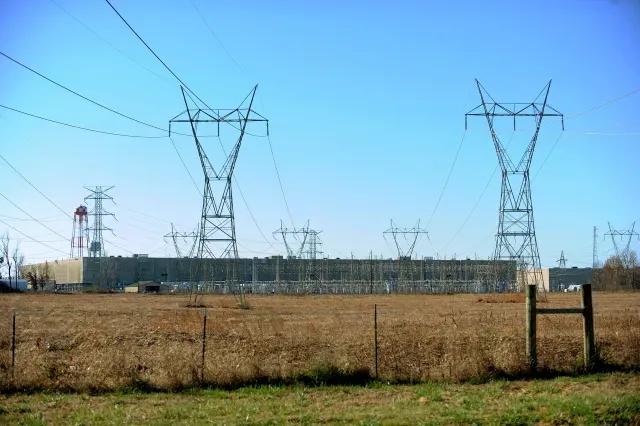
Brookfield Asset Management and NextEra Energy unveiled plans to develop a $100 billion AI data center campus at the US Department of Energy's Paducah site in western Kentucky, marking one of the largest single commitments in America's AI infrastructure buildout
1
3
. The privately funded project will transform the former nuclear weapons site—a uranium enrichment facility that operated from 1952 until 2013—into a cutting-edge computing campus designed to support AI superiority over China4
. NextEra Energy will build and own 2 gigawatts of natural gas power plants paired with 2.6 gigawatts of battery storage capacity, enough electricity to power 1.5 million homes, while Brookfield will own and operate the 1.8 gigawatt data center campus1
5
.The selection of Paducah Kentucky reflects the binding constraints facing AI development—no longer chips, but power and land to run them
2
. Kentucky has moved aggressively to court data centers, with utilities reporting dozens of projects under discussion and lawmakers passing measures, including a nuclear-energy bill this spring, to facilitate development2
. The state offers cheap, plentiful power and available land as hyperscalers exhaust easy sites near existing grids2
. The Paducah Gaseous Diffusion Plant site spans more than 3,500 acres and already features transmission capacity, water infrastructure, fiber connectivity, and road access from its previous operations, accelerating the development timeline3
. Big Rivers Electric Power Corporation will provide wholesale electric service, while Jackson Purchase Energy Cooperative will deliver retail service, with the campus connected to the main electric grid1
3
.The project fulfills President Donald Trump's Ratepayer Protection Pledge, ensuring technology companies fully fund energy and infrastructure costs rather than passing them to residential or small-business electricity customers
1
3
. NextEra CEO John Ketchum emphasized that the AI data center "will bring its own power, pay for its own power infrastructure and create good-paying jobs for local workers"3
. The power service arrangement requires additional oversight and approval from the Kentucky Public Service Commission, with excess electricity delivered to the regional grid3
4
. This structure reflects concerns about data centers pushing up power bills for households and factories in parts of the country as demand competes with everyone else on the electric grid2
.NextEra's fuel mix tells a revealing story about AI's power requirements. Once known mainly for wind and solar, the company now plans openly around natural gas power plants and nuclear as well, a pragmatic turn driven by data centers needing power around the clock rather than only when renewable sources are available
2
. The planned facility would become the largest gas-fired power plant in Kentucky4
. However, environmental advocates have raised questions about greenhouse gas emissions from such a large natural gas facility and its implications for climate change4
. A Brookfield spokesperson estimated that 30% of the $100 billion would fund construction of the data center and power components, with the remainder spent on equipment including servers, routers and semiconductor chips4
.The US Department of Energy is actively transforming Cold War-era uranium enrichment facilities into engines of innovation to ensure AI superiority in geopolitical competition with China
4
. Energy Secretary Chris Wright called the project "a crucial roadmap for future projects in the United States" and emphasized the federal government is leveraging assets like federal lands to add power generation, create jobs and win the AI race1
3
. The Department of Energy selected Brookfield following a Request for Offers issued in November 2025 and separately selected NextEra Energy to build dedicated generation resources3
. Similar projects are underway at the Portsmouth Gaseous Diffusion Plant in Ohio and South Carolina's Savannah River Site4
.Related Stories
Some elements of the AI infrastructure project are expected to become operational in 2028, with completion forecast by early 2032
1
3
. The project is expected to create approximately 8,000 construction jobs and 600 full-time operations jobs3
. Brookfield CEO Bruce Flatt stated the Paducah site would be the seed of the company's plan to invest $100 billion in AI infrastructure, with discussions already underway with hyperscalers to become anchor tenants1
3
. The project development occurs as communities around the US protest data center construction, with high-profile projects like Blackstone's QTS recently withdrawing from a 22 million square feet facility in Prince William County, Virginia after lawsuits and opposition1
.Cleanup continues at the roughly 3,550-acre Paducah site, with the Department of Energy projecting completion in 2065 at a cost of about $17 billion, including demolishing buildings, disassembling uranium converters, removing refrigerant and treating a large plume of groundwater contamination
4
. A newly formed group called Protect McCracken County has raised questions about work being carried out beside a river that 5 million people downstream drink from without an independent impact study4
. Byron Gary, senior attorney for Kentucky Resources Council, emphasized that any plans to develop the contaminated site or withdraw water from the water table underneath must be carefully executed, and that his organization will ensure regular ratepayers are not forced to subsidize power plants and transmission upgrades4
. The project remains subject to negotiation and execution of definitive documentation3
.Summarized by
Navi
[2]
[4]
30 Jul 2026•Policy and Regulation

20 Mar 2026•Business and Economy

04 Apr 2025•Technology

1
Technology

2
Technology

3
Technology