3 Sources
[1]
Trump Administration Is Repurposing Federal Land for A.I. Data Centers
In the latest example, the Energy Department will convert a shuttered Cold War-era uranium enrichment facility into a data center campus and gas plants. The Trump administration is repurposing large chunks of federal land to host enormous data centers and the power plants needed to run them as officials seek to accelerate the development of artificial intelligence and overcome growing local opposition to the facilities. The Energy Department announced on Wednesday that it would redevelop parts of a retired Cold War-era uranium enrichment facility in Paducah, Ky., to host a large new A.I. data center campus. The site is owned by the federal government and has been undergoing environmental cleanup for years. The $100 billion project would include construction of 2 gigawatts of natural gas power connected to the local grid and 2.6 gigawatts of battery storage capacity. The Energy Department said the project would be privately funded through a partnership with NextEra Energy, one of the nation's largest power companies; the investment firm Brookfield; and several local utilities. (One gigawatt of gas can power roughly 750,000 homes.) "The U.S. government is leveraging its assets -- like our federal lands -- to add power generation, create jobs, and ensure the United States wins the A.I. race," Energy Secretary Chris Wright said in a statement. It's the third time that the Trump administration has detailed plans to redevelop Cold War-era facilities into data centers. In March, the Energy Department announced that it would repurpose parts of a former nuclear enrichment facility in Piketon, Ohio, to host an enormous 10-gigawatt data center, mostly powered by natural gas and financed partly by Japan. And this month, the Energy Department's National Nuclear Security Administration said it would work with the engineering firm Amentum to explore a 1-gigawatt data center, potentially powered by gas and nuclear power, at the Savannah River Site in South Carolina, a federal complex once devoted to making plutonium for nuclear weapons. President Trump has been a major supporter of artificial intelligence, which he has called essential to winning the technology race against China. In recent months, he has also tried to confront growing opposition in many communities to the proliferation of giant, energy-hungry data centers, which are driving up electricity demand. A recent Gallup poll found that nearly half of Americans would "strongly oppose" a new data center in their neighborhood, with many citing concerns about noise, pollution and energy and water usage. In the first quarter of this year, at least 75 data center projects worth $130 billion were delayed or stopped by local opposition, according to Data Center Watch, a project by the A.I. research firm 10a Labs. At a White House event last week, Mr. Trump aimed to address some of those concerns by announcing that nearly 200 companies -- including tech giants, utilities and data center developers -- had signed a voluntary pledge to prevent A.I. data centers from increasing electricity costs for Americans. Experts said that pledge could be hard to honor in practice, since power prices are often determined by local regulators. Trump Administration: Live Updates Updated July 30, 2026, 1:17 p.m. ET3 hours ago Mr. Trump highlighted examples where new data center projects had helped reduce local property taxes or electricity rates. And he railed against data center opponents, calling them "radical left communists" who "would not lower your electricity bills." His administration has moved to encourage data center development on lands owned by the Energy Department, which could offer a smoother path for approval. The Environmental Protection Agency has also taken several steps to make data centers easier to build, such as loosening limits on smog-causing pollution from the gas turbines that often power the facilities. Separately, the Interior Department recently approved plans for the first-ever data center on federal land near Boulder City, Nev., on a site where a large utility-scale solar array had previously been permitted. The agency said it did not need to conduct a new, time-consuming environmental review for the project because the data center would have impacts similar to the original solar facility. The approval was originally reported by Heatmap, a climate news site. Two environmental groups filed a legal challenge against that decision this week. "By cutting the public out of the process, they're trying to hand over Nevada's desert to billion-dollar tech companies without anyone getting a say," said Olivia Tanager, executive director of the Sierra Club's chapter in the Toiyabe area of Nevada. In Kentucky, the new data center will sit on portions of a 3,556-acre Energy Department site that produced low-enriched uranium for both military reactors and nuclear weapons since the 1950s. The enrichment facility, which used a now-obsolete gaseous diffusion method, closed in 2013. The Energy Department said the project's new gas-fired power plants would produce more electricity than the data center needed and could provide the surplus to local communities. The project is expected to be completed in 2031. The Trump administration has sought to use more natural gas to power the A.I. data center boom while cracking down on wind and solar energy. Natural gas has become the largest source of America's greenhouse gas emissions that are heating the planet. A report issued on Wednesday by the Rhodium Group, a research firm, found that U.S. emissions declines could potentially slow in the coming years because of faster data center growth and rising gas demand.
[2]
Trump feds use a solar review to approve the first AI data center on public land
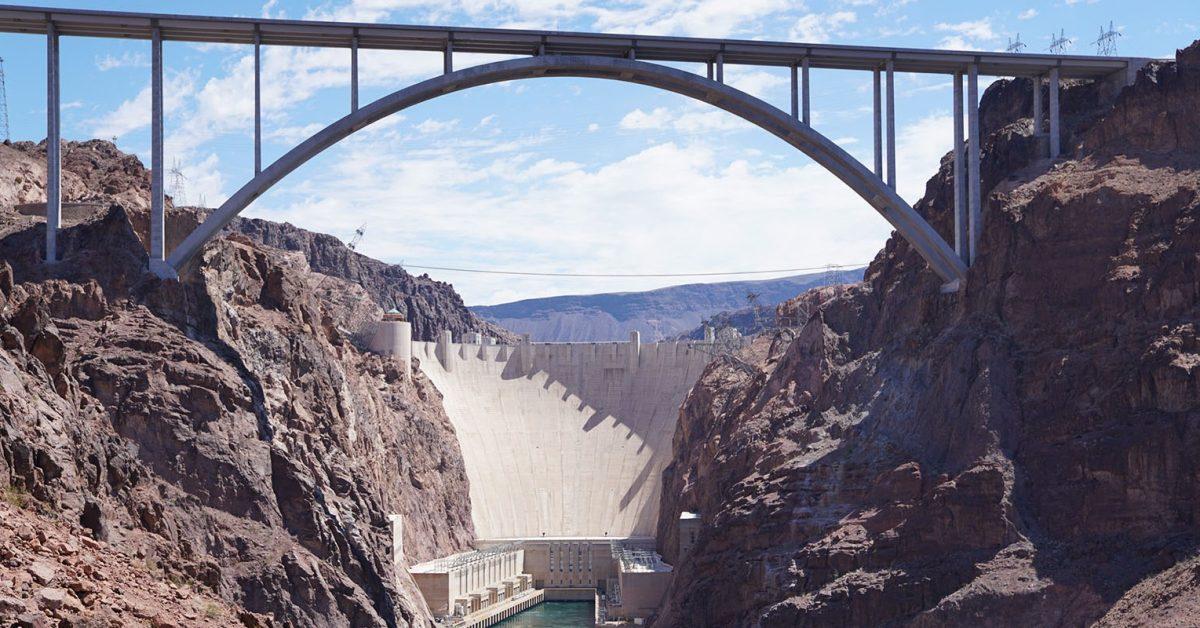
Apparently, a 19-megawatt (MW) solar farm and a 167-MW AI data center are "substantially the same" - at least according to the Trump administration's Bureau of Land Management (BLM). The Trump administration has approved what's believed to be the first data center on BLM-managed public land by transferring an environmental review completed for an entirely different project. The agency didn't conduct a new review or invite public comment on the switch. Townsite Solar 2 received a federal right-of-way in 2023 to build a solar farm and a 35 MW battery storage system on an 80-acre parcel within the city limits of Boulder City, Nevada - known as "the city that built Hoover Dam." In late 2025, the developer applied to replace the clean energy project with an AI data center, and the BLM approved the amended right-of-way on June 26. The original project would have generated 19 MW of solar power. The data center will consume up to 167 MW of power, or enough to power 75,000 homes, and have backup generators. Boulder City has a population of 15,000, or around 6,600 occupied households. To approve the change, BLM relied on a Determination of NEPA Adequacy, which allows an agency to use an existing environmental review when a new proposal is sufficiently similar to what was previously analyzed. BLM Las Vegas field office manager Bruce Sillitoe concluded that the two projects were "substantially the same," citing their similar acreage, boundaries, construction timelines, and the size and shape of the structures. BLM's online project record lists a decision record, a Determination of NEPA Adequacy, and a development plan for the data center. That reasoning has gone over like a lead balloon in Boulder City. "We've had no conversations, there's been no chance for the community or for the city to provide any input to the federal government," city spokesperson Lisa LaPlante said. "This feels so unprecedented for us to have a project placed in our city without the chance to weigh in." Townsite Solar 2 had initially sought permission to build on 88.5 acres of nearby city-owned land. When it applied to switch the project from solar and storage to a data center, Boulder City required the developer to begin a new review process that included public input, and the city's Planning Commission voted 6-1 against advancing the proposal. Townsite Solar 2 then withdrew that application after securing approval for the adjacent federal site, less than a half mile away. The Boulder City Council voted unanimously on July 14 to appeal BLM's decision to the Interior Board of Land Appeals and is seeking to pause the project while the case is heard. The city says that despite being built on federal land, the data center would still depend on local utilities, roads, and emergency services. Townsite Solar 2 says the data center would use waterless cooling, draw power from its own renewable energy sources, and fund local energy and water initiatives. Heatmap reports that Arevon, which holds a minority stake in the project, hired lobbyists from the Bernhardt Group around the time Townsite Solar 2 began pursuing the switch. The firm is led by David Bernhardt, who served as interior secretary during Trump's first term. Arevon says it owns less than 25% of the venture and did not hire lobbyists or consultants specifically for this project. Conservation groups are sounding the alarm that this approval has created a shortcut that could be used to turn other clean energy permits into data center projects without a fresh environmental review or public scrutiny. "This was a bait and switch," said Olivia Tanager, director of the Sierra Club's Toiyabe Chapter. "If we allow this precedent to stand, the fear is that this could promulgate throughout not just Nevada, but all over the country in the interest of expediting data centers." One consumes energy. One creates clean energy. There's nothing "substantially the same" about a data center and a solar farm. If you've ever considered going solar, make it easy by finding a trusted, reliable solar installer near you that offers competitive pricing by checking out EnergySage. It has hundreds of pre-vetted solar installers competing for your business, ensuring you get high-quality solutions and save 20-30% compared to going it alone. Plus, it's free to use, and you won't get sales calls until you select an installer and share your phone number with them. Your personalized solar quotes are easy to compare online, and you'll get access to unbiased Energy Advisors to help you every step of the way. Get started here.
[3]
Trump administration is repurposing federal land for AI data centers
WASHINGTON -- The Trump administration is repurposing large chunks of federal land to host enormous data centers and the power plants needed to run them as officials seek to accelerate the development of artificial intelligence and overcome growing local opposition to the facilities. The Energy Department announced Wednesday that it would redevelop parts of a retired Cold War-era uranium enrichment facility in Paducah, Kentucky, to host a large new AI data center campus. The site is owned by the federal government and has been undergoing environmental cleanup for years. The $100 billion project would include construction of 2 gigawatts of natural gas power connected to the local grid and 2.6 gigawatts of battery storage capacity. The Energy Department said the project would be privately funded through a partnership with NextEra Energy, one of the nation's largest power companies; the investment firm Brookfield; and several local utilities. (One gigawatt of gas can power roughly 750,000 homes.) "The U.S. government is leveraging its assets -- like our federal lands -- to add power generation, create jobs and ensure the United States wins the AI race," Energy Secretary Chris Wright said in a statement. It's the third time that the Trump administration has detailed plans to redevelop Cold War-era facilities into data centers. In March, the Energy Department announced that it would repurpose parts of a former nuclear enrichment facility in Piketon, Ohio, to host an enormous 10-gigawatt data center, mostly powered by natural gas and financed partly by Japan. And this month, the Energy Department's National Nuclear Security Administration said it would work with engineering firm Amentum to explore a 1-gigawatt data center, potentially powered by gas and nuclear power, at the Savannah River Site in South Carolina, a federal complex once devoted to making plutonium for nuclear weapons. President Donald Trump has been a major supporter of artificial intelligence, which he has called essential to winning the technology race against China. In recent months, he has also tried to confront growing opposition in many communities to the proliferation of giant, energy-hungry data centers, which are driving up electricity demand. A recent Gallup poll found that nearly half of Americans would "strongly oppose" a new data center in their neighborhood, with many citing concerns about noise, pollution and energy and water usage. In the first quarter of this year, at least 75 data center projects worth $130 billion were delayed or stopped by local opposition, according to Data Center Watch, a project by the AI research firm 10a Labs. At a White House event last week, Trump aimed to address some of those concerns by announcing that nearly 200 companies -- including tech giants, utilities and data center developers -- had signed a voluntary pledge to prevent AI data centers from increasing electricity costs for Americans. Experts said that pledge could be hard to honor in practice, since power prices are often determined by local regulators. Trump highlighted examples where new data center projects had helped reduce local property taxes or electricity rates. And he railed against data center opponents, calling them "radical left communists" who "would not lower your electricity bills." His administration has moved to encourage data center development on lands owned by the Energy Department, which could offer a smoother path for approval. The Environmental Protection Agency has also taken several steps to make data centers easier to build, such as loosening limits on smog-causing pollution from the gas turbines that often power the facilities. Separately, the Interior Department recently approved plans for the first-ever data center on federal land near Boulder City, Nevada, on a site where a large utility-scale solar array had previously been permitted. The agency said it did not need to conduct a new, time-consuming environmental review for the project because the data center would have impacts similar to the original solar facility. The approval was originally reported by Heatmap, a climate news site. Two environmental groups filed a legal challenge against that decision this week. "By cutting the public out of the process, they're trying to hand over Nevada's desert to billion-dollar tech companies without anyone getting a say," said Olivia Tanager, executive director of the Sierra Club's chapter in the Toiyabe area of Nevada. In Kentucky, the new data center will sit on portions of a 3,556-acre Energy Department site that produced low-enriched uranium for both military reactors and nuclear weapons since the 1950s. The enrichment facility, which used a now-obsolete gaseous diffusion method, closed in 2013. The Energy Department said the project's new gas-fired power plants would produce more electricity than the data center needed and could provide the surplus to local communities. The project is expected to be completed in 2031. The Trump administration has sought to use more natural gas to power the AI data center boom while cracking down on wind and solar energy. Natural gas has become the largest source of America's greenhouse gas emissions that are heating the planet. A report issued Wednesday by the Rhodium Group, a research firm, found that U.S. emissions declines could potentially slow in the coming years because of faster data center growth and rising gas demand.
Share
Copy Link
The Trump administration is transforming retired Cold War-era facilities into massive AI data centers on federal land, with a $100 billion project in Kentucky leading the charge. But the push to accelerate AI development is facing legal challenges over bypassed environmental reviews and concerns about electricity costs for local communities.
The Trump administration is repurposing federal land to host energy-intensive data centers as part of an aggressive strategy to accelerate AI development and maintain technological superiority over China. The Energy Department announced Wednesday that it would convert portions of a retired Cold War-era uranium enrichment facility in Paducah, Kentucky, into a sprawling AI data center campus in a $100 billion project
1
. The initiative represents the third such conversion of Cold War-era facilities, following similar announcements for sites in Piketon, Ohio, and the Savannah River Site in South Carolina.

Source: Seattle Times
The Paducah project will include construction of 2 gigawatts of natural gas power connected to the local grid and 2.6 gigawatts of battery storage capacity, with one gigawatt of gas capable of powering roughly 750,000 homes
3
. The development will be privately funded through partnerships with NextEra Energy, one of the nation's largest power companies, investment firm Brookfield, and several local utilities. Energy Secretary Chris Wright stated that "the U.S. government is leveraging its assets -- like our federal lands -- to add power generation, create jobs, and ensure the United States wins the AI race"1
.The Interior Department's Bureau of Land Management recently approved what's believed to be the first AI data center on public land near Boulder City, Nevada, using a process that has triggered legal challenges from environmental groups
2
. The agency relied on an existing environmental review completed for a 19-megawatt solar farm project to approve a 167-megawatt data center—enough to power 75,000 homes—without conducting a new assessment or soliciting public input2
.
Source: Electrek
BLM Las Vegas field office manager Bruce Sillitoe concluded the two projects were "substantially the same," citing similar acreage and construction timelines. However, Boulder City spokesperson Lisa LaPlante expressed frustration: "We've had no conversations, there's been no chance for the community or for the city to provide any input to the federal government. This feels so unprecedented for us to have a project placed in our city without the chance to weigh in"
2
. The Boulder City Council voted unanimously to appeal the decision, and two environmental groups filed legal challenges this week.The push for AI data centers comes amid mounting local resistance to these facilities. A recent Gallup poll found that nearly half of Americans would "strongly oppose" a new data center in their neighborhood, citing concerns about noise, pollution, and energy and water usage
1
. In the first quarter of this year alone, at least 75 data center projects worth $130 billion were delayed or stopped by local opposition, according to Data Center Watch, a project by the AI research firm 10a Labs3
.Olivia Tanager, executive director of the Sierra Club's Toiyabe chapter, warned that the Boulder City approval creates a dangerous precedent: "This was a bait and switch. If we allow this precedent to stand, the fear is that this could promulgate throughout not just Nevada, but all over the country in the interest of expediting data centers"
2
. She added that "by cutting the public out of the process, they're trying to hand over Nevada's desert to billion-dollar tech companies without anyone getting a say"1
.Related Stories
The administration's strategy relies heavily on private partnerships to finance these massive infrastructure projects. Beyond the Paducah site, the Energy Department announced in March that it would repurpose parts of a former nuclear enrichment facility in Piketon, Ohio, to host an enormous 10-gigawatt data center, mostly powered by natural gas and financed partly by Japan
1
. The National Nuclear Security Administration is also exploring a 1-gigawatt data center at the Savannah River Site in South Carolina, potentially powered by gas and nuclear power3
.
Source: NYT
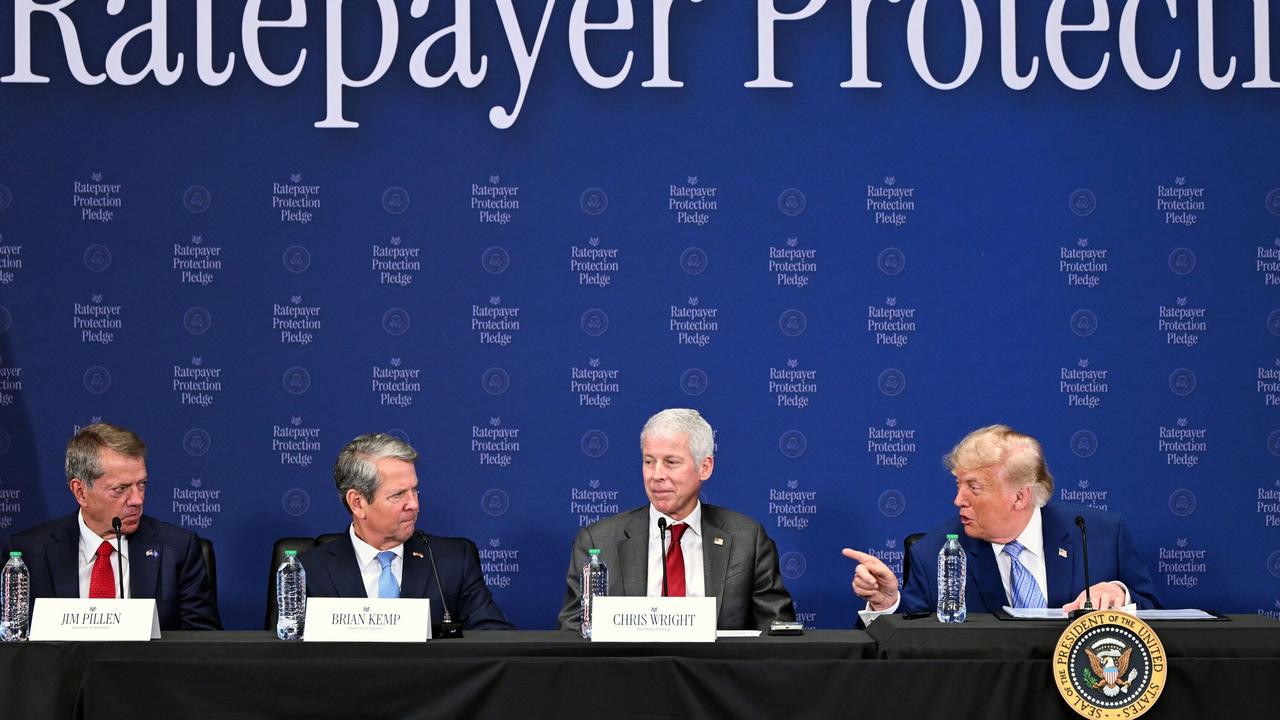
At a White House event last week, President Trump announced that nearly 200 companies—including tech giants, utilities, and data center developers—had signed a voluntary pledge to prevent AI data centers from increasing electricity costs for Americans
1
. However, experts noted that such pledges could be difficult to honor in practice since power prices are often determined by local regulators. The Environmental Protection Agency has taken several steps to make data centers easier to build, including loosening limits on smog-causing pollution from gas turbines that often power the facilities3
.The outcome of legal challenges in Boulder City and the success of retired Cold War-era facilities conversions will likely shape whether this approach becomes a template for rapid AI infrastructure deployment nationwide, or whether concerns about transparency, clean energy commitments, and electricity cost increases force a recalibration of the administration's strategy.
Summarized by
Navi
[3]
20 Dec 2024•Technology

04 Apr 2025•Technology

25 Oct 2025•Policy and Regulation

1
Technology

2
Technology

3
Technology