NestAI and Nokia unveil AI defense capabilities Europe wants to control


3 Sources
[1]
Finland's NestAI is building the AI layer Europe's militaries want to own
A Helsinki lab barely a year old, bankrolled by Nokia and the Finnish state, is now writing battlefield software with two defence ministries. The technology matters less than who controls it. On the last day of June, officials from Finland's Ministry of Defence, the Estonian Defence Forces, and a
[2]
Nokia Defense and NestAI develop AI defense capabilities By Investing.com
Investing.com -- Nokia Defense and NestAI are advancing their technology partnership with the first operational capabilities now in development following Nokia's and Tesi's €100 million joint investment in NestAI announced in November 2025. The partnership is creating three integrated operational
[3]
Nokia and NestAI develop AI support for defense operations
Telecom company Nokia and AI company NestAI are deepening their cooperation and developing the first operational solutions under the 100m investment announced in 2025, according to a press release. The cooperation includes AI-based command and control via deployable 5G networks, mission planning
Share
Copy Link
Helsinki-based NestAI, backed by Nokia and Finland's state investment firm with €100 million, is developing battlefield AI systems with Finnish and Estonian defense forces. The partnership focuses on building sovereign AI systems that European defense forces can control themselves, addressing Europe's discomfort with relying on foreign technology for critical infrastructure.
NestAI Emerges as Europe's Answer to Sovereign AI Defense
A Helsinki AI lab barely a year old is positioning itself at the center of Europe's push for military technology independence. NestAI, founded in 2025, now employs close to 200 engineers and scientists after securing €100 million from Nokia and Tesi, Finland's state investment company, in November
1
. The investment makes it one of the better-capitalized physical-AI labs on the continent, arriving at a moment when European defense forces are actively seeking alternatives to foreign-controlled systems.The company's core product, NestOS, functions as an AI-driven operating layer for unmanned military vehicles and command-and-control systems
1
. Built on open, modular architectures, the system is designed to continue learning after deployment rather than freezing at delivery. This approach addresses a critical gap: European military autonomy in an era when running critical infrastructure on external terms has become increasingly uncomfortable.Nokia Defense Partnership Delivers First Operational Capabilities
On July 9, Nokia Defense and NestAI unveiled their first operational output following the November investment. The partnership has created three integrated capabilities designed for what the industry calls denied environments—places where satellite navigation is jammed, bandwidth collapses, and autonomous systems must continue functioning
2
.The first capability combines Nokia's deployable 5G networks with NestOS to help European defense forces maintain AI-based command and control while supporting autonomous systems
2
. The second integrates Nokia's radio-network planning models into NestOS mission-planning tools, enabling forces to assess and adapt connectivity during operations3
. The third merges Nokia's Integrated Sensing and Communications early-detection capability with NestAI's multi-sensor tracking to provide wide-area situational awareness in contested environments2
."Defense is moving quickly to adopt AI-enabled defense capabilities, from mission planning to unmanned operations. But AI only works in the field when it has secure, resilient connectivity behind it," said Mikko Hautala, Chief Geopolitical & Government Relations Officer and Chairman, Nokia Defense
2
. These technologies are built to NATO operational requirements using European-developed systems2
.Finland and Estonia Sign Framework for AI Support for Defense Operations
On June 30, Finland's Ministry of Defence, the Estonian Defence Forces, and NestAI signed a letter of intent that contains no financial commitments but establishes a framework for knowledge sharing, joint development, training, and technical cooperation
1
. The agreement ties Finland's AI Centre of Excellence to Estonia's Force Transformation Command, with NestAI as the industrial partner.
Source: The Next Web
The first work strands focus on adaptive and learning AI, decision support for command and control, and autonomous and unmanned systems
1
. Major General Sami Nurmi, deputy chief of staff for strategy at Defence Command Finland, placed the letter inside the Finnish Defence Forces' data and AI strategy launched last year, stating the aim is to bring further nations into the arrangement1
.Related Stories
Why Sovereign AI Systems Matter for European Defense Forces
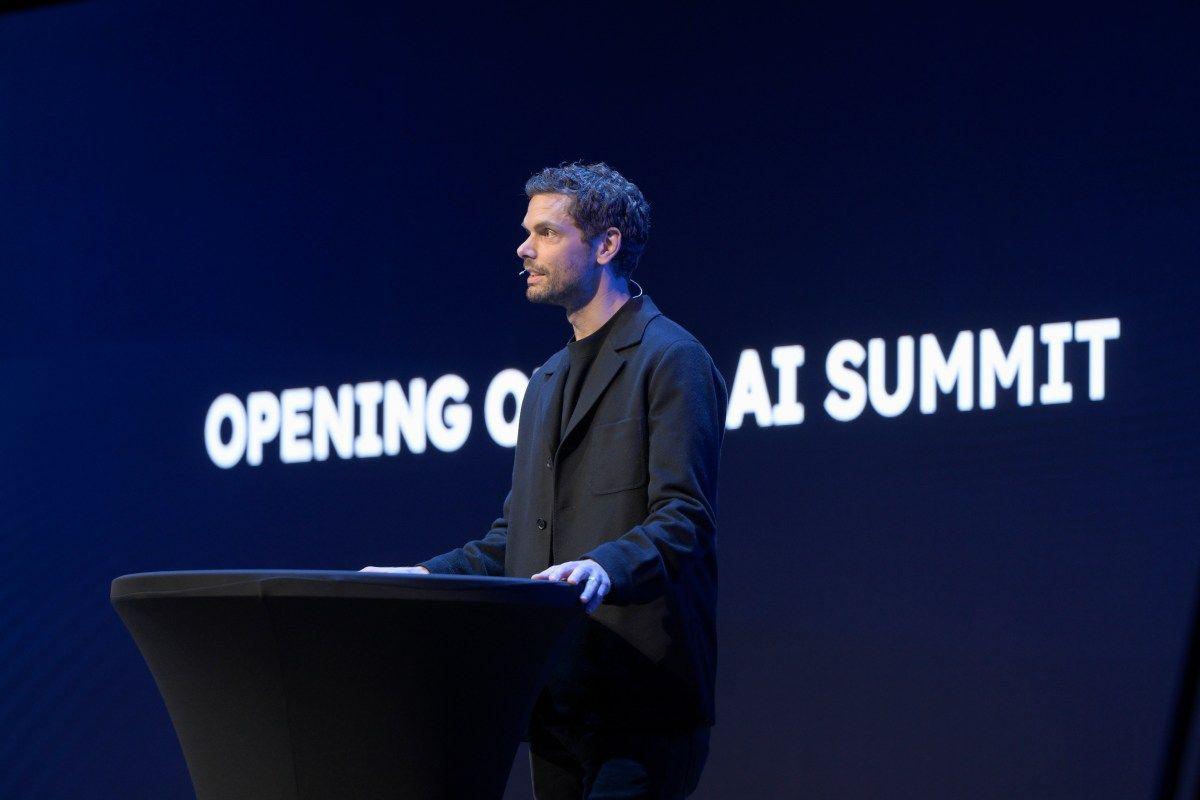
"European defense forces need AI systems that work together across national boundaries and continue to learn after deployment," said Peter Sarlin, NestAI's executive chairman. Capability evolution, he added, should stay "in the hands of the nations who operate the systems"
1
.This sovereignty clause drives the entire strategy. Open and modular design is not merely an engineering preference but a procurement doctrine: no single vendor controls the roadmap, and each country maintains sovereign control of its own data
1
. Finland shares 1,340 kilometers of border with Russia, and Estonia sits across the Gulf, geography that concentrates minds about who writes the software and where the weights are stored1
.NestAI works with the Finnish Defence Forces and lists Patria and Bittium among its industry partners
1
. While Munich's Helsing, valued at $18 billion, has built an alliance with Mistral on military AI defense, NestAI offers proximity and direct collaboration with governments seeking AI-driven operational capabilities they can control1
.References
Summarized by

Navi
[3]
Related Stories
Finnish Startup NestAI Raises €100M in Partnership with Nokia for Defense-Focused Physical AI
20 Nov 2025•Startups
European AI Powerhouses Mistral and Helsing Forge Alliance for Military AI Development
10 Feb 2025•Technology

Nokia Restructures Around AI Networks with $1 Billion Nvidia Partnership
20 Nov 2025•Business and Economy
Recent Highlights



Recent Highlights
Today's Top Stories






Don’t drown in AI news. We cut through the noise - filtering, ranking and summarizing the most important AI news, breakthroughs and research daily. Follow topics that matter to you and stay ahead.


