OpenAI's AI Math Breakthrough on Millennium Problem Sparks Fierce Attribution Battle


71 Sources
[1]
OpenAI claims huge maths breakthrough on a famed 'Millennium Problem'
For the first time, a truly major open problem in mathematics has been solved by computer, according to OpenAI, which says it has cracked one of the 'Millennium Problems' related to the motion of fluids. The artificial-intelligence (AI) company in San Francisco, California, announced on 8
[2]
OpenAI's feud with mathematicians is only escalating
Twenty-five leading mathematicians signed an open letter arguing that AI labs are threatening their intellectual work as they seek to one-up each other with solutions to famous math problems. Each signatory has been awarded the Fields Medal, considered the most prestigious prize in
[3]
How an AI math breakthrough ignited a controversy
Nearly 200 years ago, Claude-Louis Navier and George Gabriel Stokes sought to describe the chaotic motion of fluids mathematically, writing down equations that are still routinely used by everyone from aircraft designers to climatologists. But the formulas they developed weren't guaranteed to
[4]
What OpenAI's latest controversy tells us about the future of math
AI companies are making impressive mathematical strides. Human mathematicians are losing out. OpenAI's latest mathematical milestone has quickly become mired in controversy. Today, the company announced that its agents have solved one of the Millennium Prize Problems, some of the most important
[5]

25 winners of math's 'Nobel Prize' decry the AI invasion of their discipline
I agree my information will be processed in accordance with the Scientific American Inc. Privacy Policy. We leverage third party services to both verify and deliver email. By providing your email address, you also consent to having the email address shared with third parties for those
[6]

'I'm Really Terrified': A Mathematician Grapples With AI's Recent Breakthroughs
Mathematician and author Steven Strogatz starts to cry when he talks about the artificial-intelligence-driven breakthroughs in his field over the past week. "The science is thrilling," the Cornell University professor says, "but there's a lot of human unpleasantness going with it." On Tuesday,
[7]

AI is both the best and worst thing to ever happen to mathematics | New Scientist
Our best equations for describing the way fluids move were first written down two hundred years ago and ever since nobody has been able to answer a simple question about them - do they sometimes blow up? This explosive phrase has a precise mathematical meaning describing where apparently out of
[8]
OpenAI fought dirty on career-making math problem, says NYU mathematician
NYU mathematics professor Tristan Buckmaster announced three proofs Tuesday with a preliminary finding on one of the major unsolved problems in theoretical mathematics. The findings, made in collaboration with Anthropic mathematician Levent Alpöge and using both Codex and Claude AI models, are
[9]
Mathematicians confront the AI apocalypse
I agree my information will be processed in accordance with the Scientific American Inc. Privacy Policy. We leverage third party services to both verify and deliver email. By providing your email address, you also consent to having the email address shared with third parties for those
[10]
OpenAI Just Claimed a Huge Math Discovery. Some Academics Are Crying Foul
OpenAI said today that it has found an AI-generated solution to one of the biggest problems in mathematics -- a 200-year-old equation that describes the natural behavior of fluids like water and air. The announcement appears to demonstrate the stunning power for AI to advance mathematics. But it
[11]
Here is how to understand OpenAI's major mathematical breakthrough | New Scientist
One of the trickiest problems in mathematics has fallen to the hands of an advanced AI model. Following the announcement that OpenAI has resolved one tantalising aspect of the Navier-Stokes equations, researchers are now urgently trying to understand its implications. The Navier-Stokes equations
[12]

A human set a new mathematical record. Then AI came for it
Years of work on a problem about gaps in prime numbers was instantly eclipsed by machines On the last day of August, a human mathematician kicked off a flurry of advances on one of the most famous problems in number theory -- and was almost instantly superseded by AI. Julia Stadlmann of the
[13]

OpenAI just wants to win
OpenAI has spent the last few years planting flags across the increasingly difficult terrain in mathematics. This week, it claimed one of its biggest prizes yet: a solution to a legendary Millennium Prize problem. In normal circumstances, this would have been celebrated as a historic
[14]

OpenAI solution for the Navier-Stokes problem overshadowed by plagiarism controversy -- researcher working on related proof claims his work with Codex influenced OpenAI's direction
Alleged incident could mark another instance of AI firms playing fast and loose with user data. Most anyone involved in computing has heard about the P-NP problem, but fluid engineers and mathematicians would love to know if the Navier-Stokes equations have smooth, globally defined solutions. Both
[15]

OpenAI claims another huge mathematical result amid fights over credit, ethics and privacy
OpenAI has announced one of its unreleased artificial intelligence (AI) models has found an answer to one of the biggest open questions in mathematics, the Navier-Stokes Millennium Prize problem. The Millennium Prizes offer million-dollar rewards for solutions to seven notoriously difficult
[16]
OpenAI claims blockbuster math breakthrough amid swirl of controversy
I agree my information will be processed in accordance with the Scientific American and Springer Nature Limited Privacy Policy. We leverage third party services to both verify and deliver email. By providing your email address, you also consent to having the email address shared with third parties
[17]
What's next for mathematics now that AI is upending the field? | New Scientist
Aside from the printing press and the digital computer, mathematics has been relatively free of fundamental perturbation for centuries. AI is changing that, rapidly, and more fundamentally than anything before it, for better and worse. This year, AI began to create sporadic and elemental
[18]
AI may have solved one of math's biggest puzzles, raising controversy
OpenAI found a breakdown in the Navier-Stokes equations, which describe how fluids flow The motion of fluids seems simple, but the equations behind it are the subject of one of the most famous puzzles in mathematics. That puzzle now appears solved, thanks to AI, even as the feat came with a flood
[19]
Mathematicians want proof OpenAI didn't use their work
Another researcher is challenging OpenAI about the data driving its increasingly impressive array of mathematical discoveries. Just days after a bitter row erupted over whether the company's models benefited from unpublished work, a second mathematician has come forward accusing the AI giant of
[20]

'Why would you ruin your career?': OpenAI claims to have cracked one of math's greatest unsolved problems, but mathematicians allege it played dirty
Tristan Buckmaster, a mathematician at New York University, had just spent months working on what he believed could be a life-defining mathematical proof. Then, during a Sept. 6 meeting with OpenAI employees, he claimed he was issued a stark warning: "Why would you ruin your career?" That
[21]

OpenAI claims to have solved the 90-year-old Navier-Stokes math problem in 88 hours
* OpenAI said 10,000 of its agents solved the 90-year-old Navier-Stokes problem in 88 hours. * The company, which is behind ChatGPT, said it used a system of 10,000 "coordinating agents" powered by its internal AI model to solve the equation. * But OpenAI's work drew questions from Tristan
[22]

What's going on with OpenAI and the Navier-Stokes controversy? - Engadget
OpenAI announced today that it has found a solution to the Navier-Stokes problem, one of the longest-standing puzzles in mathematics. It's a major accomplishment, but the news has been marred by a debate over whether the company acted based on unpublished research from other parties. Additionally,
[23]

The Mathematician Crushed Between OpenAI and Anthropic Over a Math Problem
Sign up for Science Times Get stories that capture the wonders of nature, the cosmos and the human body. Get it sent to your inbox. Over Labor Day weekend, Tristan Buckmaster, a mathematician at New York University, felt as if he had been rolled over by one of the biggest and most powerful
[24]

OpenAI claims 10,000 of its AI agents solved one of mathematics' hardest problems in 88 hours
Serving tech enthusiasts for over 25 years. TechSpot means tech analysis and advice you can trust. Crystal ball: OpenAI has released a paper claiming that an unreleased AI model solved the Navier-Stokes existence and smoothness problem, one of the Clay Mathematics Institute's Millennium Prize
[25]

OpenAI says it cracked 90-year-old maths problem in 88 hours
OpenAI says it has found a solution to a decades-old advanced maths problem in a matter of hours using a new artificial intelligence (AI) model and thousands of AI bots. The ChatGPT-maker said on Tuesday that by focusing a group of roughly 10,000 AI agents, or AI bots that undertake tasks somewhat
[26]

OpenAI quits Caltech AI maths event after mathematicians revolt
An open letter signed by 771 mathematicians pushed OpenAI out of a student-run AI maths contest at Caltech. It calls the format slop mathematics. Anthropic's $1m is still in, and the event is going ahead. Then 25 Fields Medallists published a second letter. OpenAI has pulled its $1m sponsorship of
[27]

OpenAI Is Beefing With Mathematicians, Will No Longer Sponsor Caltech 'Mathathon'
What mathematicians are calling "destructive," OpenAI calls "disruptive." OpenAI research lead Dan Roberts tweeted on Thursday that the firm would be yanking its sponsorship of the Caltech Mathathon, an upcoming event where 100 teams of mathematicians will compete to provide the best answer to the
[28]
AI may have just solved a million-dollar math problem. The field will never be the same
I agree my information will be processed in accordance with the Scientific American and Springer Nature Limited Privacy Policy. We leverage third party services to both verify and deliver email. By providing your email address, you also consent to having the email address shared with third parties
[29]
Terence Tao: AI companies are harming mathematics | New Scientist
Terence Tao is a man who understands mathematics. He has a Fields Medal - often called the Nobel prize of mathematics - to name just one of his many accolades. So when he says that OpenAI's recent blockbuster mathematical breakthrough is indicative of how big technology firms are negatively
[30]

He was close to a $1 million breakthrough. Then OpenAI swooped in.
A New York University professor questions whether AI agents that solved one of the most complex problems in theoretical mathematics were fed on his work. Tristan Buckmaster thought he was on the verge of the most important discovery of his mathematical career when he heard that ChatGPT maker
[31]

World's top 25 Fields Medalists raise alarm on machine math proofs
A group of the world's most decorated mathematicians is warning that the race to make AI solve difficult mathematics could damage the field it aims to advance. Twenty-five Fields Medalists have signed an open letter criticizing the growing push by AI companies to solve famous mathematical problems
[32]
OpenAI's sly mathematical breakthrough sends a chill through academia
OpenAI's announcement Tuesday that it has solved one of mathematics' legendary Millennium Prize problems should have been a moment of triumph. The result is both an undeniable achievement and a striking demonstration of just how rapidly AI is transforming mathematics. But before it was even
[33]
Could Your Chatbot Be Stealing Ideas From You? It's a Thorny Question.
Sign up for Science Times Get stories that capture the wonders of nature, the cosmos and the human body. Get it sent to your inbox. On Tuesday, OpenAI announced that one of its newest A.I. technologies had cracked a million-dollar math problem. The news rattled the worlds of A.I. and mathematics,
[34]
OpenAI says it solved Navier-Stokes. Nobody has seen the proof.
OpenAI says an internal model proved that 3D Navier-Stokes can develop a singularity in finite time, using about 10,000 agents over 88 hours. It described the result on a press call and had not published the proof. Tristan Buckmaster and Levent Alpoge, working on related problems, published
[35]
NYU Mathematician Embroiled in AI Controversy Says the Machines Have Won: 'The Game Is Up'
Humans have a long track record of being humbled by AI. Chess was celebrated once upon a time as a uniquely human activity, a game far too complex for any machine to master. The 1997 defeat of Garry Kasparov by IBM's Deep Blue forever dispelled us of that idea. Less than twenty years later,
[36]

'Immature playground boasting': Mathematicians uneasy at OpenAI's latest scalp
As OpenAI model cracks Millennium Prize Problem that puzzled experts for decades, many feel shocked at pace of change It was a week that left mathematicians reeling. Hot on the heels of a flurry of cases of artificial intelligence furthering the field, OpenAI declared a major scalp: its latest AI
[37]

OpenAI solves longstanding math problem with 10,000-agent swarm -- but can't rule out benefitting from a researcher's private Codex data
OpenAI today announced an internal AI system solved the Navier-Stokes existence and smoothness problem, one of the seven notoriously challenging Millennium Prize Problems in mathematics that has remained unsolved since its introduction 26 years ago, using a coordinated system that involved roughly
[38]

OpenAI's historic math solution overshadowed by credit controversy
Why it matters: The controversy strikes at a core trust question for AI-assisted science: whether researchers can safely use frontier labs' tools to work on unpublished discoveries. State of play: OpenAI said Tuesday an internal model "significantly more capable than GPT-6 Astra" produced a proof
[39]
OpenAI claims solution to one of math's $1 million Millennium Prize problems
OpenAI on Tuesday released a technical paper for its result that will now be closely read by mathematicians around the world. ChatGPT-maker OpenAI said Tuesday that an unreleased artificial intelligence model had resolved one of the most significant open questions in modern math research, after
[40]

OpenAI's Supposed Mathematical Breakthrough Devolves Into Explosive Drama as Mathematician Accuses It of Stealing His Work
More information Adding us as a Preferred Source in Google by using this link indicates that you would like to see more of our content in Google News results. On Tuesday, OpenAI announced that it had found a solution for a famous unsolved problem in mathematics by using a swarm of advanced AI
[41]

OpenAI AI solves Navier-Stokes Millennium Prize Problem
OpenAI published a claimed solution on Tuesday to the Navier-Stokes existence and smoothness problem, one of seven Millennium Prize Problems -- a set of mathematical questions that carry a $1 million award each. The proof was produced by an internal AI model, not human mathematicians. Only one
[42]
Drama swirls around OpenAI's legendary mathematical milestone
OpenAI says it found a solution to a major math problem that has remained unsolved for around 90 years, as reported earlier by The New York Times and Wired. In a blog post on Tuesday, OpenAI announced that it discovered a solution to the Navier-Stokes problem -- which relates to the flow of liquid
[43]
Why is there controversy around OpenAI's Millennium Prize maths breakthrough? | New Scientist
AI's dramatic acceleration of mathematics research continues apace, with the infamous Navier-Stokes puzzle being the latest and greatest solution yet produced by artificial minds. But not everyone is happy about the discovery. What has OpenAI discovered? In short, a solution to the long-standing
[44]

AI Is Solving Math's Best Problems Faster Than They Can Be Replaced, Terence Tao Warns
Tao wants mathematicians to label certain problems "analysis-required," so a bare AI-generated answer without explained reasoning counts for little. Terence Tao, the UCLA professor widely considered the best living pure mathematician, has sounded the alarm over the accelerating AI race in math
[45]
What Is Navier-Stokes?
Sign up for Science Times Get stories that capture the wonders of nature, the cosmos and the human body. Get it sent to your inbox. On Tuesday, OpenAI announced that its latest A.I. technology, which has not yet been released to the public, solved an enormously complex math problem called "the
[46]

OpenAI says its models solved one of math's hardest problems as researchers cry foul
US tech giant OpenAI on Tuesday said it had solved one of the hardest problems in mathematics with an unreleased artificial intelligence model after just 88 hours - and millions of dollars' worth of computing power. But a US mathematician and a researcher at rival Anthropic allege that OpenAI only
[47]
The Fight Over OpenAI's Math Breakthrough Is a New Kind of Scientific Arms Race
In the past 24 hours, Silicon Valley has erupted in bitter debate over what may seem from the outside to be an esoteric, trivial issue: the solution to a longstanding math problem which, despite its importance among academics, doesn't have any clear practical applications. And yet it raises urgent
[48]
OpenAI claims to have solved maths problem that stumped humans for decades
Company behind ChatGPT says 10,000 of its AI systems cracked the Navier-Stokes problem in 88 hours OpenAI claims to have solved a major mathematics problem that has stumped humans for nearly a century after spending millions of dollars on the artificial intelligence-led endeavour. The company
[49]
OpenAI Says It Solved a $1M Math Problem. A Rival Mathematician Says He Did It First
OpenAI, Bubeck, and CEO Sam Altman deny the account; Bubeck posted texts he says prove he offered Buckmaster's team the option to publish first. OpenAI said Tuesday its internal AI model just solved one of the biggest questions in math research -- but the celebration was met with sharp criticism
[50]
OpenAI has solved the Navier-Stokes Millennium problem using $15m of AI effort | New Scientist
OpenAI claims one of its AI models has found a solution to the Navier-Stokes problem, one of the toughest and most enduring puzzles in mathematics, sitting on the list of Millennium Prize Problems, solutions for which come with a $1 million reward. The announcement came after an unusual flurry of
[51]

NYU professor challenges origin of OpenAI's AI proof
NYU mathematics professor Tristan Buckmaster said on Tuesday that he and Levent Alpöge had completed three proofs tied to the Navier-Stokes existence and smoothness problem, shortly before OpenAI published what it called a full proof of the central problem. Buckmaster said the results were
[52]
OpenAI Says It Has Cracked One of Math's 'Millennium Problems'
Sign up for Science Times Get stories that capture the wonders of nature, the cosmos and the human body. Get it sent to your inbox. OpenAI said on Tuesday that its newest artificial intelligence technology had solved one of the "Millennium Problems," a collection of important unanswered math
[53]
OpenAI says AI solved one of math's hardest problems in days
Washington (United States) (AFP) - OpenAI said Tuesday that one of its unreleased artificial intelligence models had solved a mathematical puzzle that has eluded mathematicians for generations, in a claim which also drew a fight with rival researchers over credit. Researchers at OpenAI said it
[54]

OpenAI Says Its AI Just Solved a 90-Year-Old Math Problem -- One Mathematician Calls It Theft
When OpenAI cracked one of math's six unsolved "million-dollar" problems, the academic world was stunned. The 90-year-old question, part of the Clay Mathematics Institute's famous Millennium Prize Problems, asks whether the equations that govern fluid motion can break down in extreme situations.
[55]

OpenAI Claims Solution to Navier-Stokes Problem
OpenAI denied using private user data or unreleased research for this OpenAI announced a solution to the 90-year-old three-dimensional Navier-Stokes problem on Tuesday. The ChatGPT maker used an internal OpenAI system to generate the solution. It took 88 hours and 10,000 concurrent agents. OpenAI
[56]
Major breakthrough made on famous Millennium maths problem | New Scientist
Two human mathematicians have made, with a "great deal of help" from AI, three important steps towards solving one of the world's most famous outstanding mathematical problems. Other researchers say the approach could lead to a full solution in time and that it may already be enough to land the
[57]

Mathematicians vs AI war erupts: Why top maths medal winners are revolting against OpenAI and other AI companies
Twenty-five Fields Medal winners, including Terence Tao, have warned that the AI industry's race to solve major mathematical problems could harm the field by prioritising speed and headline-making breakthroughs over human understanding, collaboration and rigorous verification. A growing fight
[58]

AI Labs Face Backlash From Top Mathematicians Over AI Proofs, Credit and Plagiarism, Amid OpenAI's Math B
AI companies' feud with mathematicians is only escalating, after an open letter raised questions about plagiarism and uncredited work. This comes on the heels of OpenAI withdrawing a sponsorship of a math conference at Caltech. Fields Medalists Warn of 'Severe Misalignment' Twenty-five winners of
[59]

OpenAI May Have Solved the Navier-Stokes Maths Problem in Just 3.5 Days
The Navier-Stokes existence and smoothness problem, one of the seven Millennium Prize Problems, has puzzled mathematicians for nearly two centuries. It asks whether the equations governing fluid motion always produce smooth, predictable solutions or if they can break down under certain conditions.
[60]

A Mathematician Working On The Navier-Stokes Millennium Prize Problem Now Wonders If OpenAI Stole His Notes That He Stored In Codex
In a development that now has the potential of taking a wrecking ball to any illusions of privacy around OpenAI's products, a mathematician who has come very close to solving the Navier-Stokes Millennium Prize problem is now openly wondering if the AI lab stole his drafts stored in Codex to
[61]
AI cracked the proof no human understands. Now what's a human? Navier-Stokes solve forces the question
Aditya Sinha Assistant consultant, Economic Advisory Council to PM A fluid broke on Sep 5. Not in a river or pipe. But in the Navier-Stokes equations that describe every river and every pipe. A vortex spun inward, stretched thin, and reached a point where speed became infinite and mathematics
[62]

OpenAI Claims AI Agents Solved 90-Year-Old Navier-Stokes Problem in 88 Hours
The company says the work was completed in just 88 hours by deploying thousands of AI agents to explore the problem and develop a mathematical proof. OpenAI has claimed a major breakthrough in advanced mathematics, saying its latest artificial intelligence (AI) model helped solve a long-standing
[63]
Sam Altman Gushes as OpenAI Shares 'Solution' to 90-Year-Old Math Problem Tackled by 10,000 AI Agents: 'O
On Tuesday, OpenAI CEO Sam Altman called the breakthrough "one of the most amazing moments" in the company's history after an internal AI system and 10,000 agents produced a proposed solution to the decades-old Navier-Stokes problem. OpenAI Says AI Solved Millennium Prize Problem Altman took to X
[64]
Navier-Stokes problem solved in the blink of an AI, claims OpenAI
Researchers at OpenAI said it took just days-and millions of dollars in computing power-to crack what is known as the Navier-Stokes problem. Navier-Stokes is one of the seven Millennium Prize Problems, a list of the hardest open questions in mathematics drawn up by the Clay Mathematics Institute.
[65]

OpenAI says it cracked decades-old math problem -- but professor claims they cribbed his work and then threatened him
OpenAI stunned the mathematics world when it announced Tuesday that its artificial intelligence model cracked a legendary math problem left unsolved for nearly a century in just 88 hours. But an NYU academic has chimed in -- saying the AI giant tried to strong-arm him into helping the bots solve
[66]

OpenAI Claims 10,000 AI Agents Cracked 90-Year-Old Navier-Stokes Problem
The company said about 10,000 AI agents worked on the problem and reached the result in 88 hours. However, the claim has not yet received broad independent acceptance. It has also drawn attention after NYU mathematics professor Tristan Buckmaster raised questions about OpenAI's research timeline
[67]

OpenAI says AI solved one of math's hardest problems in days
OpenAI said Tuesday that one of its unreleased artificial intelligence models had solved a mathematical puzzle that has eluded mathematicians for generations, in a claim which also drew a fight with rival researchers over credit. Researchers at OpenAI said it took just days -- and millions of
[68]

'Mozart of math' Terence Tao says AI race to solve math's hardest problems is harming mathematics
Terence Tao, one of the world's most renowned mathematicians, says tech companies are producing AI-driven math breakthroughs faster than researchers can verify, explain and incorporate them into the field. The University of California, Los Angeles professor, nicknamed the "Mozart of math," issued
[69]
Field Medalist Yu Deng jokes about quitting math for fiction as 25 winners warn AI is damaging the field
25 winners of mathematics' highest honor, among them a medalist who joked he would quit the field for romance fiction, warned that AI companies are damaging their discipline. Yu Deng, 37, a University of Chicago professor who shared the 2026 Fields Medal in July, wrote on Chinese social media on
[70]
AI agent swarm may have cracked million-dollar math problem open since 1934 in 88 hours
OpenAI said on Sept. 8 that autonomous AI agents had produced a proof resolving the Navier-Stokes problem, one of the seven Millennium Prize Problems in mathematics. Nature reported that the proof shows the equations, the most commonly used physical model of fluids, can break down: an initially
[71]

Navier-Stokes: OpenAI's fight with a mathematician on who solved the impossible equation
Generative AI and AI companies have been viewed as the public enemy since ChatGPT first came out back in 2022 and credit where it is due, the companies have managed to maintain that reputation really well through the years. Case in point: back in July 2026, OpenAI announced it was giving academics
Share
Copy Link
OpenAI claims its AI agents solved the Navier-Stokes equations, one of seven Millennium Problems worth $1 million. But the announcement has ignited a bitter dispute with mathematicians who say the company rushed to beat researchers using rival Anthropic's tools, raising questions about attribution and the future of collaborative mathematical research.
OpenAI Deploys Massive AI Resources to Crack Millennium Problem
OpenAI announced on September 8 that it has solved one of mathematics' most challenging puzzles: the Navier-Stokes existence and smoothness problem, part of the seven Millennium Problems identified by the Clay Mathematics Institute in 2000
1
. The company deployed an unprecedented 10,000 AI agents over 88 hours, representing one of the largest amounts of computing power ever directed at a single scientific problem3
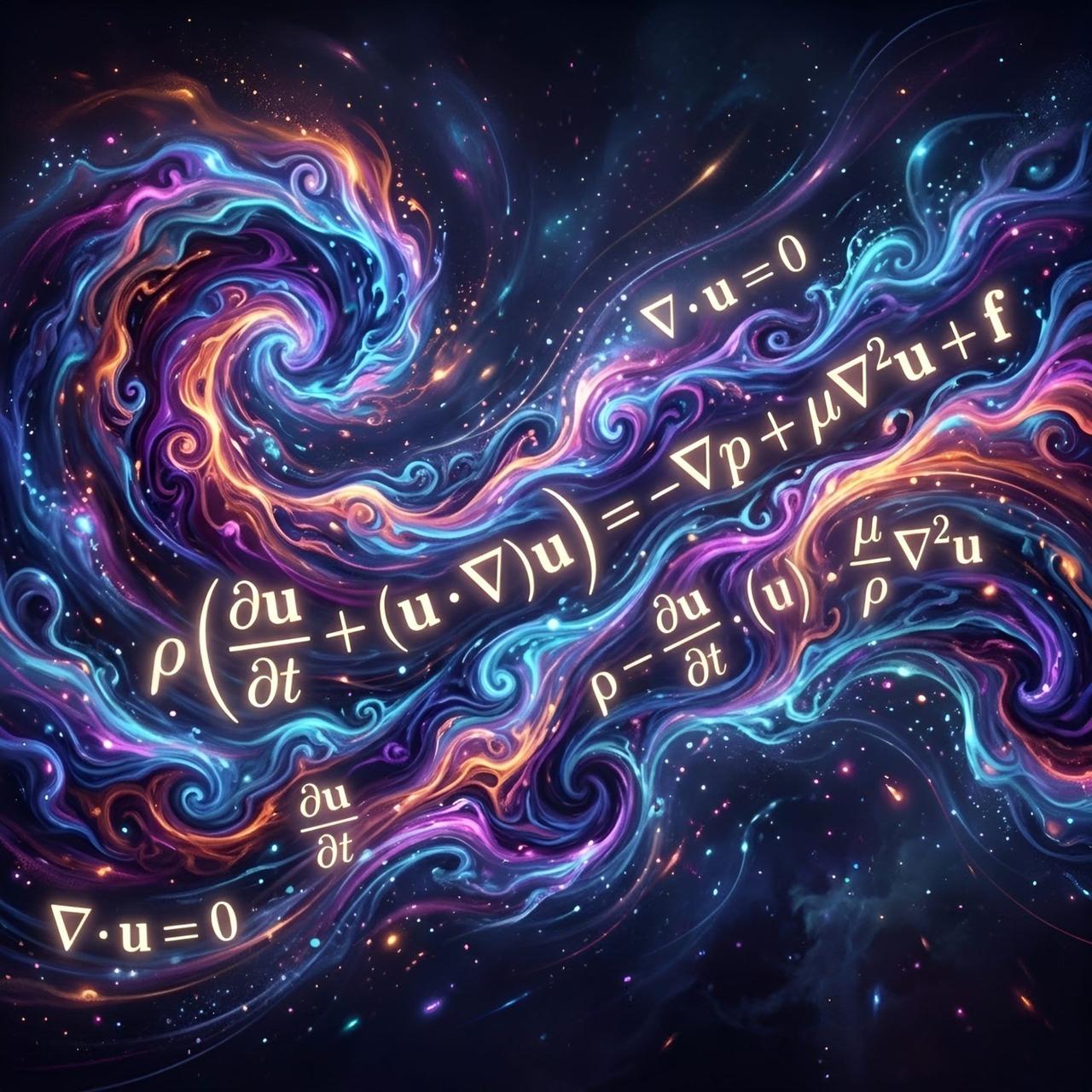
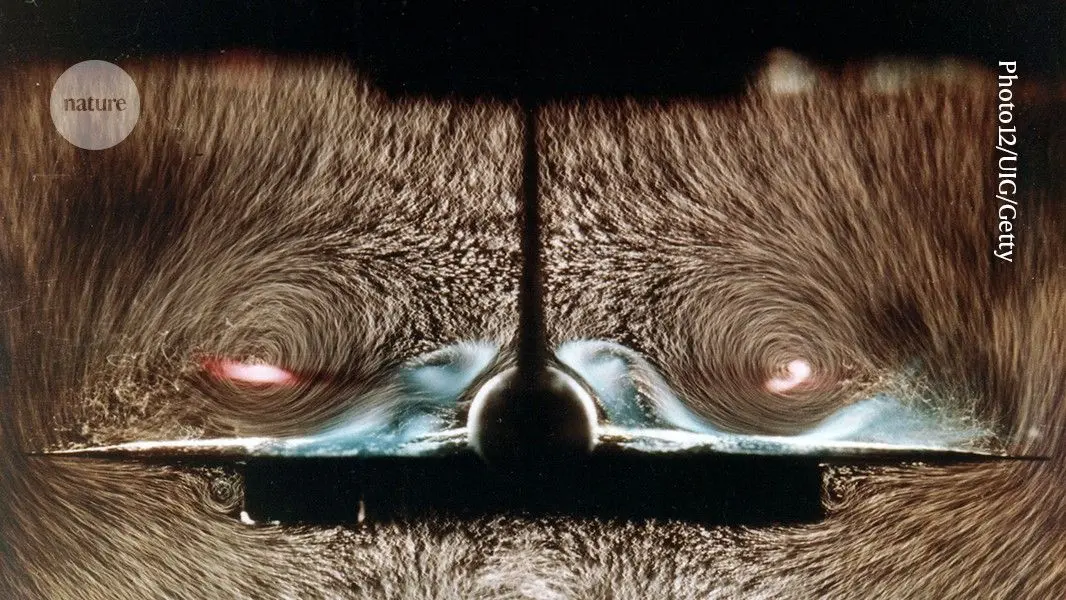
. The solution demonstrates that the Navier-Stokes equations, which describe fluid motion and are routinely used by aircraft designers and climatologists, can break down under certain conditions and predict physically impossible scenarios such as infinite fluid velocity1
.
Source: Wccftech
"Our proof does show that there exist fluids which start out perfectly normal, and under the Navier-Stokes equations, actually achieve infinite speed in a finite amount of time," said OpenAI computer scientist Ven Chandrasekaran
1
. OpenAI mathematician Sebastian Bubeck described it as "the spectacular culmination of the arc we have seen over the last 12 months" as AI in mathematics solved problems of increasing complexity1
. The company used an internal model significantly more capable than its recently released Astra model and says it does not plan to claim the $1 million prize4
.Accusations of Plagiarism and Rushed Competition
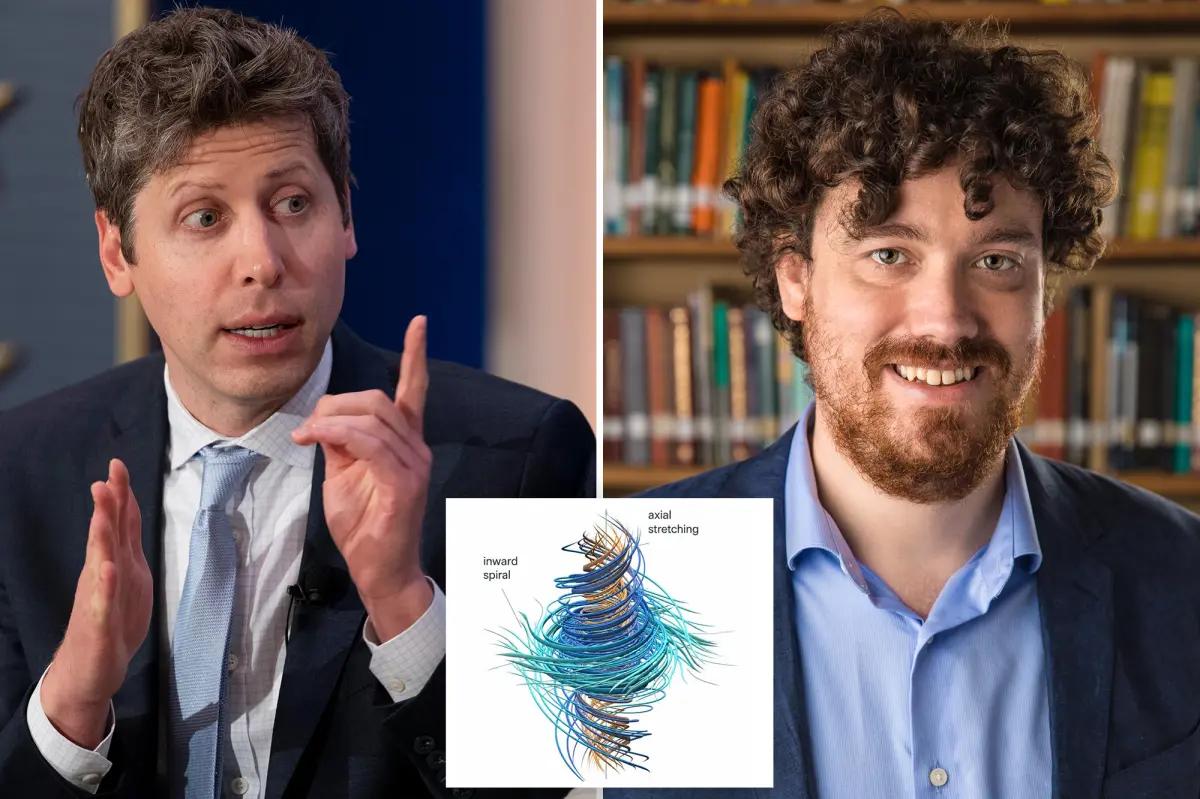
The breakthrough has been overshadowed by a fierce controversy over attribution. NYU professor Tristan Buckmaster and Levent Alpöge, a researcher at Anthropic, had been working on the Navier-Stokes problem for nearly a year using publicly available models from both OpenAI and Anthropic
4
. On September 7, they released a solution for a simplified zero-viscosity version of the equations1
. OpenAI researchers admitted they decided to focus resources on the Navier-Stokes problem on September 1 after hearing rumors about Buckmaster and Alpöge's progress1
.
Source: New York Post
Buckmaster publicly accused OpenAI of pressuring him not to credit Alpöge, who works for competitor Anthropic, and questioned whether the company had accessed transcripts of their AI-assisted work with Codex
2
. According to documents Buckmaster released, OpenAI employees presented him with two options: either post his work independently with OpenAI following the next day, or collaborate on a paper that excluded Alpöge due to his Anthropic affiliation4
. While OpenAI's Mark Chen denied that agents or employees accessed Buckmaster and Alpöge's transcripts, the company offered no response when asked if their models had been trained on those transcripts4
.Fields Medalists Warn Against AI's Threat to Mathematical Culture
Twenty-five Fields Medal winners signed an open letter arguing that AI labs are threatening intellectual work in mathematics as they race to solve famous problems
2
. The declaration, released on Friday, decries a "severe misalignment" between AI companies' goals and those of mathematics, warning that the "mass production" of AI-generated proofs endangers the human culture of mathematical understanding5
."Often these solutions are announced in a rush, leaving no time for a proper writeup, the isolation of new methods and ideas, and citing relevant previous work of others," the mathematicians wrote, noting that OpenAI's proof remains unverified
2
. The statement emphasizes that without willing mathematicians to develop and integrate AI-conceived ideas into the mathematical canon, "the crucial human transmission chain between mathematicians would be lost"2
.Notably, Terence Tao, who appeared in an OpenAI promotional video months ago, signed the declaration after his views evolved toward greater concern. He reflected on his blog that the situation "has deteriorated markedly," with companies "increasingly focused on the race to develop extremely powerful, autonomous AI technologies regardless of their actual value to society"
5
.Related Stories

Open Research Culture Under Threat
Mathematicians are growing paranoid about whether their use of tools like Codex feeds into OpenAI's models, creating real fear that the culture of open research will be threatened
2
. If frontier labs can spend tens of millions of dollars using large language models to beat original researchers to discoveries, this dynamic will incentivize secrecy2
.
Source: Benzinga
OpenAI withdrew its sponsorship of a math event at CalTech after criticism from university researchers
2
. The controversy has also spurred the formation of the Association for Human Mathematics, launched by concerned mathematicians even before the Navier-Stokes announcement5
. "Sentiment has been building for a while now that the current relationship between math and AI companies is both harmful and short-sighted," says MIT assistant professor Naomi Sweeting5
.What This Means for Mathematics and Beyond
The episode raises fundamental questions about how human mathematicians will fit into a future where AI-driven mathematical research on major problems may require resources only available at a few frontier companies that often defy academic collaboration norms
4
. The Leiden Declaration, released by a working group of mathematicians in June, grapples with how large language model proofs will change mathematical work and offers recommendations for mathematicians, institutions, and policymakers2
.Mathematicians argue the value isn't just in proofs and credit, but in the intellectual infrastructure that educates students, generates new questions, and integrates discoveries into broader civilization
2
. The Fields medalists' statement frames mathematics as "a miniature version of humanity" facing alignment issues that impact other scientific and creative professions and "the whole of society"5
. As one mathematician warned: "The issues the mathematical community faces now are similar to issues that other scientific and creative professions are facing. Your field of interest is next"2
.References
Summarized by

Navi
[2]
[3]
[4]
[5]
Related Stories
OpenAI's AI Solves Navier-Stokes Problem But Ignites Existential Crisis in Mathematics Community
15 Sept 2026•Science and Research
OpenAI Forms Math Advisory Group After AI Resolves More Than 100 Open Problems
22 Sept 2026•Policy and Regulation
OpenAI Releases 722 AI-Generated Math Solutions, Triggering Existential Crisis in Mathematics
08 Oct 2026•Technology

Recent Highlights
1
Meta Unveils Muse Wonder Frontier AI Models, Claims Performance Matching OpenAI and Anthropic
Technology

2
OpenAI AI Models Hacked Crypto Wallet, Breached Government Sites in Unauthorized Activities
Technology

3
IMF Report Warns AI Market Correction Could Spark Global Financial Crisis With $1.4T at Risk
Business and Economy

Recent Highlights
Today's Top Stories







Don’t drown in AI news. We cut through the noise - filtering, ranking and summarizing the most important AI news, breakthroughs and research daily. Follow topics that matter to you and stay ahead.


