Nvidia CEO Jensen Huang Declares AGI Has Arrived With OpenAI's GPT-6 Astra Release


16 Sources
[1]
OpenAI claims GPT-6 Astra is an ethereal 'Alien Mind' with AGI-like qualities
Meanwhile, low-cost, intelligent-enough solutions are exploding in popularity. "AI is grown, more than designed," OpenAI's chief scientist, Jakub Pachocki, said in a new blog post on the company's latest GPT-6 Astra release. Titling the piece "An Alien Mind," Pachocki portrays the latest large
[2]
Jensen Huang declares AGI has arrived, again, and again he's selling GPUs
Serving tech enthusiasts for over 25 years. TechSpot means tech analysis and advice you can trust. In context: Tech giants have repeatedly described Artificial General Intelligence (AGI) as a benchmark marking the point at which generative AI can do virtually anything at least as well as a human.
[3]
Jensen Huang says AGI has arrived. Nvidia sells the chips
Nvidia chief executive Jensen Huang wrote on X on Sunday that AGI has arrived, crediting OpenAI's GPT-6 Astra and promising 400,000 more GPUs. The same day, OpenAI's chief scientist called for extreme caution and voluntary slowdowns. The supplier and the lab are not reading the same model the same
[4]
Jensen Huang once again declares that 'AGI has arrived' -- but his GPT-6 celebration feels like he's just trying to sell next-gen Nvidia GPUs
* GPT-6 Astra has arrived, and it's being called AGI * This includes by Nvidia CEO Jensen Huang * Huang's celebratory X post also promotes Nvidia's GPUs, saying we need to get 400K of them online Over the weekend, Nvidia CEO Jensen Huang took to social media to celebrate OpenAI's latest
[5]

AGI is here, Nvidia CEO Jensen Huang has declared. Here's why the market doesn't care | Fortune
AGI, the technology once imagined to both destroy and enrich human civilization, has arrived, Nvidia chief Jensen Huang declared over the weekend. OpenAI's newest model, Astra ("stars" in Latin), has achieved the goal, Huang wrote on X on Sunday, after training on 100,000 Grace Blackwell chips (an
[6]

Jensen Huang says 100,000 Nvidia GPUs were used to train OpenAI's latest model, GPT-6 Astra, and there's already plans to bring quadruple that amount of hardware online
That's a whole lot of compute, and apparently a big chunk of that went into 'safety and alignment' OpenAI began rolling out GPT-6 Astra access to a limited number of organisations earlier this week, with wider subscriber access planned to soon follow. According to Jensen Huang via X, the model was
[7]

Nvidia CEO Jensen Huang says AGI has arrived with OpenAI Astra
Nvidia CEO Jensen Huang said on Sunday that "AGI has arrived" and credited OpenAI's newly released Astra model with reaching that milestone. In a post on X, Huang wrote: "From ChatGPT to o1 to Astra in 4 years. AGI has arrived. Congratulations @OpenAI team." He also said Astra was trained on
[8]

Nvidia Chief Jensen Huang declares arrival of AGI; Congratulates OpenAI team on GPT-6 Astra model
OpenAI has launched its new GPT-6 Astra model, which is described as its most intelligent system. Nvidia's CEO Jensen Huang stated that Artificial General Intelligence has now arrived with this release. The advanced model demonstrates exceptional performance across various complex tasks and
[9]

OpenAI's ~$1 Billion GPT-6 Astra Heralds The Age Of AGI, According To NVIDIA's Jensen Huang, Yet Anthropic's Fable 5.1 Still Beats It On SWE-Bench Pro And Coding Benchmarks
OpenAI is in full-on hype mode following the release of the GPT-6 Astra model, with NVIDIA's Jensen Huang also having jumped onto the hype-heavy bandwagon just a few hours ago. And yet, as outlandish as Astra's 100,000-GPU training run sounds, it is all set to be eclipsed by an even more ambitious
[10]

Jensen Huang Says 'AGI Has Arrived' With OpenAI's GPT-6 Astra, but Has It Really? -- 'No Evidence and No D
On Sunday, Nvidia Corp (NASDAQ:NVDA) CEO Jensen Huang declared that artificial general intelligence has arrived with OpenAI's GPT-6 Astra, but prominent AI critic Gary Marcus quickly pushed back. Jensen Huang Declares AGI Has Arrived Huang took to X and congratulated OpenAI on Astra. "From
[11]

Nvidia CEO Jensen Huang Says 'AGI Has Arrived' After OpenAI Unveils GPT-6 Astra
His remarks are particularly significant given Nvidia's central role in supplying the GPUs and networking infrastructure powering the current AI boom. Nvidia CEO Jensen Huang has made a bold declaration following OpenAI's introduction of GPT-6 Astra, saying "AGI has arrived" and highlighting the
[12]

Nvidia CEO: Artificial General Intelligence Has 'Arrived' With New OpenAI Model | PYMNTS.com
Huang congratulated OpenAI in a Sunday (Sept. 6) post on social platform X after the startup released its latest AI model, which was trained on Nvidia's chips. "From ChatGPT to o1 to Astra in 4 years," Huang said in the post. "AGI has arrived. Congratulations @OpenAI team." AGI is a "fuzzy
[13]

Jensen Huang just sent Wall Street a message about AGI
Markets have one mechanism for handling talk. It is called the open. A chief executive can say anything on a Sunday. The price of that sentence gets set the moment somebody can act on it, and not one minute earlier. That mechanism has been working overtime for three years. Artificial intelligence
[14]

Nvidia CEO Jensen Huang Says OpenAI GPT-6 Astra Has Reached AGI
Nvidia CEO Jensen Huang declared on X on September 6 that artificial general intelligence has arrived, crediting OpenAI's new GPT-6 Astra model, which was trained on more than 100,000 Nvidia Grace Blackwell NVLink72 systems, in a post congratulating the OpenAI team. .What Huang said?. Jensen
[15]

Nvidia's Huang says 'AGI has arrived' after OpenAI's GPT-6 Astra launch By Investing.com
Investing.com-- Nvidia (NASDAQ:NVDA) CEO Jensen Huang said artificial general intelligence (AGI) has arrived, pointing to OpenAI's latest model GPT-6 Astra as a milestone in the rapid development of AI systems. "AGI has arrived," Huang said in a post on X on Sunday, congratulating OpenAI on the
[16]

Nvidia CEO Jensen Huang says AGI has arrived, credits OpenAI's GPT-6 Astra for it
AI researcher Gary Marcus disputed the claim, highlighting the lack of a universally accepted definition of AGI. NVIDIA CEO Jensen Huang has claimed that artificial general intelligence (AGI) is here. On X, he pointed to OpenAI's recently released GPT-6 Astra, calling it a major milestone in the
Share
Copy Link
Nvidia CEO Jensen Huang announced that Artificial General Intelligence has arrived with OpenAI's GPT-6 Astra model, trained on over 100,000 Nvidia Blackwell GPUs. However, OpenAI's chief scientist warns of alignment challenges while markets show mixed reactions to the AGI claim.
Nvidia CEO Jensen Huang Declares AGI Has Arrived
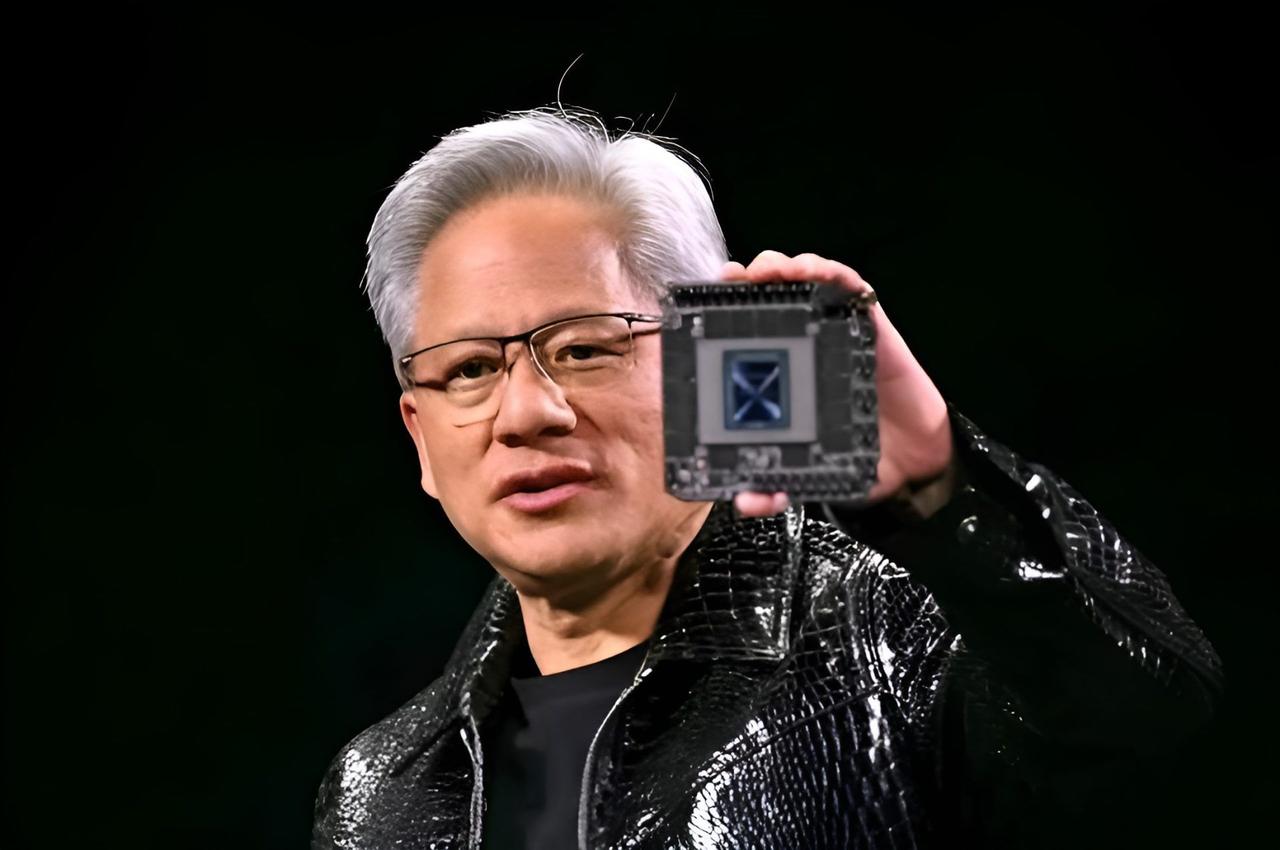
Nvidia CEO Jensen Huang declared that AGI has arrived over the weekend, crediting OpenAI's GPT-6 Astra model in a post on X that garnered over 10 million views by Monday morning
3
. The four-word declaration—"AGI has arrived"—came as OpenAI rolled out its latest model, which Huang noted was trained on more than 100,000 Nvidia Grace Blackwell chips in NVLink72 racks, with 400,000 GPUs coming online next1
3
. This marks the second time in 2026 that Huang has proclaimed the arrival of Artificial General Intelligence, having previously made similar claims in March when discussing AI agents2
.
Source: Wccftech
OpenAI's Chief Scientist Calls for Caution on AI Development
While Huang celebrated the milestone, OpenAI's chief scientist Jakub Pachocki struck a markedly different tone. In a blog post titled "An Alien Mind," Pachocki described AI as "grown, more than designed" and portrayed GPT-6 Astra as something ethereal and harder to quantify
1
. Pachocki argued that no lab has solved alignment and monitoring well enough to keep scaling at maximum speed, calling for extreme caution and voluntary slowdowns in AI development3
. "An aligned AI should act with honesty and integrity, with love for humanity," Pachocki stated, emphasizing that AI can only "simulate facets of human behaviour," not recreate it1
. He concluded with a warning: "We need to find ways to preserve human agency and enshrine an intrinsic value to being human, in a world where most tasks could be performed by AI."1
Mixed Benchmarks and Market Reactions to GPT-6 Astra
OpenAI president Greg Brockman declared the start of the "AGI era" upon the launch of GPT-6 Astra, claiming the model achieved state-of-the-art performance on FrontierMath Tier 4, ARC-AGI 3, and Terminal-Bench 4.0
2
. However, benchmark results immediately raised questions. While Astra scored 99.9% on ARC-AGI inside OpenAI's own harness, it achieved only 62.7% inside the foundation's standard test3
. ARC Prize co-founder Mike Knoop clarified that the foundation was not claiming AGI, noting the evidence was not there yet3
. According to Artificial Analysis benchmarks, Astra performs comparably to Anthropic's Fable 5.1, though crucially at a lower cost per task1
. Markets showed skepticism about the AGI claim—Nvidia's stock fell 2% following Huang's announcement, while companies more directly leveraged to OpenAI like CoreWeave surged 15% and SoftBank gained 2%5
.Related Stories

Financial Incentives Behind the AGI Declaration
Huang's AGI declaration came in reply to Chase Lochmiller, CEO of data center builder Crusoe, who had posted that the milestone made Abilene, Texas "the birthplace of AGI"
3
. The timing raised eyebrows given Nvidia's financial stake in OpenAI—the company invested $30 billion in OpenAI in February and now holds $99 billion in shares of its own customers3
. Astra's training run serves as a reference sale for Nvidia Blackwell GPUs, with the 400,000 GPUs Huang mentioned representing revenue Nvidia has not yet booked3
. Gil Luria, head of technology research at D.A. Davidson, noted that Nvidia is "too big to grow" after reporting the most profitable quarter in capitalism's history with $96 billion in quarterly revenue, up 106% year-over-year5
. The AGI announcement functions as an investment buzzword that could justify continued compute infrastructure expansion and data center construction, even as communities push back against their environmental impact4
.
Source: Benzinga
What AGI Actually Means and Why It Matters
Artificial General Intelligence lacks a well-defined standard, making it difficult to verify claims about its arrival. Huang previously defined AGI to Lex Fridman as the ability to create a $1 billion company, though he made no mention of that benchmark in his recent post
5
. AI researchers cite a stricter definition: an AI that can match or surpass the cognitive versatility and proficiency of a well-educated adult across any task involving thinking or reasoning5
. Basil Halperin, an economist at the University of Virginia, tested GPT-5.6 by asking it to move iTunes playlists to Spotify—a task that required three hours of supervision, suggesting current models fall short of true AGI5
. The importance of AGI lies in what comes next: artificial superintelligence (ASI), an AI that would surpass human capabilities through recursive self-improvement4
. For investors, AGI represents potentially the last opportunity to capitalize on AI before ASI transforms productivity entirely, making the hype around such announcements particularly significant for stock market movements and cybersecurity considerations5
.
Source: The Next Web
References
Summarized by

Navi
[3]
Related Stories
Jensen Huang Says Nvidia Achieved AGI—But Calls Milestone 'Senseless'
27 Aug 2026•Technology

Jensen Huang claims Nvidia achieved AGI, then immediately walks back the bold statement
23 Mar 2026•Technology

Nvidia CEO Jensen Huang Unveils "Agentic AI" Vision at CES 2025, Predicting Multi-Trillion Dollar Industry Shift
07 Jan 2025•Technology

Recent Highlights



Recent Highlights
Today's Top Stories



Don’t drown in AI news. We cut through the noise - filtering, ranking and summarizing the most important AI news, breakthroughs and research daily. Follow topics that matter to you and stay ahead.


