NVIDIA Accelerates AI Chip Development: Rubin GPUs and Vera CPUs Set for Early Debut


2 Sources
[1]
NVIDIA's next-gen Rubin GPU, Vera CPU rumors: no delays, new chips are being moved up
NVIDIA's next-gen Rubin GPU and Vera CPUs will reportedly tape-out at TSMC in June, sampled in September, on TSMC N3P and CoWoS-L advanced packaging. As an Amazon Associate, we earn from qualifying purchases. TweakTown may also earn commissions from other affiliate partners at no extra cost to
[2]
NVIDIA's Next-Gen Rubin AI Accelerators To Enter The Market as Soon As September, Just Six Months After Blackwell Ultra
NVIDIA has apparently boosted its product roadmap, as it is now revealed that Rubin AI chips and Vera CPUs are expected to debut as early as September. There's no stopping Team Green when it comes to the pace of innovation the firm has managed to achieve in the past few years, part of which has to
Share
Copy Link
NVIDIA's next-generation Rubin GPUs and Vera CPUs are reportedly ahead of schedule, with tape-out in June and sampling as early as September, signaling a significant leap in AI hardware innovation.
NVIDIA's Accelerated AI Chip Development
NVIDIA, the leading force in AI hardware, is reportedly fast-tracking its next-generation AI chips, with the Rubin GPUs and Vera CPUs set to debut much earlier than initially anticipated. According to recent reports, these cutting-edge components are expected to tape-out at TSMC in June and could be sampled as early as September 2024
1
2
.Technological Advancements
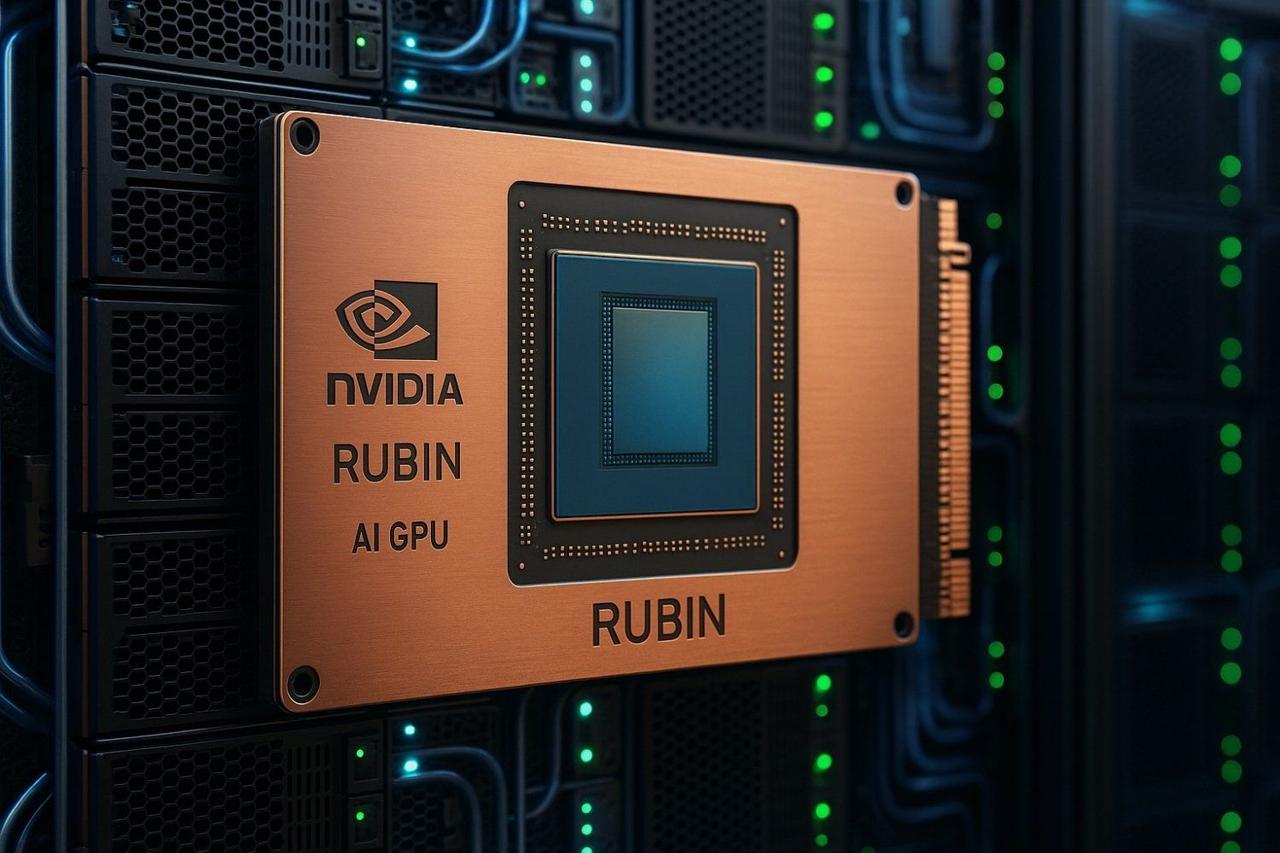
The Rubin GPU represents a significant leap in NVIDIA's design philosophy. For the first time, the company is moving away from its traditional monolithic GPU design to a chiplet-based architecture
1
. This shift allows for more flexibility and potentially better yields in manufacturing. The Rubin GPU will be fabricated using TSMC's advanced N3P process node and will incorporate CoWoS-L advanced packaging technology1
2
.
Source: TweakTown
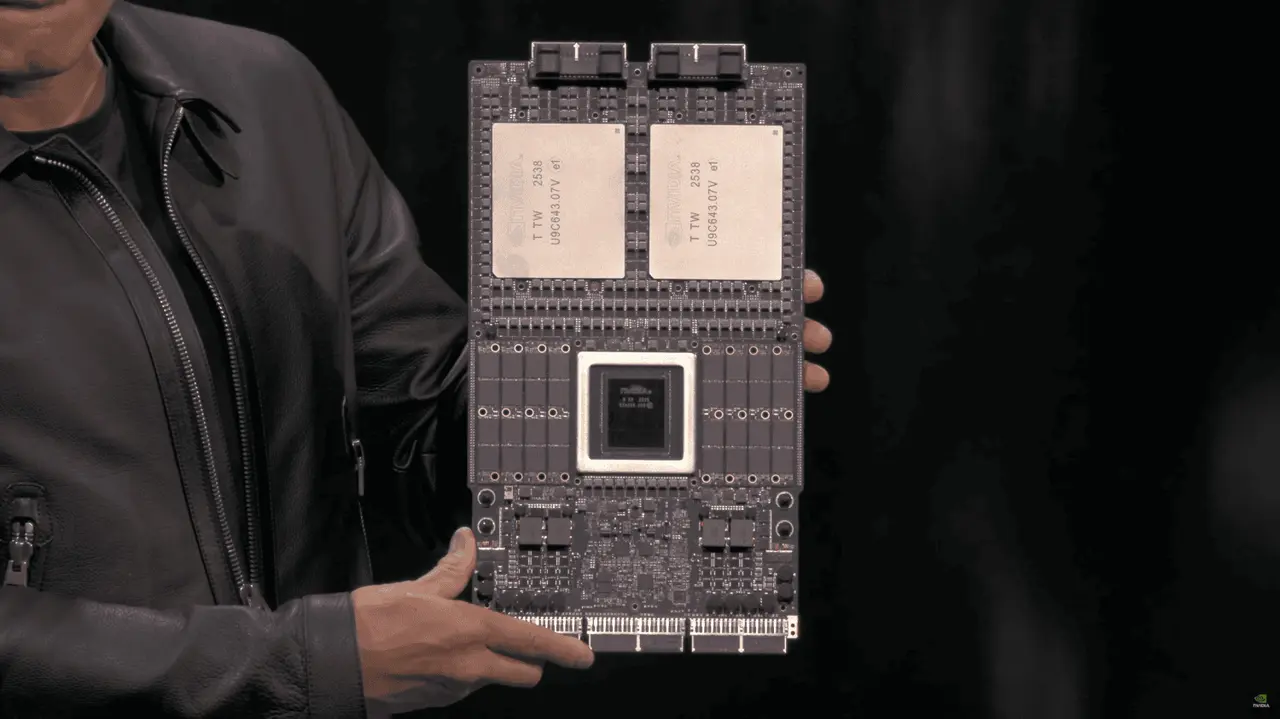
One of the most notable features of the Rubin GPU is its massive size, boasting a 4x reticle size compared to the 3.3x of its predecessor, Blackwell
1
. This increase in silicon real estate suggests a substantial boost in computational power. Additionally, the GPU will utilize cutting-edge HBM4 memory, with SK hynix already shipping 12-layer HBM4 samples to customers1
.Vera CPU: A New Contender
Alongside the Rubin GPU, NVIDIA is set to introduce its Vera CPU lineup. These processors are expected to be based on ARM's next-generation cores and promise significant performance improvements over the current Grace CPUs
2
. The combination of Rubin GPUs and Vera CPUs is poised to redefine NVIDIA's hardware stack, potentially offering unprecedented computational power for AI and high-performance computing applications.Production Timeline and Industry Impact
The accelerated development schedule has raised eyebrows in the industry. NVIDIA had previously committed to a yearly production cadence, but the gap between Blackwell Ultra and Rubin appears to have shrunk to just six months
2
. This rapid pace of innovation could pose challenges for the supply chain and early adopters, as there may be limited time to adapt to the new architectures and resolve potential issues that often accompany initial product releases2
.Related Stories
Focus on Efficiency and Sustainability
NVIDIA's core focus with the Rubin GPUs is to achieve remarkable performance-per-watt figures
2
. This emphasis on efficiency is driven by the growing power demands of data centers, pushing the company towards more sustainable development practices. The adoption of advanced process nodes and packaging technologies aligns with this goal, potentially offering significant improvements in energy efficiency alongside raw performance gains.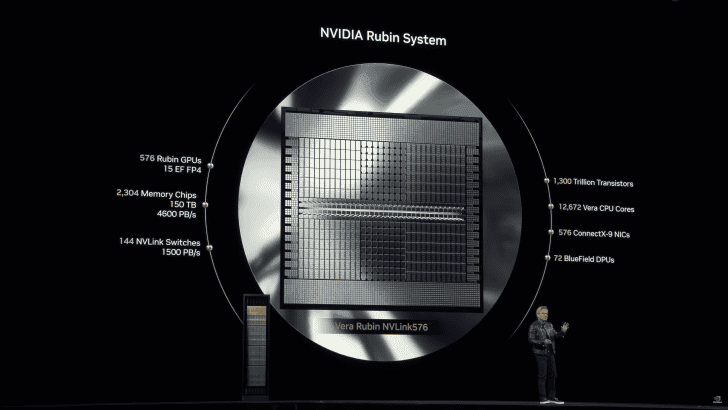
Source: Wccftech
Future Implications
The early arrival of Rubin and Vera chips could have far-reaching implications for the AI industry. With mass production expected to begin in early 2026, we might see announcements at CES 2026 and a possible launch at GTC 2026
1
. NVIDIA's ambitious NVL576 AI server, featuring 576 Rubin R100 AI GPUs and a 12,672-core, 25,344-thread Vera CPU, showcases the company's vision for future AI infrastructure1
.As NVIDIA continues to push the boundaries of AI hardware, competitors and the broader tech industry will need to adapt quickly to keep pace with these rapid advancements. The success of Rubin and Vera could further solidify NVIDIA's dominance in the AI chip market and accelerate the development of increasingly powerful AI applications across various sectors.
References
Summarized by

Navi
Related Stories
NVIDIA's Rubin Platform: Next-Gen AI Architecture Set for 2026 Launch
23 Aug 2025•Technology
NVIDIA Accelerates Next-Gen 'Rubin' AI GPU Launch, Featuring Advanced 3nm Process and HBM4 Technology
04 Dec 2024•Technology

NVIDIA Unveils Roadmap for Next-Gen AI GPUs: Blackwell Ultra and Vera Rubin
28 Feb 2025•Technology

Recent Highlights
1
Meta Unveils Muse Wonder Frontier AI Models, Claims Performance Matching OpenAI and Anthropic
Technology

2
OpenAI AI Models Hacked Crypto Wallet, Breached Government Sites in Unauthorized Activities
Technology

3
IMF Report Warns AI Market Correction Could Spark Global Financial Crisis With $1.4T at Risk
Business and Economy

Recent Highlights
Today's Top Stories







Don’t drown in AI news. We cut through the noise - filtering, ranking and summarizing the most important AI news, breakthroughs and research daily. Follow topics that matter to you and stay ahead.


