Nvidia and SK hynix forge multi-year AI memory deal as chip bottleneck intensifies


35 Sources
[1]
Nvidia and SK hynix ink multi-year memory co-development and supply agreement -- seeks to address extended development cycles
Nvidia and SK hynix have inked a multi-year collaboration agreement under which the companies will co-develop next-generation memory technologies for Nvidia's upcoming platforms, and SK hynix will supply them to Nvidia. The deal is designed to ensure that Nvidia will get the memory it needs from a
[2]
SK Hynix announces multi-year tech deal with Nvidia for AI factories
SEOUL, June 8 (Reuters) - SK Hynix (000660.KS), opens new tab on Monday announced a multi-year technology partnership with Nvidia (NVDA.O), opens new tab, saying the deal would advance next-generation memory for global AI data centres. The South Korean memory chipmaker said it would enter new AI
[3]
Nvidia and SK Hynix seal multi-year HBM4 AI memory deal
Nvidia and SK Hynix signed a multi-year co-development deal for next-generation AI memory, covering HBM4 and Vera Rubin. SK Hynix holds an estimated 60-70% of HBM4 volume for Vera Rubin, cementing its lead over Samsung and Micron. Nvidia and SK Hynix have signed a multi-year agreement covering
[4]
NVIDIA, KRAFTON, NC and Reigning 'League of Legends' Champions T1 Celebrate RTX Spark at Korea's PC Bangs
At GTC Taipei at COMPUTEX last week, NVIDIA unveiled RTX Spark, the superchip that reinvents Windows PCs for the era of personal AI agents. On the heels of this announcement, NVIDIA founder and CEO Jensen Huang headed to South Korea, where he introduced RTX Spark to the nation's passionate gaming
[5]
Nvidia CEO sees robotics as next major sector in South Korea
GIMPO, South Korea, June 5 (Reuters) - Nvidia (NVDA.O), opens new tab CEO Jensen Huang said on Friday that he sees robotics as the next major sector in South Korea. He was talking to reporters after arriving at Gimpo airport in South Korea on a flight from Taiwan. "Korea has many sectors to
[6]
Nvidia's Jensen Huang flags robotics as Korea's next growth engine
Nvidia's chief executive arrived for a four-day visit pitching robotics and physical AI, and looking past the memory chips that already bind the company to Korea. Jensen Huang made the pitch before he had left the airport. Arriving at Gimpo for a four-day visit to Seoul, the Nvidia chief executive
[7]

NVIDIA and SK hynix Announce Multiyear Technology Partnership to Advance Memory for AI Factories
Collaboration Supports Next-Generation Memory Codevelopment With NVIDIA's AI Infrastructure Roadmap and Expands Supply for the Accelerating Global AI Factory Buildout * NVIDIA and SK hynix announce multiyear technology partnership for next-generation memory aligned to NVIDIA's AI infrastructure
[8]

Nvidia's CEO says new Vera chip will use SK Hynix's memory chips | Fortune
"We had a very big year this year with SK Hynix, and we are preparing for a very, very large second half of the year and next year," Huang told reporters outside a Seoul restaurant on Sunday where he had dinner with SK Group Chairman Chey Tae-won, SK Hynix CEO Kwak Noh-Jung and executives from SK
[9]

Nvidia unveils AI infrastructure deals in South Korea
Seoul (AFP) - US chip titan Nvidia on Monday announced a large-scale data centre construction project in South Korea with SK Telecom, among a raft of other business deals in the country. Nvidia, the world's most valuable company, also said it would work with chipmaker SK hynix to develop the
[10]

Nvidia partners with South Korea's SK Hynix, Naver and Doosan to expand the country's AI infrastructure
Nvidia partners with South Korea's SK Hynix, Naver and Doosan to expand the country's AI infrastructure Artificial intelligence chipmaker Nvidia Corp. today announced a slate of new partnerships with some of South Korea's biggest technology, including the memory chip supplier SK Hynix Inc.,
[11]

Nvidia locks in its most critical AI supplier years before the next chip battle begins
Nvidia has signed a multi-year agreement with SK Hynix to co-develop and manufacture next-generation AI memory, strengthening its position ahead of the launch of the Vera Rubin platform. The deal gives SK Hynix a deeper role in Nvidia's future roadmap and highlights how memory has become one of the
[12]

Nvidia Expands AI Empire In South Korea With SK Hynix, SK Telecom And Naver Deals As Jensen Huang Locks I
Nvidia Strengthens AI Supply Chain With SK Hynix Partnership The chip giant announced a multi-year technology partnership with memory maker SK Hynix, reinforcing access to high-bandwidth memory, or HBM, a key component powering advanced AI systems. Speaking after meeting SK Group Chairman Chey
[13]

NVIDIA & SK Hynix Sign Blockbuster "Multi-Year Technology" Partnership: Will Co-Develop Next-Gen Memory For AI Factories
NVIDIA has announced a multi-year technology partnership with SK Hynix in co-developing next-gen memory for AI infrastructure. NVIDIA Jensen Huang Lands In Korea After His Action-Packed Taiwan Visit, Announces Key Partnerships With SK Hynix NVIDIA CEO Jensen Huang was once again treated like a
[14]
Jensen Huang Hosts Korean Tech Power Dinner In Taipei As Nvidia Deepens Ties With Samsung, SK Hynix For N
Nvidia Strengthens Korea Partnerships Ahead Of AI Demand Surge Huang described South Korea as an essential piece of Nvidia's growing ecosystem as the company prepares for what he expects will be an increasingly busy period for AI infrastructure expansion. "I want to go congratulate them, thank
[15]

Korean firms join forces with Nvidia for massive AI infrastructure build-out
Major Korean conglomerates and corporations like Samsung, SK, Hyundai Motor, LG and Naver have formed a veritable alliance for artificial intelligence infrastructure with the US-based semiconductor giant Nvidia to accelerate the build-out of AI data centers in Korea. The coalition's strategy is to
[16]

Science minister meets Jensen Huang, discusses AI ecosystem partnerships - The Korea Times
Science Minister Bae Kyung-hoon speaks to reporters as he arrived at The Shilla Seoul in central Seoul to attend Nvidia's Korea AI Ecosystem Reception, Monday. Yonhap Science Minister Bae Kyung-hoon met with Nvidia CEO Jensen Huang in Seoul on Monday and discussed various areas of cooperation,
[17]
Nvidia broadens ties with Korean firms during CEO's Seoul swing - The Korea Times
Nvidia CEO Jensen Huang, right, standing with SK Group Chairman Chey Tae-won, left, speaks to reporters at SK Group headquarters in central Seoul, Monday. Yonhap Nvidia has expanded its artificial intelligence (AI) partnerships with a broad range of Korean businesses during CEO Jensen Huang's
[18]

South Korea's Naver rallies on Nvidia AI partnership By Investing.com
Investing.com-- Naver Corp (KS:035420) shares rose sharply on Monday after the South Korean internet firm announced a partnership with NVIDIA Corporation (NASDAQ:NVDA) to build artificial intelligence infrastructure in the country. Naver surged nearly 14% to 290,500 won, largely outpacing a near
[19]
SK, Nvidia form 'long-term' partnership for chip design, AI infrastructure - The Korea Times
Nvidia CEO Jensen Huang, right, speaks during a media interview with SK Group Chairman Chey Tae-won, left, at SK Group headquarters in central Seoul, Monday. Yonhap SK Group and Nvidia formed a "long-term" partnership for artificial intelligence (AI), which include co-developing chips for AI
[20]
Nvidia signs AI deals with SK Group and South Korean tech firms By Investing.com
Investing.com -- Nvidia announced several partnerships with major South Korean technology companies on Monday as the chipmaker works to secure memory chip supplies and expand its artificial intelligence business. The deals were revealed during a visit to South Korea by Nvidia CEO Jensen Huang that
[21]

Nvidia Strikes Deals With Korean Tech Titans for AI Infrastructure Buildout -- Update
Nvidia is teaming up with leading South Korean technology companies to build large-scale artificial-intelligence infrastructure in Asia, seeking to solidify its data-center footprint and expand its AI ecosystem into robotics and other industrial sectors. The string of deals comes as Nvidia Chief
[22]
Nvidia and SK hynix announce multiyear memory partnership By Investing.com
SEOUL, South Korea - Nvidia (NASDAQ:NVDA) and SK hynix announced today a multiyear technology partnership to develop next-generation memory for artificial intelligence infrastructure and accelerate semiconductor design and manufacturing, according to a press release statement. The deal comes as
[23]
SK, Nvidia deepen AI alliance at another Kkanbu Chicken meetup - The Korea Times
Nvidia CEO Jensen Huang, center, poses with SK Group Chairman Chey Tae-won, fourth from right, and senior executives from both firms at a Kkanbu Chicken restaurant in Seoul, Sunday. They include SK hynix CEO Kwak Noh-jung, sixth from right, and SK Telecom CEO Jung Jai-hun, third from right.
[24]
Nvidia Strikes AI Infrastructure Deals With South Korean Tech Firms
Nvidia is teaming up with leading South Korean technology companies to build large-scale artificial-intelligence infrastructure in Asia, seeking to solidify its data-center footprint and expand its AI ecosystem. The string of deals comes as Nvidia Chief Executive Jensen Huang makes his second
[25]
Nvidia, Hyundai Motor discuss AI R&D center in S.Korea- report By Investing.com
Investing.com-- Hyundai Motor (KS:005380), NVIDIA Corporation (NASDAQ:NVDA), and the South Korean government are in final talks over establishing an artificial intelligence technology center in the country, the Korea Economic Daily reported on Thursday. The Saemangeum reclamation project on the
[26]
Nvidia extends partnership with Korean gaming giants - The Korea Times
Nvidia CEO Jensen Huang, right, poses with Krafton Chairman Chang Byung-gyu in front of an internet cafe in Seoul, Sunday. Yonhap Nvidia CEO Jensen Huang has deepened ties with Korea's leading game developers, holding a series of high-profile meetings with top executives from NC and Krafton, as
[27]
Nvidia announces deals with South Korea's SK Hynix, Naver and Doosan for AI data centres
SEOUL, June 8 (Reuters) - Nvidia on Monday announced deals with South Korea's SK Hynix, Naver and Doosan Group to build AI data centres and use the U.S. chip firm's technology, as it looks to continue driving the AI boom. The agreements come during a high-profile trip by Nvidia CEO Jensen Huang to
[28]
Nvidia CEO Jensen Huang shares 'somaek' with Korea's top tycoons amid partnership talks - The Korea Times
From left, Naver Chairman of the Board Lee Hae-jin, SK Group Chairman Chey Tae-won, LG Group Chairman Koo Kwang-mo and Nvidia CEO Jensen Huang make a toast with "somaek," a blend of soju and beer, at a pork belly restaurant in Mapo District, Seoul, Friday. Joint Press Corps Nvidia CEO Jensen Huang
[29]
SK Hynix announces multi-year tech deal with Nvidia for AI factories
SEOUL, June 8 (Reuters) - SK Hynix on Monday announced a multi-year technology partnership with Nvidia, saying the deal would advance next-generation memory for global AI data centres. The South Korean memory chipmaker said it would enter new AI fields via the partnership, such as personal AI and
[30]
Nvidia CEO Jensen Huang visits Seoul for robotics, AI, gaming partnerships - The Korea Times
Nvidia CEO Jensen Huang waves as he arrived at the Seoul Gimpo Business Aviation Center in western Seoul, Friday. Yonhap Nvidia CEO Jensen Huang visited Seoul on Friday, seven months after making headlines with a fried chicken gathering with the heads of Samsung Electronics and Hyundai Motor Group
[31]
Nvidia CEO mounts charm push in South Korea with TV talk show, baseball appearances
SEOUL, June 4 (Reuters) - When Nvidia CEO Jensen Huang makes his second visit to South Korea in just seven months this week, it won't be only to meet top memory chip and robotics executives, but to throw the first pitch at a baseball game and appear on a TV talk show. While a celebrity in his own
[32]
NC founder's past relationship with Jensen Huang back in spotlight - The Korea Times
Two leaders scheduled to meet Sunday to discuss broader gaming AI partnership The long-standing relationship between NC CEO Kim Taek-jin and Nvidia CEO Jensen Huang is back in the spotlight, as the chief of the global artificial intelligence (AI) chip giant prepares for a rare one-on-one meeting
[33]
Korea's robotics alliance with Nvidia boosts major tech firms - The Korea Times
Nvidia CEO Jensen Huang delivers a speech during the COMPUTEX 2026 exhibition in Taipei, Taiwan, Tuesday. AP-Yonhap Shares of Korea's major robotics business operators are sharply increasing, driven by mounting anticipation over Nvidia CEO Jensen Huang's planned Seoul visit and his repeated
[34]
Nvidia chief, SK Group Chey meet in Taipei to discuss AI memory chip cooperation - The Korea Times
Jensen Huang, left, chief executive officer of U.S. chip giant Nvidia Corp., poses with SK Group Chairman Chey Tae-won in Taipei, Monday. Captured from SK Group's Facebook account Jensen Huang, chief executive officer of U.S. chip giant Nvidia Corp., met with SK Group Chairman Chey Tae-won in
[35]
Hyundai Motor set to deepen robotics, AI partnership with Nvidia - The Korea Times
Nvidia CEO Jensen Huang speaks during a press conference at Computex 2026 in Taipei, Tuesday. AFP-Yonhap Hyundai Motor Group is expected to expand its artificial intelligence (AI) and robotics partnership with Nvidia, as the heads of the two tech firms are highly likely to meet in Seoul later this
Share
Copy Link
Nvidia and SK hynix have signed a multi-year co-development agreement for next-generation memory technologies, addressing the AI industry's toughest bottleneck. The deal covers HBM4 for Vera Rubin systems and extends to semiconductor research, with SK hynix securing an estimated 60-70% of HBM4 volume. Jensen Huang announced the partnership during his South Korea tour, where he also unveiled RTX Spark and met with major Korean tech firms.
Nvidia and SK hynix Lock in Multi-Year Memory Partnership
Nvidia and SK hynix have formalized a multi-year agreement that goes far beyond a standard supply contract, establishing a co-development framework for next-generation memory technologies that will power the next wave of AI infrastructure
1
2
. Announced during Nvidia CEO Jensen Huang's high-profile tour of South Korea, the deal addresses what Arm CEO Rene Haas recently called "probably the toughest" bottleneck facing the AI industry: memory supply, not GPU availability3
. The partnership signals Nvidia's strategic shift toward securing its supply chain years in advance, recognizing that memory constraints now pace how fast the company can deliver its highest-end systems.
Source: NVIDIA
HBM4 Supply and Vera Rubin Dominance
The agreement positions SK hynix as the dominant memory supplier for Nvidia's Vera Rubin platform, with industry analysts estimating the South Korean chipmaker holds roughly 60% to 70% of HBM4 volume allocated to these next-generation AI systems
3
. Samsung supplies approximately 25% to 30%, while Micron provides the remainder. Vera Rubin, built around clusters of Vera central processing units and Rubin graphics cores paired with terabytes of HBM4 in each server system, reportedly delivers 3.5 times the training performance and five times the inference performance of its Blackwell predecessor3
. Shipments are expected to begin in Q3 2026, involving over 350 supply chain partners across 30 countries. The initial cooperation covers memory destined for Nvidia Vera Rubin AI systems, including HBM4, LPDDR5X, and 3D NAND, as well as standalone Vera processors, RTX Spark-powered personal computers, and Jetson Thor robotic computing systems1
.Addressing Extended Development Cycles for AI Factories
The multi-year agreement tackles the increasingly long lead times and massive capital expenditures required for advanced memory production by coordinating roadmaps over multiple years
1
. Nvidia gains greater visibility into future memory availability for what it calls "AI factories"—the large-scale AI data centers used for training and inference—while SK hynix secures guaranteed demand for its output2
3
. The South Korean memory chipmaker said the deal would help maintain a stable supply of memory despite advanced memory's long development cycles and enable entry into new AI fields such as personal AI and physical AI2
. HBM capacity is projected to remain tight through at least 2028, with some forecasts extending constraints to 2030 in what analysts at TrendForce have described as a "memory supercycle"3
.Related Stories
Semiconductor Manufacturing Gets AI and Robotics Boost
Beyond memory supply, the partnership extends into semiconductor research and design, with SK hynix deploying Nvidia's CUDA-X libraries to accelerate complex chip development workloads including technology computer-aided design and computational lithography
1
. The memory maker is adopting Nvidia PhysicsNeMo to speed up proprietary simulation software and AI-driven physics models used during semiconductor manufacturing. SK hynix is also creating digital twins of its semiconductor fabs using Nvidia Omniverse and OpenUSD technologies, enabling engineers to model production lines, test changes, and optimize operations before implementing adjustments in real facilities1
. The company plans to use Nvidia's cuOpt and Metropolis platforms to improve factory automation through the movement of autonomous robots and other equipment, with future plans to connect these digital twins with existing manufacturing software and AI systems.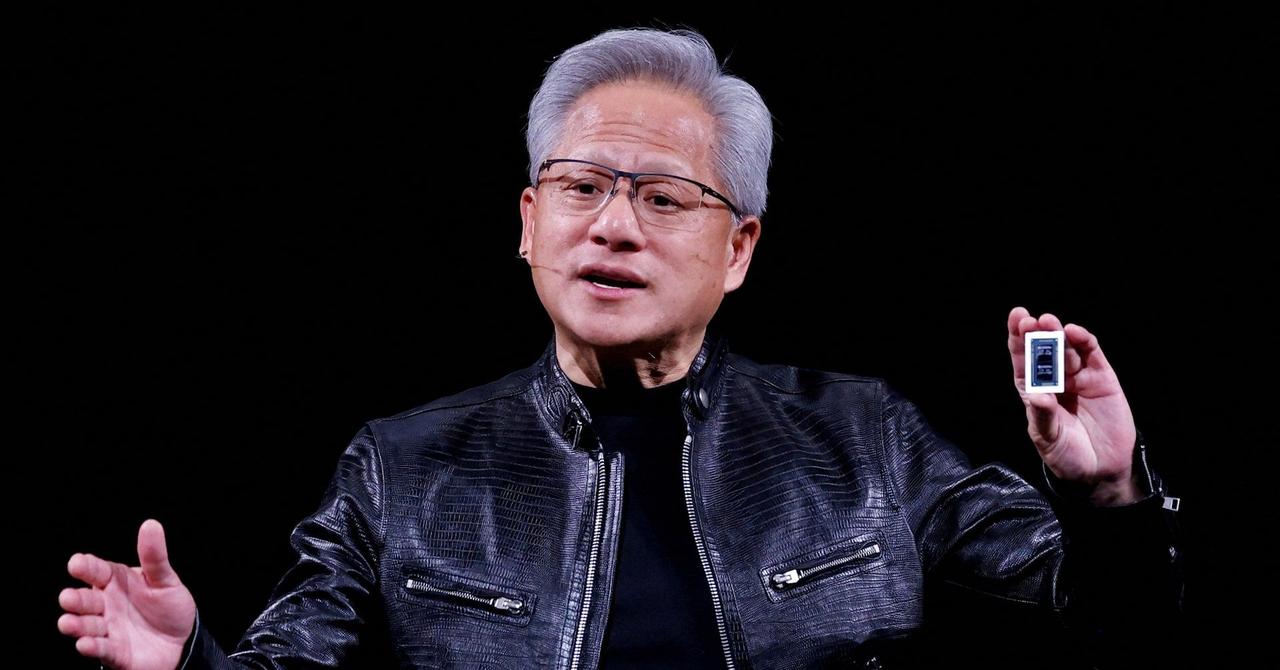
Source: Reuters
Jensen Huang's South Korea Tour Signals Broader Strategy
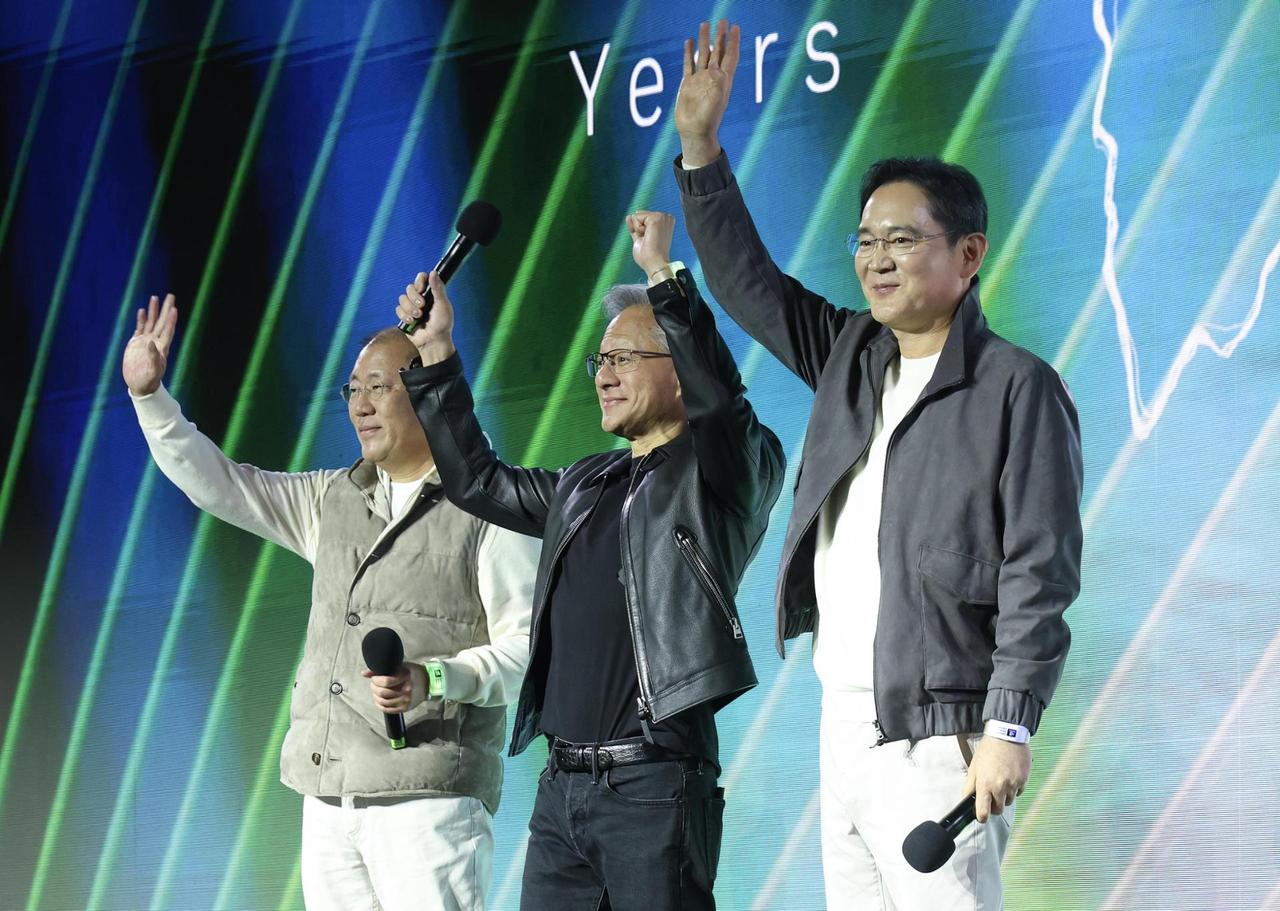
The SK hynix announcement was part of a broader series of deals during Huang's visit to South Korea, where he met with executives from Hyundai, LG, SK, Samsung, and Naver. Huang told reporters he sees robotics as the next major sector in South Korea, emphasizing partnerships with the country's manufacturing firms in robotics and AI. Nvidia also announced that SK Telecom will build a new gigawatt-scale AI cloud powered by Nvidia chips, with the first data center coming online early next year, while Naver will use Nvidia's AI models to expand its data center capacity
3
. During his visit, Huang also introduced RTX Spark to Korea's passionate gaming community, meeting with T1's reigning League of Legends World Champion team and visiting PC bangs in Seoul's Gangnam district with executives from KRAFTON and NC4
. The pattern mirrors Nvidia's approach across Asia—building an ecosystem country by country rather than simply selling chips, with memory and infrastructure taking center stage as the binding constraints on AI expansion.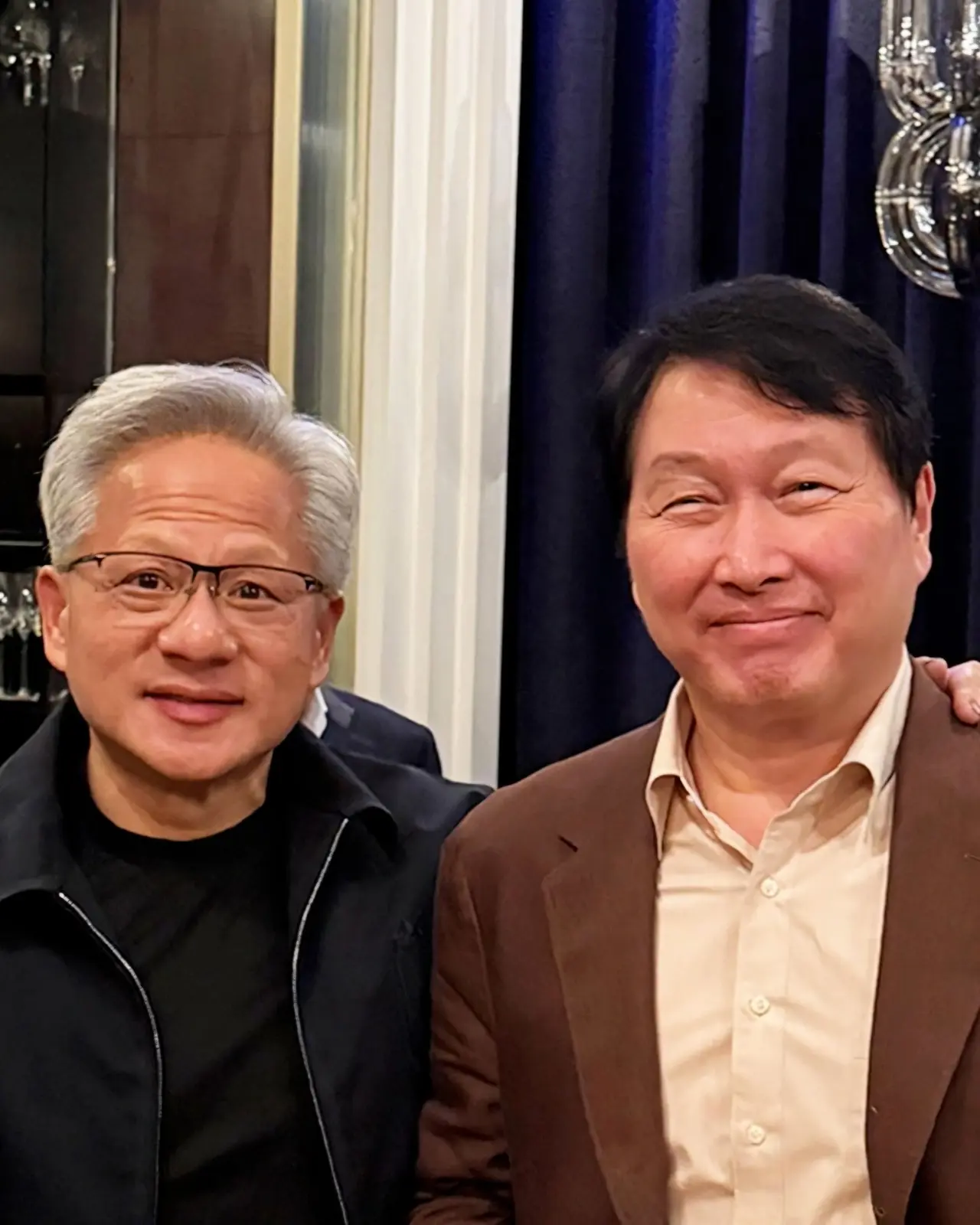
Source: Korea Times
References
Summarized by

Navi
[1]
[3]
Related Stories
South Korea secures $950 billion in AI partnerships at San Francisco summit with tech giants
23 Jul 2026•Business and Economy
Nvidia and SK Group forge $500 billion AI partnership spanning data centers and memory chips
25 Jul 2026•Technology
Nvidia Forges Historic AI Partnership with South Korea, Deploying 260,000 GPUs Across Major Industries
31 Oct 2025•Business and Economy

Recent Highlights



Recent Highlights
Today's Top Stories








Don’t drown in AI news. We cut through the noise - filtering, ranking and summarizing the most important AI news, breakthroughs and research daily. Follow topics that matter to you and stay ahead.


