NVIDIA and TSMC Deploy AI Across Taiwan's Manufacturing Ecosystem With 500+ Partners


2 Sources
[1]
Taiwan's Industry Titans Turbocharge World's AI Infrastructure Buildout With NVIDIA
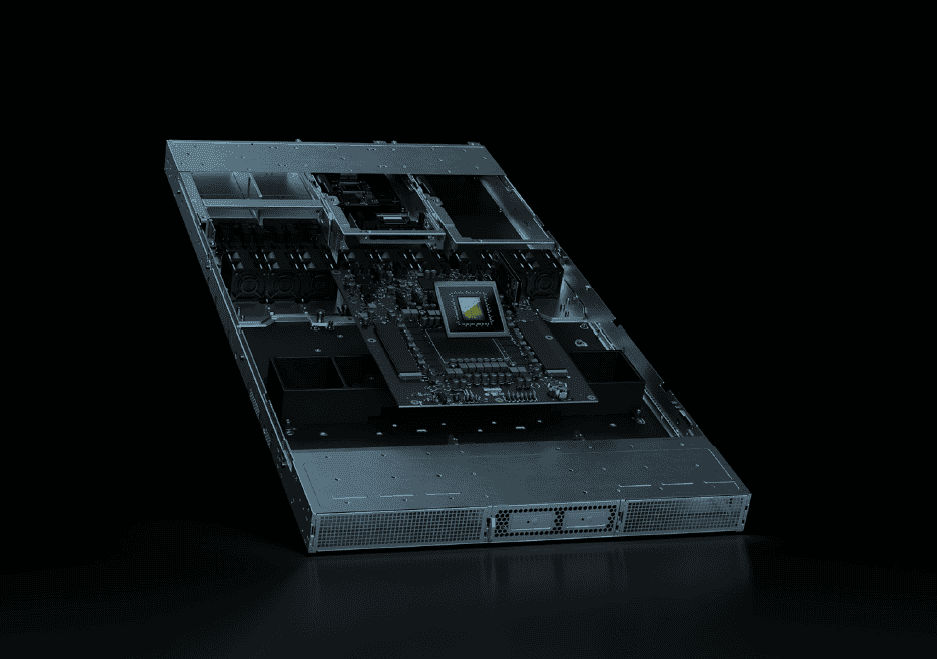
Your browser doesn't support HTML5 video. Here is a link to the video instead. Taiwan is home to more than 500 NVIDIA ecosystem partners. More than 1 million NVIDIA MGX rack components for NVIDIA Vera Rubin infrastructure come together in Taiwan, from across 25 factory sites. As Vera Rubin ramps
[2]
NVIDIA and TSMC Bring AI Into Fabs to Advance Semiconductor Design and Manufacturing
* NVIDIA CUDA-X libraries and AI models are accelerating TSMC workloads across lithography, transistor and process simulation, advanced process control and fab operations optimization. * TSMC is using NVIDIA Metropolis and NVIDIA TAO Toolkit to advance automated defect inspection with vision AI,
Share
Copy Link
NVIDIA partners with TSMC and over 500 Taiwan-based manufacturers to transform AI infrastructure production. The collaboration integrates accelerated computing, simulation, and physical AI across chipmaking and server assembly operations. Companies like Foxconn report 80% faster root-cause analysis and 15% productivity gains using NVIDIA's AI tools.
NVIDIA and Taiwan's Manufacturing Giants Build Global AI Infrastructure
NVIDIA has mobilized Taiwan's manufacturing powerhouse to accelerate the global buildout of AI infrastructure, partnering with TSMC and over 500 NVIDIA ecosystem partners across the island. More than 1 million NVIDIA MGX rack components for the Vera Rubin infrastructure are assembled across 25 factory sites in Taiwan, creating what amounts to an AI manufacturing nerve center
1
. The collaboration spans the entire supply chain, from wafer and chip partners like TSMC, SPIL, Kinsus, KYEC and UMTC, to systems leaders including Foxconn, Pegatron, QCT, Wistron and Inventec1
.What makes this development significant is not just the scale of production, but how these manufacturers are applying NVIDIA's AI technologies to their own operations. This creates a feedback loop where the companies building AI infrastructure are simultaneously using AI to optimize their manufacturing processes, establishing a blueprint for advanced manufacturing processes worldwide.
TSMC Transforms Semiconductor Design and Manufacturing With NVIDIA AI
Source: NVIDIA
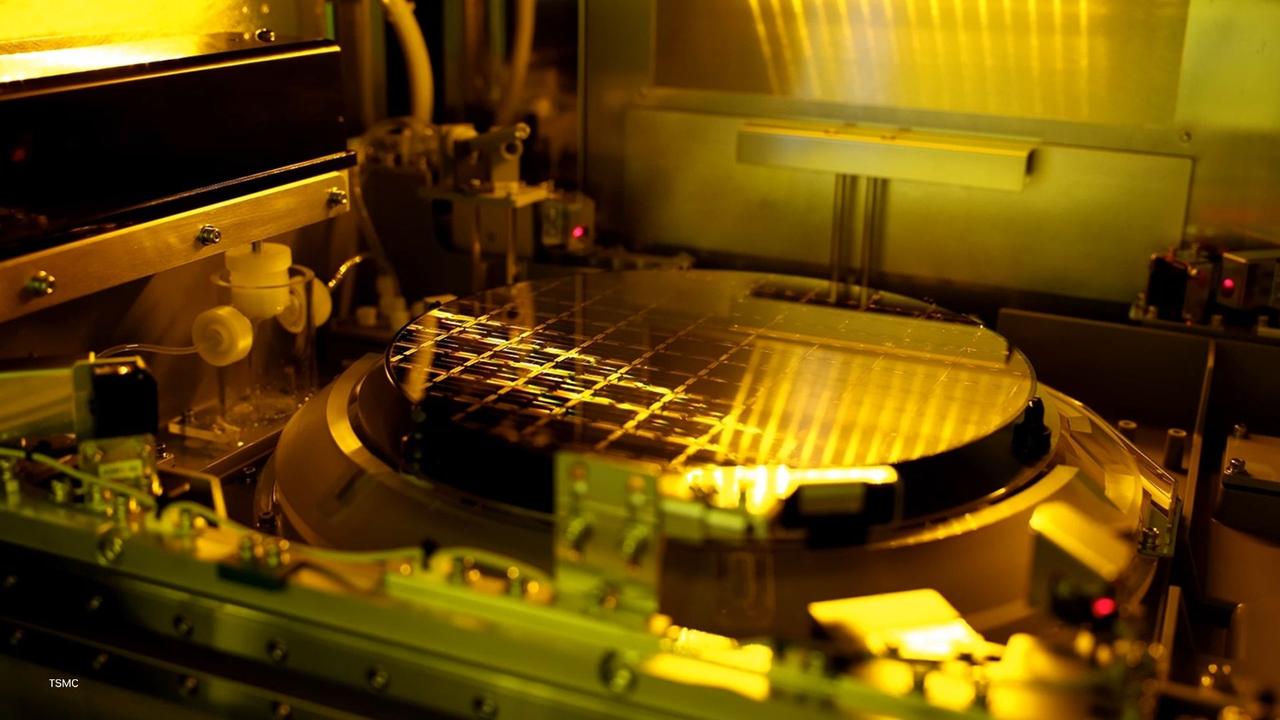
TSMC, the world's leading semiconductor company, is deploying NVIDIA accelerated computing technologies and AI across its entire semiconductor design and manufacturing lifecycle. The partnership addresses one of computing's most complex challenges: bringing chips from design to high-volume production at advanced nodes, which now requires massive-scale simulation and real-time optimization
2
.TSMC is applying NVIDIA CUDA-X libraries across multiple critical workloads. For computational lithography, NVIDIA cuLitho delivers a 20-50% improvement in cost effectiveness or cycle time compared with CPU-based approaches while maintaining the same cost of ownership
2
. The NVIDIA cuEST library accelerates semiconductor material simulation by 50x on average, enabling faster transistor, equipment and process simulation1
.For advanced process control, TSMC uses the NVIDIA cuML machine learning library to analyze hundreds of thousands of process parameters spanning thousands of steps, significantly reducing process variation
2
. The company is also leveraging NVIDIA Metropolis and NVIDIA TAO Toolkit to advance defect detection capabilities, improving identification of nanometer-scale defects while reducing repeated labeling and retraining requirements2
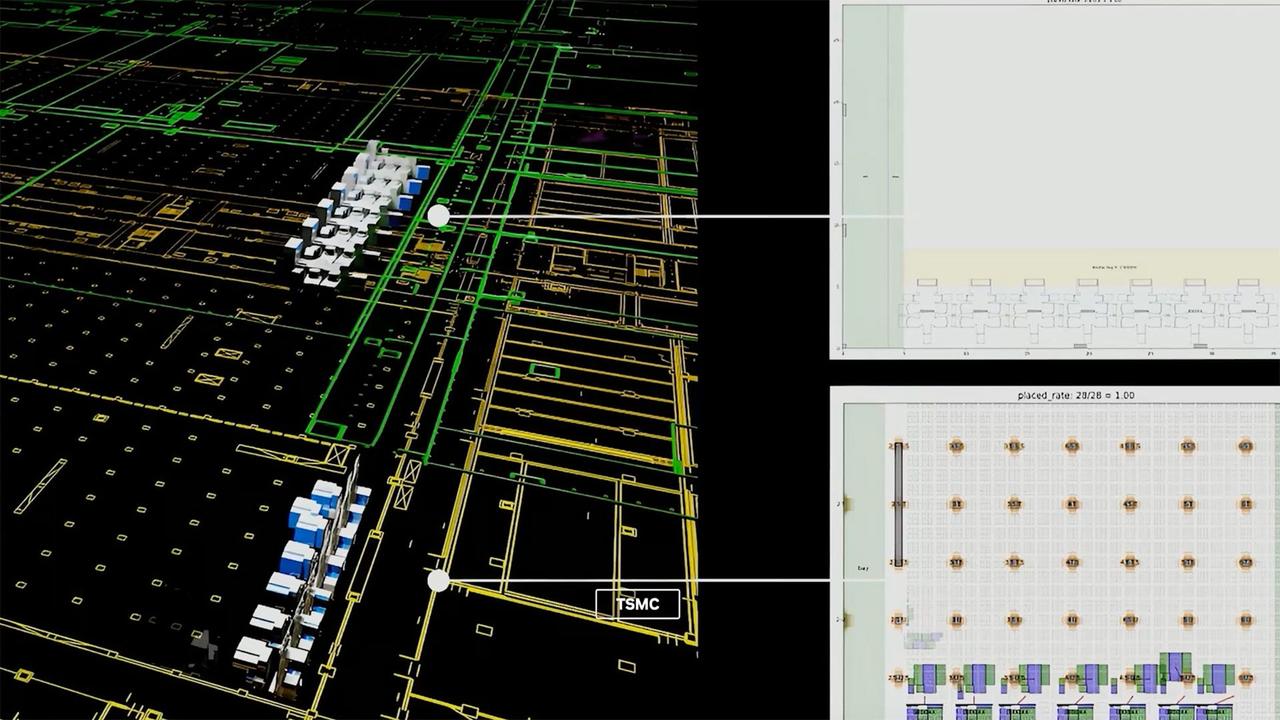
.TSMC is exploring NVIDIA Omniverse libraries to build FabTwin, a virtual fab environment for evaluating process tool layouts and simulation workflows. This digital-first approach allows the company to test design scenarios before physical implementation, comparing complex configurations more flexibly and identifying potential constraints earlier
2
.Foxconn Deploys AI Agents for Factory Optimization and Physical AI Robots
Foxconn is implementing NVIDIA's Factory Operations Blueprint and NemoClaw blueprints to build MoMClaw, its manufacturing operations management agent. This system connects sensor and machine signals with specialized agents that provide plant managers and operators with real-time answers and action plans through a natural language interface
1
. The results are substantial: Foxconn estimates an 80% speedup in root-cause analysis time, a 15% increase in labor productivity, and a 10% decrease in machine failure rates1
.The company is also using DeepHow's SOP Verification vision AI system with NVIDIA Cosmos and the NVIDIA Metropolis Blueprint for video search and summarization to gain visibility into complex manufacturing processes, boosting first pass yield by 3%
1
. Foxconn is applying NVIDIA Isaac Teleop, Isaac Sim, Isaac Lab and ROS 2 to wheeled humanoid robots in its factories, supporting precision assembly tasks including pick and place, dual-arm collaboration and force-controlled screw fastening1
.Foxconn's $1.4 billion AI cloud supercomputing center in Taiwan, powered by 10,000 NVIDIA GPUs, is being built with the NVIDIA GB300 NVL72 hybrid cooling architecture
1
.Related Stories
QCT, Wistron, Pegatron and Inventec Accelerate Server Assembly With Digital Twins
Source: NVIDIA
QCT is using NVIDIA Omniverse-based digital twins to accelerate factory planning, giving engineering, operations and logistics teams shared access to design data for faster layout feedback and improved space utilization
1
. The company is also collaborating with its subsidiary Techman Robot on a physical AI developer kit using NVIDIA Jetson Thor and the Isaac GR00T platform for next-generation robots, including the TM Xplore I humanoid for advanced industrial tasks like server fan assembly1
.Wistron is using the NVIDIA Omniverse DSX Blueprint and NVIDIA PhysicsNeMo framework to simulate burn-in environments for stress-testing across global manufacturing sites. Running on NVIDIA RTX PRO 6000 Blackwell Server Edition GPUs, these workflows speed layout analysis by as much as 70% and cut facility power demand by 20% through dynamic rack optimization
1
.Pegatron is adopting the NVIDIA Omniverse DSX Blueprint to connect design data, thermal simulation, digital twins and physical qualification, accelerating the design and deployment of AI factories. The company is also using NVIDIA's Defect Image Generation physical AI agent skill with NVIDIA Cosmos world foundation models to generate synthetic defect data, reducing AI visual inspection deployment time by 67% and operational effort by 10%
1
. Inventec is similarly using the Defect Image Generation agent skill to generate synthetic defect data for automated optical inspection, producing more than 10,000 synthetic defect images in internal validation1
.Taiwan's AI Infrastructure Model Shapes Global Manufacturing Future
The integration of AI manufacturing across Taiwan's ecosystem represents more than just increased production capacity for AI infrastructure. These companies are creating a model for how accelerated computing, simulation and physical AI can make chipmaking and advanced manufacturing faster, more efficient and adaptive. As Jensen Huang, NVIDIA's founder and CEO, noted, TSMC is "tackling some of the world's most complex design and manufacturing challenges with simulation, optimization and AI to improve speed, efficiency and yield for the next generation of chips"
2
.C.C. Wei, TSMC's chairman and CEO, emphasized that "by using NVIDIA accelerated computing and AI across fab operations optimization, lithography, process control and inspection, TSMC is strengthening our technology leadership and manufacturing excellence to support our customers' future products and success"
2
. The collaboration between NVIDIA and Taiwan's manufacturing leaders signals a shift where AI infrastructure production itself becomes a testbed for next-generation manufacturing capabilities, with implications for how factories worldwide will operate as agentic AI systems scale globally.References
Summarized by

Navi
Related Stories
Nvidia Expands AI Infrastructure in Taiwan with Supercomputers and New Headquarters
19 May 2025•Technology

Nvidia CEO Jensen Huang Unveils New AI Technologies at Computex 2025
15 May 2025•Technology
NVIDIA Unveils NVLink Fusion: Enabling Custom AI Infrastructure with Industry Partners
19 May 2025•Technology
Recent Highlights



Recent Highlights
Today's Top Stories



Don’t drown in AI news. We cut through the noise - filtering, ranking and summarizing the most important AI news, breakthroughs and research daily. Follow topics that matter to you and stay ahead.


