NVIDIA CEO Jensen Huang Predicts 20% Performance Boost from GAA Technology, Emphasizes Architectural Innovations


2 Sources
[1]
Nvidia's Jesnen Huang expects GAA-based technologies to bring a 20% performance uplift
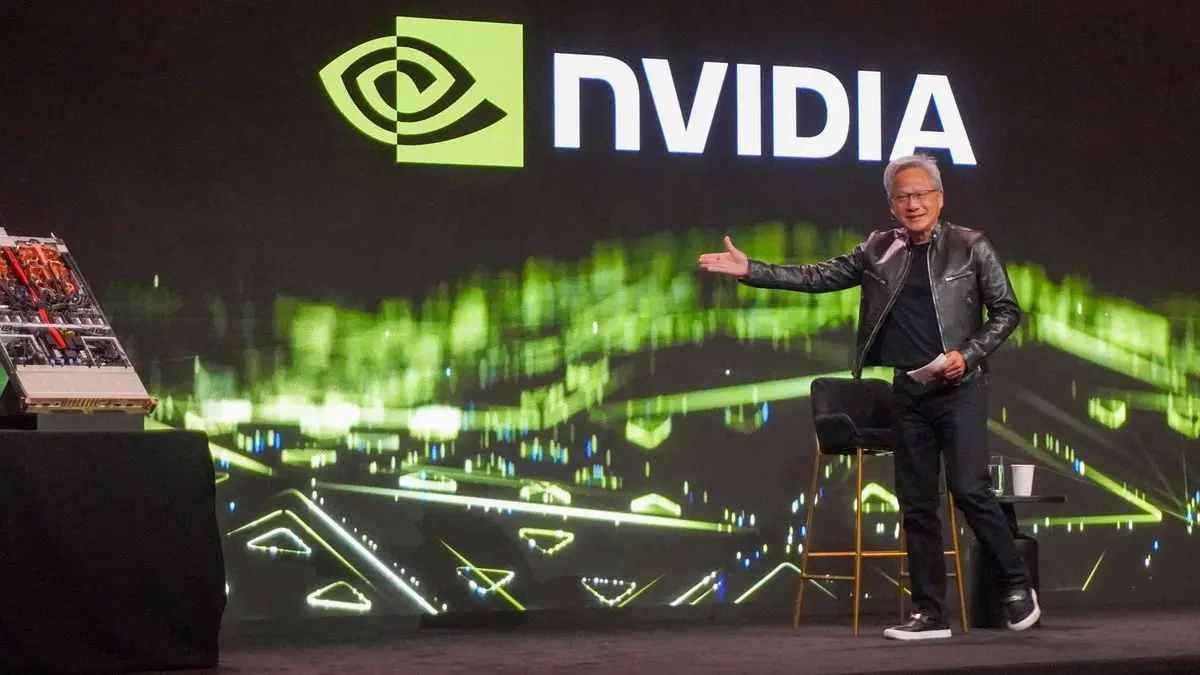
Is that enough for GPU production to jump to a cutting-edge node? Nvidia's Jensen Huang said during a Q&A session at GTC that next-generation process technologies relying on gate-all-around (GAA) transistors will likely bring about a 20% performance boost for the company's processors, reports EE
[2]
NVIDIA's CEO Claims GAA-Based Processes Will Bring In a 20% Performance Boost, But Key Focus Will Remain On Architectural Advancements
NVIDIA's CEO Jensen Huang is optimistic about the use of GAA-focused processes in the future, claiming that they could bring a massive boost to performance. We all know that Jensen isn't a firm believer in Moore's Law or lets it dictate the trend of performance brought in by newer architecture.
Share
Copy Link
NVIDIA CEO Jensen Huang discusses the potential impact of Gate-All-Around (GAA) transistor technology on GPU performance, highlighting the company's focus on architectural and software innovations for AI infrastructure.

NVIDIA CEO Predicts Modest Gains from GAA Technology
NVIDIA CEO Jensen Huang has shared his thoughts on the future of semiconductor technology, particularly focusing on Gate-All-Around (GAA) transistors. During a Q&A session at the GPU Technology Conference (GTC), Huang suggested that GAA-based technologies could bring about a 20% performance boost for NVIDIA's processors
1
.Emphasis on Architectural and Software Innovations
While acknowledging the potential benefits of GAA technology, Huang emphasized that the most significant performance improvements for NVIDIA's GPUs come from architectural advancements and software innovations. He noted that as AI systems scale, the efficiency of managing vast numbers of processors is becoming more critical than the raw performance of individual processors
1
.NVIDIA's Approach to Process Node Adoption
Unlike some competitors, NVIDIA typically does not adopt the latest process technologies immediately. The company has been using tailored versions of TSMC's 4nm-class process technologies for its current generation of GPUs. Looking ahead, NVIDIA is expected to use TSMC's 3nm-class fabrication process for its next-generation AI GPUs, codenamed Rubin, in 2024
1
.Future GPU Architectures and GAA Implementation
Speculation surrounds NVIDIA's plans for implementing GAA technology in future GPU architectures. The Feynman architecture, expected in 2028, might be the first to utilize GAA-based processes, potentially adopting TSMC's N2P or A16 nodes. These advanced nodes are projected to offer significant performance improvements over current technologies
2
.Beyond Semiconductor Manufacturing
Huang stressed that NVIDIA has evolved beyond being simply a semiconductor company. He described NVIDIA as a provider of large-scale AI infrastructure and a leader in algorithm development for various fields, including computer graphics, robotics, and computational lithography
1
.Related Stories

Industry Perspective on GAA Technology
The chip industry has shown some uncertainty regarding GAA adoption. Samsung, the first to announce a fully developed 3nm GAA process, has faced challenges in achieving industry-standard yield rates. TSMC is expected to introduce GAA with its N2 (2nm) lineup of processes
2
.NVIDIA's Performance Scaling Strategy
NVIDIA's approach to performance scaling, dubbed "Huang's Law" by some, focuses on driving performance through architectural advancements rather than relying solely on process node improvements. This strategy has allowed the company to scale up chip efficiency by over 1,000x in a decade
2
.Implications for the AI and GPU Markets
As NVIDIA continues to push the boundaries of GPU and AI technology, the company's stance on process node advancements and its focus on architectural innovations could have significant implications for the broader AI and high-performance computing markets. The balance between leveraging new manufacturing technologies and optimizing existing architectures will likely remain a key factor in NVIDIA's strategy moving forward.
References
Summarized by

Navi
[1]
Related Stories
Nvidia Set to Pioneer TSMC's Advanced A16 Node, Reshaping AI Chip Landscape
15 Sept 2025•Technology

Nvidia CEO Claims AI Chips Outpacing Moore's Law, Promising Faster AI Progress
08 Jan 2025•Technology

Jensen Huang teases AI chip that will 'surprise the world' at Nvidia's GTC Conference in March
19 Feb 2026•Technology
Recent Highlights
1
Microsoft and Nvidia Launch Surface Laptop Ultra: A $2,599 AI-Ready PC With RTX Spark Chip
Technology

2
Meta Muse AI Agent Surges to 6.6M Downloads Despite Privacy and Security Controversies
Technology

3
Scientists Build AI Model That Reconstructs Images From Brain Scans in Record Time
Science and Research

Recent Highlights
Today's Top Stories











Don’t drown in AI news. We cut through the noise - filtering, ranking and summarizing the most important AI news, breakthroughs and research daily. Follow topics that matter to you and stay ahead.


