Nvidia CEO Jensen Huang Declares Quantum Computing at 'Inflection Point', Unveils New AI Initiatives


3 Sources
[1]
Nvidia CEO says quantum computing is at an inflection point
Jensen Huang made similar comments in March at Nvidia's annual software developer conference when he spoke about the potential of quantum computing, walking back comments he made in January when he said useful quantum computers were 20 years away.Quantum computing technology is at an inflection
[2]
Nvidia CEO Sees Quantum Computing Reaching 'Inflection Point' | PYMNTS.com
"There's an inflection point happening in quantum computing," Huang said Wednesday (June 11) at the Viva Tech 2025 conference in Paris. "It is clear now we're within reach of being able to apply quantum classical computing in areas that can solve some interesting problems in the coming
[3]
Nvidia CEO says quantum computing is at an inflection point
PARIS (Reuters) -Quantum computing technology is at an inflection point, Nvidia CEO Jensen Huang reiterated on Wednesday at the VivaTech conference in Paris. Quantum calculations could crack problems that currently would demand years of processing from Nvidia's most advanced AI systems. Quantum
Share
Copy Link
Nvidia CEO Jensen Huang announces that quantum computing has reached an inflection point, reversing his earlier skepticism. He also introduces new AI and quantum computing initiatives at the VivaTech 2025 conference in Paris.
Nvidia CEO Declares Quantum Computing at Inflection Point
Jensen Huang, CEO of Nvidia, has made a significant shift in his stance on quantum computing, declaring it to be at an "inflection point" during the VivaTech 2025 conference in Paris. This statement marks a reversal from his earlier skepticism expressed in January when he suggested that useful quantum computers were two decades away
1
2
.
Source: ET
Quantum Computing Advancements
Huang's optimism stems from recent progress in the field, predicting that quantum computing will solve "some interesting problems" in the coming years. He envisions a future where quantum processing units (QPUs) will be integrated with GPUs in the next generation of supercomputers
2
.The Nvidia CEO boldly forecasted the growth of quantum computing capabilities:
"I can totally expect 10 times more logical qubits every five years, 100 times more logical qubits every 10 years," Huang stated, citing advancements in error correction, robustness, and scalability
2
.Nvidia's Quantum Initiatives
To capitalize on this quantum revolution, Nvidia has announced several initiatives:
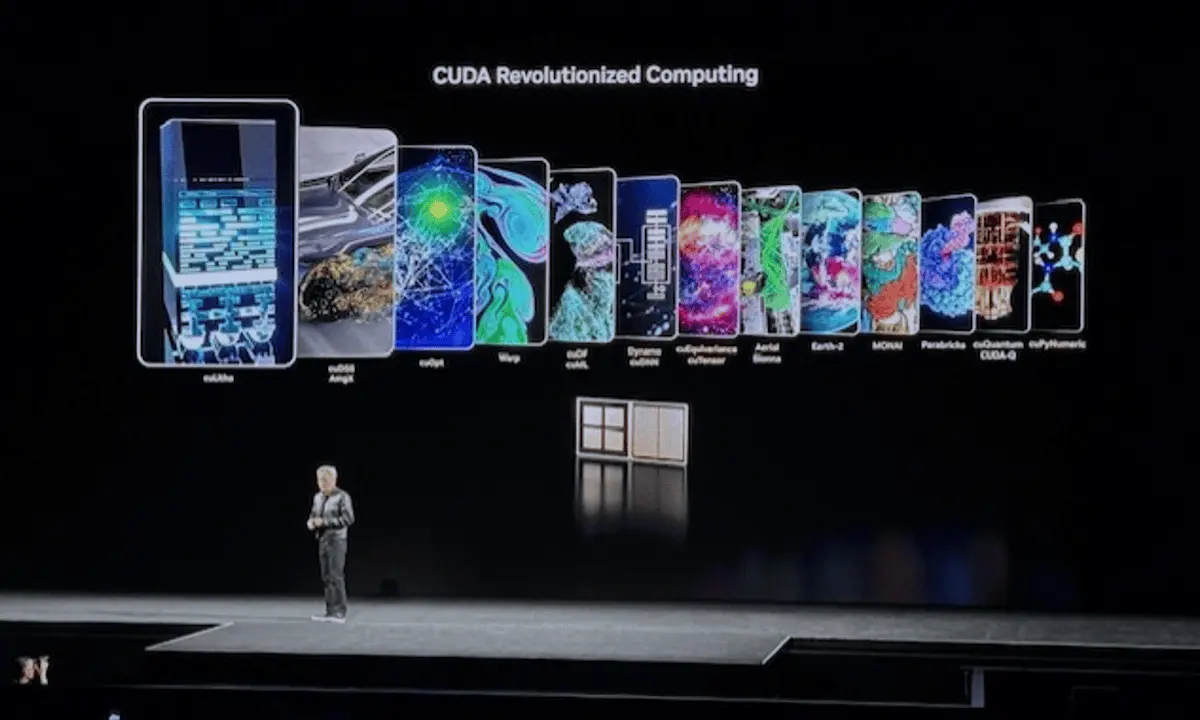
- CUDA-Q: An open-source hybrid computing platform designed for quantum-classical hybrid computing
2
.
Source: PYMNTS
- A new quantum computing research lab in Boston, collaborating with Harvard and MIT scientists
1
3
.
These moves position Nvidia at the forefront of the emerging quantum-classical computing paradigm.
AI Advancements and 'AI Factories'
Alongside quantum computing, Huang unveiled Nvidia's next-generation Grace Blackwell platform, described as a "thinking machine" for reasoning and planning. This hardware leap enables the creation of digital twins - virtual replicas of physical systems for design and testing
2
.Huang introduced the concept of 'AI factories', a new type of data center dedicated to processing and generating smart tokens for AI applications. He emphasized the critical role of these facilities:
"Every country, every society, every company will depend on" intelligence infrastructure, Huang asserted
2
.The Rise of Agentic AI
Huang outlined the evolution of AI from perception to generative AI, and now to agentic AI. This new paradigm involves intelligence that can perceive, reason, plan, and execute tasks, mirroring human thought and action processes
2
.Agentic AI is not confined to the digital realm; it can be embedded in robots to enhance their intelligence and contextual understanding in the physical world. Nvidia's Omniverse platform provides a simulation environment for developing and deploying both virtual and physical agents
2
.Related Stories

Industrial Applications and Partnerships
Nvidia is partnering with Schneider Electric and French startup Mistral AI to build large-scale AI clouds optimized for various models. These clouds will support both foundational model training and enterprise-grade agentic AI applications
2
.The company is also launching an industrial AI cloud in Europe, supporting real-time design and simulation across various sectors. Huang described this as the fourth industrial revolution, driven by the convergence of simulation, robotics, and generative AI
2
.Democratizing Robotics
Looking ahead, Huang envisions a future where even small businesses can afford and utilize custom robots. These robots will be teachable, reusable, and deployable in industries previously unable to afford automation
2
.As Nvidia continues to push the boundaries of both quantum and classical computing, the company is positioning itself at the forefront of the next technological revolution, promising transformative changes across multiple industries.
References
Summarized by

Navi
[3]
Related Stories
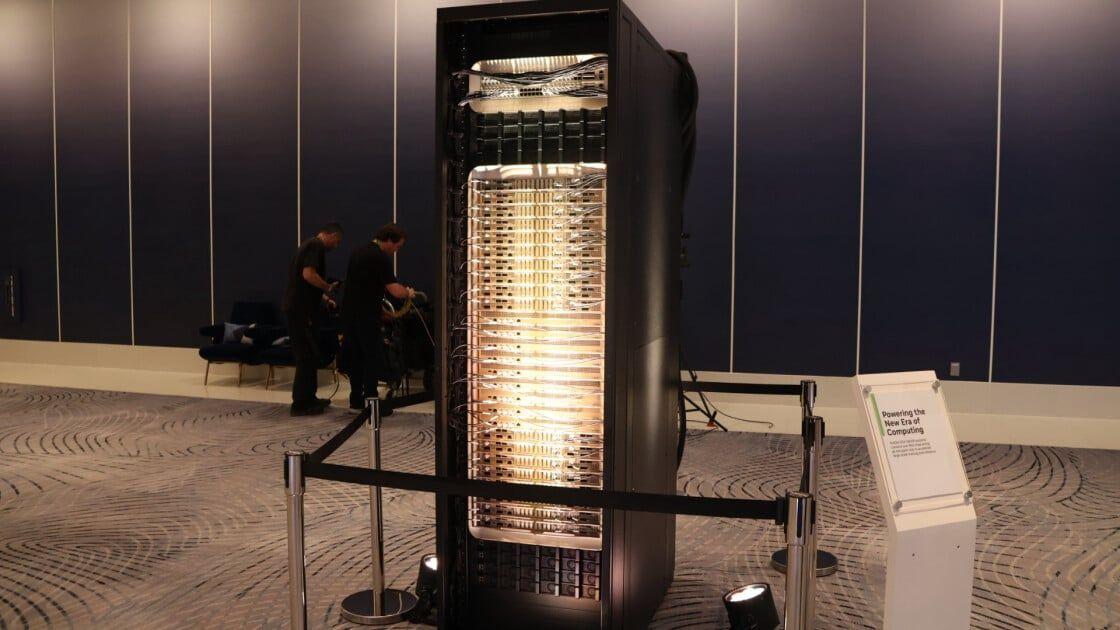
Nvidia Launches Accelerated Quantum Research Center to Advance AI-Quantum Integration
19 Mar 2025•Technology
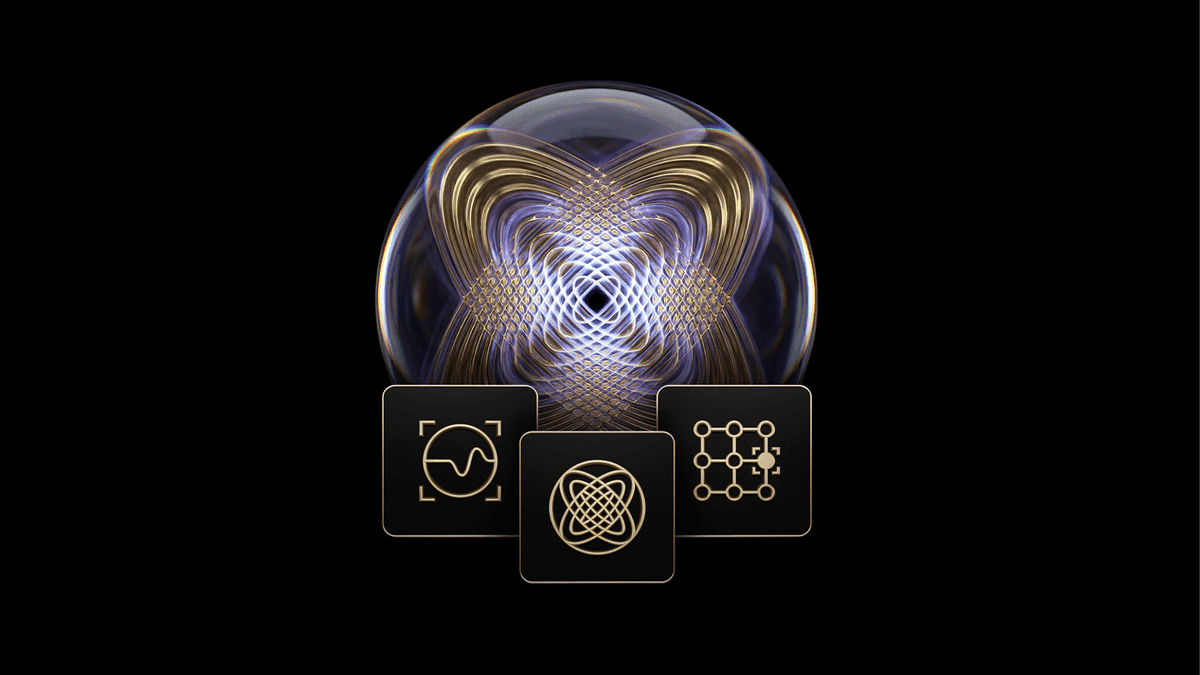
Nvidia releases Ising open AI models to solve quantum computing's biggest bottlenecks
14 Apr 2026•Technology
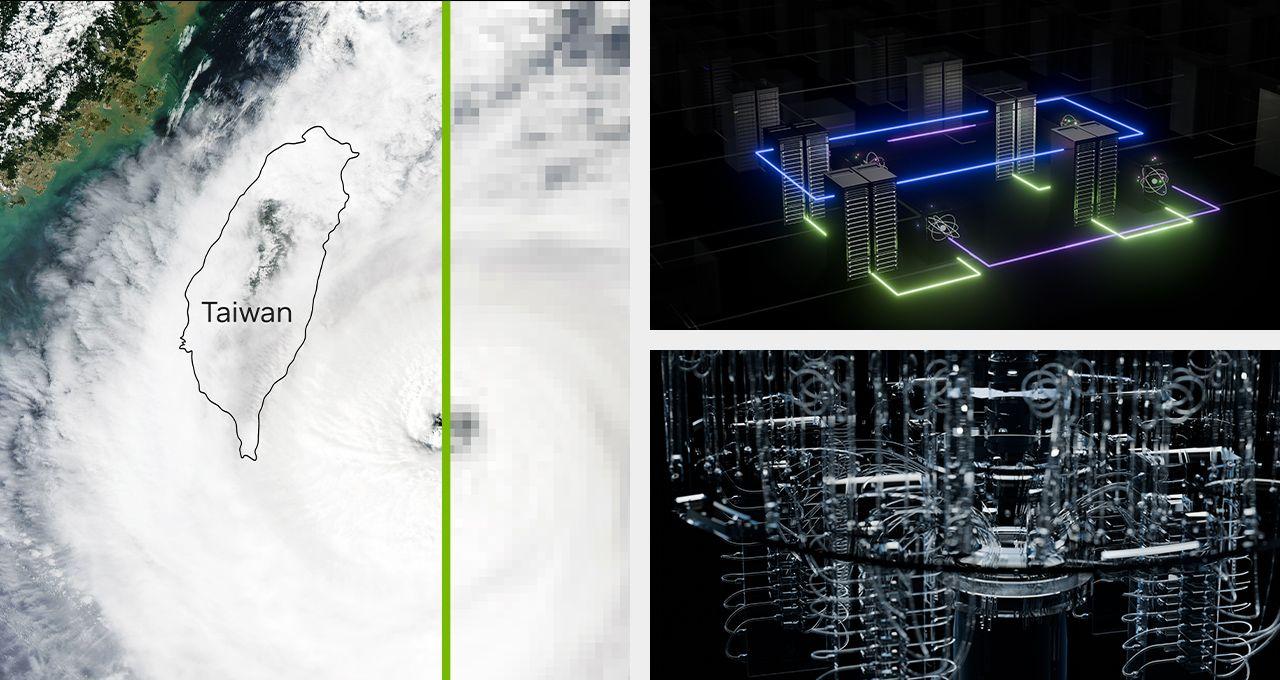
Taiwan's New AI Supercomputer to Boost Research in Quantum Computing and Climate Science
19 May 2025•Technology
Recent Highlights



Recent Highlights
Today's Top Stories








Don’t drown in AI news. We cut through the noise - filtering, ranking and summarizing the most important AI news, breakthroughs and research daily. Follow topics that matter to you and stay ahead.


